
Slicing potatoes can be a slow, tiring job with a knife. Many home cooks and even professionals turn to food processors to make the process faster, more precise, and much easier. If you have ever wondered how to slice potatoes in a food processor—and do it safely, efficiently, and with great results—this guide will help you.
Whether you want thin slices for homemade potato chips, even rounds for gratins, or quick cuts for soups, mastering your food processor opens up new cooking possibilities.
But there are some important things to know. Not all food processors are the same. The way you prepare, load, and use the machine will affect your results. This article will walk you through everything: choosing the right blade, prepping your potatoes, using the machine, and troubleshooting common problems. Along the way, you’ll also find tips that most beginners miss, such as why potato size matters for even slicing and how to avoid common safety mistakes.
Why Use A Food Processor For Slicing Potatoes?
Many people still use knives for slicing potatoes, but there are clear advantages to using a food processor:
- Speed: You can slice several potatoes in seconds instead of minutes.
- Uniformity: Food processors make slices of the same thickness, which is important for even cooking.
- Safety: Your hands stay farther from the blade compared to manual slicing.
- Less Fatigue: No more tired wrists or uneven cuts.
A food processor is especially helpful when you need to slice a large amount of potatoes—such as for parties, family dinners, or meal prep. In restaurants, this tool is essential for saving time and delivering consistent results.
Understanding Food Processor Blades And Discs
The key to perfect potato slices is the right blade or disc. Most food processors come with several attachments, but only a few are meant for slicing.
The Slicing Disc
The slicing disc (sometimes called the “slicing blade”) is designed for this exact job. It is a round, flat disc that sits at the top of the food processor bowl. The potato passes through the feed tube, hits the spinning disc, and is sliced into even pieces.
Common disc thicknesses:
- Thin: About 1-2 mm (great for chips or delicate dishes)
- Medium: 3-4 mm (good for gratins or casseroles)
- Thick: 5-6 mm (for stews or chunky salads)
Most processors offer at least one disc, but some have adjustable thickness. Check your manual to see what you have.
Adjustable Vs. Fixed Discs
Some modern food processors let you adjust the slicing thickness with a dial. Others require swapping out discs for different thicknesses. Adjustable discs offer more control, while fixed discs are simple and less expensive.
Here’s a quick comparison:
| Type | Advantage | Drawback |
|---|---|---|
| Adjustable Disc | Custom thickness | More parts to clean |
| Fixed Disc | Simple to use | Limited thickness options |
What About The S-shaped Blade?
The S-shaped blade (also called the “chopping” blade) is not for slicing. It will chop or puree your potatoes, not slice them. Always use the slicing disc for potato slices.
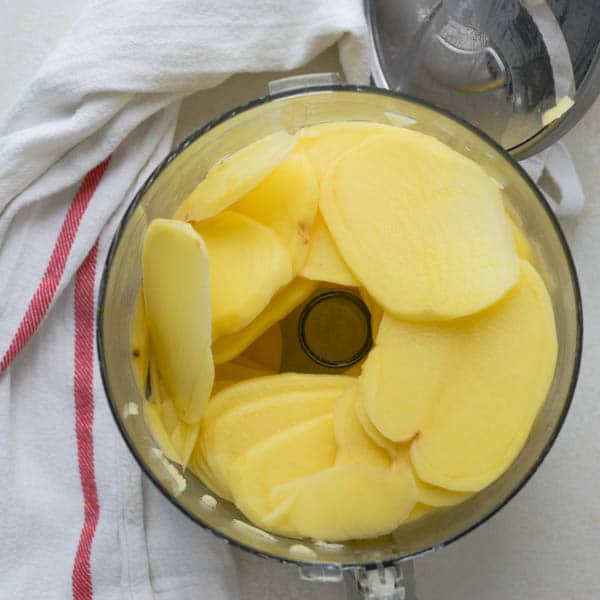
Credit: www.garlicandzest.com
Preparing Potatoes For Slicing
Before you start, it’s important to prepare your potatoes the right way. Proper preparation helps your food processor work smoothly and gives you better results.
Wash And Peel
First, wash your potatoes under cold water to remove dirt. You can leave the skin on if you like the texture and nutrients, but most people peel potatoes for a smoother finish. Use a sharp peeler for thin, even peeling.
Trim And Shape
Cut off any eyes, bruises, or green spots. If your potatoes are very large, cut them in half or into chunks that fit easily into the food processor’s feed tube. This helps prevent jamming and ensures that all slices are the same size.
Dry The Potatoes
Pat the potatoes dry with a clean towel. Wet potatoes can stick together or slip in the processor, making the slices uneven.
Should You Soak Potatoes Before Slicing?
Soaking potatoes in water before slicing is not necessary, but it can help remove excess starch. This can make the slices less sticky and help them brown better if frying. Just make sure to dry them well before putting them in the food processor.
Keep Potatoes Cold
For the cleanest cuts, keep your potatoes cool. Soft, warm potatoes can squash or break as they go through the slicing disc.
Setting Up Your Food Processor
Each food processor is a little different, but the main setup steps are similar.
Attach The Slicing Disc
Remove the bowl from the base. Place the slicing disc onto the central post inside the bowl. Make sure it locks into place. Replace the lid securely.
Select Slice Thickness
If your disc is adjustable, set the thickness dial before you start. Remember, thin slices (1-2 mm) are best for chips, while medium (3-4 mm) works for most casseroles.
Prepare The Feed Tube
Most food processors have a wide and a narrow feed tube. Use the tube that best matches the width of your potato pieces. The goal is to keep the potatoes upright and steady as they are pushed through the disc.

Credit: www.kitchenaid.com
How To Slice Potatoes In A Food Processor: Step-by-step
Slicing potatoes is simple once you understand the steps. Here’s a complete guide:
- Wash, peel, and trim potatoes as needed.
- Cut potatoes to fit the feed tube.
- Dry potatoes with a towel.
- Set up the food processor with the slicing disc.
- Select thickness if using an adjustable disc.
- Load potatoes vertically into the feed tube. Stand them upright for round slices or lay flat for oval slices.
- Secure lid and safety lock.
- Turn on the food processor.
- Use the pusher to gently press potatoes into the disc. Do not force too hard; let the machine do the work.
- Collect slices from the bowl. Remove any leftover chunks from the feed tube.
Tip: For best results, slice potatoes in batches. Overloading the feed tube can lead to uneven slices and jamming.
Achieving Even Slices: Expert Tips
Even though food processors are designed to slice evenly, several factors can affect your results.
Potato Size And Shape
Uniform pieces give more consistent slices. Odd-shaped or uneven chunks may tilt and create slices of different sizes. Trim potatoes so they fit snugly in the feed tube.
Avoid Overloading
Too many potatoes at once can jam the machine or make uneven slices. Process in small batches for the best results.
Use Steady Pressure
A common mistake is pressing too hard or too soft with the food pusher. Heavy pressure can crush potatoes, while too little can result in incomplete slices. Use steady, moderate pressure.
Arrange For Consistency
If you want round slices (for chips), place potatoes vertically. For long oval slices, lay them flat. Consistent arrangement equals consistent results.
Clean The Disc Regularly
If you are slicing a lot of potatoes, starch can build up on the disc and make it less sharp. Pause and wipe the disc clean as needed.
Common Mistakes When Slicing Potatoes In A Food Processor
Even experienced cooks can run into trouble. Here are some common mistakes and how to avoid them:
- Using the wrong blade: Always use the slicing disc, not the S-blade.
- Overfilling the feed tube: This can jam the machine and lead to uneven slices.
- Not drying potatoes: Wet potatoes can stick or clump together, making slicing harder.
- Forcing the food pusher: Let the machine do the work. Pressing too hard can damage both potatoes and the machine.
- Ignoring safety features: Never put your fingers near the blade. Always use the pusher.
- Skipping the manual: Each food processor is different. Read the instructions for your machine.
Cleaning Up After Slicing
Potatoes are starchy and can leave residue on your food processor. Cleaning up quickly keeps your machine working well.
Disassemble Carefully
Unplug the processor. Remove the slicing disc carefully—it is sharp. Separate all parts: lid, bowl, disc, feed tube, and pusher.
Wash Promptly
Wash all parts in warm, soapy water. If your processor parts are dishwasher safe, you can use the top rack. Wipe the base with a damp cloth; never immerse it in water.
Remove Starch Buildup
Potato starch can dry and harden. Use a soft brush or cloth to scrub the disc and bowl. Pay special attention to the disc’s edges.
Dry Completely
Let all parts air dry or wipe with a clean towel before reassembling or storing.
Comparing Food Processors For Potato Slicing
Not all food processors perform equally when it comes to slicing potatoes. Here’s a comparison of features to consider:
| Feature | Basic Model | Mid-Range | Premium |
|---|---|---|---|
| Slicing Thickness | One option | Multiple discs | Adjustable dial |
| Feed Tube Size | Small | Medium | Large (fits whole potatoes) |
| Motor Power | 250-400 W | 400-700 W | 700+ W |
| Ease of Cleaning | Manual only | Dishwasher safe | Dishwasher safe, self-cleaning disc |
If you plan to slice potatoes often, a mid-range or premium model with a large feed tube and adjustable slicing disc will save time and give better results.
Slicing Potatoes For Different Recipes
Potatoes are used in many dishes, and the best slice thickness depends on the recipe.
Potato Chips
For crispy chips, aim for thin slices (1-2 mm). Soak slices in water after slicing to remove starch, then dry thoroughly before frying or baking.
Scalloped Potatoes Or Gratin
Medium slices (3-4 mm) cook evenly and absorb sauce well without falling apart.
Stews And Roasts
Thicker slices (5-6 mm) hold their shape during long cooking. Good for chunky soups or oven roasts.
Potato Salad
Slicing cooked potatoes is common for salads. For this, slice raw potatoes, boil until tender, then cool before adding to your salad.
French Fries
Food processors can make slices, not sticks. For fries, use a julienne or French fry blade if your model has one.

Credit: www.youtube.com
Safety Tips When Slicing Potatoes
Using a food processor is generally safe, but always follow key safety rules:
- Never reach into the bowl while the machine is plugged in.
- Always use the food pusher, not your hands, to press potatoes.
- Unplug before cleaning or changing blades.
- Handle discs carefully; slicing blades are very sharp.
- Do not overload the feed tube or bowl.
Many injuries happen when people rush or skip safety steps. Take your time, especially when cleaning or removing the blade.
Troubleshooting: When Things Go Wrong
Sometimes, things don’t go as planned. Here’s how to fix common problems:
Uneven Slices
- Check if potatoes are trimmed to fit the feed tube snugly.
- Make sure you are using steady, even pressure.
- Clean off any starch buildup from the disc.
Potato Slices Sticking Together
- Dry potatoes thoroughly before slicing.
- Consider soaking slices in cold water after cutting, then draining and drying before cooking.
Food Processor Jamming
- Don’t overload the feed tube.
- Cut large potatoes into smaller pieces.
- Remove and clean the disc if necessary.
Slices Too Thick Or Thin
- Adjust the disc thickness if possible.
- Try a different disc if your processor came with more than one.
Machine Not Starting
- Check that all parts are locked into place.
- Make sure the bowl and lid are correctly positioned.
How Food Processor Slicing Compares To Other Methods
Is a food processor really better than a mandoline or a knife? Here’s a quick look:
| Method | Speed | Uniformity | Safety | Effort |
|---|---|---|---|---|
| Food Processor | Very fast | High | Good with pusher | Low |
| Mandoline | Fast | Very high | Medium (risk of cuts) | Medium |
| Knife | Slow | Low to medium | Good with skill | High |
A food processor is the best choice for speed and consistency. Mandolines are great for thin, precise slices but require more attention to safety. Knives are flexible but slow and can produce uneven results unless you have strong knife skills.
Two Non-obvious Insights For Better Results
- Chill Your Potatoes for Cleaner Slices: Placing potatoes in the fridge for 30 minutes before slicing can make them firmer. Firmer potatoes give cleaner, crisper slices and are less likely to break or mash in the food processor. This is especially useful for making chips or thin slices.
- Alternate the Direction for Even Wear: If you are slicing a large amount (such as for a party), occasionally switch the direction you load potatoes in the feed tube. This helps wear the blade evenly and keeps slices consistent over time—a small trick used in professional kitchens.
Frequently Asked Questions
How Do I Stop Potatoes From Turning Brown After Slicing?
Potatoes turn brown when exposed to air. To prevent this, place sliced potatoes in a bowl of cold water if you won’t cook them right away. For longer storage, you can add a splash of lemon juice or vinegar to the water.
Can I Slice Sweet Potatoes Or Other Root Vegetables The Same Way?
Yes, you can slice sweet potatoes, carrots, beets, and other firm vegetables using the same method. Just be aware that very hard roots may require a more powerful food processor, and you may need to cut them into smaller pieces first.
Is It Safe To Slice Cooked Potatoes In A Food Processor?
It is not recommended. Cooked potatoes are soft and can easily break or mash in the food processor. For potato salads, it is better to slice raw potatoes, cook them, and then use them in your recipe.
What If I Want To Make French Fries?
Most standard slicing discs will make round or oval slices, not sticks. For French fries, some food processors have a julienne or French fry blade. Check if your model offers this attachment.
Can I Use The Food Processor For Shredding Or Dicing Potatoes?
Yes, but you need the right attachment. Use the shredding disc for hash browns or latkes. Dicing attachments are less common and may not be included with all food processors. Always check your manual for available functions.
Slicing potatoes in a food processor is a simple skill that makes meal prep faster, easier, and safer. By choosing the right disc, preparing your potatoes carefully, and following best practices, you’ll achieve perfect slices every time. Whether you’re making a quick side or prepping for a big family dinner, your food processor can be your best kitchen partner. If you want to learn more about the science of food processors or compare top models, you can find reliable guides on Wikipedia.
With a little practice, you’ll wonder how you ever cooked without this handy tool.

Hello, This is Annie Walker, a 38-year-old blogger, founder, and editor of Cookware Guider from NY, USA. I am a cookware fanatic and passionate cooker. I love to cook with different types of cooking appliances (example: all types of cookware, rice cookers, slow cookers, etc) almost every day in my kitchen. I love to share my experience with my readers in my blog. Also, I enjoy helping people to solve their problems through my website. You can follow me on Twitter & Pinterest. To know details about my blog please check the about us page.