
Frying chicken thighs in a pan is a classic way to get juicy meat and crispy skin. Whether you’re cooking for yourself or serving a group, knowing the right frying time helps you avoid dry or undercooked chicken. Many people guess or use random timings, but this often leads to mistakes. This guide gives clear, step-by-step advice, with practical tips and real data, so you can fry chicken thighs perfectly every time. Even if you’re new to cooking, you’ll find helpful details that make the process easier and safer.
Key Factors That Affect Frying Time
Before you start, it’s important to know what changes the frying time. Cooking chicken thighs in a pan is not always a simple process. The time depends on:
- Bone-In vs Boneless: Bone-in thighs need more time than boneless. The bone slows down cooking, so always allow a few extra minutes.
- Skin-On vs Skinless: Skin-on thighs take a bit longer to crisp up. The skin acts as a barrier, so it needs extra attention to get that golden finish.
- Thickness: Thicker pieces cook slower. If your chicken is much thicker than average, don’t rush—give it more time and check doneness carefully.
- Pan Type: Heavy pans (like cast iron) hold heat better. This helps the chicken cook evenly, while thin pans can lead to hot spots and uneven results.
- Heat Level: Medium-high heat is best, but too hot burns the outside. If the heat is too low, your chicken may not crisp or cook through.
- Oil Type: Oils with high smoke points (like canola or peanut) are best. These oils let you cook at higher temperatures without burning.
Knowing these factors helps you adjust frying time and avoid common mistakes. For example, if you’re using a thin nonstick pan and boneless, skinless thighs, you may need to watch closely so they don’t overcook.
How Long To Fry Chicken Thighs In A Pan
The Most Important Question: How Long Does It Actually Take?
Average Frying Times
Here’s a quick comparison for the most common types:
| Type | Skin | Bone | Average Frying Time |
|---|---|---|---|
| Boneless | Skinless | No | 10–12 minutes |
| Boneless | Skin-On | No | 12–14 minutes |
| Bone-In | Skinless | Yes | 16–18 minutes |
| Bone-In | Skin-On | Yes | 18–22 minutes |
These times are for medium-high heat and thighs about 1 inch thick. If your chicken is thicker, add 2–3 minutes. If thinner, subtract 1–2 minutes. Remember, timing is a guideline—always check for doneness.
Step-by-step Frying Instructions
Follow these steps for best results:
- Prep the Chicken: Pat thighs dry with paper towels. This removes moisture and helps the skin crisp. Season with salt, pepper, and other spices. You can add garlic powder, paprika, or lemon zest for extra flavor.
- Heat the Pan: Use a heavy pan and add enough oil to cover the bottom. Heat to medium-high (about 350°F if you have a thermometer). The oil should shimmer but not smoke.
- Add Chicken: Place thighs skin-side down (if skin-on) and do not overcrowd the pan. Crowding lowers the temperature and prevents crisping.
- Fry First Side: For boneless, fry 5–7 minutes; for bone-in, 8–10 minutes. The skin should be golden brown and release easily from the pan.
- Flip and Fry Second Side: Cook boneless 5–7 minutes more; bone-in 8–12 minutes, depending on thickness. If cooking multiple batches, add oil as needed.
- Check Doneness: The internal temperature should reach 165°F. Use a meat thermometer for accuracy. If you don’t have a thermometer, cut into the thickest part—if the juices run clear, it’s ready.
- Rest: Remove and let rest for 2–3 minutes before serving. Resting helps the juices settle and keeps the meat moist.
Example: Frying Bone-in, Skin-on Thighs
Suppose you have four bone-in, skin-on thighs. Here’s how to fry them:
- Heat pan and oil to 350°F.
- Fry skin-side down 10 minutes. Resist moving the chicken so the skin gets crisp.
- Flip and fry another 10–12 minutes. Adjust heat if oil starts to smoke or chicken browns too quickly.
- Check temperature: If not at 165°F, fry 2–3 minutes more. Always check the thickest thigh.
- Let rest before serving. This step makes a big difference in tenderness.
If you’re frying a large batch, keep finished thighs warm in a low oven while you cook the rest.
Choosing The Right Pan And Oil
Your pan and oil matter for frying. Here’s a quick guide:
| Pan Type | Heat Retention | Best For | Notes |
|---|---|---|---|
| Cast Iron | High | Even browning | Heavy, good for crisp skin |
| Stainless Steel | Medium | Quick frying | Needs more oil, can stick |
| Nonstick | Low | Easy cleanup | Not as crispy |
For oil, use those with a high smoke point:
- Canola oil
- Peanut oil
- Sunflower oil
Avoid olive oil for high-heat frying as it burns easily. You can mix oils, such as canola and a bit of sesame, for a subtle flavor twist.
How To Tell Chicken Thighs Are Done
Checking doneness is not only about time. Here are ways to know:
- Internal Temperature: Use a thermometer. 165°F is safe. Insert into the thickest part without touching bone.
- Juices: Pierce the thickest part. Clear juices = cooked, pink = needs more time.
- Color: Meat should be white or pale, not pink. The skin should be golden and crisp.
- Texture: Cooked thighs feel firm, not soft.
These methods help you avoid undercooked chicken, which can cause illness. Overcooked thighs are dry and tough, so aim for just right. Sometimes, the skin crisps before the meat is ready—lower the heat and finish cooking gently.
Common Mistakes When Frying Chicken Thighs
Many home cooks make simple errors. Avoid these for the best results:
- Overcrowding the pan: This lowers the heat and causes soggy skin. Cook in batches if needed.
- Using too little oil: Not enough oil leads to uneven browning. Don’t be afraid to add more if the pan looks dry.
- Skipping the thermometer: Guessing can result in unsafe food. Even experienced cooks use thermometers for accuracy.
- Turning too often: Let the skin crisp before flipping. Moving the chicken too much breaks the crust.
- Cooking on very high heat: Burns outside, leaves inside raw. Watch for oil smoking and adjust heat as needed.
These mistakes can ruin your chicken, so keep them in mind. Another error: not drying the skin well enough before frying. Wet skin steams instead of crisps.
Practical Tips For Crispy, Juicy Chicken Thighs
Some tricks and advice can help you get perfect results:
- Dry the skin: Moisture prevents crispiness. Pat dry before cooking.
- Bring chicken to room temperature: Cold meat cooks unevenly. Take chicken out of the fridge 20–30 minutes before frying.
- Use a splatter guard: Reduces mess and oil burns. This makes cooking safer and cleaner.
- Let the chicken rest after frying: This keeps juices inside. Resting also allows the fibers to relax, making the meat tender.
- Season both sides: For balanced flavor. Try mixing salt with smoked paprika or cumin for an extra kick.
One non-obvious insight: Letting the thighs sit uncovered in the fridge for 1–2 hours before frying dries the skin and makes it extra crispy. Many beginners miss this step, but it works wonders for texture.
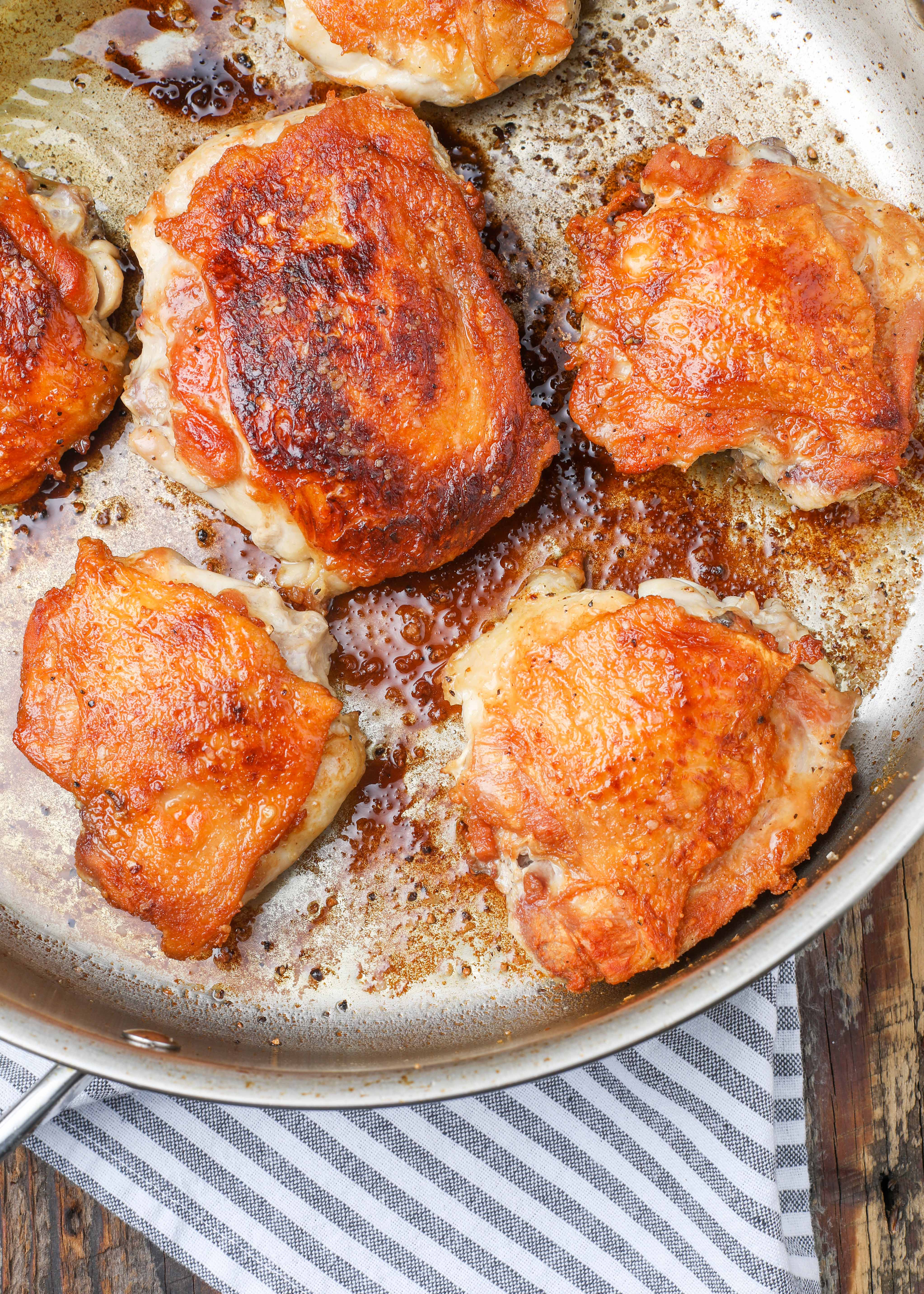
Credit: barefeetinthekitchen.com
Safety And Food Handling
Handling raw chicken is risky if you don’t follow safety rules. Here are key points:
- Wash hands and utensils after touching raw chicken. Use separate cutting boards for meat and vegetables.
- Do not wash raw chicken: This spreads bacteria. Cooking kills bacteria, washing does not.
- Store leftovers quickly: Refrigerate within 2 hours. If left out longer, bacteria can grow.
- Cook to 165°F: Avoid foodborne illness.
According to the USDA, chicken is one of the most common sources of food poisoning. Always check the internal temperature. Keep raw chicken away from ready-to-eat foods.
Nutritional Facts And Health Considerations
Chicken thighs are rich in protein but higher in fat than breasts. Here’s a quick data table:
| Type | Calories (per 100g) | Protein | Fat |
|---|---|---|---|
| Skinless, Boneless | 175 | 21g | 9g |
| Skin-On, Bone-In | 220 | 19g | 14g |
Fried chicken thighs are tasty but not the healthiest option if you eat them often. For a lighter meal, remove the skin and use less oil. If you’re watching calories, measure the oil before cooking and blot excess oil after frying.

Credit: www.wholesomeyum.com
Variations And Flavor Ideas
Frying chicken thighs can be simple or creative. Here are some flavor ideas:
- Classic Southern: Use buttermilk marinade and seasoned flour. The buttermilk tenderizes the meat and adds tang.
- Asian-inspired: Marinate in soy sauce, ginger, and garlic. Sprinkle sesame seeds after frying for extra flavor.
- Spicy: Add cayenne pepper or hot sauce to the seasoning. Serve with cooling dips like ranch or yogurt.
- Herbs: Mix rosemary, thyme, and oregano for earthy flavors. Fresh herbs added after frying boost aroma.
Another insight: Mixing cornstarch with flour for breading gives extra crunch. This is a pro tip many beginners overlook. You can also add a pinch of baking powder to the breading for even crispier skin.
How To Store And Reheat Fried Chicken Thighs
If you have leftovers, store and reheat them properly:
- Cool completely before refrigerating. Hot food steams in containers and makes the skin soggy.
- Store in airtight containers. This keeps the chicken fresh and prevents odors.
- Eat within 3–4 days. Longer storage risks spoilage.
To reheat:
- Oven: Heat at 375°F for 10–15 minutes; skin stays crispy. Place chicken on a rack for best results.
- Microwave: Quick, but skin gets soggy. Use for convenience, not for best texture.
- Air fryer: Best for crispy leftovers. Heat at 350°F for 6–8 minutes.
Avoid reheating in a pan; this can dry out the meat. Let reheated chicken rest a few minutes before eating.
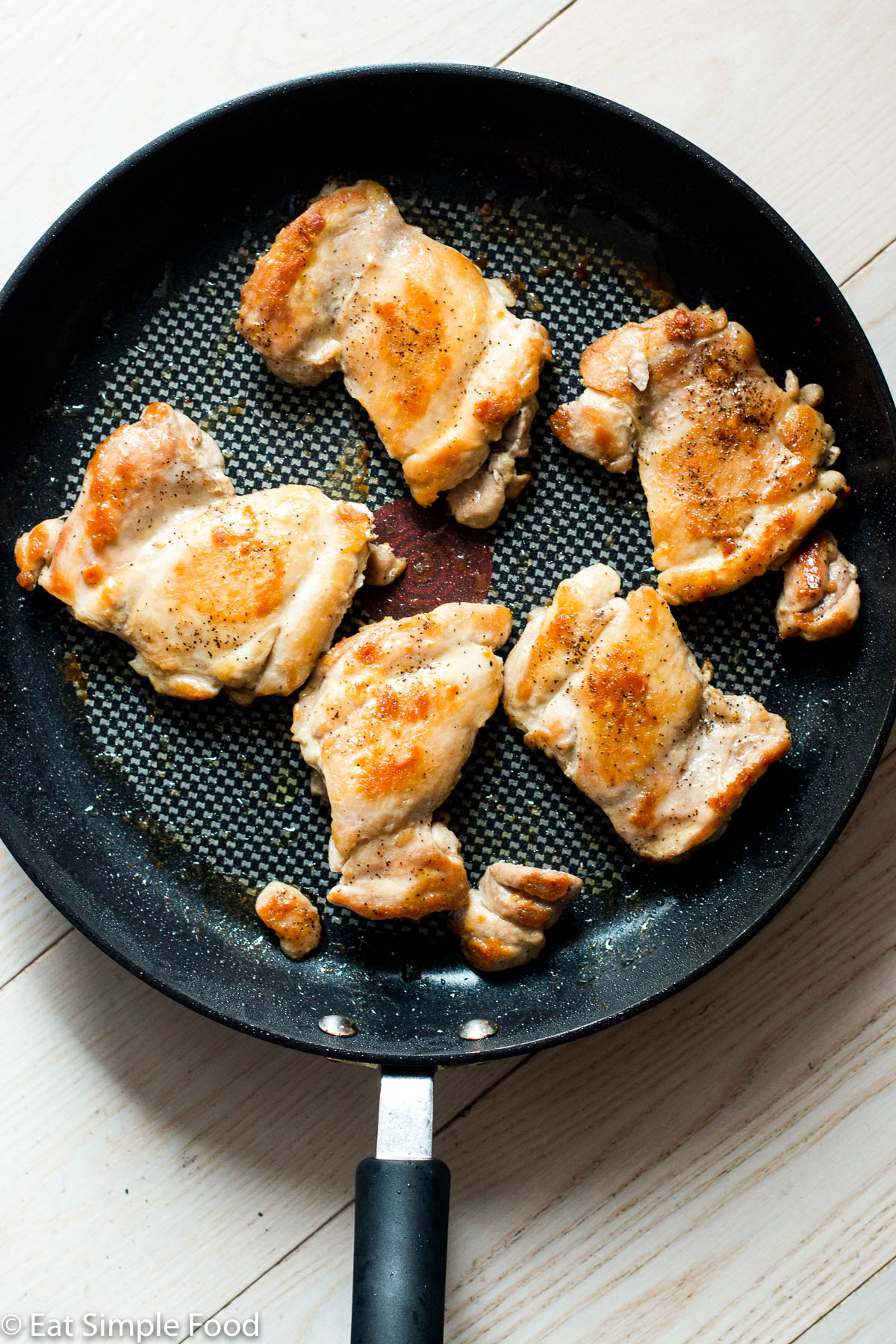
Credit: eatsimplefood.com
Frequently Asked Questions
How Can I Tell If Chicken Thighs Are Fully Cooked Without A Thermometer?
Check the juices by piercing the thickest part. If the juices are clear (not pink), the chicken is usually done. Also, the meat will be white and firm, not pink and soft. If unsure, cook for another 2–3 minutes and check again.
Can I Fry Frozen Chicken Thighs In A Pan?
It is not safe to fry frozen chicken thighs. They cook unevenly, and the inside can stay raw. Always thaw chicken fully in the fridge before frying. Never thaw on the counter, as this can lead to bacteria growth.
What’s The Best Oil For Frying Chicken Thighs?
Use oils with high smoke points, like canola, peanut, or sunflower oil. Avoid butter and olive oil, as they burn at high heat. If you want more flavor, add a small amount of sesame oil near the end.
Is Frying Chicken Thighs Healthier Than Baking?
Frying adds more fat and calories. Baking is healthier because you use less oil. However, frying gives better crispiness and flavor. If you want crispiness with less oil, try oven-frying with a wire rack.
Can I Reuse Oil After Frying Chicken Thighs?
You can reuse oil once or twice if you strain it and store it properly. However, reused oil can taste old and is less healthy. For best flavor and safety, use fresh oil. Never reuse oil if it smells bad or looks cloudy.
Frying chicken thighs in a pan is simple once you know the right timing and technique. With these tips, clear instructions, and safety advice, you’ll get juicy, crispy chicken every time. For more detailed food safety info, check out the USDA Food Safety Guidelines. Enjoy your meal with confidence, knowing you’ve mastered the art of frying chicken thighs.

Hello, This is Annie Walker, a 38-year-old blogger, founder, and editor of Cookware Guider from NY, USA. I am a cookware fanatic and passionate cooker. I love to cook with different types of cooking appliances (example: all types of cookware, rice cookers, slow cookers, etc) almost every day in my kitchen. I love to share my experience with my readers in my blog. Also, I enjoy helping people to solve their problems through my website. You can follow me on Twitter & Pinterest. To know details about my blog please check the about us page.