
Cooking pork chops in a pan seems simple, but many home cooks struggle to get them just right—juicy inside, golden outside, and never dry. The secret is knowing exactly how long to pan fry pork chops based on their thickness, cut, and whether they are bone-in or boneless. This guide gives you everything you need: precise times, temperature tips, and troubleshooting advice so you can achieve perfect pork chops every time.
Why Pan Frying Pork Chops Is So Popular
Pan frying is a classic method for pork chops because it creates a delicious crust and lets you control doneness closely. Unlike baking or grilling, pan frying gives quick results and works well in any home kitchen. The method allows for easy flavor variations—think garlic butter, fresh herbs, or a quick pan sauce right after cooking.
But why do so many people end up with tough, dry pork chops? Usually, it’s because they guess the cooking time, use heat that’s too high, or don’t let the meat rest. Understanding the ideal cooking times and methods will help you avoid these common mistakes.
Factors That Affect Pan Frying Time
Getting the right pan frying time for pork chops depends on more than just the recipe. Here are the main factors:
- Thickness of the pork chop: Thicker chops need more time.
- Bone-in or boneless: Bone-in chops cook a little slower.
- Starting temperature: Cold chops from the fridge need longer.
- Pan material and heat level: Cast iron holds heat differently than stainless steel.
- Desired doneness: USDA recommends at least 145°F (63°C) internal temperature.
Let’s look at each factor in more detail.
Thickness
Most standard pork chops are between ½ inch and 1½ inches thick. The thicker the chop, the longer it takes to cook through. A thin chop can overcook in seconds, while a thick one needs gentle heat to avoid burning the outside.
Bone-in Vs. Boneless
Bone-in pork chops hold heat differently because the bone acts as a heat barrier. They often stay juicier but need a little more time. Boneless chops cook faster but can dry out if overcooked.
Starting Temperature
If you take pork chops straight from the fridge, they’ll need about a minute extra per side. Letting them rest at room temperature for 15–20 minutes before cooking ensures even cooking.
Pan And Heat
A cast iron skillet gives the best crust but requires medium heat. Stainless steel pans also work but may need more oil. Nonstick pans can brown less, but are more forgiving for beginners. Overly high heat leads to burnt outsides and raw centers.
Doneness
The safe minimum for pork is 145°F with a 3-minute rest, according to the USDA. Some people like pork slightly pink inside, but never undercooked.
How Long To Pan Fry Pork Chops: The Basics
Here’s a quick reference for average pan frying times. Actual times depend on your stove, chop thickness, and pan type, but these are reliable starting points.
| Pork Chop Type | Thickness | Pan Frying Time (per side) | Total Cooking Time |
|---|---|---|---|
| Boneless | 1/2 inch (1.3 cm) | 2–3 min | 4–6 min |
| Boneless | 1 inch (2.5 cm) | 4–5 min | 8–10 min |
| Bone-in | 1/2 inch (1.3 cm) | 3–4 min | 6–8 min |
| Bone-in | 1 inch (2.5 cm) | 5–6 min | 10–12 min |
Tip: Always check the thickest part with a meat thermometer. Go for at least 145°F (63°C).
Step-by-step: Pan Frying Pork Chops For Perfect Results
Here’s how to pan fry pork chops so they turn out juicy and flavorful every time.
1. Choose The Right Pork Chops
Look for pork chops that are at least 1 inch thick for the juiciest results. Thinner chops cook faster but dry out easily. Marbled meat (a little fat in the muscle) adds flavor.
2. Bring Chops To Room Temperature
Let your pork chops sit on the counter for about 15–20 minutes. This helps them cook evenly.
3. Pat Dry And Season
Use paper towels to remove surface moisture. Dry meat browns better. Season both sides with salt, pepper, and any other spices you like.
4. Heat The Pan
Place a heavy skillet (cast iron is best) over medium-high heat. Add 1–2 tablespoons of oil (canola, vegetable, or olive oil). The pan should be hot but not smoking.
5. Pan Fry
Lay the pork chops in the pan, leaving space between them. Don’t crowd the pan. Sear without moving for the recommended time (see table above). Flip once when a golden crust forms.
6. Check Doneness
Insert a meat thermometer into the thickest part. If you don’t have one, cut a small slit—the juices should run clear, with a blush of pink inside.
7. Rest
Remove the chops from the pan and let them rest on a plate, loosely covered with foil, for at least 3 minutes. This keeps them juicy.
8. Optional: Make A Pan Sauce
While the pork rests, you can make a quick sauce with the browned bits left in the pan. Add a splash of broth, wine, or water, scrape up the bits, and simmer for a minute. Stir in a pat of butter for a rich finish.
Pan Frying Time By Chop Type: In-depth
Each pork chop cut has its own ideal pan frying method. Let’s dig deeper.
Boneless Pork Chops
Boneless chops are lean and cook fast. For best results:
- ½ inch thick: 2–3 minutes per side on medium-high heat
- 1 inch thick: 4–5 minutes per side, lower the heat after browning to finish cooking
Because boneless chops dry out quickly, remove them from the pan as soon as they reach 145°F.
Bone-in Pork Chops
These chops stay juicier and have more flavor. They need a little more time:
- ½ inch thick: 3–4 minutes per side
- 1 inch thick: 5–6 minutes per side
With thick bone-in chops (over 1 inch), you may need to finish them in the oven at 350°F for 5–7 minutes.
Thick-cut Or Double-cut Pork Chops
For chops thicker than 1½ inches, pan frying alone may burn the outside before the inside is cooked.
Try the sear and finish method:
- Sear each side for 3–4 minutes.
- Place the pan in a 350°F oven for 8–12 minutes, until the center reaches 145°F.
This method gives the best of both worlds: a golden crust and a juicy inside.
Thin Pork Chops
Thin pork chops (¼–⅓ inch) cook in just 1–2 minutes per side. Watch them closely—one extra minute can make them tough.
Comparing Pan Frying To Other Cooking Methods
How does pan frying stack up against baking, grilling, or broiling? Here’s a quick look.
| Cooking Method | Typical Time | Texture/Flavor | Best For |
|---|---|---|---|
| Pan Frying | 4–12 min | Golden crust, juicy inside | Quick meals, flavor control |
| Baking | 15–30 min | Even, gentle cooking | Very thick or stuffed chops |
| Grilling | 6–14 min | Smoky, charred | Summer meals, bone-in chops |
| Broiling | 5–12 min | Crisp top, moist inside | Boneless or thin chops |
Pan frying stands out for speed and the tasty crust it creates. For thick chops, finishing in the oven gives the best result.
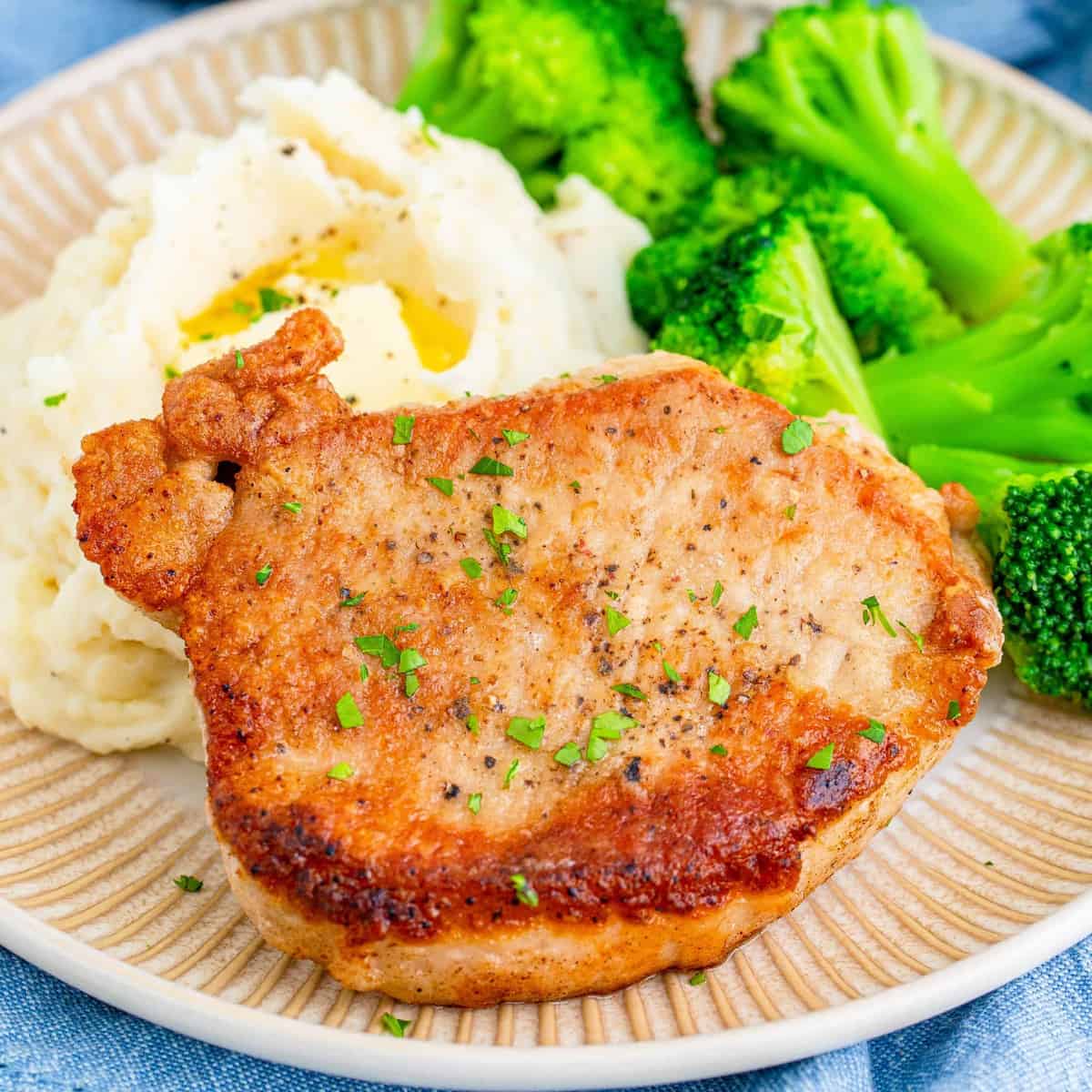
Credit: www.thecountrycook.net
Common Mistakes When Pan Frying Pork Chops
Even experienced cooks sometimes get pork chops wrong. Here are common mistakes and how to avoid them:
- Skipping the rest: Cutting into chops right away lets juices run out. Always rest 3–5 minutes.
- Cooking straight from the fridge: Cold chops cook unevenly. Let them warm up for 15–20 minutes.
- Using high heat: Super high heat burns the outside before the inside is done. Stick to medium-high, then reduce if needed.
- Overcooking: Pork is safe at 145°F. Overcooking guarantees dryness.
- No thermometer: Guessing leads to mistakes. A thermometer is a small investment that makes a big difference.
How To Tell When Pork Chops Are Done Without A Thermometer
If you don’t own a meat thermometer, you can still get good results with a few old-school tricks:
- Touch test: Press the center of the chop with your finger or tongs. It should feel firm but springy, not hard.
- Juice color: Pierce with a knife. The juices should be clear with a hint of pink.
- Cut and peek: Cut into the thickest part. A little pink is okay; raw-looking meat is not.
Remember, pork is not like chicken—it’s safe with a slight blush at 145°F.
How To Keep Pork Chops Juicy When Pan Frying
Dry pork chops are a big disappointment. Here’s how to keep them juicy:
- Don’t overcook: Remove from pan at 145°F.
- Rest after cooking: Juices reabsorb while resting.
- Brine if possible: Soaking chops in saltwater for 30 minutes before cooking boosts moisture.
- Use a little fat: Oil or butter helps prevent sticking and adds flavor.
- Don’t press down: Pressing with a spatula squeezes out juices.
A non-obvious tip: Pork chops with a little fat cap (the strip of white fat on the edge) stay juicier than completely trimmed ones.
Flavor Variations And Simple Pan Sauces
Pan frying lets you create easy, flavorful variations. Try these combinations:
- Classic: Salt, pepper, garlic powder
- Herb: Rosemary and thyme in the last minute of cooking
- Spicy: Paprika and a pinch of cayenne
- Sweet-savory: Brown sugar and mustard glaze added in the final minute
For a simple pan sauce:
- Remove pork chops from the pan.
- Add ¼ cup chicken broth or white wine.
- Scrape up browned bits with a wooden spoon.
- Simmer 1–2 minutes.
- Swirl in a tablespoon of butter.
Pour over your pork chops for extra flavor.
Troubleshooting: What If Pork Chops Are Still Pink?
Pork is safe at 145°F, which often leaves a blush of pink in the center. If you’re worried:
- Check the temperature with a thermometer.
- If below 145°F, return to the pan for 1 more minute per side.
- If juices run clear and the surface is firm, you’re safe.
The days of dry, gray pork are over. Modern pork is leaner, so a little pink is both safe and delicious.
Tips For Batch Cooking Or Large Groups
Cooking for several people? Here’s how to keep pork chops perfect:
- Work in batches: Overcrowding the pan lowers the temperature and prevents browning.
- Keep warm in oven: Place cooked chops on a tray in a 200°F oven while you finish the rest.
- Pre-season: Season all chops before starting to cook for efficiency.
- Rest all at once: Let all chops rest together for even juiciness.
Nutritional Information: Pan Fried Pork Chops
For a standard 4-ounce (113g) boneless pork chop, pan fried with a teaspoon of oil:
- Calories: ~210
- Protein: 29g
- Fat: 9g
- Carbs: 0g
Adding breading, sauce, or extra butter will increase calories. Pork is a good source of protein, B vitamins, and minerals like zinc and iron.
Sourcing The Best Pork Chops
Better pork makes a big difference. Here’s what to look for:
- Pinkish-red color: Pale pork is often less flavorful.
- Marbling: Small streaks of white fat mean more juiciness.
- Bone-in for flavor: Bone helps keep the meat moist.
- Freshness: Buy from a trusted butcher when possible.
Organic or heritage pork may cost more but often delivers richer taste and texture.
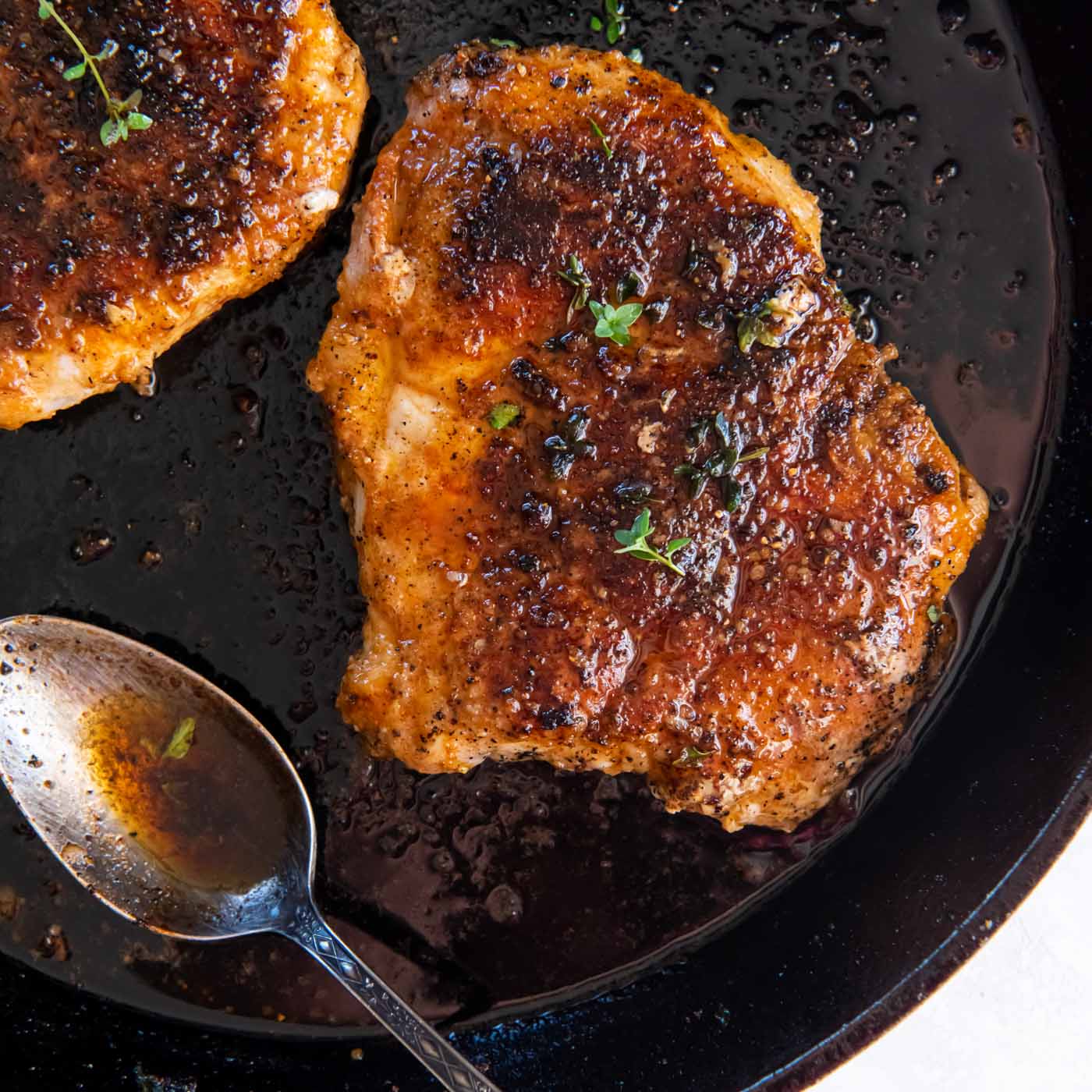
Credit: kristineskitchenblog.com
Safety And Storage Tips
- Refrigerate leftovers within 2 hours.
- Store cooked pork in an airtight container for up to 3 days.
- Reheat gently in a skillet with a splash of water or broth—never microwave on high, which makes pork rubbery.
For more on pork safety, you can visit the USDA Food Safety and Inspection Service.
Frequently Asked Questions
How Do I Keep Pork Chops From Sticking To The Pan?
Make sure your pan is hot and well-oiled before adding the chops. Let them sear undisturbed until a crust forms; they’ll naturally release when ready to flip. Using a cast iron or well-seasoned pan also helps.
Can I Pan Fry Frozen Pork Chops?
It’s best to thaw pork chops first for even cooking. If you must cook from frozen, use lower heat and cook longer, covering the pan for part of the time. The texture and browning may not be as good.
What Oil Is Best For Pan Frying Pork Chops?
Neutral oils with a high smoke point, like canola, vegetable, or light olive oil, are ideal. For extra flavor, add a small amount of butter in the last minute of cooking.
Should I Cover Pork Chops While Pan Frying?
Usually, no. Covering traps steam and softens the crust. For thick chops, you can cover briefly after searing to help the inside cook through, but uncover to finish so the crust stays crisp.
How Do I Reheat Pan Fried Pork Chops Without Drying Them Out?
Reheat gently in a skillet with a little broth or water over low heat, covered, for a few minutes. Avoid microwaving at full power, which can make pork tough.
Pan frying pork chops is a simple skill with big rewards—if you pay attention to thickness, time, and temperature. With these tips and a little practice, you’ll enjoy juicy, flavorful pork chops every time.

Credit: www.spendwithpennies.com

Hello, This is Annie Walker, a 38-year-old blogger, founder, and editor of Cookware Guider from NY, USA. I am a cookware fanatic and passionate cooker. I love to cook with different types of cooking appliances (example: all types of cookware, rice cookers, slow cookers, etc) almost every day in my kitchen. I love to share my experience with my readers in my blog. Also, I enjoy helping people to solve their problems through my website. You can follow me on Twitter & Pinterest. To know details about my blog please check the about us page.