
If you’ve invested in Greenpan cookware, you want to make sure it lasts as long as possible and keeps performing at its best. But how do you take care of these special pans without damaging their non-stick surface?
You might be wondering what cleaning methods work best, or how to avoid common mistakes that could shorten your cookware’s life. You’ll discover simple, effective tips to keep your Greenpan looking new and cooking like a dream. Keep reading to unlock the secrets to caring for your Greenpan cookware the right way.
Choosing Greenpan Cookware
Choosing Greenpan cookware is important for anyone wanting safe, durable, and easy-to-use kitchen tools. Greenpan offers a wide range of options designed to fit different cooking styles and needs. Picking the right type helps you cook better and take care of your cookware easily. Understanding the varieties and benefits of Greenpan products makes your kitchen work smooth and enjoyable.
Types Of Greenpan Cookware
Greenpan cookware comes in many styles to suit different cooking tasks. Each type has unique features that help with specific meals and techniques.
- Frying Pans: Great for frying, sautéing, and searing. They have a wide, flat surface and low sides.
- Saucepans: Perfect for boiling, simmering, and making sauces. They come with tall sides and a lid.
- Stockpots: Designed for soups, stews, and large meals. These pots have a big capacity and sturdy handles.
- Griddles and Grill Pans: Ideal for grilling meat or vegetables indoors. They add grill marks and flavor.
- Woks: Used for stir-frying and quick cooking. Their rounded shape allows fast, even heat.
Choosing the right cookware depends on your cooking style and the meals you make often. A small kitchen may benefit from versatile pieces like frying pans and saucepans. For larger families, stockpots and multiple sizes help cook bigger meals.
| Cookware Type | Main Use | Common Sizes |
|---|---|---|
| Frying Pan | Frying, Sautéing | 8, 10, 12 inches |
| Saucepan | Boiling, Simmering | 1 to 4 quarts |
| Stockpot | Soups, Stews | 6 to 12 quarts |
| Grill Pan | Grilling indoors | 10 to 12 inches |
| Wok | Stir-frying | 12 to 14 inches |
Benefits Of Ceramic Non-stick
Greenpan uses ceramic non-stick coating on all cookware. This coating has many benefits that improve cooking and cleaning.
- Healthy Cooking: Ceramic coating is free from harmful chemicals like PFAS and PFOA. It makes cooking safer for your family.
- Easy to Clean: Food does not stick, so cleaning takes less time. Usually, a soft cloth or sponge is enough.
- Better Heat Distribution: Ceramic spreads heat evenly. This helps food cook uniformly without hot spots.
- Durability: The ceramic surface resists scratches and damage better than traditional non-stick pans.
- Eco-Friendly: Ceramic coatings use natural materials and less energy to produce, reducing environmental impact.
Here is a quick comparison between ceramic and traditional non-stick coatings:
| Feature | Ceramic Non-Stick | Traditional Non-Stick |
|---|---|---|
| Health Safety | Free from toxic chemicals | May contain PFAS/PFOA |
| Cleaning | Easy, food slides off | Easy but less durable |
| Heat Distribution | Even heating | Good but uneven in some pans |
| Durability | Scratch resistant | Scratches easily |
| Eco Impact | More eco-friendly | Higher environmental cost |
Cleaning Tips
Cleaning Greenpan cookware properly keeps it in great shape for a long time. The right cleaning methods protect its non-stick surface and preserve its look. This section shares simple cleaning tips to help maintain Greenpan’s performance and beauty.
Hand Washing Techniques
Hand washing is the best way to clean Greenpan cookware. Avoid the dishwasher to protect the non-stick coating. Use warm water and a gentle dish soap to clean the pans.
- Fill the sink with warm water and a few drops of mild dish soap.
- Use a soft sponge or cloth to wash the surface. Avoid abrasive scrubbers.
- Clean inside and outside gently to remove food and grease.
- Rinse the cookware well under warm water to remove all soap.
- Dry immediately with a soft towel to prevent water spots.
Follow this simple routine after each use to keep the cookware clean without damage. Hand washing also helps you notice any spots that need more care.
Avoiding Harsh Cleaners
Harsh cleaners can ruin Greenpan cookware’s non-stick surface. Avoid bleach, oven cleaners, and strong chemical detergents. These can cause scratches and dull the finish.
Use only mild dish soap and water for cleaning. Here is a quick guide on what to avoid and what to use:
| Do Not Use | Safe Alternatives |
|---|---|
| Steel wool or metal scrubbers | Soft sponge or nylon scrubber |
| Bleach or chlorine-based cleaners | Mild dish soap |
| Abrasive powders or pastes | Baking soda paste (for stubborn stains) |
Cleaning gently protects the coating and keeps the cookware safe for cooking healthy meals.
Dealing With Stubborn Residue
Sometimes food sticks or burns on Greenpan cookware. Removing stubborn residue needs care to avoid damage.
Try these steps:
- Fill the pan with warm water and a little dish soap.
- Let it soak for 15 to 30 minutes to loosen residue.
- Use a soft sponge to gently scrub the stuck food.
- For tough spots, make a paste of baking soda and water.
- Apply the paste to the residue and let it sit for 10 minutes.
- Gently scrub the area with a soft sponge or cloth.
- Rinse well and dry immediately.
Never use sharp tools or metal scrubbers to scrape off residue. This can scratch the surface and reduce the non-stick quality.
Cooking Best Practices
Proper cooking techniques help maintain GreenPan cookware’s non-stick surface and durability. Following best practices protects the ceramic coating and keeps your pans working well for years. Simple habits during cooking make a big difference in performance and lifespan.
Using Suitable Utensils
GreenPan cookware has a delicate ceramic non-stick coating. Using the right utensils avoids scratches and damage. Choose utensils made from soft materials like:
- Wood
- Silicone
- Plastic (heat-resistant)
Avoid metal utensils such as forks, knives, or metal spatulas. These can scrape or chip the coating.
Here is a quick guide:
| Utensil Type | Safe for GreenPan | Notes |
|---|---|---|
| Wooden | Yes | Gentle on surface, durable |
| Silicone | Yes | Heat-resistant, flexible |
| Plastic (heat-resistant) | Yes | Good for light cooking |
| Metal | No | Can scratch and damage coating |
Use gentle stirring and flipping motions. Avoid scraping hard or scraping the pan’s bottom. Proper utensils keep the surface smooth and non-stick.
Heat Settings To Use
GreenPan cookware heats efficiently with less oil. Use medium or low heat for most cooking tasks. High heat can harm the ceramic coating and reduce its lifespan.
Follow these tips for heat settings:
- Preheat pans on low to medium heat
- Do not use maximum heat unless specified
- Use medium heat for frying, sautéing, and cooking eggs
- Lower heat for simmering sauces or delicate foods
Use this simple heat guide for common cooking tasks:
| Cooking Task | Recommended Heat |
|---|---|
| Frying | Medium |
| Sautéing | Medium |
| Boiling water | High (briefly) |
| Simmering | Low |
High heat can cause food to stick and damage the pan’s surface. GreenPan works best with controlled, moderate heat.
Preventing Warping
Warping changes your pan’s shape and reduces cooking performance. Avoid sudden temperature changes to prevent this.
Tips to prevent warping:
- Do not put a hot pan directly under cold water
- Allow the pan to cool before washing
- Heat the pan gradually instead of turning heat on high suddenly
- Use a stable burner that fits the pan size
Rapid cooling or heating causes metal to expand or contract quickly. This stresses the pan and causes warping.
Follow this care routine:
- After cooking, turn off heat and let the pan cool naturally
- Wash with warm, soapy water after cooling
- Dry the pan well before storing
Proper heating and cooling protect the pan’s base and keep it flat. This helps food cook evenly and extends pan life.
.png?v=1764108107108&options=w_870,h_700)
Credit: www.greenpan.us
Storage Recommendations
Proper storage is important for GreenPan cookware to keep it in good shape. Storing pans the right way helps avoid scratches and damage to the non-stick surface. This section shares simple tips to store GreenPan cookware safely and protect its coating.
Stacking Safely
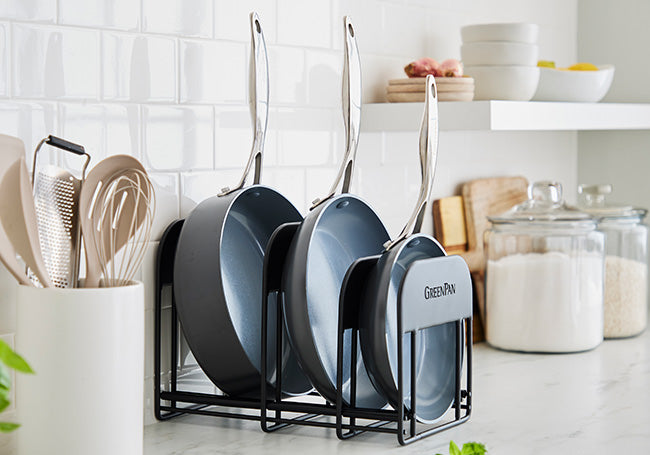
Stacking your GreenPan cookware saves space but can cause scratches if done carelessly. To stack safely, place a soft layer between each pan. This layer stops pans from rubbing against each other and damaging the surface.
- Use paper towels or cloth napkins as a cushion.
- Consider using felt pan protectors made for cookware.
- Stack heavier pans at the bottom and lighter ones on top.
Follow this simple order to avoid warping and dents:
- Place the largest pan first.
- Put a soft layer on top.
- Add the next pan carefully.
- Repeat with soft layers between all pans.
| Do | Don’t |
|---|---|
| Use soft liners between pans | Stack pans directly without protection |
| Store pans in a dry place | Leave pans wet or damp when stacking |
| Keep lids separate or stacked with liners | Place heavy items on top of pans |
Good stacking habits extend the life of your GreenPan cookware. Avoid rushing or forcing pans together. Gentle handling keeps the cookware looking new and working well.
Protecting The Non-stick Surface
The non-stick coating on GreenPan cookware needs special care. Scratches or chips reduce its effectiveness and lifespan. Protect the surface by following these tips:
- Always clean pans with soft sponges or cloths.
- Avoid metal utensils that can scratch the coating.
- Store pans with the cooking surface facing up or separated by liners.
- Do not stack pans without protection on the cooking surface.
Use these simple habits to keep the coating safe during storage:
- Place a paper towel or pan protector inside the pan before stacking.
- Store lids separately or upside down with a soft cloth between.
- Keep pans in a cool, dry cupboard away from moisture and heat.
Remember, a well-protected non-stick surface makes cooking easier and cleaning faster. Treat your GreenPan cookware gently to keep it non-stick for years.
Maintaining Performance
Maintaining the performance of Greenpan cookware ensures it stays non-stick and durable. Proper care keeps cooking smooth and extends the life of your pans. Simple steps help preserve the special ceramic coating. Regular attention prevents damage and maintains heat distribution. Following easy routines protects your investment and enhances cooking results.
Reconditioning The Surface
Reconditioning Greenpan’s ceramic surface helps restore its non-stick power. Over time, food particles or oils may build up and reduce performance. Gentle cleaning and occasional reconditioning keep the surface smooth and effective.
- Use warm water and mild dish soap. Avoid harsh detergents that can wear the coating.
- Soft sponges work best. Avoid steel wool or abrasive pads that scratch the surface.
- Apply a light coating of cooking oil. Rub a small amount on the surface with a paper towel after cleaning.
- Heat the pan gently. Warm it on low heat for a few minutes to help the oil seal the surface.
Reconditioning keeps the ceramic coating smooth and prevents food from sticking. This process also protects the pan from drying out or cracking. For best results, recondition your cookware every few weeks depending on use.
| Step | Action | Purpose |
|---|---|---|
| 1 | Clean with mild soap and warm water | Remove residue without damaging surface |
| 2 | Dry completely | Prevent water spots and prepare for oil |
| 3 | Rub a thin layer of cooking oil | Restore smoothness and non-stick property |
| 4 | Warm gently on low heat | Seal oil into ceramic coating |
Regular Inspection For Damage
Checking your Greenpan cookware regularly helps catch damage early. Small chips or scratches reduce the pan’s cooking quality. Detecting issues before they grow keeps your pans safe and effective.
- Look for cracks or chips. These can lead to coating peeling or uneven heating.
- Check the handle attachment. Ensure handles are tight and free from wobbling.
- Inspect the base. Warping can cause uneven heat and poor cooking results.
- Test for stickiness. Food should slide off easily; sticky spots show wear.
Maintain a simple checklist to inspect your cookware after every few uses:
- Examine the cooking surface for scratches.
- Feel the handle for looseness.
- Check the base on a flat surface for warping.
- Observe cooking performance for sticking or uneven heating.
Early detection prevents bigger problems and helps you decide when to replace or repair your Greenpan. Always handle with care to avoid accidental damage.
Credit: www.greenpan.us
.jpeg?v=1761941819946&options=w_870,h_700)
Credit: www.greenpan.us
Frequently Asked Questions
How Do I Clean Greenpan Cookware Properly?
To clean Greenpan cookware, use warm soapy water and a soft sponge. Avoid abrasive cleaners or steel wool to protect the coating. Hand wash is recommended to maintain non-stick performance and extend cookware life.
Can I Use Metal Utensils With Greenpan Cookware?
It’s best to avoid metal utensils with Greenpan cookware. Use wooden, silicone, or plastic utensils to prevent scratching the non-stick surface. This helps maintain cookware durability and cooking efficiency.
Is Greenpan Safe For Dishwasher Cleaning?
Greenpan cookware is dishwasher safe but hand washing is preferred. Dishwashers may cause faster wear of the non-stick coating. Hand washing preserves appearance and extends cookware lifespan.
How Do I Prevent Food From Sticking To Greenpan Cookware?
Preheat your Greenpan cookware on low to medium heat before cooking. Use a small amount of oil or butter to enhance non-stick performance. Avoid overheating to keep food from sticking.
Conclusion
Caring for Greenpan cookware keeps it working well for years. Clean with warm, soapy water after each use. Avoid metal tools to protect the non-stick surface. Store pieces carefully to stop scratches and dents. Use low to medium heat for best cooking results.
Follow these simple steps to enjoy healthy and easy cooking. Greenpan cookware stays strong and safe with regular care. Cook happily and keep your kitchen tools in great shape.

Hello, This is Annie Walker, a 38-year-old blogger, founder, and editor of Cookware Guider from NY, USA. I am a cookware fanatic and passionate cooker. I love to cook with different types of cooking appliances (example: all types of cookware, rice cookers, slow cookers, etc) almost every day in my kitchen. I love to share my experience with my readers in my blog. Also, I enjoy helping people to solve their problems through my website. You can follow me on Twitter & Pinterest. To know details about my blog please check the about us page.