
Glass cooktops are beautiful and modern, but they can quickly lose their shine if not cared for properly. Many people struggle with streaks, burnt-on food, and cloudy spots. Using harsh cleaners is risky—they can scratch the surface or leave residues. Thankfully, vinegar is a safe, effective, and affordable cleaning solution. If you want a cooktop that looks new every day, this guide will show you exactly how to clean your glass cooktop with vinegar, avoid common mistakes, and keep it sparkling for years.
Why Choose Vinegar For Glass Cooktop Cleaning?
Vinegar is one of the best natural cleaners for glass cooktops. It’s non-abrasive, so it won’t scratch the glass. It’s also acidic, which helps cut through grease, mineral deposits, and burnt food. Unlike many commercial cleaners, vinegar doesn’t leave a film on your cooktop. It’s also safe for the environment and your health.
Many professional cleaners use vinegar as a base for glass surface cleaning. According to the Environmental Protection Agency (EPA), vinegar is among the safest household cleaning agents for surfaces like glass, metal, and ceramic. It’s cheap—a bottle costs less than $3—and it’s easy to find in any grocery store.
Understanding The Problem: Common Glass Cooktop Issues
Before you start cleaning, it helps to know what you’re dealing with. Glass cooktops face some unique problems:
- Streaks and Smudges – These appear after cooking, especially with oily foods.
- Burnt-on Residue – Spills that aren’t cleaned right away can harden and stick to the glass.
- Mineral Deposits – Hard water leaves cloudy spots and rings.
- Scratches – Using rough pads or harsh chemicals can damage the surface.
A big mistake is using steel wool or abrasive powders. These can leave permanent marks. Another is using ammonia-based cleaners, which can create a dull film. Vinegar solves most of these problems without risk.
What You’ll Need: The Essential Supplies
Cleaning with vinegar is simple, but having the right tools will make the job easier and safer. Here’s what you need:
- White vinegar (distilled)
- Spray bottle
- Soft microfiber cloths or paper towels
- Plastic scraper (for tough spots)
- Baking soda (optional, for stubborn stains)
- Warm water
- Small bowl
- Rubber gloves (optional)
- Dry towel (for finishing)
Using a microfiber cloth is critical. Unlike cotton rags, microfiber lifts dirt and absorbs moisture without scratching the glass. A plastic scraper can help remove burnt-on bits, but never use metal.
Preparing Your Cooktop For Cleaning
Safety first: Make sure the cooktop is cool before you start. Cleaning a hot surface can cause burns and make streaks worse. Remove any loose debris, crumbs, or food with a dry cloth.
If there are large spills or sticky spots, gently wipe them away. Don’t use force. If something is stuck, wait until the vinegar step—soaking will loosen it.
Step-by-step: Cleaning Glass Cooktop With Vinegar
The best results come from a careful process. Here’s how to clean your glass cooktop using vinegar:
Step 1: Spray Vinegar
Fill your spray bottle with white vinegar. Spray a generous amount over the entire glass surface. The vinegar should cover all spots, especially where you see stains or streaks.
Let the vinegar sit for 5–10 minutes. This allows it to break down grease and soften tough residue.
Step 2: Wipe With Microfiber Cloth
Take a microfiber cloth or paper towel and gently wipe the cooktop. Work in circles to lift dirt and oil. If you notice streaks, wipe again with a clean section of the cloth.
For most daily messes, this step is enough. Vinegar lifts and removes most stains without scrubbing.
Step 3: Treat Stubborn Stains
If you see burnt-on food or tough spots, sprinkle a little baking soda directly on the stain. Then spray vinegar over the baking soda. It will fizz—the reaction helps loosen the grime.
Let it sit for 10 minutes. Use a plastic scraper to gently remove the softened residue. Be careful not to press too hard.
Step 4: Rinse And Dry
Wipe the cooktop with a cloth dampened in warm water. This removes any leftover vinegar or baking soda. Finish by drying with a clean towel. Drying is important—it prevents streaks and mineral spots.
Step 5: Polish For Extra Shine
If you want a mirror-like finish, spray a light mist of vinegar again and buff with a dry microfiber cloth. This makes your cooktop look brand new.
Comparing Vinegar To Other Cleaning Methods
Many people wonder how vinegar stacks up against commercial cleaners or other DIY methods. Here’s a quick comparison:
| Cleaning Method | Effectiveness | Safety for Glass | Cost | Residue Risk |
|---|---|---|---|---|
| Vinegar | High | Safe | Low | None |
| Baking Soda & Vinegar | Very High | Safe | Low | None |
| Commercial Cleaner | Medium–High | Depends on brand | Medium–High | Possible |
| Ammonia-based Cleaner | Medium | Risky | Medium | High |
| Steel Wool | High (for tough stains) | Unsafe | Low | None |
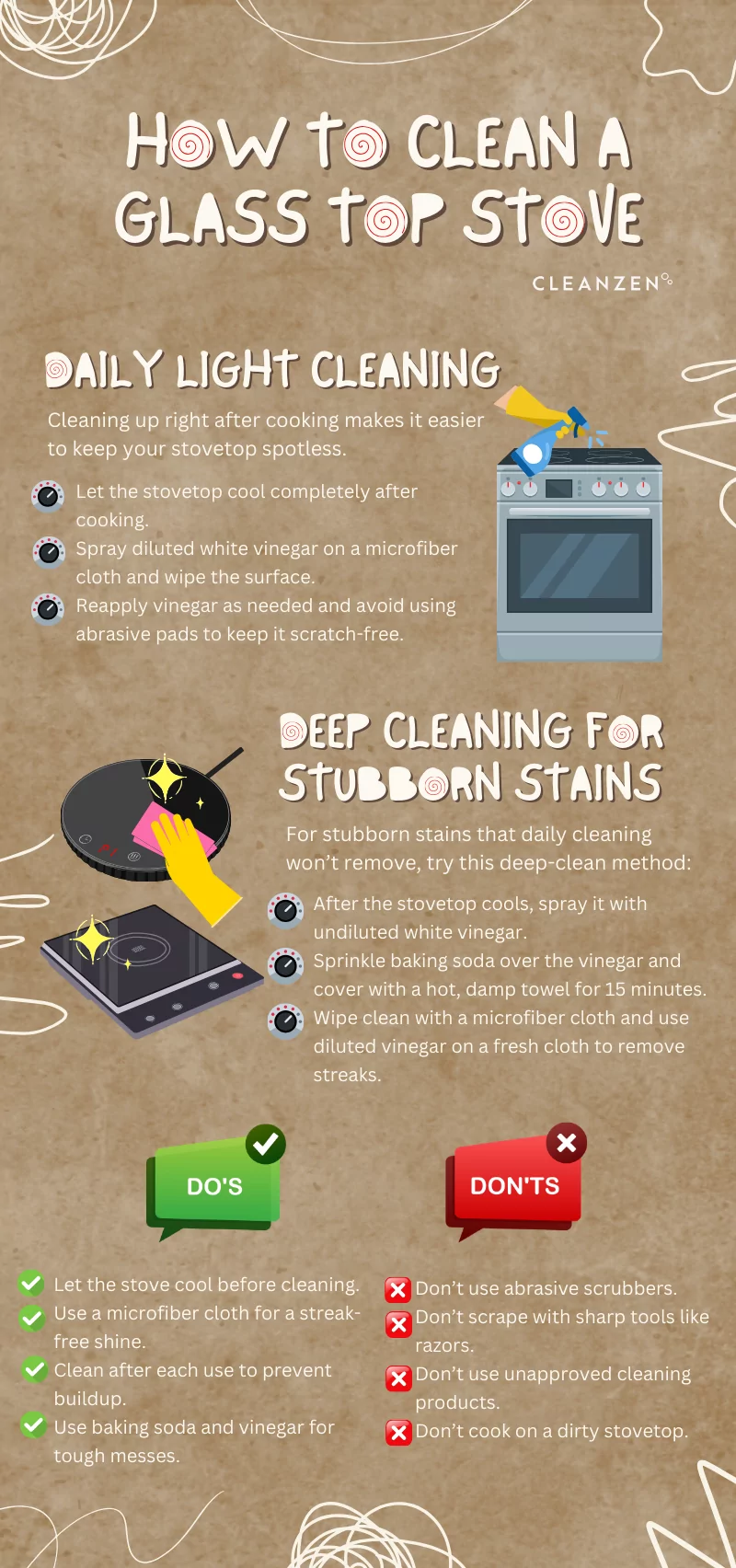
As you can see, vinegar is both effective and safe. Commercial cleaners may work, but they’re often expensive and can leave residues or dull the glass.
Credit: cleanzen.com
How Often Should You Clean Your Glass Cooktop?
Regular cleaning is the secret to a spotless cooktop. For most homes, wiping down the glass daily is enough. If you cook a lot, especially with oil or sauces, clean after every meal.
Deep cleaning (with baking soda and vinegar) is needed about once a week, or whenever you see burnt-on stains. Regular maintenance prevents tough build-up and keeps your cooktop looking new.
Practical Tips For Better Results
Some simple habits can make cleaning easier and more effective:
- Clean spills quickly – The longer food sits, the harder it is to remove.
- Use vinegar regularly – This prevents mineral deposits and greasy buildup.
- Avoid abrasive pads – Only use soft cloths and plastic tools.
- Dry after cleaning – This prevents water spots and streaks.
- Check for scratches – If you see scratches, avoid scrubbing and use only gentle cleaners.
Many people miss the importance of drying. Even if the cooktop looks clean, water spots can appear later. Always finish by drying with a towel.
Mistakes To Avoid When Cleaning Glass Cooktops
Even experienced cooks make mistakes. Here are some to watch for:
- Using too much pressure – Pressing hard can scratch the glass.
- Skipping the rinse – Not rinsing leaves vinegar or baking soda behind, which can cause streaks.
- Cleaning while hot – Hot surfaces can cause burns and streaks.
- Mixing cleaners – Never mix vinegar with bleach or other chemicals. This can be dangerous.
- Ignoring manufacturer’s advice – Some brands have special instructions. Check your manual.
A common beginner mistake is using metal scrapers. Always use plastic to avoid damage.
The Science Behind Vinegar Cleaning
Vinegar is a weak acetic acid. Its acidity dissolves minerals (like calcium from hard water), cuts through grease, and helps break down burnt food. Unlike soap or detergent, vinegar doesn’t leave a film.
Studies show that vinegar removes 99% of bacteria from surfaces. For glass cooktops, this makes it both a cleaner and a sanitizer. It’s also safe for pets and children.
Credit: www.thekitchn.com
Using Vinegar For Other Kitchen Surfaces
Vinegar isn’t just for cooktops. You can use it to clean:
- Glass oven doors
- Microwave interiors
- Refrigerator shelves
- Sink fixtures
Just remember: never use vinegar on natural stone (like granite), as it can damage the finish.
When To Use Baking Soda With Vinegar
For very tough stains, baking soda is a helpful partner. Baking soda is a mild abrasive—it scrubs away stuck food without scratching the glass.
Here’s how to combine them:
- Sprinkle baking soda on the stain.
- Spray vinegar to make it fizz.
- Wait 10–15 minutes.
- Wipe or scrape gently with a plastic tool.
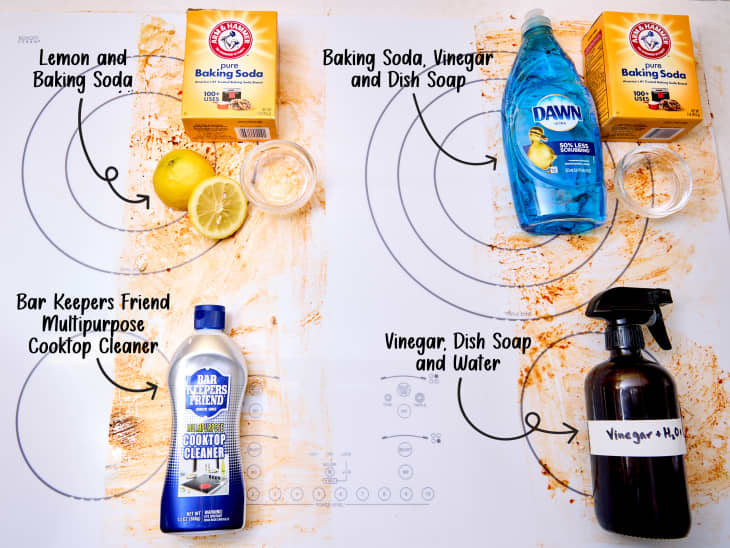
Some people try lemon juice, but vinegar is more effective for glass cooktops.
Cleaning Glass Cooktop Knobs And Edges
Don’t forget the knobs and edges. These collect grease and crumbs. Remove knobs (if possible) and soak them in vinegar and water. Scrub gently with a soft brush.
For edges, spray vinegar and wipe with a cloth. Never use sharp tools—they can chip the glass.
Comparing Vinegar To Store-bought Cooktop Cleaners
Many commercial cooktop cleaners promise great results. Here’s a direct comparison:
| Feature | Vinegar | Store-Bought Cleaner |
|---|---|---|
| Safety | Very safe | Varies |
| Cost | $2–$3 per bottle | $8–$15 per bottle |
| Residue | No residue | Possible residue |
| Ease of Use | Simple | Often easy, but may require rinsing |
| Environmental Impact | Low | Medium–High |
Vinegar is simple, cheap, and leaves no residue. Most store-bought cleaners are safe if used correctly, but always check the label.
Real-life Example: A Busy Family Kitchen
Sarah, a mom of three, cooks daily on her glass cooktop. She tried several cleaners but always saw streaks after cleaning. She switched to vinegar and noticed her cooktop stayed clear and shiny longer. Her secret: she sprays vinegar every night, wipes with a microfiber cloth, and dries with a towel. For tough stains, she uses baking soda and vinegar. Her cooktop is now free of burnt spots and cloudy rings.
How To Remove Hard Water Spots With Vinegar
Hard water can leave white rings or cloudy stains. Vinegar breaks down these mineral deposits. Here’s what to do:
- Spray vinegar on the spot.
- Let sit for 10 minutes.
- Wipe with a microfiber cloth.
- Repeat if needed.
If the spot is stubborn, use a small amount of baking soda.
Dealing With Burnt-on Food: Advanced Tips
Sometimes, burnt food seems impossible to remove. Don’t panic. Soak the area with vinegar and baking soda, wait longer (up to 30 minutes), then use a plastic scraper. Repeat if needed.
Never use knives or metal tools. If a stain won’t budge, try heating the cooktop slightly (not hot!) Before cleaning—warmth can help loosen residue.
Maintenance For Long-term Cooktop Health
Keeping your glass cooktop clean isn’t just about looks—it also prevents damage. Grease and burnt spots can cause hot spots that affect cooking. Mineral deposits can weaken the glass over time.
Follow these habits:
- Clean after every use.
- Deep clean weekly.
- Dry every time.
- Use vinegar for regular maintenance.
These steps extend your cooktop’s life and improve cooking performance.
Credit: www.reddit.com
Expert Insight: What Appliance Technicians Recommend
Many appliance technicians say simple cleaning is best. The most common repair call is for scratched or dulled glass, usually caused by rough pads or harsh chemicals. They recommend vinegar, microfiber cloths, and plastic scrapers. Some brands suggest their own cleaner—always check your manual.
A non-obvious tip: technicians suggest cleaning under the cooktop edges every month. Food and grease can collect here and cause odors.
When Vinegar Is Not Enough: Professional Solutions
If your cooktop has deep scratches or permanent stains, vinegar may not fix it. Professional repair may be needed. Appliance repair shops can polish glass and remove deep marks, but this is expensive.
Sometimes, replacing the glass is cheaper than repair. But with regular vinegar cleaning, most people never need professional help.
Quick Reference: Cleaning Steps At A Glance
For easy reference, here’s the cleaning routine:
- Wait until cooktop is cool.
- Spray white vinegar.
- Let sit 5–10 minutes.
- Wipe with microfiber cloth.
- For tough stains, use baking soda and vinegar.
- Scrape gently with plastic scraper.
- Rinse with warm water.
- Dry with towel.
- Buff with vinegar for shine.
Comparing Vinegar-based Cleaning To Diy Alternatives
Some people use lemon juice, dish soap, or rubbing alcohol. Here’s how they compare:
| Cleaner | Effectiveness | Safety | Residue Risk |
|---|---|---|---|
| Vinegar | Excellent | Very safe | No |
| Lemon juice | Good | Safe | Low |
| Dish soap | Medium | Safe | Yes |
| Rubbing alcohol | Medium | Safe | Low |
Vinegar is the clear winner for glass cooktops.
Environmental And Health Benefits Of Vinegar Cleaning
Using vinegar is good for your home and the planet. It’s non-toxic, so it won’t harm kids or pets. It’s biodegradable, and it doesn’t pollute water. Commercial cleaners often contain chemicals that can irritate skin or lungs.
The American Cleaning Institute recommends vinegar for allergy-friendly cleaning. It’s also safe for those with sensitive skin.
Where To Find More Information
If you want to learn more about safe home cleaning, visit the EPA Safer Choice Program. They offer tips and advice for cleaning products and healthy homes.
Frequently Asked Questions
How Often Should I Clean My Glass Cooktop With Vinegar?
For best results, clean your cooktop with vinegar daily after cooking. Deep clean with baking soda and vinegar once a week or when you see tough stains.
Can Vinegar Damage My Glass Cooktop?
No, vinegar is safe for glass cooktops. It’s non-abrasive and doesn’t scratch or dull the surface. Avoid using vinegar on natural stone surfaces.
What If My Cooktop Has Scratches?
If your cooktop is scratched, avoid scrubbing and only use soft cloths and gentle cleaners like vinegar. Deep scratches may need professional repair.
Is It Safe To Use Vinegar Around Kids And Pets?
Yes, vinegar is non-toxic and safe. It doesn’t leave harmful residues and is safe for homes with children and animals.
Can I Use Vinegar To Clean Other Kitchen Appliances?
Yes, vinegar is great for cleaning glass oven doors, microwaves, refrigerator shelves, and sink fixtures. Do not use it on natural stone.
Keeping your glass cooktop clean with vinegar is easy, safe, and affordable. With the right tools and habits, you can enjoy a spotless, shiny cooktop every day. Regular vinegar cleaning prevents stains, streaks, and damage—giving you a kitchen you’re proud of.

Hello, This is Annie Walker, a 38-year-old blogger, founder, and editor of Cookware Guider from NY, USA. I am a cookware fanatic and passionate cooker. I love to cook with different types of cooking appliances (example: all types of cookware, rice cookers, slow cookers, etc) almost every day in my kitchen. I love to share my experience with my readers in my blog. Also, I enjoy helping people to solve their problems through my website. You can follow me on Twitter & Pinterest. To know details about my blog please check the about us page.