
Keeping your Whirlpool cooktop clean is more than just about looks—it helps your kitchen stay safe and your appliance last longer. Many people worry about damaging their cooktop or using the wrong cleaner, but with the right approach, you can clean it easily and keep it shining.
This guide will walk you through every step, from daily care to tackling stubborn stains, so you can enjoy your Whirlpool cooktop for years. Whether you have a glass, ceramic, or stainless steel model, you’ll learn practical tips, common mistakes to avoid, and answers to questions most beginners ask.
Let’s make your cooktop look and perform its best.
Understanding Your Whirlpool Cooktop
Before cleaning, it’s important to know what type of cooktop you have. Whirlpool offers several styles, each with unique cleaning needs. The main types are glass-ceramic, stainless steel, and gas burner cooktops. If you’re unsure, check your user manual or the label on your appliance.
| Cooktop Type | Cleaning Challenge | Common Mistake |
|---|---|---|
| Glass-Ceramic | Scratches and water spots | Using abrasive scrubbers |
| Stainless Steel | Fingerprints and streaks | Cleaning against the grain |
| Gas Burner | Grease buildup | Not removing grates |
Glass-ceramic cooktops look sleek but can scratch easily. Stainless steel is tough but shows fingerprints and streaks. Gas burners have grates and parts that collect grease and food. Each needs a slightly different cleaning approach, so understanding your cooktop type is the first step.
Essential Tools And Cleaning Products
Cleaning a Whirlpool cooktop requires the right tools and products. Using the wrong cleaners can cause damage or leave residues. Here’s what you need:
- Soft microfiber cloths – for wiping and polishing
- Non-abrasive sponges – safe for all surfaces
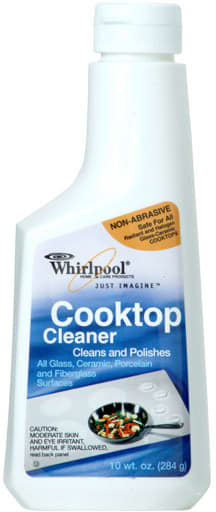
- Cooktop cleaner – designed for glass and ceramic
- Mild dish soap – for everyday cleaning
- Plastic scraper – removes stuck-on residue without scratching
- Old toothbrush – for tight spots on gas burners
- Paper towels – for drying and buffing
- White vinegar – helpful for mineral stains
Avoid steel wool, rough scouring pads, and harsh chemicals like bleach. These can scratch or dull the finish. For stainless steel, use a cleaner made for that surface to avoid streaks and damage.
Daily Cooktop Cleaning Routine
Regular cleaning is the best way to prevent tough stains and buildup. Most messes are easier to clean when fresh. Here’s a simple daily routine:
Step-by-step Daily Cleaning
- Turn off and cool: Always make sure the cooktop is off and cool before cleaning.
- Wipe loose debris: Use a dry microfiber cloth to remove crumbs and dust.
- Apply dish soap: Mix a few drops of mild dish soap with warm water.
- Clean with sponge: Dip a soft sponge in the soapy water and gently wipe the surface.
- Rinse and dry: Wipe with a damp cloth to remove soap, then dry with a paper towel.
For glass and ceramic cooktops, avoid using too much water. Water can seep into seams and cause issues. For gas burners, remove grates and knobs and clean them separately.
Deep Cleaning: Tackling Tough Stains And Residue
Sometimes spills are left to dry or food gets burnt onto the cooktop. Deep cleaning is needed to remove these tough spots. Here’s how to handle stubborn stains:
Glass-ceramic Cooktops
- Apply cooktop cleaner: Spread the cleaner on the stain and let it sit for 5-10 minutes.
- Use plastic scraper: Gently scrape the residue. Hold the scraper at a 45-degree angle to avoid scratching.
- Buff with microfiber cloth: Polish the area with a dry cloth.
Stainless Steel Cooktops
- Wipe with vinegar: For streaks or mineral spots, dampen a cloth with white vinegar and wipe along the grain.
- Use stainless steel cleaner: Apply cleaner and buff with a soft cloth.
- Avoid circular motions: Always clean in the direction of the grain for best results.
Gas Burner Cooktops
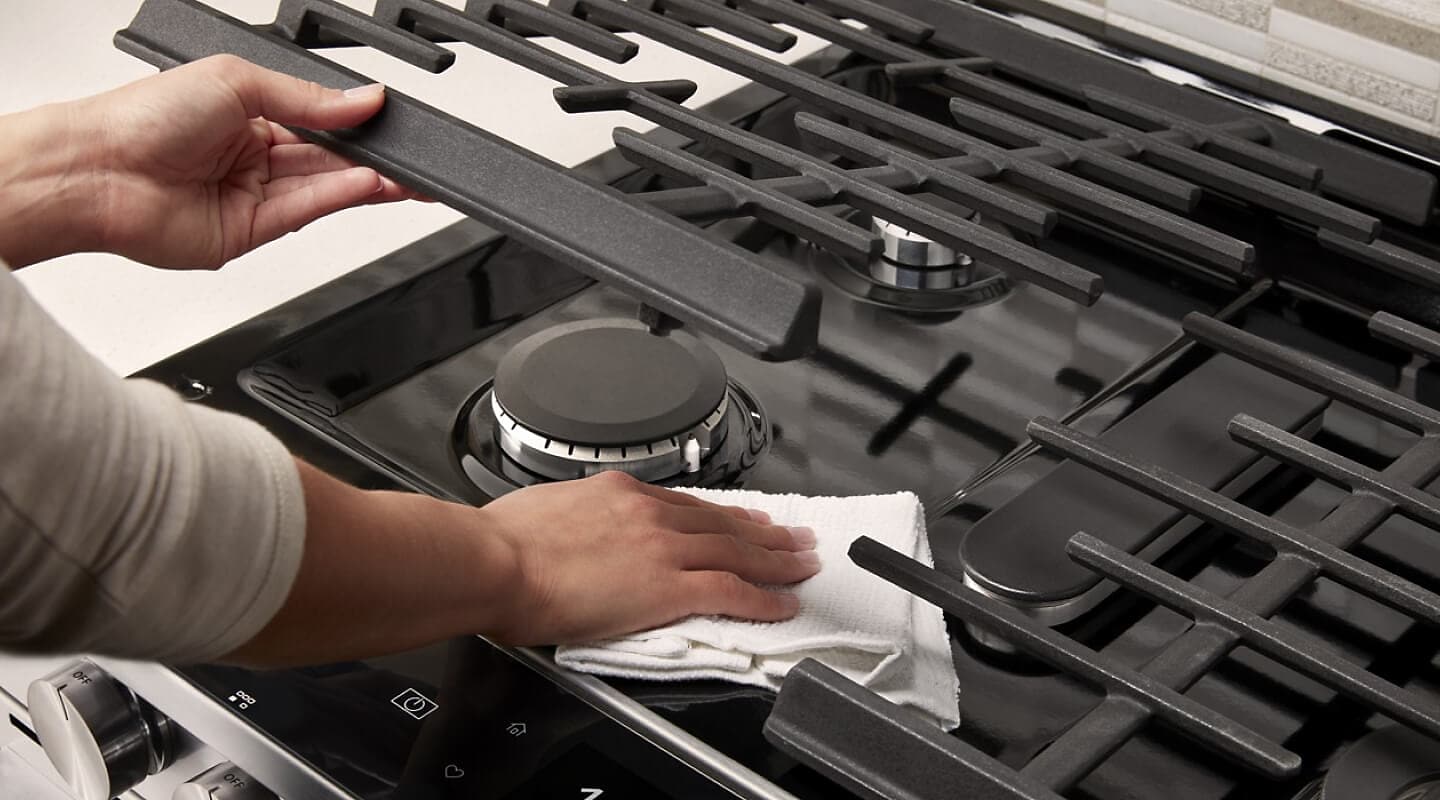
- Remove grates and burner caps: Soak them in warm, soapy water for 15–20 minutes.
- Scrub with brush: Use an old toothbrush to clean crevices.
- Clean surface: Wipe the cooktop with a sponge and soapy water.
- Dry parts thoroughly: Make sure grates and caps are dry before reassembling.
| Cleaning Frequency | Glass-Ceramic | Stainless Steel | Gas Burner |
|---|---|---|---|
| Daily | Wipe spills | Remove fingerprints | Wipe surface |
| Weekly | Buff with cleaner | Deep clean with vinegar | Clean grates |
| Monthly | Remove tough stains | Polish finish | Check burner holes |
Credit: www.whirlpool.com
Removing Burnt-on Food And Grease
Burnt food and grease are common problems, especially after cooking with high heat. Here’s how to remove them without damaging your Whirlpool cooktop:
Glass-ceramic Cooktop
- Let the cooktop cool before touching the stain.
- Apply a cooktop cleaning cream directly to the burnt area.
- Cover with a damp cloth for 10–15 minutes to soften the residue.
- Use a plastic scraper to gently lift the food.
- Buff with a clean cloth to restore shine.
Stainless Steel Cooktop
- Sprinkle baking soda on the affected area.
- Add a few drops of water to make a paste.
- Gently rub with a soft cloth following the steel’s grain.
- Rinse and dry to avoid water spots.
Gas Burner Cooktop
- Remove all parts and soak in hot, soapy water.
- Scrub gently with a brush or sponge.
- Inspect burner holes for blockages. Use a toothpick to clear them if needed.
- Dry everything to prevent rust.
Insight: Many beginners forget that letting burnt residue sit overnight makes it much harder to remove. Always try to clean spills soon after cooking.
Cleaning Whirlpool Cooktop Knobs And Controls
Knobs and controls collect grease, dust, and fingerprints. They’re often overlooked during cleaning. Here’s the best way to clean them:
- Remove knobs: Gently pull off the knobs if your model allows. If unsure, check the manual.
- Soak in soapy water: Let knobs sit for 10 minutes.
- Scrub gently: Use a soft brush to remove buildup.
- Dry completely: Moisture can cause electrical issues, so make sure knobs are dry before reinstalling.
- Wipe control panel: Use a damp cloth (not wet) to clean the panel. Avoid spraying water directly.
Non-obvious insight: Some Whirlpool cooktops have sealed controls. If yours does, avoid soaking or spraying water to prevent damage.
Preventing Scratches And Damage
Cooktops are often scratched or stained because of simple mistakes. Protect your Whirlpool cooktop with these tips:
- Always use soft cloths and non-abrasive sponges.
- Avoid dragging pots and pans across the surface.
- Clean spills quickly to prevent hardening.
- Do not use sharp objects for scraping.
- For glass-ceramic models, avoid sugar spills. Sugar can bond with the surface and cause permanent marks.
Example: If you spill syrup or jam, clean it immediately. Once hardened, it’s much harder to remove and can cause lasting stains.
Cleaning Whirlpool Cooktop Grates And Burner Caps
Gas cooktop grates and burner caps need special care. They collect grease and food, which can affect performance.
Steps For Cleaning Grates And Caps
- Remove grates and caps: Make sure the cooktop is cool.
- Soak in hot, soapy water: 20–30 minutes loosens grease.
- Scrub with brush: Remove stuck-on food.
- Rinse and dry: Never leave wet grates or caps, as this can cause rust.
- Reassemble carefully: Ensure parts are completely dry before putting them back.
Non-obvious insight: If your grates are coated (like porcelain or enamel), avoid using abrasive cleaners. They can chip the coating and lead to rust.
Handling Mineral Deposits And Water Spots
Hard water can leave mineral deposits and water spots on glass and stainless steel cooktops. These marks can be stubborn.
Solution For Mineral Deposits
- Dampen a cloth with white vinegar.
- Lay the cloth on the stain for 5–10 minutes.
- Wipe and buff with a dry microfiber cloth.
For tough spots, repeat the process. Avoid using too much vinegar, as the smell can linger. Always rinse and dry after cleaning.
Comparing Cleaning Methods
Some cleaning methods are faster but less effective, while others require more time but give better results. Here’s a comparison to help you choose:
| Method | Time Needed | Effectiveness | Best For |
|---|---|---|---|
| Daily wipe-down | 5 minutes | Good | Light spills |
| Deep cleaning | 20 minutes | Excellent | Burnt-on food |
| Vinegar soak | 10 minutes | Very good | Mineral spots |
| Baking soda paste | 15 minutes | Excellent | Grease removal |
What Not To Do When Cleaning Your Whirlpool Cooktop
Avoiding common mistakes will keep your cooktop looking new and working well. Here’s what you should never do:
- Do not use abrasive pads or steel wool.
- Never spray water or cleaner directly onto controls or seams.
- Do not leave grates or caps wet after washing.
- Avoid harsh chemicals like bleach or ammonia.
- Don’t clean hot surfaces; always let them cool first.
- Do not use glass cleaner on glass-ceramic cooktops (it can cause streaks).
Insight: Many people use regular kitchen cleaners without checking if they’re safe for their cooktop. Always choose a product made for your Whirlpool model.
Tips For Maintaining Your Whirlpool Cooktop
Keeping your cooktop clean is easier with a few habits. Here are practical tips to maintain it:
- Clean after each use: Wipe spills and spots as soon as possible.
- Use covers: Place paper towels or silicone mats on the cooktop when not in use to prevent dust.
- Check gas burners monthly: Make sure holes are clear for good flame.
- Polish stainless steel weekly: Keeps it shiny and prevents fingerprints.
- Store cleaning supplies nearby: Makes daily cleaning more convenient.
Experience-based tip: If you cook often, schedule a weekly deep clean. It prevents buildup and keeps the cooktop working smoothly.

Credit: www.pacfiber.com
Whirlpool Cooktop Cleaning: Safety Considerations
Cleaning is not only about appearance; it’s also about safety. Here’s how to clean safely:
- Unplug electric cooktops before cleaning.
- Let surfaces cool to avoid burns.
- Avoid excessive water near controls to prevent electrical shorts.
- Ventilate the kitchen if using strong cleaners.
If you ever smell gas or see sparks, stop cleaning and check for leaks or electrical problems. Safety should always come first.
Eco-friendly Cleaning Alternatives
If you prefer natural cleaning methods, there are safe options for Whirlpool cooktops:
- Baking soda paste: Mix baking soda and water to clean stains and grease.
- White vinegar: Removes mineral deposits and disinfects.
- Lemon juice: Freshens and cuts through grease.
Natural methods are gentle and avoid harsh chemicals, but may take a bit longer to work. They’re ideal for daily maintenance.
When To Call For Professional Help
Sometimes, cleaning isn’t enough. If your cooktop has deep scratches, persistent stains, or performance issues, it may be time to call a professional:
- Electrical problems: If controls don’t work after cleaning, contact a technician.
- Gas leaks: If you smell gas, stop using the cooktop and call for service.
- Broken glass or ceramic: Do not attempt to fix cracks—call Whirlpool support.
Professional help ensures your appliance stays safe and functional. For more information, visit the official Whirlpool service page.
Frequently Asked Questions
How Often Should I Deep Clean My Whirlpool Cooktop?
It’s best to deep clean your cooktop once a week if you cook daily. If you cook less often, a monthly deep clean is enough. Regular cleaning keeps stains from getting worse and makes each session easier.
Can I Use Regular Glass Cleaner On A Glass-ceramic Cooktop?
No, regular glass cleaners can leave streaks or cause damage. Always use a cleaner made for glass-ceramic cooktops. These products remove stains and protect the surface without leaving residue.
What Should I Do If My Cooktop Gets Scratched?
If the scratch is light, you can buff it gently with a cooktop cleaner. For deep scratches, avoid using abrasive materials. If the damage affects performance or looks bad, contact Whirlpool support.
Is It Safe To Use Vinegar On Stainless Steel Cooktops?
Yes, vinegar is safe for stainless steel. It removes water spots and disinfects, but always wipe with the grain and rinse afterward. Don’t let vinegar sit too long, as it can dull the finish.
How Do I Clean Gas Burner Holes If They Get Clogged?
Turn off the gas and let the cooktop cool. Remove the burner caps and use a toothpick or soft brush to clear the holes. Never use metal objects that might damage the burner.
Cleaning your Whirlpool cooktop doesn’t have to be hard or stressful. With the right tools, regular habits, and careful attention, you can keep it spotless and working well. Remember to always check your model’s manual for specific instructions, use gentle cleaners, and clean up spills quickly.
If you ever have doubts or trouble, don’t hesitate to ask for help or visit the Whirlpool service page. Your cooktop is the heart of your kitchen—keep it clean, and it will serve you for years.
Credit: www.ajmadison.com

Hello, This is Annie Walker, a 38-year-old blogger, founder, and editor of Cookware Guider from NY, USA. I am a cookware fanatic and passionate cooker. I love to cook with different types of cooking appliances (example: all types of cookware, rice cookers, slow cookers, etc) almost every day in my kitchen. I love to share my experience with my readers in my blog. Also, I enjoy helping people to solve their problems through my website. You can follow me on Twitter & Pinterest. To know details about my blog please check the about us page.