
Few foods are as tempting as the sound and smell of bacon cooking in a frying pan. That sizzle, that aroma—it’s a simple pleasure that brings comfort and flavor to breakfast and beyond. But if you’ve ever tried to cook bacon at home, you know it’s not always as easy as it looks. Bacon can burn, curl, or turn out greasy. Many people wonder: What’s the best way to cook bacon on a frying pan, and how do you get that perfect balance of crispy and chewy?
In this article, you’ll find a practical, step-by-step guide to frying bacon on a pan. Whether you’re a beginner or just want to improve your skills, you’ll learn the tools you need, preparation tips, cooking techniques, and ways to avoid common mistakes.
You’ll also discover pro tips, helpful data, and answers to frequent questions. Let’s unlock the secrets to great pan-fried bacon.
Why Cook Bacon On A Frying Pan?
Cooking bacon in a frying pan is a classic method for many reasons:
- Control: You can easily monitor the doneness and adjust the heat.
- Texture: Pan-frying makes it easier to achieve both crispy edges and tender centers.
- Flavor: Bacon cooks in its own fat, enhancing taste and aroma.
- Versatility: You can cook a few slices or a whole package.
While there are other ways to cook bacon—like in the oven or microwave—the frying pan gives you hands-on control and a traditional bacon experience.
Choosing The Right Bacon
Not all bacon is the same. Quality, cut, and thickness affect cooking time and final results. Here’s how to choose wisely:
Types Of Bacon
- Regular (Streaky) Bacon: The most common. Has fat and meat streaks.
- Thick-Cut Bacon: Slices are up to twice as thick as regular. Takes longer to cook but offers a meatier bite.
- Turkey Bacon: Lower in fat, cooks faster, but has less flavor.
- Back Bacon (Canadian Bacon): Leaner, with a ham-like texture.
What To Look For
- Color: Good bacon should be pink with white fat.
- Marbling: Look for streaks of fat and meat for best flavor.
- Freshness: Check the date and avoid grayish or slimy slices.
Bacon Thickness Comparison
Here’s how bacon thickness affects cooking time and texture:
| Bacon Type | Slice Thickness | Average Cooking Time (per side) | Texture |
|---|---|---|---|
| Regular | 0.06 in (1.5 mm) | 3-4 min | Crispy, slightly chewy |
| Thick-Cut | 0.12 in (3 mm) | 5-7 min | Chewy, hearty |
| Turkey | 0.06 in (1.5 mm) | 2-3 min | Lean, less crispy |
Non-obvious insight: Thicker bacon benefits from a lower heat to cook evenly without burning the fat.
Essential Tools And Ingredients
Getting the right setup makes bacon frying easier and safer.
What You Need
- Frying Pan/Skillet: Heavy-bottomed pans (cast iron or stainless steel) hold heat better and cook more evenly.
- Tongs or Fork: For flipping bacon safely.
- Paper Towels: To drain excess fat.
- Plate or Tray: For resting cooked bacon.
- Splatter Guard (Optional): Reduces grease mess.
- Oven Mitts: Protect your hands from hot oil.
Ingredients
- Bacon: As much as you need (usually 2–4 slices per person).
- No added oil or butter: Bacon releases enough fat for frying.
Extra tip: If you like, you can add a pinch of black pepper or maple syrup for extra flavor near the end of cooking.
Preparing Bacon For The Pan
A little preparation helps bacon cook better and prevents sticking.
- Separate slices: Gently pull slices apart. If the bacon is cold and sticking, let it sit a few minutes or use a butter knife to separate.
- Pat dry: Use a paper towel to blot excess moisture. This reduces splattering and helps crispiness.
- Let it warm up: For even cooking, let bacon sit at room temperature for 5–10 minutes before frying.
Did you know? Cold bacon can curl up more quickly due to a temperature shock when it hits the hot pan.
Step-by-step: How To Cook Bacon On A Frying Pan
Now, let’s get to the heart of the process. Follow these steps for delicious pan-fried bacon.
1. Place Bacon In A Cold Pan
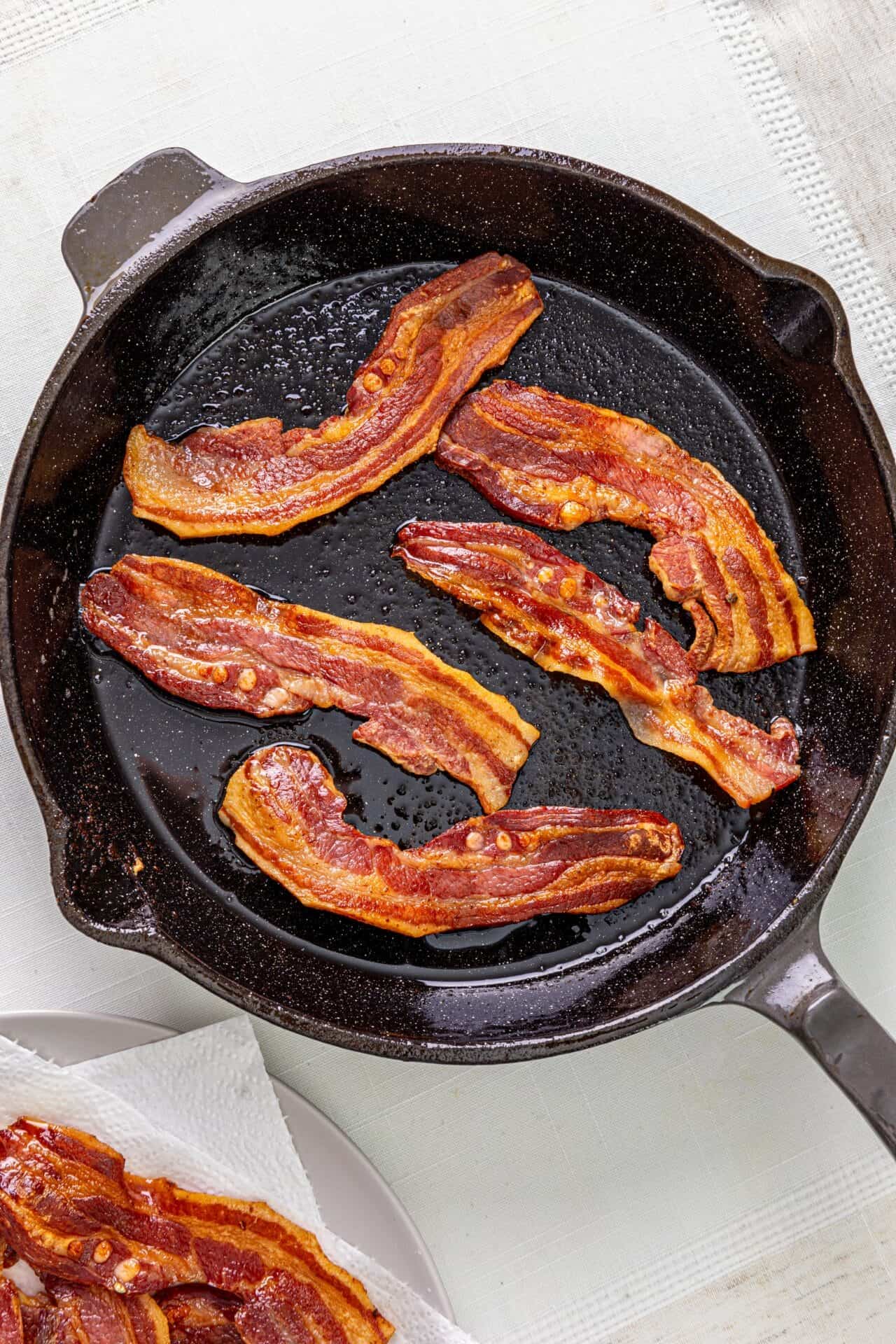
Start with a cold frying pan. Lay the bacon strips flat without overlapping. This helps render the fat slowly, making bacon crispier and less greasy.
2. Turn Heat To Medium Or Medium-low
Set your burner to medium or medium-low. High heat can burn bacon before it cooks through. A lower, steady heat allows fat to melt and edges to crisp.
3. Watch And Flip
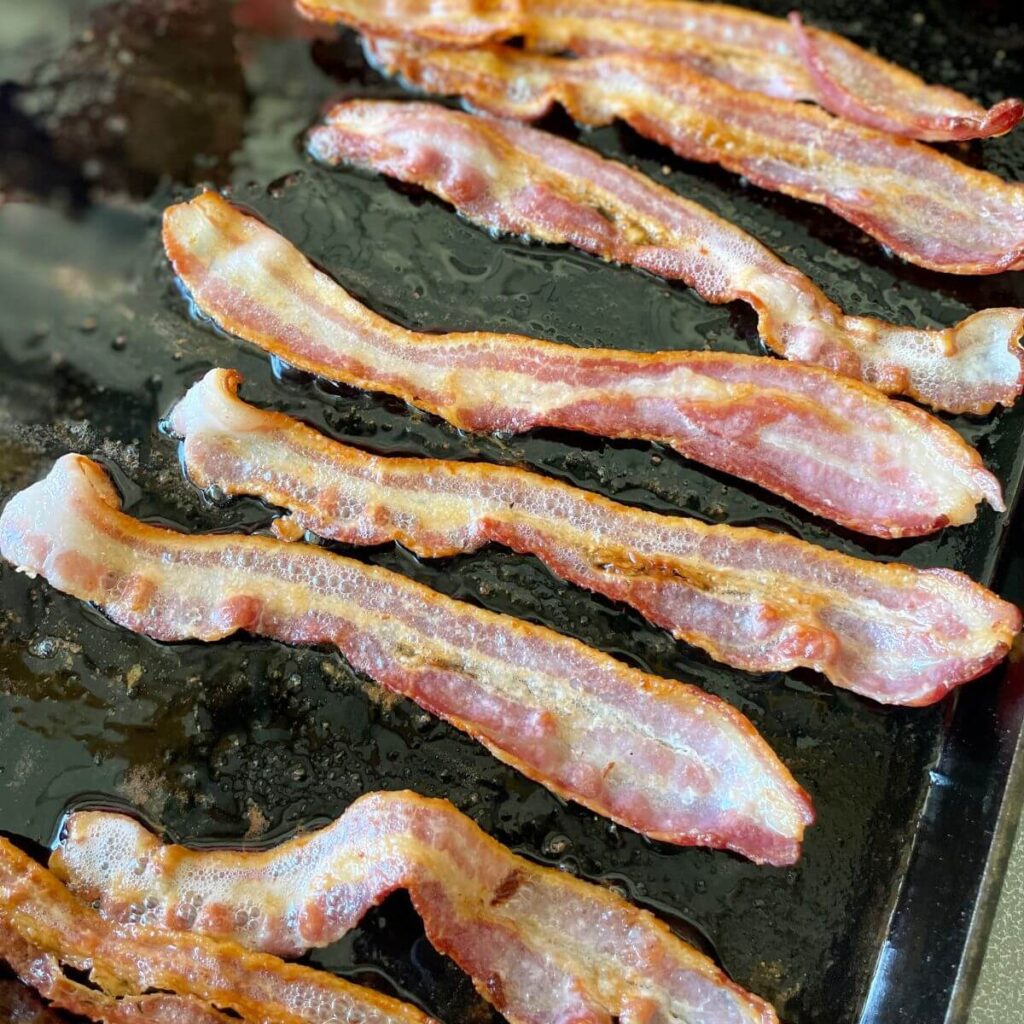
As bacon begins to sizzle, fat will render and the slices will shrink. Use tongs to flip the bacon every 1–2 minutes. This encourages even browning and reduces curling.
4. Remove Bacon At The Right Time
Bacon goes from perfect to burnt quickly. Remove slices when they are golden brown but still a little soft—they will crisp more as they cool. For chewy bacon, take it off slightly earlier. For extra-crispy, leave it another minute.
5. Drain And Rest
Place cooked bacon on a paper towel-lined plate. Let it rest for at least 1 minute. The bacon will firm up and excess grease will drain off.
Cooking Time Guide
Here’s a quick reference for different bacon styles:
| Bacon Style | Pan Heat Level | Total Cooking Time | Texture Goal |
|---|---|---|---|
| Regular | Medium | 8–10 min | Crispy/chewy |
| Thick-Cut | Medium-Low | 12–15 min | Chewy, meaty |
| Turkey | Medium | 5–7 min | Lean, slightly crisp |
Practical tip: If you’re cooking more than one batch, carefully pour off extra bacon fat between batches to avoid burning.
Tips For Crispy Or Chewy Bacon
Everyone has their own favorite style of bacon. Here’s how to adjust for your perfect bite.
For Crispy Bacon
- Cook at medium heat: Not too high to avoid burning.
- Flip often: Every 1–2 minutes for even browning.
- Let it rest: Bacon crisps up as it cools.
For Chewy Bacon
- Lower the heat: Medium-low gives a softer texture.
- Shorten cooking time: Remove bacon when it’s still a little flexible.
- Use thicker cuts: They stay chewier inside.
Comparison: Crispy Vs Chewy Bacon
| Preference | Heat Level | Cooking Time | Resting Time |
|---|---|---|---|
| Crispy | Medium | 8–12 min | 1–2 min |
| Chewy | Medium-Low | 6–9 min | 30 sec–1 min |
Non-obvious insight: Overcrowding the pan can steam bacon, making it less crispy even if cooked longer.
Common Mistakes And How To Avoid Them
Even experienced cooks can make errors with bacon. Here’s what to watch out for:
- Pan Too Hot: Bacon burns on the outside and stays undercooked inside.
- Solution: Use medium or medium-low heat for best results.
- Overcrowding: Slices stick together and cook unevenly.
- Solution: Leave space between slices.
- Not Watching Closely: Bacon can go from perfect to burnt in seconds.
- Solution: Stay nearby and flip regularly.
- Pouring Away All the Fat: The pan needs some fat for even cooking.
- Solution: Remove excess, but leave a thin layer for flavor.
- Using a Nonstick Pan at High Heat: Can damage the coating and produce off-flavors.
- Solution: Stick with medium heat, especially for nonstick pans.
Extra tip: Use a splatter guard to reduce cleanup. Bacon grease can make surfaces slippery.
Cleaning Up After Frying Bacon
Cooking bacon can leave a greasy mess, but a few steps make cleanup easier:
- Let fat cool: Pour cooled bacon fat into a container for later use, or dispose of it safely (never down the drain).
- Wipe pan with paper towels: Removes most grease before washing.
- Wash with hot, soapy water: For cast iron, wipe out excess fat but avoid soap if you want to keep the seasoning.
Did you know? Saved bacon fat is great for frying eggs or adding flavor to vegetables.
Credit: bakedbree.com
Using Bacon Grease
Many home cooks throw away bacon grease, but it’s a flavorful cooking fat. Here are some ways to use it:
- Fry eggs: Adds a smoky flavor.
- Roast potatoes: Toss with a teaspoon of bacon fat.
- Sauté vegetables: Especially good with green beans or Brussels sprouts.
Store bacon fat in a glass jar in the fridge for up to a month.
Variations And Flavor Twists
Pan-fried bacon is delicious as is, but you can try new flavors.
- Peppered Bacon: Sprinkle black pepper on bacon slices before frying.
- Maple Bacon: Drizzle a little maple syrup on bacon in the last minute of cooking.
- Spicy Bacon: Dust with chili powder or smoked paprika.
- Herb Bacon: Add rosemary or thyme to the pan for an aromatic touch.
Pro tip: Don’t add sugary glazes at the beginning—they can burn. Wait until the end.
:max_bytes(150000):strip_icc()/__opt__aboutcom__coeus__resources__content_migration__serious_eats__seriouseats.com__2019__03__20190306-best-way-to-cook-bacon-vicky-wasik-cast-iron3-1-1e6a16e24c0947ffbbd9c4c1446b2f65.jpg)
Credit: www.seriouseats.com
Safety Tips
Cooking bacon can be messy. Here’s how to stay safe:
- Watch for splatters: Hot fat can pop. Use a splatter guard or cover the pan loosely with foil.
- Wear oven mitts: Protect your hands when flipping.
- Turn off heat before moving the pan: Prevents grease accidents.
- Dispose of fat carefully: Pour into a heat-safe container, not the sink.
Bacon Nutrition Facts
Bacon is flavorful, but also high in fat and sodium. Here are some basic facts per 2 slices (16g):
- Calories: 80–90
- Protein: 6g
- Fat: 7g (about 3g saturated)
- Sodium: 300–400mg
Turkey bacon has less fat and calories, but usually more sodium. For more details, check the packaging or see the USDA’s bacon nutrition data.
Non-obvious insight: Cooking bacon on a pan lets you drain off extra fat, making it less greasy than deep-frying.
Creative Ways To Use Pan-fried Bacon
Bacon isn’t just for breakfast. Here are tasty ideas:
- BLT Sandwich: Bacon, lettuce, tomato on toast.
- Bacon and Eggs: Classic breakfast plate.
- Salad Topping: Crumble bacon on spinach or Caesar salad.
- Bacon-Wrapped Dates or Asparagus: Savory appetizer.
- Bacon in Pasta: Try it with carbonara or mac and cheese.
Pro tip: Save crumbled bacon in the fridge to add a flavor punch to meals all week.
Bacon Around The World
Bacon styles and uses vary globally. In the US, streaky bacon is most popular. In the UK and Canada, back bacon is common—leaner and more like ham. In Italy, pancetta is cured but not smoked and often used in pasta dishes.
For more on the history and types of bacon, see Wikipedia.
Credit: theflattopking.com
Frequently Asked Questions
How Do I Keep Bacon From Curling In The Pan?
Start with a cold pan and lay the bacon flat. Flip often, and if curling is a problem, you can press the bacon down gently with a spatula for the first minute. Thicker bacon curls less than thin slices.
Can I Cook Bacon Without Oil?
Yes. Bacon releases its own fat as it cooks, so you do not need to add oil or butter. In fact, adding extra fat can make bacon greasy.
What’s The Best Pan For Frying Bacon?
A cast iron skillet is a top choice because it heats evenly and retains heat well. Stainless steel also works. Nonstick pans are fine but should be used at medium heat to protect the coating.
Is It Safe To Eat Slightly Undercooked Bacon?
No. Bacon should be cooked until it’s no longer raw and reaches at least 145°F (63°C). Undercooked bacon can carry bacteria or parasites.
Can I Save Leftover Bacon?
Yes. Store cooked bacon in an airtight container in the fridge for up to 4–5 days. Reheat in a pan or microwave for best texture.
Cooking bacon on a frying pan is both an art and a science. With the right technique, a little attention, and a few pro tips, you’ll enjoy bacon that’s just the way you like it—crispy, chewy, and full of flavor.
Happy frying!

Hello, This is Annie Walker, a 38-year-old blogger, founder, and editor of Cookware Guider from NY, USA. I am a cookware fanatic and passionate cooker. I love to cook with different types of cooking appliances (example: all types of cookware, rice cookers, slow cookers, etc) almost every day in my kitchen. I love to share my experience with my readers in my blog. Also, I enjoy helping people to solve their problems through my website. You can follow me on Twitter & Pinterest. To know details about my blog please check the about us page.