
Cooking sausage on a frying pan is a classic kitchen skill. It’s easy, quick, and gives you delicious results every time. Whether you prefer breakfast sausage links, spicy Italian sausages, or bratwurst, the frying pan brings out flavor and juicy texture.
Many people think pan-frying sausage is simple, but there are key steps and small tricks that make a big difference. If you want perfectly cooked sausage—crispy outside, juicy inside—read on. This guide explains everything, from choosing the right sausage to avoiding common mistakes, with practical tips for beginners and experienced cooks alike.
Choosing Your Sausage
Before you start cooking, you need the right sausage. There are many types, each with its own cooking style and flavor profile. Here are some popular options:
- Breakfast sausage links: Small, mild, often made with pork.
- Italian sausage: Spicy or sweet, usually larger, made with pork or beef.
- Bratwurst: German style, rich and juicy.
- Chicken or turkey sausage: Leaner, but still flavorful.
- Vegetarian sausage: Made from soy, pea protein, or grains.
When choosing, check the label for freshness and fat content. Fresh sausages cook better and taste richer. Higher fat content gives more juiciness and crispness but can splatter more.
Comparing Sausage Types
Here’s a quick comparison of common sausage types for frying:
| Sausage Type | Typical Cooking Time (min) | Fat Content (%) | Texture After Frying |
|---|---|---|---|
| Breakfast Links | 8–10 | 20–30 | Soft, crispy outside |
| Italian Sausage | 12–15 | 25–35 | Firm, juicy |
| Bratwurst | 13–16 | 30–40 | Very juicy, thick skin |
| Chicken/Turkey | 10–12 | 10–20 | Lean, less crisp |
| Vegetarian | 6–8 | 0–5 | Firm, sometimes dry |
Ingredients And Tools You Need
Cooking sausage on a frying pan doesn’t require many ingredients or tools, but some choices can make your meal tastier and easier.
Basic Ingredients
- Sausage: 4–6 pieces (links or patties)
- Cooking oil: 1–2 tablespoons (vegetable, olive, or canola)
- Optional: Chopped onions, peppers, or garlic for extra flavor
Essential Tools
- Frying pan: Heavy-bottomed, 10–12 inches wide
- Tongs or spatula: For turning sausages
- Paper towels: For draining excess oil
- Meat thermometer: Ensures safe internal temperature (especially for chicken or turkey sausage)

Credit: www.youtube.com
Preparing Sausage For The Pan
Preparation is more than just opening a package. Careful prepping helps sausage cook evenly and stay juicy.
- Let sausage rest at room temperature for 5–10 minutes. Cold sausage can cook unevenly and split.
- Pat sausage dry with paper towels. This removes extra moisture that can cause splattering.
- Pierce the skin (optional): For thick sausages like bratwurst, poke a few holes with a fork. This helps fat escape and prevents bursting.
- Slice larger sausages if you want faster cooking or smaller portions.
Step-by-step Cooking Instructions
Here’s how to cook sausage on a frying pan for best results. Follow these steps closely for juicy, evenly cooked meat.
1. Heat The Pan
Place your frying pan on the stove. Set the heat to medium. Add 1–2 tablespoons of oil. Wait until the oil is hot but not smoking—usually 2–3 minutes.
2. Add Sausages
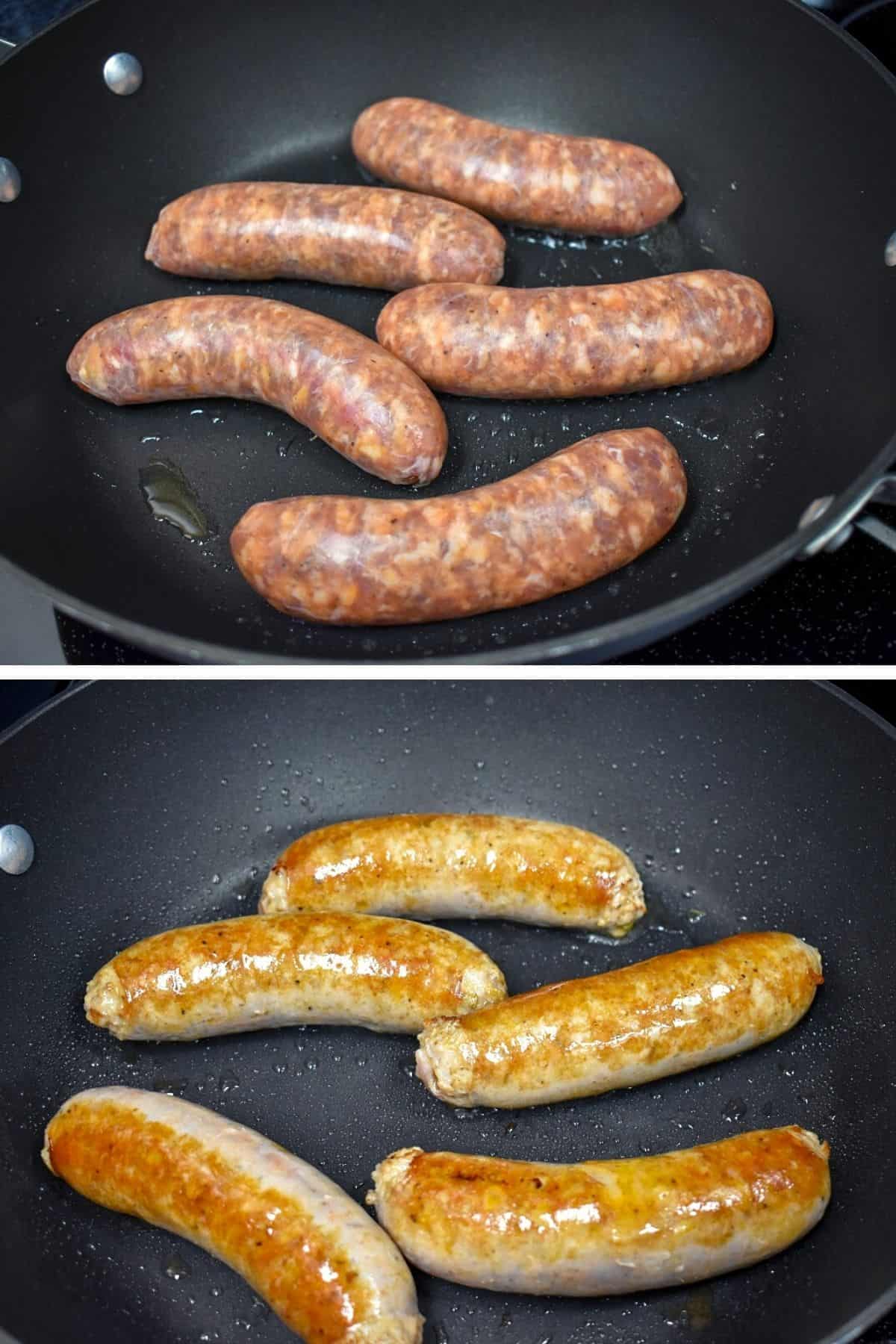
Place sausages in the pan, leaving space between them. Don’t overcrowd the pan. Overcrowding causes uneven cooking and steaming instead of browning.
3. Brown All Sides
Let sausages cook undisturbed for 2–3 minutes. Once the bottom is brown, use tongs to turn each sausage. Repeat this step until each side is browned. This usually takes 8–10 minutes for small links, 12–15 minutes for larger sausages.
4. Lower Heat And Finish Cooking
Turn the heat down to low-medium. Cover the pan with a lid. Cook for another 5–7 minutes. This ensures the inside cooks fully without burning the outside.
5. Check Internal Temperature
Use a meat thermometer to check the sausage’s center. Safe temperatures:
- Pork/Beef: 160°F (71°C)
- Chicken/Turkey: 165°F (74°C)
- Vegetarian: Usually pre-cooked, just heat through
6. Rest And Serve
Remove sausages from the pan. Place them on paper towels to absorb excess oil. Let them rest for 2–3 minutes before serving. This helps juices settle and keeps sausage moist.
Cooking Sausage Patties
Sausage patties cook differently than links. Here’s how:
- Shape the patties evenly, about ½ inch thick.
- Cook on medium heat for 4–5 minutes per side.
- Flip once, don’t press down (pressing releases juices).
- Check for 160°F internal temperature.
Flavor Boosts: Seasoning And Add-ons
You can improve sausage flavor with simple add-ons:
- Sprinkle herbs (thyme, rosemary) during cooking.
- Sauté onions or peppers in the same pan.
- Add a splash of beer or wine for extra aroma (especially for bratwurst).
- Drizzle with mustard or hot sauce after cooking.
These extras make your meal richer without much effort.
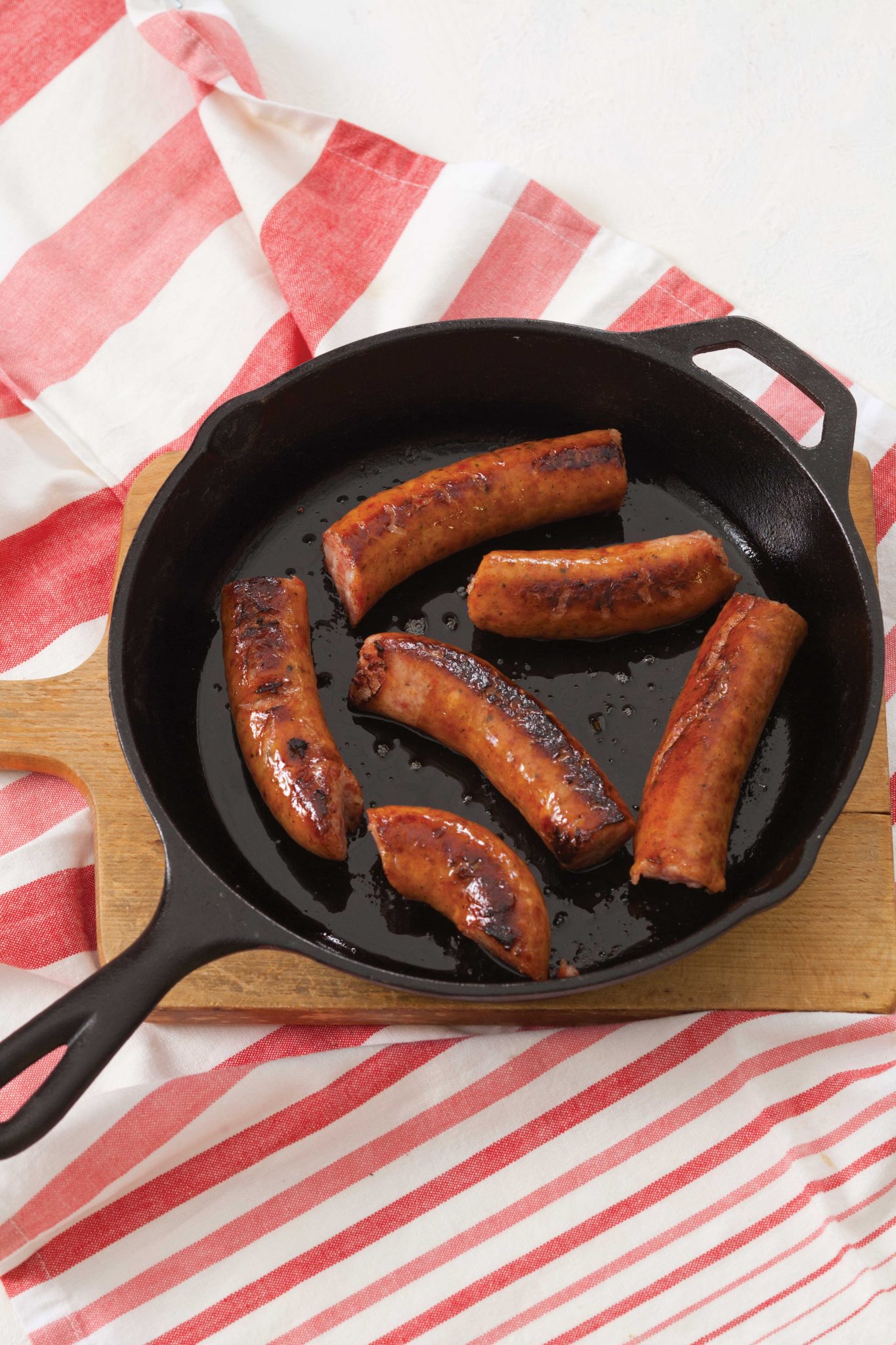
Credit: conecuhsausage.com
Common Mistakes And How To Avoid Them
Even experienced cooks make mistakes with sausages. Here are the most frequent errors:
- Too high heat: Burns outside, leaves inside raw. Always start on medium.
- Overcrowding: Causes steaming, not crisping. Give space.
- Not turning enough: Uneven browning. Turn sausages every few minutes.
- Skipping thermometer: Unsafe meat. Always check internal temperature.
- Not resting after cooking: Juices escape. Let sausages rest.
Practical Example: Overcrowding
Imagine cooking 6 sausages in a small pan. Instead of crisp brown, you get pale, soft sausages. This happens because steam builds up, preventing browning. Always cook in batches if your pan is small.
Cooking Time And Pan Comparison
Cooking times depend on sausage type and pan material. Here’s a quick look at different pans:
| Pan Material | Heat Distribution | Browning Quality | Ease of Cleaning |
|---|---|---|---|
| Stainless Steel | Even | Excellent | Medium |
| Nonstick | Good | Good | Easy |
| Cast Iron | Very even | Best | Hard |
| Aluminum | Uneven | Fair | Easy |
Cast iron pans give the best browning, but need seasoning and careful cleaning. Nonstick pans are easy, but don’t brown as deeply. Stainless steel offers a balance.
Credit: www.cook2eatwell.com
Nutrition And Health Facts
Sausages are tasty, but their nutrition varies. Here’s what you need to know:
- High-fat sausages: More calories, juicier, but can be less healthy.
- Chicken/turkey sausages: Lower in fat, fewer calories.
- Vegetarian sausages: Usually lower in fat, but can be high in sodium.
Typical values per 100g:
| Sausage Type | Calories | Protein (g) | Fat (g) | Sodium (mg) |
|---|---|---|---|---|
| Pork | 290 | 13 | 23 | 650 |
| Chicken | 190 | 15 | 11 | 550 |
| Vegetarian | 160 | 9 | 5 | 700 |
For healthier meals, choose leaner sausages and serve with veggies instead of bread.
Cleaning Up After Cooking
After enjoying your sausage, clean the pan while it’s still warm (but not hot). Use a paper towel to wipe excess grease. For sticky bits, add a splash of water and gently scrape with a spatula. Nonstick pans are easier, but cast iron needs special care—never use soap, just hot water and a stiff brush.
Non-obvious Insights For Better Sausage
Many beginners miss these subtle tips:
- Preheat the pan for longer: Letting the oil heat for 3–4 minutes gives a better sear and prevents sticking.
- Use a lid at the end: Covering the pan for final cooking traps steam, helping the inside cook without drying out the skin.
Also, try resting sausages on a rack instead of paper towels for crispier skin.
Serving Suggestions
Sausage is versatile. You can eat it alone, or add to meals:
- Serve with scrambled eggs for breakfast.
- Add to pasta or rice for dinner.
- Slice and use in sandwiches or wraps.
- Pair with sautéed vegetables for a healthier plate.
For a classic American breakfast, serve sausage links with eggs, hash browns, and toast.
Frequently Asked Questions
How Do I Know When Sausage Is Fully Cooked?
The safest way is using a meat thermometer. Sausage should reach 160°F (pork/beef) or 165°F (chicken/turkey) in the center. If you don’t have a thermometer, cut one open—the inside should not be pink and juices should run clear.
Can I Cook Frozen Sausage In A Frying Pan?
Yes, but it takes longer and can cook unevenly. Thaw sausage first for best results. If you must cook from frozen, use low heat and cover the pan. Turn often and check the center for doneness.
Is It Necessary To Add Oil When Pan-frying Sausage?
It depends on sausage type. High-fat sausages can release their own fat, but a tablespoon of oil helps prevent sticking and gives a good crust. Lean sausages or vegetarian types need oil.
How Can I Keep Sausage From Bursting During Cooking?
Pierce the skin with a fork before cooking, especially for thick sausages like bratwurst. Cook on medium heat and avoid sudden temperature changes. Let sausages warm up before cooking.
What’s The Best Pan For Frying Sausage?
Cast iron gives the best browning and flavor, but needs care. Nonstick pans are easy for beginners. Stainless steel is a good middle ground. For more details, see Wikipedia’s frying pan guide.
Cooking sausage on a frying pan is simple, but doing it well takes attention and practice. With the right sausage, pan, and technique, you can enjoy crisp, juicy sausage every time. Try different types, experiment with flavors, and use these tips to improve your cooking.
Your kitchen will smell amazing, and your meal will taste even better.

Hello, This is Annie Walker, a 38-year-old blogger, founder, and editor of Cookware Guider from NY, USA. I am a cookware fanatic and passionate cooker. I love to cook with different types of cooking appliances (example: all types of cookware, rice cookers, slow cookers, etc) almost every day in my kitchen. I love to share my experience with my readers in my blog. Also, I enjoy helping people to solve their problems through my website. You can follow me on Twitter & Pinterest. To know details about my blog please check the about us page.