
Pan frying burgers at home is a simple way to enjoy juicy, flavorful patties—no grill required. If you’ve ever wondered how restaurants create that perfect crust and tender interior, you’re not alone. Many home cooks believe great burgers need fancy equipment or special meat blends.
The truth? With a few smart techniques, you can make exceptional burgers in your kitchen using just a pan.
This guide breaks down everything you need: from picking the right ground beef, shaping patties, seasoning, and mastering the pan-frying process, to tips for serving and troubleshooting. You’ll learn insights that even some experienced cooks overlook, such as the role of pan material and the importance of resting your burgers. By the end, you’ll be ready to cook pan-fried burgers that impress family and friends—and never settle for dry, bland patties again.
Choosing The Right Meat
The foundation of any great burger is the meat. Not all ground beef is the same, and your choice will impact flavor, texture, and juiciness.
Fat Content
For burgers, fat content is crucial. Lean beef (90% or higher) often leads to dry, crumbly patties. Instead, aim for 80/20 ground beef (80% lean, 20% fat). This ratio provides enough fat to keep the burger moist and flavorful during cooking.
A quick comparison:
| Type | Fat Content | Juiciness | Flavor |
|---|---|---|---|
| 90/10 Ground Beef | 10% | Low | Mild |
| 85/15 Ground Beef | 15% | Good | Better |
| 80/20 Ground Beef | 20% | Excellent | Rich |
Some cooks use blends like chuck, brisket, and short rib for added depth. While these blends add complexity, classic 80/20 beef is more than enough for most home cooks.
Fresh Vs. Frozen
Freshly ground beef creates a looser, more tender patty. Pre-packed ground beef can be used, but try to avoid compacted or overly handled meat, which may cook up tough.
Non-obvious insight: If you buy meat from the butcher, ask for a coarse grind. Coarse-ground beef holds up better during pan frying and produces a more satisfying, steak-like bite.
Prepping And Shaping The Patties
Your burger’s shape and thickness affect how it cooks and tastes.
Portion Size
A standard burger patty weighs 4 to 6 ounces. Thicker patties (about ¾ inch) stay juicier, while thinner ones cook faster and work well for double-stacked burgers.
Shaping Technique
- Handle gently: Overworking the meat makes burgers dense and tough. Lightly form the meat into a loose ball, then gently flatten it.
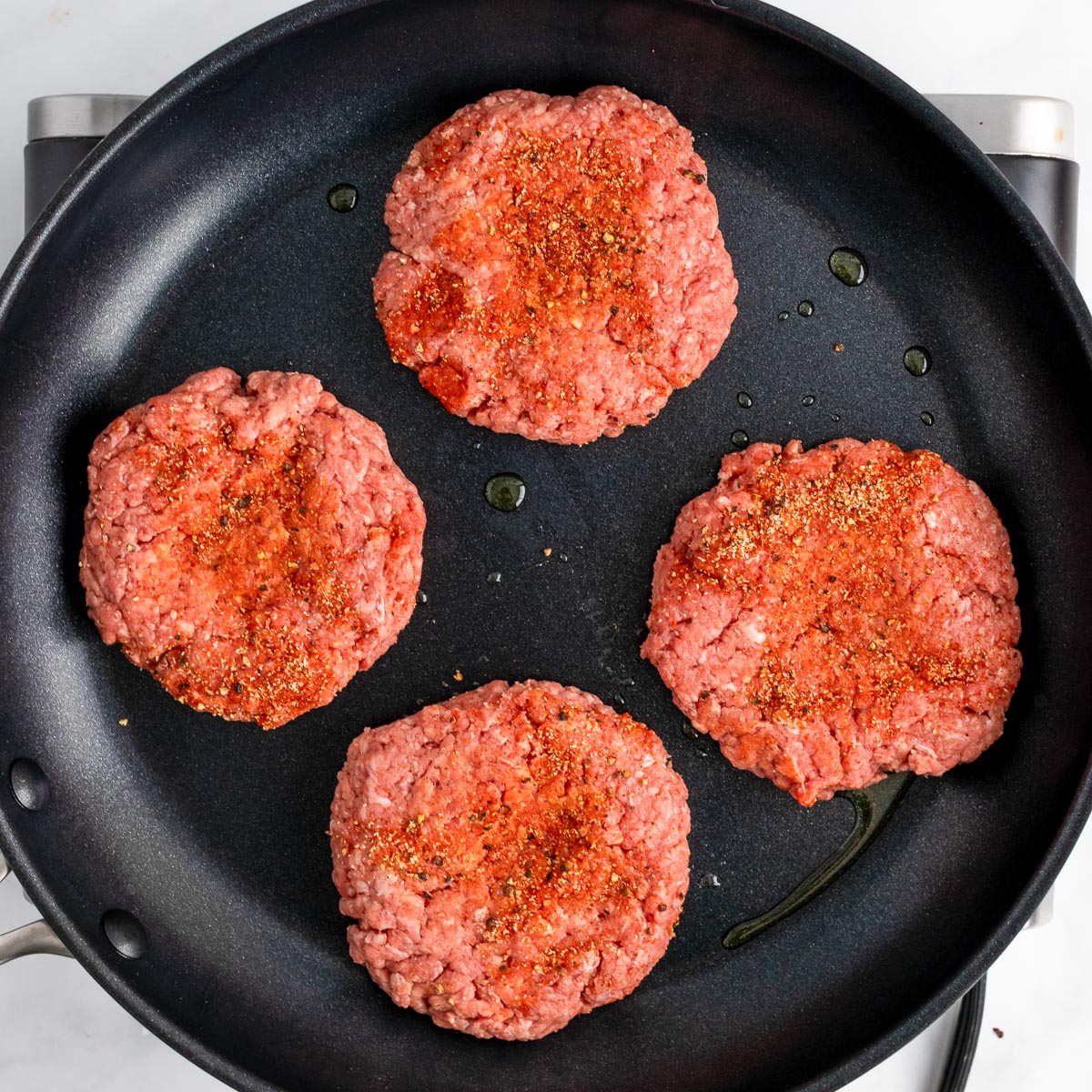
- Indent the center: Press a small dimple in the middle of each patty using your thumb. This prevents the burger from puffing up as it cooks, ensuring even thickness.
Patty Size
Make the patty slightly wider than the bun. Burgers shrink as they cook—usually about ½ inch.
Seasoning
Season both sides of the patty generously with kosher salt and fresh black pepper just before cooking. Avoid adding salt to the meat before shaping; it draws out moisture and makes the texture rubbery.
Pro tip: For extra flavor, sprinkle a little garlic powder or smoked paprika on the outside. But keep it simple—too many seasonings can mask the beef’s natural taste.
Choosing Your Pan
The pan you use matters more than you might think. Different pans deliver different crusts and can affect heat distribution.
Best Pan Materials
| Pan Type | Pros | Cons |
|---|---|---|
| Cast Iron | Retains heat, creates a great sear | Heavy, needs care |
| Stainless Steel | Good heat, durable | Food may stick if not preheated |
| Nonstick | Easy release, less cleanup | Weaker crust, not for high heat |
Cast iron is a favorite for burgers. It delivers high, even heat for a crispy, caramelized crust. Stainless steel works well, too. Nonstick pans are fine for beginners, but they won’t develop as deep a sear.
Non-obvious insight: Preheat your pan for at least 3–5 minutes. A properly heated pan prevents sticking and starts the Maillard reaction—the browning that makes burgers taste amazing.
Pan Frying Burgers: Step-by-step
With your patties shaped and pan ready, it’s time to cook.
Step 1: Preheat The Pan
Place your pan over medium-high heat. Let it heat until a drop of water sizzles on contact. This usually takes 3–5 minutes.
Step 2: Add Oil
Add a thin layer of neutral oil (like canola or vegetable oil) to the pan. Swirl to coat the surface. Avoid butter—it burns at high heat.
Step 3: Place The Patties
Gently lay the patties in the pan. Don’t press down—this squeezes out flavorful juices. Leave space between each patty for even cooking.
Example: For a 12-inch pan, cook 2–3 patties at a time.
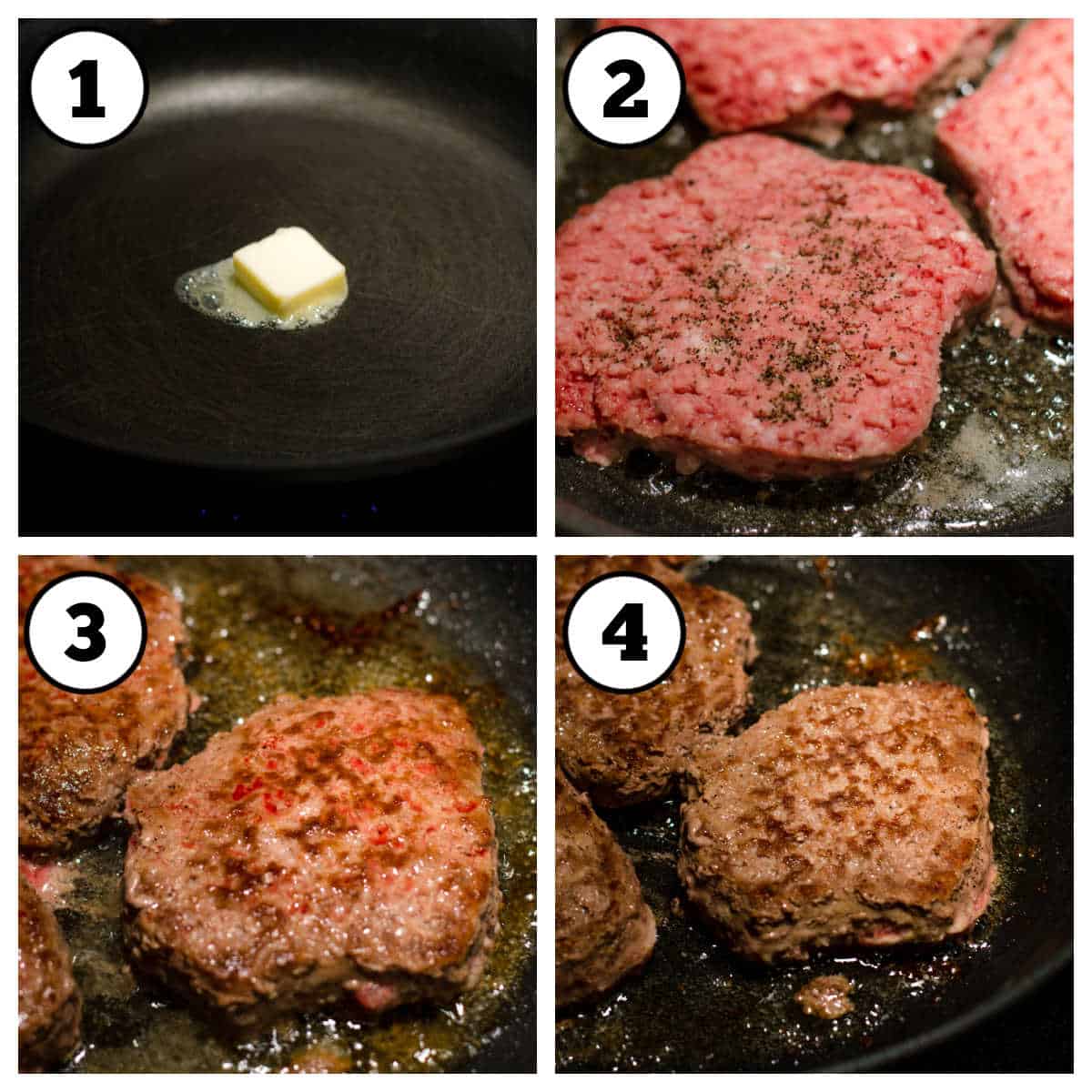
Step 4: Sear The First Side
Let the patties cook undisturbed for 3–4 minutes. You want a deep brown crust. If the patty sticks, it’s not ready to flip yet.
Step 5: Flip And Finish
Flip each patty once. Cook the second side for 2–4 minutes, depending on thickness and desired doneness.
Here’s a quick doneness guide:
| Doneness | Internal Temp (°F) | Cook Time (per side) | Color Inside |
|---|---|---|---|
| Rare | 120–125 | 2–3 min | Red, cool center |
| Medium-Rare | 130–135 | 3–4 min | Warm red center |
| Medium | 140–145 | 4–5 min | Pink, juicy |
| Well Done | 160+ | 5–6 min | Brown, little pink |
Step 6: Add Cheese (optional)
If you want a cheeseburger, place a slice of cheese on top during the last minute of cooking. Cover the pan with a lid to help the cheese melt quickly.
Step 7: Rest The Patties
Transfer cooked patties to a plate and let them rest for 2–3 minutes. This step is easy to skip, but it keeps your burgers juicy by allowing the juices to redistribute.
Pro tip: Tent the burgers loosely with foil while resting to keep them warm.
Common Mistakes And How To Avoid Them
Even with the right technique, small missteps can ruin a burger. Here’s how to dodge the most common errors:
- Overworking the meat: Mix and shape gently. Compact patties are tough.
- Pressing down on the patties: It’s tempting, but this squeezes out moisture and flavor.
- Underseasoning: Salt and pepper are essential. Don’t be shy.
- Flipping too often: One flip is all you need. More flips = less crust.
- Cooking from cold: Let patties sit at room temperature for 10 minutes before cooking. This helps them cook evenly.
- Skipping the rest: Always rest burgers before serving.
Toppings And Buns: The Finishing Touches
While the patty is the star, the bun and toppings can elevate a good burger to great.
Choosing The Right Bun
Soft, slightly sweet buns like brioche or classic potato rolls work best. They hold up to juicy patties without falling apart. Toast buns lightly in the pan for extra texture and flavor.
Popular Toppings
- Cheese: American, cheddar, Swiss, or blue cheese are favorites.
- Lettuce and tomato: Adds freshness and crunch.
- Pickles and onions: For tang and bite.
- Sauces: Mayo, ketchup, mustard, or special burger sauce.
Pro tip: Layer cheese directly on the hot patty. Place lettuce beneath the burger to shield the bun from juices and prevent sogginess.
Customizing Your Burgers
Pan frying lets you experiment with flavors and fillings. Here are a few ideas:
Stuffed Burgers
Try making a Juicy Lucy by sealing cheese inside the patty. Press two thin patties together with cheese in the middle, then seal the edges well.
Seasoned Crust
Before cooking, press coarsely ground black pepper or chopped herbs onto the surface for a flavorful crust.
International Twists
- Mexican-style: Add chopped jalapeños and cumin to the meat, top with pepper jack cheese and salsa.
- Italian-style: Mix in grated Parmesan and Italian herbs, serve with mozzarella and marinara.
The possibilities are endless. Just remember—don’t overload the patty or you’ll risk it falling apart during cooking.
Cleaning Up After Pan Frying
Burgers can leave your kitchen a bit messy. Here’s how to make cleanup easy:
- Wipe excess grease: Let the pan cool slightly, then wipe out fat with a paper towel.
- Soak stubborn bits: Fill the pan with hot water and a drop of dish soap. Let it soak for 10–15 minutes, then scrub gently.
- Avoid harsh cleaners: Especially with cast iron—just use hot water and a stiff brush.
Non-obvious insight: If you pan fry often, consider using a splatter screen. It keeps your stovetop clean and avoids greasy messes.

Credit: www.omahasteaks.com
Troubleshooting: Solving Common Burger Problems
No two kitchens are the same, so you may run into issues. Here’s how to solve the most frequent burger problems.
Burgers Stick To The Pan
- Solution: Make sure your pan is hot enough before adding the patties. Don’t move the burger until it naturally releases.
- Extra tip: Use a thin metal spatula to gently lift the edges.
Patties Shrink Too Much
- Solution: Make a slight dimple in the center of each patty before cooking. Don’t use meat with too high a fat content (above 25%).
Dry, Tough Burgers
- Solution: Use 80/20 beef and avoid overcooking. Don’t press down on the patties. Let them rest after cooking.
Unevenly Cooked Burgers
- Solution: Let patties come to room temperature before cooking. If the burger is thick, reduce heat slightly and extend cooking time.
Cheese Doesn’t Melt
- Solution: Add cheese in the final minute, cover the pan to trap steam, and let the heat finish melting.
Nutrition And Food Safety
Burgers are a treat, but safety matters. Ground beef can harbor bacteria, so use a food thermometer to check doneness. The USDA recommends 160°F for ground beef.
Healthier Burger Tips
- Choose leaner meat if you want to reduce fat—just expect a less juicy burger.
- Swap out the bun for lettuce wraps to cut carbs.
- Add vegetables like spinach or grated carrot to the patty mix for extra nutrition.
Credit: allshecooks.com
Storing And Reheating Leftovers
Proper storage and reheating can keep your burgers tasty for another meal.
- Refrigerate cooked patties within two hours, in a sealed container. Eat within 3–4 days.
- Freeze cooked patties for up to 3 months. Place parchment paper between each patty to prevent sticking.
- Reheat gently in a pan over medium-low heat, adding a tablespoon of water and covering with a lid. This helps steam the burger and keeps it moist.
Pan Frying Vs. Other Cooking Methods
How does pan frying compare with grilling, broiling, or oven baking? Here’s a quick look:
| Method | Flavor | Texture | Ease |
|---|---|---|---|
| Pan Frying | Rich, caramelized crust | Juicy, slightly crisp | Easy, year-round |
| Grilling | Smoky, charred | Crusty outside, juicy | Requires outdoor grill |
| Broiling | Moderate browning | Tender, less crust | Uses oven broiler |
| Oven Baking | Mild, even | Soft, less browned | Best for large batches |
Pan frying gives you control and excellent results, especially in small kitchens or apartments.
Credit: fantabulosity.com
Serving Suggestions
Burgers are versatile and can be served in many ways:
- Classic: On a toasted bun with lettuce, tomato, onion, pickles, and your favorite sauce.
- With fries: Try classic shoestring fries, sweet potato fries, or even a simple green salad.
- Low-carb: Serve in lettuce wraps or over a bed of greens.
- Sliders: Make mini patties for parties or kids.
Non-obvious insight: For parties, set up a burger bar with different buns, cheeses, toppings, and sauces so guests can build their own.
Frequently Asked Questions
How Do I Keep Burgers From Falling Apart In The Pan?
Use beef with at least 20% fat and handle the meat gently. Avoid adding breadcrumbs or eggs—these aren’t needed for pure beef burgers. If your patties are crumbling, try chilling them for 15–30 minutes before cooking.
Is It Safe To Eat Burgers Cooked Medium Or Rare?
The USDA recommends cooking ground beef to 160°F for safety. Eating undercooked burgers carries a risk of bacteria. If you grind your own beef from whole cuts, the risk is lower—but always cook store-bought ground beef fully.
What Oil Is Best For Pan Frying Burgers?
Use a neutral oil with a high smoke point, like canola, vegetable, or sunflower oil. Olive oil can work, but avoid extra-virgin—it burns at high heat.
Can I Pan Fry Frozen Burger Patties?
Yes, you can, but thawing is better. If cooking from frozen, add 2–3 extra minutes per side and cover the pan to help cook through. Season after the first flip, as frozen patties can lose seasoning.
How Do Restaurants Get Their Burgers So Juicy?
Restaurants often use freshly ground beef with higher fat content, hot griddles, and avoid pressing the patties. They also rest burgers after cooking. For a deep dive into restaurant techniques, see this Wikipedia article on hamburgers.
—
Cooking burgers in a pan is one of the easiest, most rewarding ways to enjoy this classic dish at home. With the right meat, smart shaping, and careful pan technique, you’ll get burgers with a delicious crust and juicy interior every time.
Remember the small details—like resting, proper seasoning, and bun choice—because they make a big difference. Whether you’re making dinner for one or a crowd, pan frying puts tasty, satisfying burgers within reach all year round.

Hello, This is Annie Walker, a 38-year-old blogger, founder, and editor of Cookware Guider from NY, USA. I am a cookware fanatic and passionate cooker. I love to cook with different types of cooking appliances (example: all types of cookware, rice cookers, slow cookers, etc) almost every day in my kitchen. I love to share my experience with my readers in my blog. Also, I enjoy helping people to solve their problems through my website. You can follow me on Twitter & Pinterest. To know details about my blog please check the about us page.