
Cooking fish at home can feel intimidating, especially if you want it to taste as good as what you get in a restaurant. The truth is, you don’t need a professional kitchen or years of experience to pan fry fish perfectly.
With a few simple tips and a little practice, anyone can master this technique. Pan frying brings out the natural flavors of the fish and gives you a crisp, golden crust with a moist, tender center. In this guide, you’ll learn step-by-step how to pan fry fish, what tools and ingredients you need, common mistakes to avoid, and ways to serve your finished dish.
Along the way, you’ll pick up insider tips that even many home cooks overlook.
Why Pan Fry Fish?
Pan frying is one of the quickest and most reliable methods for cooking fish. The direct contact with the hot pan creates a crisp exterior while keeping the inside juicy. It works for many types of fish, from flaky white fillets to fattier varieties like salmon.
Key advantages of pan frying:
- Speed: Most fillets cook in under 10 minutes.
- Flavor: Browning adds rich, savory notes to the fish.
- Simplicity: You only need a pan, some oil, and a heat source.
- Versatility: Works for thin and thick fillets, both skin-on and skinless.
Pan frying is also healthier than deep frying since you use less oil, but still get great texture and taste.
Choosing The Right Fish
Not all fish fry equally well. Some types hold up better in a hot pan, while others are more delicate and may break apart. The thickness, fat content, and moisture level all matter.
Best Fish For Pan Frying
- Tilapia
- Cod
- Catfish
- Snapper
- Halibut
- Salmon
- Trout
- Mahi-mahi
- Bass
Lean white fish like cod and snapper fry quickly and absorb flavors well. Fattier fish like salmon and trout develop a delicious crust without drying out.
Fish To Avoid
Very flaky or thin fish, such as sole or flounder, can fall apart in the pan unless handled carefully. Oily fish like sardines or mackerel can work, but their strong flavor and high oil content may require adjustments.
Fresh Vs. Frozen
Fresh fish is ideal, but frozen fillets can work if thawed properly. Avoid fish with a strong odor, mushy texture, or brownish edges. Quality matters more than the exact species.
Pro tip: Ask your fishmonger for fillets that are about the same thickness. This helps them cook evenly.

Credit: www.recipetineats.com
Preparing Fish For Pan Frying
Getting your fish ready before it touches the pan is crucial for good results. Preparation affects taste, texture, and even how much it sticks.
Thawing And Drying
If using frozen fish, thaw it overnight in the fridge or in a sealed bag in cold water. Pat the fillets very dry with paper towels — moisture causes splattering and prevents browning.
Seasoning
At a minimum, use salt and pepper. For more flavor, try:
- Lemon zest
- Paprika
- Garlic powder
- Dried herbs (like thyme or dill)
Season both sides just before cooking to avoid drawing out too much moisture.
Dredging
Dredging means coating fish lightly in flour, cornmeal, or breadcrumbs. This step:
- Adds crunch
- Helps browning
- Reduces sticking
For gluten-free, use rice flour or cornstarch.
Here’s how to dredge:
- Put flour on a plate.
- Press both sides of the fillet into the flour, shaking off excess.
- For extra crunch, dip in beaten egg, then breadcrumbs.
Non-obvious insight: Don’t overdo it. Too much coating can become gummy.
Essential Equipment
You don’t need fancy gear, but the right tools make pan frying easier and safer.
The Right Pan
A heavy-bottomed skillet or cast iron pan works best. They hold heat well and prevent hot spots.
- Nonstick pans are good for delicate fish.
- Avoid thin aluminum pans — they burn food easily.
Oil
Choose a high-heat oil, such as:
- Canola oil
- Grapeseed oil
- Vegetable oil
- Clarified butter (ghee)
Avoid butter or olive oil alone; they burn quickly.
Other Useful Tools
- Fish spatula: Thin, flexible, and slotted for easy flipping
- Tongs: For handling thicker pieces
- Paper towels: For drying fish
- Thermometer: Optional, but helps with perfect doneness
Pro tip: Have everything ready before you start. Fish cooks fast, so you won’t have time to hunt for tools.
How To Pan Fry Fish: Step-by-step
Let’s get to the heart of the process. Here’s a detailed breakdown:
1. Preheat The Pan
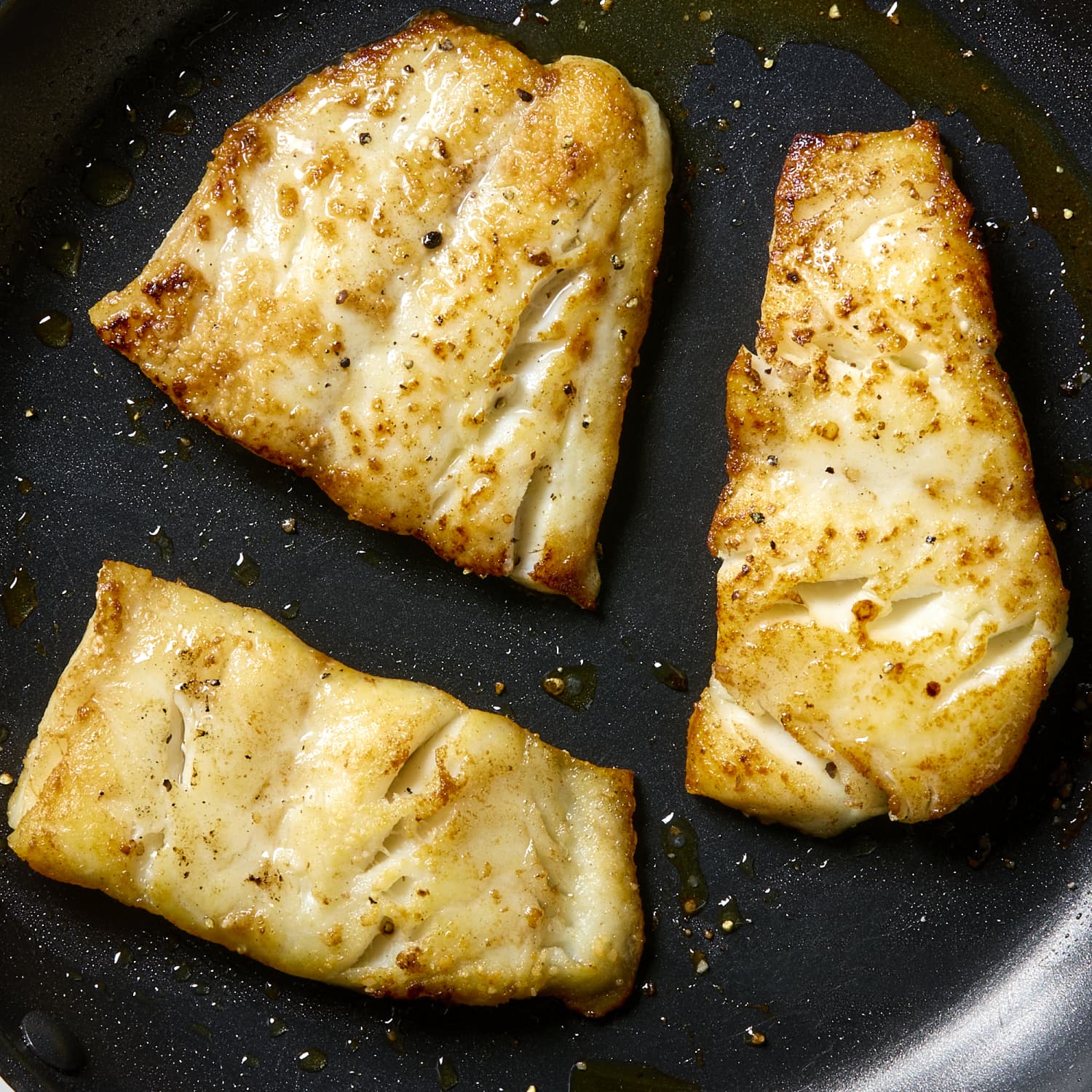
Place your skillet over medium-high heat for 2–3 minutes. Add oil and swirl to coat the bottom. The oil should shimmer but not smoke.
2. Add The Fish
Lay the fillets in the pan away from you to prevent splattering. Don’t crowd the pan — leave space between pieces.
3. Cook Undisturbed
Let the fish cook on the first side without moving it. This helps develop a golden crust and makes flipping easier.
- For thin fillets (1/2 inch or less): 2–3 minutes per side
- For thick fillets (over 1 inch): 4–5 minutes per side
4. Flip Carefully
Use a fish spatula to gently turn the fish. If it resists, wait another 30 seconds — it’s not ready yet.
5. Finish Cooking
Cook until the thickest part is opaque and flakes easily. For salmon, a little translucency in the center is fine.
Internal temperature: 140–145°F (60–63°C) is safe for most fish.
6. Rest And Serve
Transfer the cooked fish to a plate and let it rest for a minute or two. This keeps it juicy.
Non-obvious insight: Don’t cover with foil — steam will ruin the crispy crust.
Pan Frying Timing Chart
To make things easier, here’s a quick reference for different fillet thicknesses:
| Fish Thickness | Cooking Time (Per Side) | Doneness Clue |
|---|---|---|
| 1/2 inch (1.2 cm) | 2–3 minutes | Opaque, flakes easily |
| 1 inch (2.5 cm) | 4–5 minutes | Opaque center, firm texture |
| 1.5 inches (3.8 cm) | 6–7 minutes | Juices run clear, no translucency |
Common Mistakes To Avoid
Many home cooks struggle with pan frying because of a few easy-to-fix errors.
1. Not Drying The Fish
If the fish is wet, it will steam instead of brown. Always pat fish dry before seasoning.
2. Overcrowding The Pan
Too many fillets lower the temperature. This leads to soggy, pale fish.
3. Using The Wrong Oil
Butter and olive oil burn before the fish is done. Use high-heat oils instead.
4. Moving The Fish Too Soon
Fish needs time to form a crust. If it sticks, it’s not ready to flip.
5. Overcooking
Fish cooks quickly. Use a timer, check for flaking, or use a thermometer. Overcooked fish is dry and tough.
Flavor Variations And Coatings
Pan frying is a blank canvas for flavor. Here are some ways to add variety:
Classic Coatings
- Seasoned flour: Add paprika, cayenne, or garlic powder.
- Cornmeal crust: For Southern-style crunch.
- Panko breadcrumbs: Ultra-crispy Japanese style.
Marinades
- Lemon juice, olive oil, and herbs (marinate 15–30 minutes)
- Soy sauce and ginger for an Asian twist
Finishing Touches
- Squeeze of fresh lemon
- Chopped parsley or dill
- Drizzle of browned butter
Pro tip: Add a pat of butter at the end for flavor, but not during frying.
Credit: www.thekitchn.com
Pan Frying: Skin-on Vs. Skinless Fish
Many cooks wonder if they should leave the skin on or remove it. Here’s a quick comparison:
| Skin-On Fish | Skinless Fish |
|---|---|
| Protects delicate flesh | More direct browning |
| Extra crispy texture | No risk of chewy skin |
| Easier flipping | Ideal for breaded fish |
Tip: For skin-on, always cook skin-side down first, and longer. This gives crispiness and easy release from the pan.
What To Serve With Pan Fried Fish
A simple piece of pan fried fish pairs well with many sides. Here are a few ideas:
- Steamed vegetables: Asparagus, green beans, or broccoli
- Rice or quinoa: Neutral grains absorb sauces well
- Mashed potatoes: Creamy texture balances crispy fish
- Salads: Arugula, tomato, and cucumber for freshness
- Tartar sauce or aioli: Classic dipping options
For a complete meal, combine one starch, one vegetable, and a sauce.
Storing And Reheating
Pan fried fish is best fresh, but you can save leftovers safely.
Storing
- Cool fish to room temperature within 30 minutes
- Store in an airtight container in the fridge
- Eat within 2 days for best quality
Reheating
- Use a skillet over medium heat with a little oil
- Avoid microwaving — it makes fish rubbery and dries it out
Non-obvious insight: Place a lid slightly ajar over the pan while reheating to keep fish moist, but not soggy.
Quick Troubleshooting Guide
If your pan fried fish didn’t come out as planned, here’s how to fix common issues:
| Problem | Possible Cause | Solution |
|---|---|---|
| Fish sticks to pan | Pan not hot enough, not enough oil, moved too soon | Preheat pan, add more oil, wait to flip |
| Soggy crust | Fish too wet, crowded pan, low heat | Pat dry, fry in batches, increase heat |
| Fish is dry | Overcooked, too thin, low-fat fish | Reduce cook time, try thicker/fattier fish |
| Breading falls off | Wet fish, not enough pressure, flipped too early | Dry well, press coating, let crust set before flipping |

Credit: www.recipetineats.com
Health And Nutrition Facts
Pan frying is a balanced way to cook fish. You use minimal oil, and most types of fish are high in protein and nutrients.
Average nutrition (per 4 oz. fillet of cod, pan fried):
- Calories: 180–220
- Protein: 22–24g
- Fat: 6–8g
- Carbohydrates: 4–6g (with light flour coating)
- Omega-3s: 200–400mg (varies by fish)
For more on fish nutrition, the FDA’s advice about eating fish is a useful resource.
Pro tip: Wild-caught fish often have more omega-3s and fewer contaminants than farmed fish.
Cooking For A Crowd
If you’re making pan fried fish for several people, keep these tips in mind:
- Fry in batches — don’t overload the pan
- Keep cooked fish warm in a 200°F oven on a rack (not on a plate, which steams the crust)
- Serve with a platter of lemon wedges and sauces
For large quantities, consider using two pans at once.
Cleaning Up After Pan Frying
Oil splatters are part of pan frying, but cleanup doesn’t have to be a chore.
- Let the pan cool before washing
- Wipe out excess oil with paper towels
- Soak with hot water and dish soap for 10–15 minutes
- For cast iron, avoid soaking; wipe and lightly oil after cleaning
If your kitchen smells fishy, simmer a pot of water with lemon slices or vinegar for a few minutes.
Frequently Asked Questions
How Do I Keep Fish From Sticking To The Pan?
Make sure the pan is hot before adding fish, and use enough oil to coat the bottom. Dry the fish well and don’t flip too soon. A good crust forms when fish is left undisturbed.
Can I Pan Fry Fish Without Flour?
Yes. For a gluten-free option, use cornstarch or rice flour. You can also fry fish plain (no coating), especially fattier types like salmon or skin-on fillets.
What Oil Is Best For Pan Frying Fish?
Neutral, high-smoke-point oils like canola, grapeseed, or vegetable oil are ideal. Avoid extra virgin olive oil and butter for frying, as they burn quickly.
How Do I Know When Fish Is Done?
Fish is done when it’s opaque, flakes easily with a fork, and reaches an internal temperature of 140–145°F. If in doubt, cut into the thickest part to check.
Can I Use A Nonstick Pan For Pan Frying Fish?
Absolutely. Nonstick pans work well for delicate fish and reduce the risk of sticking. Just remember not to use metal utensils, which can scratch the coating.
Pan frying fish is a skill that pays off for a lifetime. Once you understand the basics, you can mix and match flavors, coatings, and sides for endless variety. With practice, you’ll be able to cook fish that’s crisp outside, tender inside, and full of fresh flavor — all in less than 15 minutes.
Whether you’re making a quick dinner or impressing friends, pan fried fish is a technique worth mastering.

Hello, This is Annie Walker, a 38-year-old blogger, founder, and editor of Cookware Guider from NY, USA. I am a cookware fanatic and passionate cooker. I love to cook with different types of cooking appliances (example: all types of cookware, rice cookers, slow cookers, etc) almost every day in my kitchen. I love to share my experience with my readers in my blog. Also, I enjoy helping people to solve their problems through my website. You can follow me on Twitter & Pinterest. To know details about my blog please check the about us page.