
Pan-frying trout is more than just a cooking method—it’s a simple way to highlight the natural flavors of a popular freshwater fish. Trout is tender, mild, and cooks quickly, making it perfect for home cooks and restaurant chefs. Many people shy away from pan-frying fish, worried about sticking, overcooking, or losing flavor.
But with the right technique, trout turns crisp on the outside, juicy on the inside, and is ready in under 15 minutes. Whether you’re new to cooking fish or want to improve your results, this guide will help you master pan-frying trout with confidence.
Choosing The Right Trout
Not all trout are the same. You’ll find several varieties in stores and markets, each with unique qualities. The most common are rainbow trout, brook trout, and brown trout. Rainbow trout is popular for its mild taste and tender flesh. Brook trout is a bit smaller and has a more delicate flavor, while brown trout is slightly stronger and firmer.
Freshness matters. Look for:
- Bright, clear eyes
- Firm, shiny skin
- No strong fishy smell
If you buy fillets, make sure they’re moist, not dry or discolored. Whole trout should be gutted and cleaned, but many stores will do this for you.
You can use farmed or wild trout, but wild trout often has a firmer texture and more pronounced flavor. Farmed trout is usually more consistent in size and taste.
| Type of Trout | Flavor | Texture | Common Size |
|---|---|---|---|
| Rainbow Trout | Mild | Tender | 10–16 oz |
| Brook Trout | Delicate | Soft | 6–12 oz |
| Brown Trout | Rich | Firm | 12–24 oz |
Preparing Trout For Pan Frying
Before cooking, you need to prepare the trout properly. If you have whole trout, rinse it under cold water and pat dry with paper towels. Remove any remaining scales by scraping gently with the back of a knife. Check inside for any bones or bloodline and remove these if present.
For fillets, inspect for pin bones. Run your fingers along the flesh; if you feel bones, use tweezers to remove them. Drying the trout is important—moisture causes sticking and prevents browning.
Seasoning is simple. Sprinkle both sides with:
- Salt
- Freshly ground black pepper
Many cooks add lemon zest or fresh herbs like dill or parsley for extra flavor, but basic seasoning lets the trout shine.
If you want a crisp crust, lightly coat the trout in flour. This helps create a golden, non-stick exterior. Use all-purpose flour, cornmeal, or rice flour for gluten-free options.
| Preparation Step | Importance | Common Mistake |
|---|---|---|
| Drying the trout | Ensures crisp skin | Cooking with wet fish |
| Removing bones | Better eating experience | Leaving pin bones in fillets |
| Seasoning | Enhances flavor | Over-salting |
| Flour coating | Creates crust | Too thick coating |

Credit: www.thetastychilli.com
Ingredients And Tools Needed
To pan fry trout, you need just a few ingredients and tools. Here’s a basic list:
Ingredients:
- 2 trout fillets or whole trout (about 12 oz each)
- 2 tablespoons all-purpose flour (optional)
- Salt and pepper
- 2 tablespoons butter or oil (canola, olive, or grapeseed)
- Lemon wedges (for serving)
- Fresh herbs (optional: Parsley, dill, chives)
Tools:
- 12-inch nonstick or stainless steel skillet
- Fish spatula (thin and flexible)
- Paper towels
- Tongs (optional)
A fish spatula is helpful because it slides easily under delicate fish without breaking it. If you use stainless steel, preheat the pan and add oil to prevent sticking.
Step-by-step: How To Pan Fry Trout
Pan-frying trout is quick, but each step matters. Here’s how to do it:
- Dry the trout: Pat fillets or whole fish dry with paper towels. Moisture prevents browning.
- Season: Sprinkle both sides with salt and pepper. Add lemon zest or herbs if desired.
- Coat with flour (optional): Dust lightly with flour on both sides. Shake off extra.
- Heat pan: Place skillet on medium-high heat. Add butter or oil. Wait until it shimmers or butter foams.
- Add trout: Lay the trout in the pan, skin side down if you have skin-on fillets. Don’t crowd the pan—cook in batches if needed.
- Cook undisturbed: Let it cook for 3–4 minutes. The skin should turn golden and crisp.
- Flip gently: Use a fish spatula to turn the trout. Cook another 2–3 minutes, until the flesh turns opaque and flakes easily.
- Remove and rest: Transfer trout to a plate. Let it rest for 1–2 minutes. This keeps it juicy.
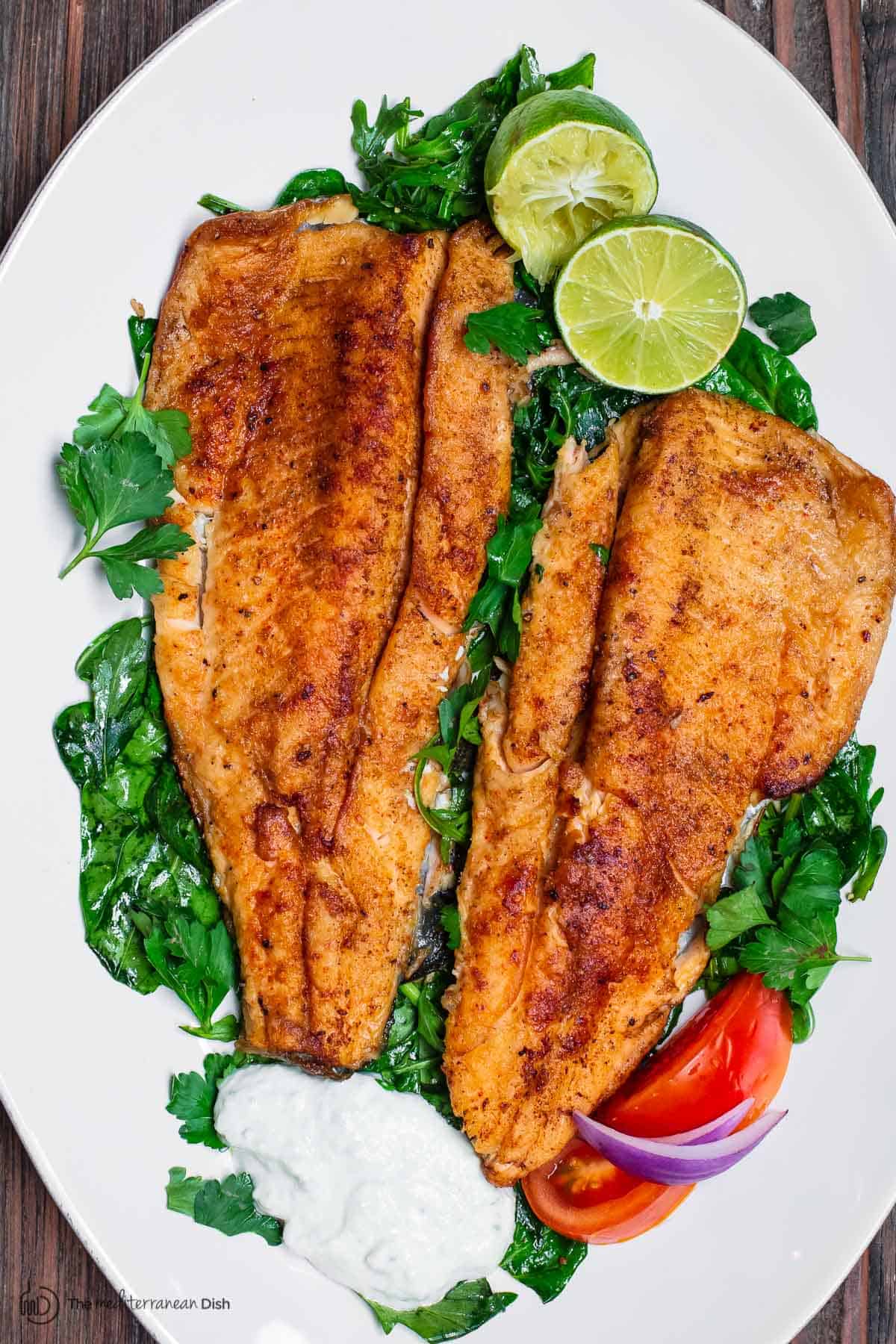
- Serve: Add lemon wedges and sprinkle with fresh herbs. Serve immediately.
Cooking Times
Trout cooks quickly. For fillets, 3–4 minutes per side is typical. Whole trout may need a minute more. If the fish is thicker, add an extra minute.
Tip: Don’t overcook. Trout becomes dry fast. When the flesh flakes with a fork, it’s done.
Common Mistakes When Pan Frying Trout
Many beginners make mistakes that affect taste and texture. Knowing these helps you avoid them.
- Using cold fish: Let trout come to room temperature for 10 minutes before cooking. Cold fish cooks unevenly.
- Overcrowding the pan: Too many pieces lower the temperature and cause steaming, not frying.
- Not drying the fish: Wet fish sticks and won’t crisp.
- Overcooking: Trout dries out fast. Watch closely.
- Using the wrong oil: Butter adds flavor but burns easily. Mix butter with oil for better results.
Non-obvious insight: If your trout sticks, let it cook longer. As the skin crisps, it releases naturally from the pan.
Flavor Variations And Sauces
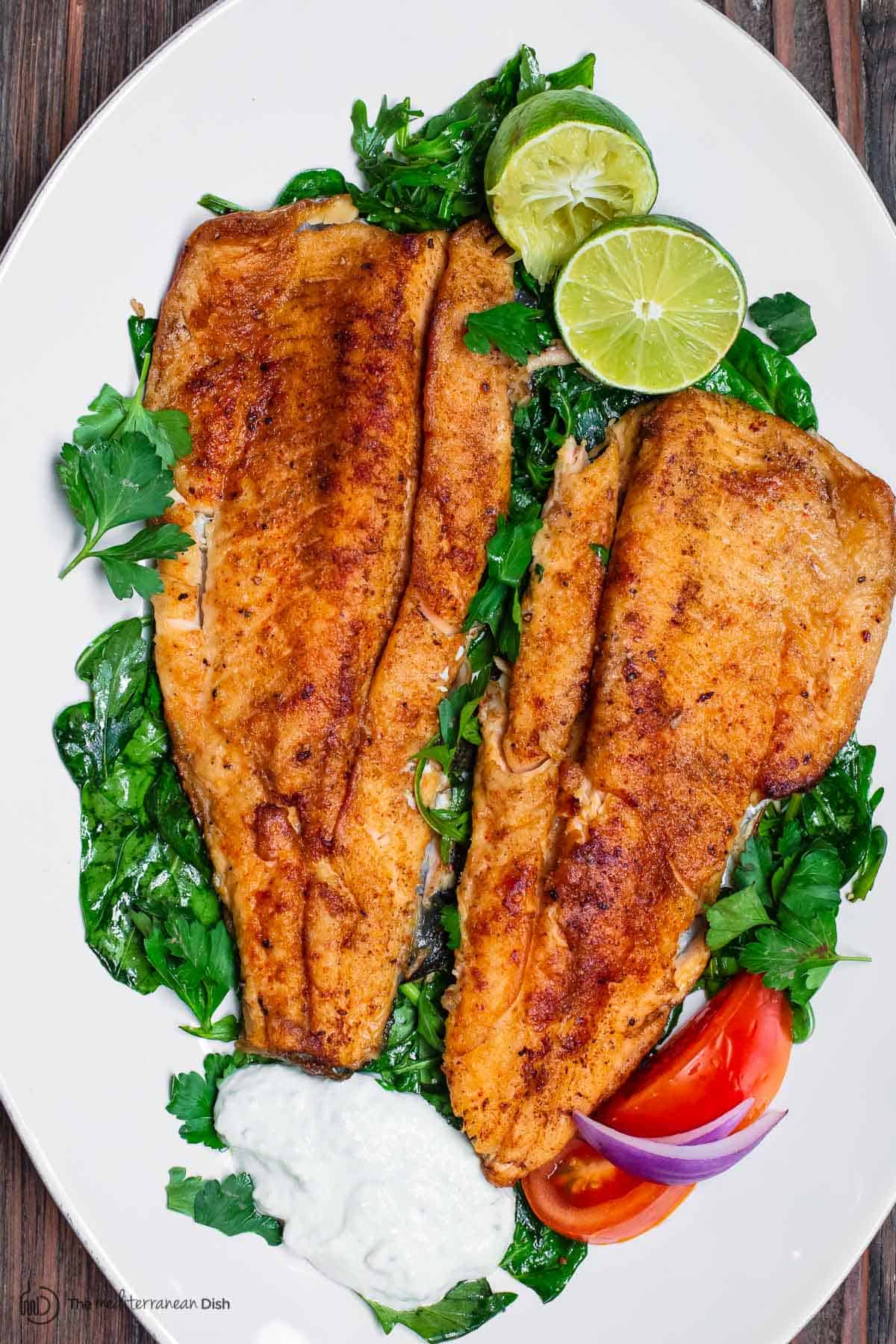
Pan-fried trout is tasty on its own, but you can add sauces or toppings for extra flavor. Classic options include:
- Lemon butter sauce: Melt butter, add lemon juice and parsley.
- Garlic herb sauce: Sauté garlic in oil, add chopped herbs and drizzle over fish.
- Almondine: Toast sliced almonds in butter, pour over trout.
Data point: A survey by Bon Appétit found lemon butter is the most popular sauce for trout, chosen by 42% of respondents.
You can also try spice rubs, like smoked paprika or Cajun seasoning. Just don’t overpower the natural flavor.
Credit: www.themediterraneandish.com
Serving And Pairing Suggestions
Trout pairs well with simple sides. Try:
- Steamed vegetables: Asparagus, green beans, or broccoli
- Roasted potatoes or rice
- Fresh salad
Light wines, such as Sauvignon Blanc or Pinot Grigio, complement trout’s flavor. If you prefer beer, choose a crisp lager.
| Side Dish | Wine Pairing | Beer Pairing |
|---|---|---|
| Steamed Asparagus | Sauvignon Blanc | Pilsner |
| Roasted Potatoes | Chardonnay | Lager |
| Fresh Salad | Pinot Grigio | Wheat Beer |
Tips For Perfect Pan Fried Trout
Here are a few expert tips that make a big difference:
- Preheat the pan for at least 2 minutes. Hot pans prevent sticking.
- Use a mix of oil and butter for flavor and crispness.
- Don’t move the trout until it’s ready to flip. Disturbing it too soon breaks the crust.
- Rest after cooking for a minute. This keeps the fish moist.
- Clean the pan between batches if cooking multiple trout. Burnt bits affect flavor.
Another insight: If you want extra crispy skin, press gently on the fish with a spatula for the first minute.
Credit: www.tomsawesomeseafood.com
Nutrition And Health Benefits
Trout is one of the healthiest fish you can eat. It’s rich in omega-3 fatty acids, protein, and vitamins B12 and D. One 4-ounce serving has about 120 calories, 20 grams of protein, and 2 grams of fat.
Eating trout regularly helps support heart health, brain function, and reduces inflammation. Pan-frying with minimal oil keeps calories low.
According to the USDA, trout has less mercury than many other fish, making it a safer choice for families and children.
Cleaning Up After Cooking
Fish can leave odors and mess. Here’s how to clean up efficiently:
- Let the pan cool before washing.
- Use warm, soapy water and a non-abrasive sponge.
- To remove fish smell, rub the pan with lemon juice or vinegar.
If you cooked skin-on trout, remove any leftover skin or bits from the pan before washing. This prevents sticking in future uses.
Frequently Asked Questions
How Do I Know When Trout Is Fully Cooked?
Trout is cooked when the flesh turns opaque and flakes easily with a fork. The internal temperature should reach 145°F (63°C), but most people rely on color and texture. Overcooking makes it dry, so check after 6–7 minutes total.
Can I Pan Fry Trout Without Flour?
Yes, you can pan fry trout without flour. The skin will still crisp if you dry the fish well and use a hot pan. Flour adds crunch, but isn’t required. For gluten-free diets, use cornmeal or rice flour.
What Oil Is Best For Pan Frying Trout?
Choose oils with a high smoke point, like canola, grapeseed, or light olive oil. Butter adds flavor but burns quickly, so mix it with oil. Avoid heavy oils like peanut or sesame—they overpower the trout.
Can I Pan Fry Frozen Trout Fillets?
It’s best to thaw trout fillets before pan frying. Frozen fish releases water, causing sticking and uneven cooking. Thaw in the fridge overnight or under cold running water for 30–60 minutes.
How Do I Prevent Fish From Sticking To The Pan?
Dry the trout thoroughly, preheat the pan, and use enough oil. Don’t move the fish until the crust forms. A fish spatula helps, and nonstick pans make the process easier.
Pan-frying trout is easy with the right steps. Enjoy experimenting with sauces and sides, and remember that practice brings confidence. For more tips on trout and other freshwater fish, visit Wikipedia. With these techniques, you’ll serve delicious, crisp trout every time.

Hello, This is Annie Walker, a 38-year-old blogger, founder, and editor of Cookware Guider from NY, USA. I am a cookware fanatic and passionate cooker. I love to cook with different types of cooking appliances (example: all types of cookware, rice cookers, slow cookers, etc) almost every day in my kitchen. I love to share my experience with my readers in my blog. Also, I enjoy helping people to solve their problems through my website. You can follow me on Twitter & Pinterest. To know details about my blog please check the about us page.