
Do you find your kitchen drawers cluttered with saucepan lids that never seem to fit right? Struggling to keep them organized can waste your time and make cooking more frustrating than it needs to be.
Imagine opening your cabinet and instantly spotting the perfect lid, ready to use. Storing your saucepan lids the right way can save you space, reduce stress, and keep your kitchen looking neat. You’ll discover simple and clever tips to organize your lids so you can cook with ease every time.
Keep reading—your kitchen will thank you!
Choosing Storage Spots
Choosing the right spots to store saucepan lids helps keep your kitchen tidy and efficient. Proper storage prevents lids from getting lost or damaged. It also saves space and makes cooking easier. Pick locations that fit your kitchen layout and how often you use your pots and pans. This guide explores three smart storage spots that suit different kitchens and needs.
Cabinet Options
Cabinets offer a classic and protected place for saucepan lids. You can store lids inside the cabinet with pots or separately, depending on space. Use organizers or dividers to keep lids upright and easy to grab. This prevents scratching and stacking mess.
- Vertical dividers: Place lids between boards or racks to keep them standing.
- Pull-out trays: Attach trays that slide out for better access.
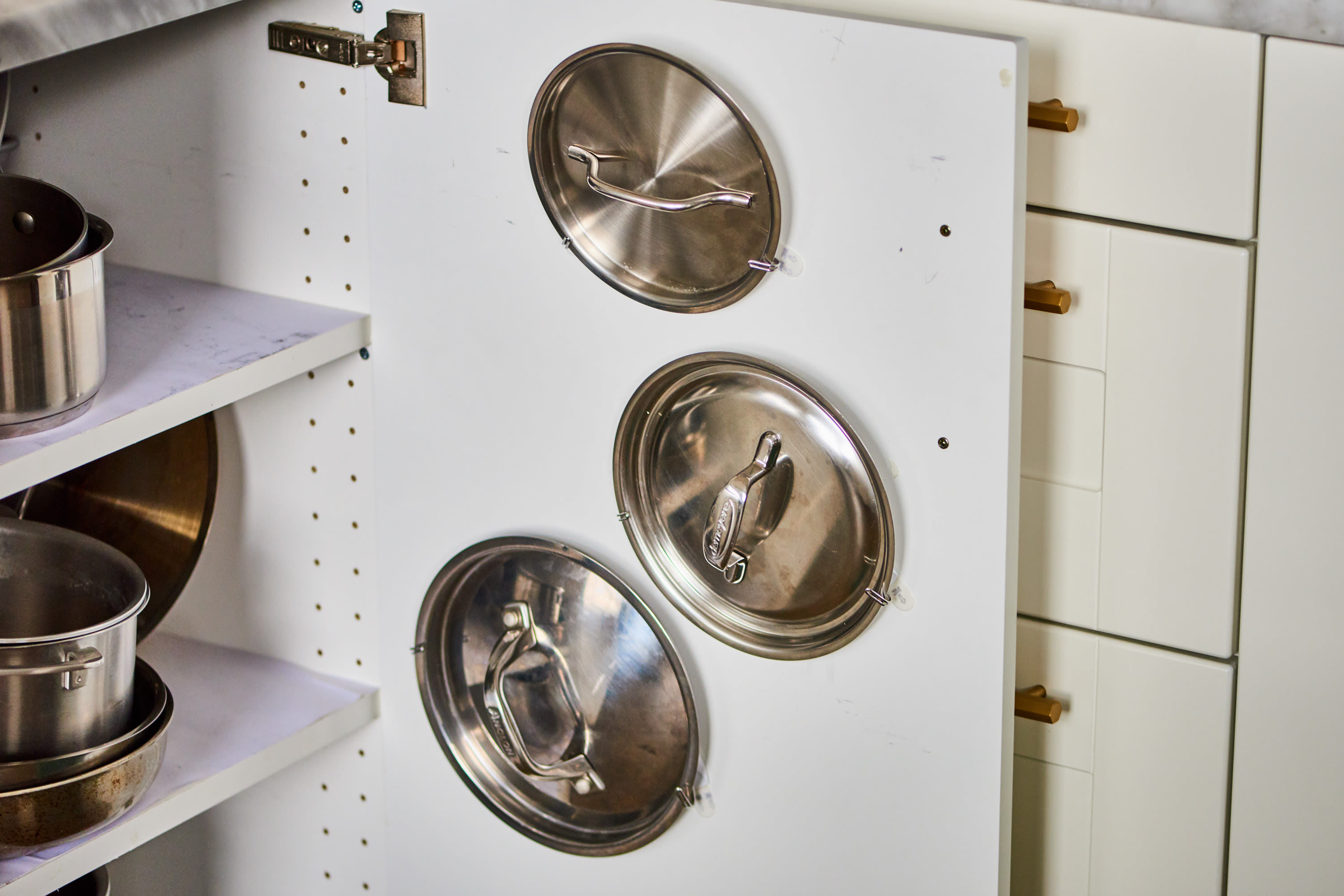
- Door-mounted racks: Use the inside of cabinet doors to hang or slot lids.
Here is a simple comparison of cabinet storage methods:
| Method | Space Used | Accessibility | Protection |
|---|---|---|---|
| Vertical Dividers | Moderate | High | Good |
| Pull-out Trays | High | Very High | Excellent |
| Door-mounted Racks | Low | Moderate | Moderate |
Choose cabinet solutions based on your kitchen size and how often you cook. These options keep lids safe and easy to find.
Drawer Solutions
Drawers provide an excellent spot for saucepan lids, especially in kitchens with deep or wide drawers. They keep lids flat and prevent stacking damage. Organizers and dividers make the most of drawer space. Use adjustable inserts to fit lids of different sizes. This keeps lids neat and prevents clattering when you open the drawer.
Benefits of using drawers for lid storage:
- Easy access: Pull out the drawer and see all lids at once.
- Space-saving: Use drawer depth to store multiple lids without clutter.
- Protection: Soft liners prevent scratches and noise.
Consider drawer organizers like this simple layout:
| Lid 1 | Lid 2 | Lid 3 | Lid 4 |Use dividers to separate lids by size or type. This method keeps lids visible and organized. It works well for kitchens with limited cabinet space.
Wall-mounted Racks
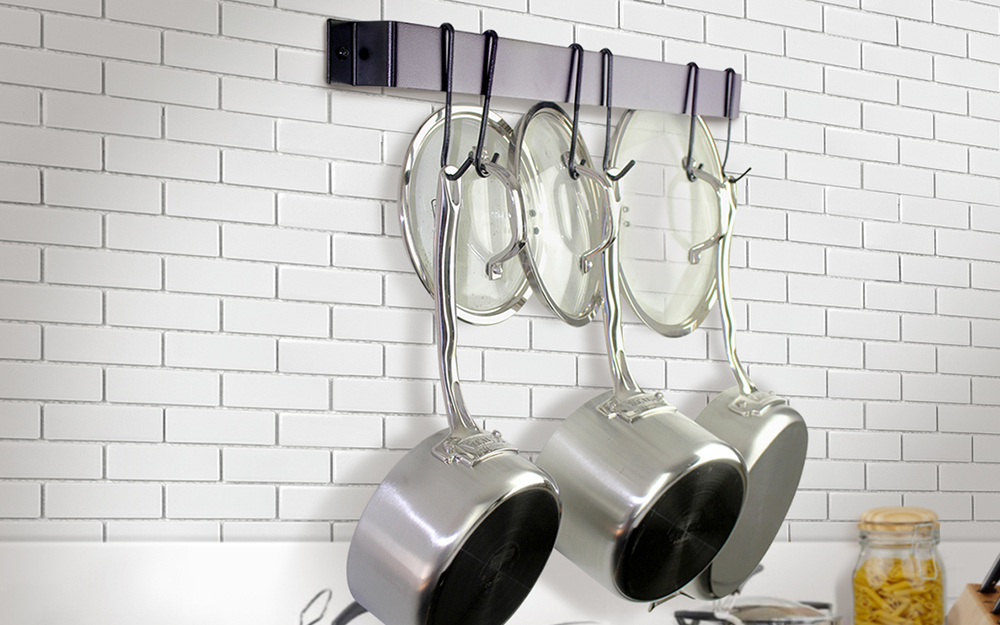
Wall-mounted racks free up cabinet and drawer space. They turn unused wall areas into practical storage zones. Hang lids by their handles or place them on hooks or shelves. This method is highly visible and easy to reach. It suits kitchens with good wall space near cooking areas.
- Hooks: Hang lids by handles for quick grab-and-go.
- Shelves: Place lids flat or upright on small shelves.
- Magnetic strips: Attach metal lids using magnets for a sleek look.
Wall racks come in various styles and sizes. Choose one that fits your kitchen decor and lid sizes. Keep lids away from direct heat or steam to protect them. Wall storage makes lids part of your kitchen design while saving space.
Credit: www.thekitchn.com
Using Organizers
Storing saucepan lids can be tricky. They take up space and often create clutter in kitchen cabinets. Using organizers helps keep lids neat, easy to find, and safe from damage. Organizers come in many styles and sizes, fitting different kitchen setups. They save time and reduce frustration when cooking. This section explores smart organizer options for saucepan lids.
Lid Holders And Racks
Lid holders and racks are designed specifically to hold lids upright or flat. They keep lids visible and accessible. These organizers fit inside cabinets, on doors, or countertop edges. Most are made from metal or plastic and come with slots or hooks.
- Vertical lid holders: Hold lids upright like files. Save horizontal space.
- Wall-mounted racks: Attach to cabinet doors or walls. Free up shelf space.
- Countertop racks: Sit on counters for easy access while cooking.
Benefits include:
| Feature | Benefit |
|---|---|
| Multiple Slots | Hold several lids of different sizes |
| Non-slip Base | Keeps organizer stable and prevents tipping |
| Compact Design | Fits small spaces and cabinets |
Choose a rack that matches your kitchen size. Look for adjustable slot widths to fit various lid sizes. Many racks allow stacking to maximize space. This keeps lids organized and your kitchen tidy.
Adjustable Dividers
Adjustable dividers create custom compartments inside drawers or cabinets. They separate lids from pots and other kitchenware. These dividers slide or clip into place. You can change their position to fit different lid sizes.
Key points:
- Make use of drawer space efficiently
- Prevent lids from sliding and scratching
- Easy to rearrange as kitchen tools change
Materials include plastic, wood, and metal. Some dividers have rubber grips to stay steady. Others have flexible arms to hold lids upright.
Here’s how to use adjustable dividers:
- Measure drawer or cabinet width
- Place dividers to create compartments matching lid sizes
- Store lids flat or upright within compartments
Adjustable dividers reduce clutter and protect lids. They fit most kitchen spaces and budgets. This method works well for kitchens with limited vertical storage.
Diy Storage Ideas
Creating your own lid storage can be simple and cost-effective. DIY projects use common materials to build custom organizers. These ideas suit different kitchen layouts and personal styles.
Popular DIY lid storage options include:
- Repurposed magazine holders: Use sturdy holders to keep lids upright inside cabinets.
- Wooden slat racks: Build a rack with wood strips and nails to hold lids vertically.
- Hanging pegboards: Attach hooks to pegboards for lid hanging on kitchen walls.
Steps for a simple DIY lid rack:
- Cut a wooden board to fit your cabinet width
- Attach vertical wooden strips evenly spaced
- Place lids between strips to hold upright
This project requires basic tools like a saw, drill, and screws. Paint or stain wood for a polished look. DIY storage lets you customize size and style. It also saves money compared to store-bought options.
Space-saving Tips
Saving space in the kitchen is key for keeping things tidy and easy to find. Saucepan lids often take up extra room and can get messy. Using smart space-saving tips helps store lids neatly and frees up cabinet or drawer space. Organizing lids properly makes cooking smoother and keeps your kitchen looking clean. Here are effective ways to store saucepan lids with minimal space.
Stacking Methods
Stacking saucepan lids is a simple way to save space. Group lids by size and shape before stacking. This method reduces clutter and keeps lids easy to access.
- Sort lids from largest to smallest for stable stacks.
- Use a non-slip liner between lids to prevent sliding.
- Stack lids with similar handles facing the same way for neatness.
Place the stack inside a cabinet or on a shelf. Keep heavier lids at the bottom to avoid damage. If your lids have glass centers, stack carefully to prevent cracks.
| Stack Type | Best For | Tips |
|---|---|---|
| Flat Stack | Metal lids without handles | Use liners to avoid scratches |
| Handle-Aligned Stack | Lids with knobs or handles | Keep handles facing same direction |
Stacking works well in deep cabinets. Avoid tall stacks to keep lids easy to pick up. This method fits many lids in one spot.
Vertical Storage
Vertical storage saves horizontal space and keeps lids visible. Store lids upright in racks, holders, or DIY dividers.
- Use a pot lid organizer rack designed for vertical storage.
- Create dividers with wooden slats or metal bars inside cabinets.
- Repurpose magazine holders to hold lids upright in pantry or cupboards.
Vertical storage allows quick lid selection without moving others. It fits narrow spaces or cabinet doors easily. This method also prevents lids from scratching.
| Vertical Storage Option | Space Saved | Ease of Use |
|---|---|---|
| Pot Lid Organizer | High | Very Easy |
| DIY Dividers | Medium | Moderate |
| Magazine Holders | Medium | Easy |
This setup works well inside cabinets or on kitchen counters. It keeps lids clean and ready to use.
Multi-purpose Containers
Multi-purpose containers store lids and other kitchen items together. This keeps space organized and reduces clutter.
- Use plastic bins to hold lids upright or stacked.
- Choose containers with handles for easy moving.
- Label containers to find lids quickly.
Containers fit inside cabinets, shelves, or even drawers. They protect lids from dust and damage. Some containers have dividers for extra organization.
| Container Type | Best Use | Benefits |
|---|---|---|
| Plastic Bin | Stacking or vertical storage | Portable and dust-free |
| Drawer Organizer | Drawer storage | Keeps lids separated and neat |
| Box with Dividers | Mixed lid sizes | Prevents shifting and damage |
Using containers simplifies kitchen cleaning. It also groups lids with matching saucepans or pots. This method works well for busy kitchens with many lids.
Credit: www.homedepot.com
Maintaining Lid Condition
Maintaining the condition of saucepan lids keeps your cookware in top shape and extends its life. Proper care prevents damage such as stains, scratches, and cracks. Clean lids and safe storage protect their surface and functionality. This section explains key steps to keep lids clean, scratch-free, and well handled.
Cleaning Before Storage
Cleaning lids thoroughly before storing is essential to avoid stains and odors. Food residue and grease can cause damage over time if left on the surface. Use warm water and mild dish soap for effective cleaning.
- Rinse the lid with warm water to remove loose particles.
- Use a soft sponge or cloth with dish soap to wash all areas.
- Pay attention to edges and handles where dirt can hide.
- Rinse well to remove soap residue.
- Dry immediately with a clean towel to prevent water spots.
For stubborn stains, soak lids in warm soapy water for 10-15 minutes before scrubbing gently. Avoid harsh chemicals or abrasive scrubbers, as they can damage the lid’s finish.
| Cleaning Step | What to Do | What to Avoid |
|---|---|---|
| Rinse | Use warm water to remove loose dirt | Cold water or no rinsing |
| Wash | Mild soap with soft sponge | Abrasive pads or harsh chemicals |
| Dry | Use a clean towel immediately | Air drying causing water spots |
Avoiding Scratches
Scratches reduce the lifespan and appearance of saucepan lids. Handle lids carefully to avoid rough contact with hard surfaces or other utensils.
Follow these tips to prevent scratches:
- Stack lids with soft cloth or paper towels between them.
- Use lid organizers or racks to keep lids separate.
- Store lids upright instead of flat to avoid rubbing.
- Never slide lids across metal or abrasive surfaces.
- Place lids on clean, padded surfaces when not in use.
Use protective covers for lids with non-stick coatings or delicate finishes. Check lids regularly for signs of wear and replace any that show deep scratches to maintain cooking safety and hygiene.
Handling Glass Lids
Glass lids require gentle care to prevent cracks or breakage. Treat them carefully during cleaning and storage to keep them clear and intact.
Key handling tips for glass lids:
- Hold lids by their handles, not edges, to avoid dropping.
- Use non-abrasive cleaners and soft cloths to clean glass surfaces.
- Do not expose glass lids to sudden temperature changes.
- Store glass lids separately or with cushioning to prevent impact damage.
- Inspect lids for chips or cracks before each use.
Glass lids often have metal rims or handles. Dry these parts thoroughly to avoid rust. Avoid stacking heavy pots or lids on glass lids to prevent pressure damage. Proper care preserves their transparency and safety for cooking.
Special Considerations
Storing saucepan lids requires more than just placing them in a drawer. Some lids need special care due to their size, shape, or design. Paying attention to these details helps keep your kitchen organized and protects your cookware. This section highlights important tips for storing large lids, lids with handles, and matching lids to their saucepans.
Large And Odd-shaped Lids
Large and odd-shaped lids can be tricky to store because they take up more space or don’t fit standard racks. These lids often belong to specialty pots or pans and need careful handling to avoid damage or clutter.
Try these storage ideas for large or unusual lids:
- Use vertical storage racks: Place lids upright between dividers to save space and keep them visible.
- Hang on wall hooks: Install sturdy hooks on the kitchen wall or inside cabinet doors for easy access.
- Store flat under shelves: Slide large lids flat on top of lower shelves if space allows.
Here is a simple comparison of storage methods:
| Method | Best For | Pros | Cons |
|---|---|---|---|
| Vertical Racks | Large flat lids | Saves space, easy to see lids | Needs extra rack or divider |
| Wall Hooks | Odd shapes, heavy lids | Accessible, frees up cabinet space | Requires wall space and installation |
| Flat Shelf Storage | Large lids with no handles | Simple, no installation needed | Can clutter shelf, hard to access lids at bottom |
Lids With Handles
Lids with handles need extra attention to prevent damage and make them easy to grab. Handles may catch on other items or break if stored improperly.
Follow these tips for storing lids with handles:
- Use lid holders with compartments: These keep lids upright and protect handles from pressure.
- Hang lids by handles: Use hooks or pegs to hang lids, keeping handles free and safe.
- Avoid stacking lids: Stacking can damage handles or cause lids to slip and fall.
Consider organizing lids by handle type and size to improve storage:
- Small handles: Use small hooks or compartments.
- Large or wide handles: Hang on sturdy hooks or store separately.
- Fragile or decorative handles: Keep in padded compartments or away from heavy items.
Matching Lids To Saucepans
Matching lids to their saucepans saves time and space. It avoids confusion and helps keep your kitchen neat.
Try these ideas to keep lids and saucepans paired:
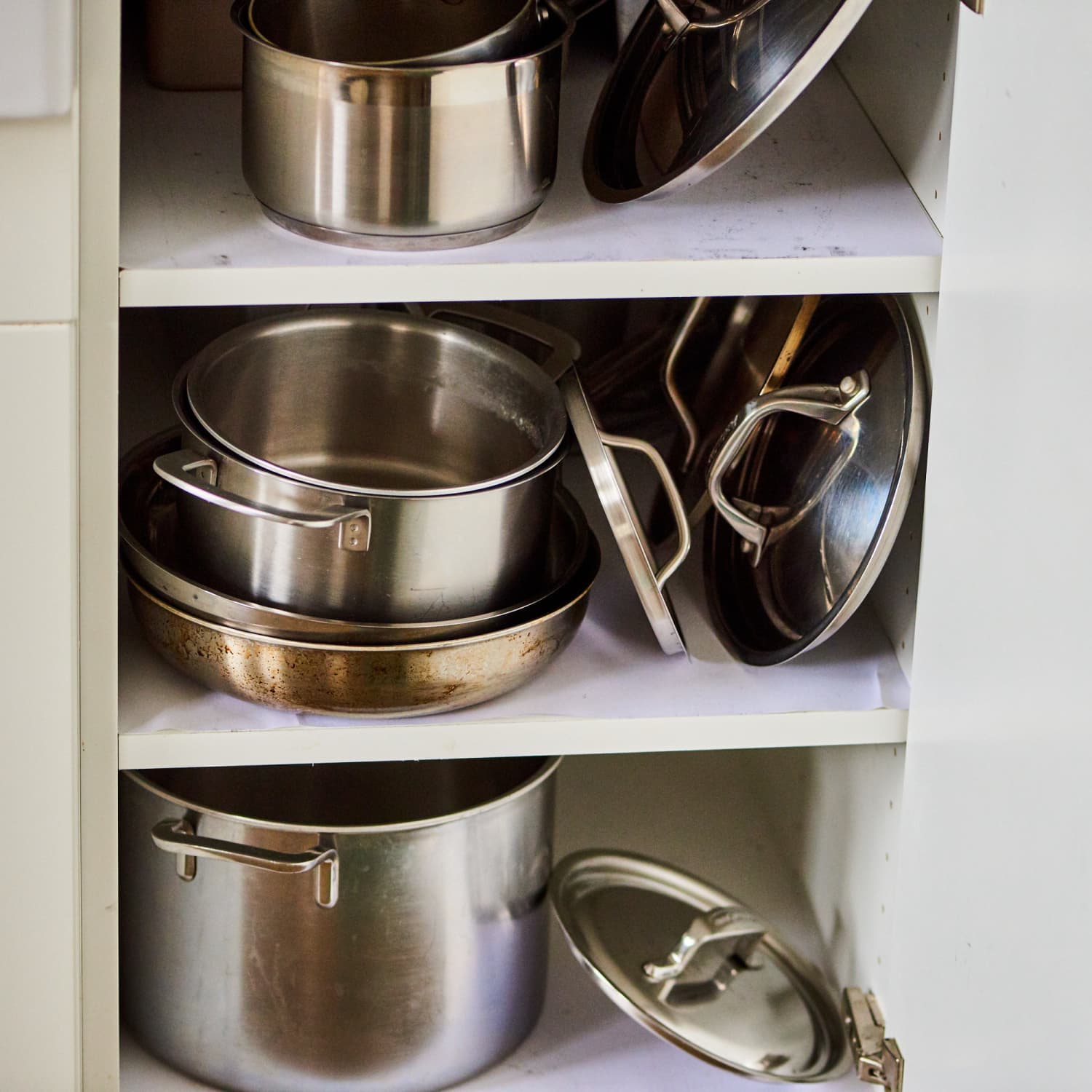
- Store lids inside their pans: Place each lid on or inside its saucepan to keep sets complete.
- Label lids and pans: Use small stickers or tags with size or type to match them easily.
- Use adjustable racks: These can hold pans and lids in the same spot, organized by size.
Here is a quick checklist for matching lids and pans:
| Step | Action | Benefit |
|---|---|---|
| 1 | Check lid size and shape | Ensures proper fit |
| 2 | Pair lid with matching pan | Keeps sets together |
| 3 | Store lid inside or on pan | Saves space and time |
| 4 | Label if needed | Makes identification quick |
Credit: www.thekitchn.com
Frequently Asked Questions
How Can I Organize Saucepan Lids Efficiently?
Use a vertical rack or lid organizer inside cabinets. It saves space and keeps lids accessible. Label or group lids by size for quick use.
What’s The Best Way To Store Glass Saucepan Lids?
Store glass lids upright to avoid scratches or cracks. Use silicone pads or felt liners between lids for extra protection. Avoid stacking heavy items on top.
Can I Hang Saucepan Lids To Save Space?
Yes, hanging lids on hooks or a pegboard is effective. This method keeps lids visible and frees up cabinet space. Ensure hooks fit lid handles securely.
How Do I Prevent Saucepan Lids From Getting Damaged?
Avoid stacking lids without protection. Use soft liners between lids or store them separately. Handle lids gently to prevent chips or cracks.
Conclusion
Storing saucepan lids properly saves space and keeps your kitchen tidy. Use racks, hooks, or inside the pots to keep lids organized. Choose a method that fits your kitchen size and style. Clean lids before storing to avoid smells and stains.
Regularly check your storage to keep it neat and easy to use. Small changes make a big difference in kitchen order. Keep lids easy to find and grab when needed. Simple steps make cooking smoother and cleanup faster.

Hello, This is Annie Walker, a 38-year-old blogger, founder, and editor of Cookware Guider from NY, USA. I am a cookware fanatic and passionate cooker. I love to cook with different types of cooking appliances (example: all types of cookware, rice cookers, slow cookers, etc) almost every day in my kitchen. I love to share my experience with my readers in my blog. Also, I enjoy helping people to solve their problems through my website. You can follow me on Twitter & Pinterest. To know details about my blog please check the about us page.