
Have you ever stopped to wonder where your cookware really comes from? Knowing where your pots and pans are made can change the way you cook—and shop.
If you care about quality, safety, and durability, the origin of your cookware matters more than you might think. You’ll discover exactly where Made In cookware is made and why that makes a difference for your kitchen. Keep reading to find out how this knowledge can help you choose better tools for your cooking adventures.

Credit: www.amazon.com
Cookware Origins
Cookware is an essential part of every kitchen. Knowing where cookware is made helps buyers understand its quality and durability. The origins of cookware vary widely, influenced by the country’s expertise and available materials. Each region brings unique skills and techniques to cookware production, shaping the final product’s performance. The history and tradition of cookware making also play a role in its design and function.
Common Production Countries
Many countries produce cookware, but some are more famous for their quality and craftsmanship. These countries have strong manufacturing industries and use advanced technology to make durable and safe cookware.
- China: The largest producer of cookware, offering a wide range of affordable options. China uses mass production techniques to meet global demand.
- United States: Known for high-quality, durable cookware. Many American brands focus on innovation and eco-friendly materials.
- Germany: Famous for precision engineering and premium cookware. German-made products often feature stainless steel and advanced manufacturing.
- France: Renowned for cast iron cookware. French brands combine tradition and craftsmanship for long-lasting products.
- Italy: Produces stylish and functional cookware. Italian manufacturers focus on design and high-quality materials.
| Country | Known For | Common Cookware Types |
|---|---|---|
| China | Mass production, affordability | Non-stick pans, stainless steel sets |
| United States | Durability, innovation | Cast iron, stainless steel |
| Germany | Precision, premium quality | Stainless steel, cookware sets |
| France | Craftsmanship, tradition | Cast iron, enameled cookware |
| Italy | Design, quality materials | Stainless steel, non-stick |
Materials And Manufacturing
Cookware materials affect cooking performance and longevity. Different countries use various materials based on local resources and technology. Understanding materials helps choose the right cookware for your kitchen.
Common materials include:
- Stainless Steel: Durable, resistant to rust and stains. It heats evenly and is easy to clean.
- Cast Iron: Heavy but retains heat well. Ideal for slow cooking and frying.
- Aluminum: Lightweight and conducts heat quickly. Often coated with non-stick layers.
- Copper: Excellent heat conductor. Used in high-end cookware for precise temperature control.
- Non-stick Coatings: Prevent food from sticking and make cleaning easier. Usually applied to aluminum or stainless steel bases.
Manufacturing processes also differ:
- Stamping: Sheets of metal are cut and shaped into pans and pots.
- Forging: Metal is hammered or pressed for strength and durability.
- Casting: Molten metal is poured into molds, common for cast iron cookware.
- Coating: Non-stick or enamel coatings are applied to improve performance and appearance.
Many manufacturers combine materials and methods to create cookware with the best features. For example, a pan may have an aluminum core for heat and a stainless steel exterior for durability.
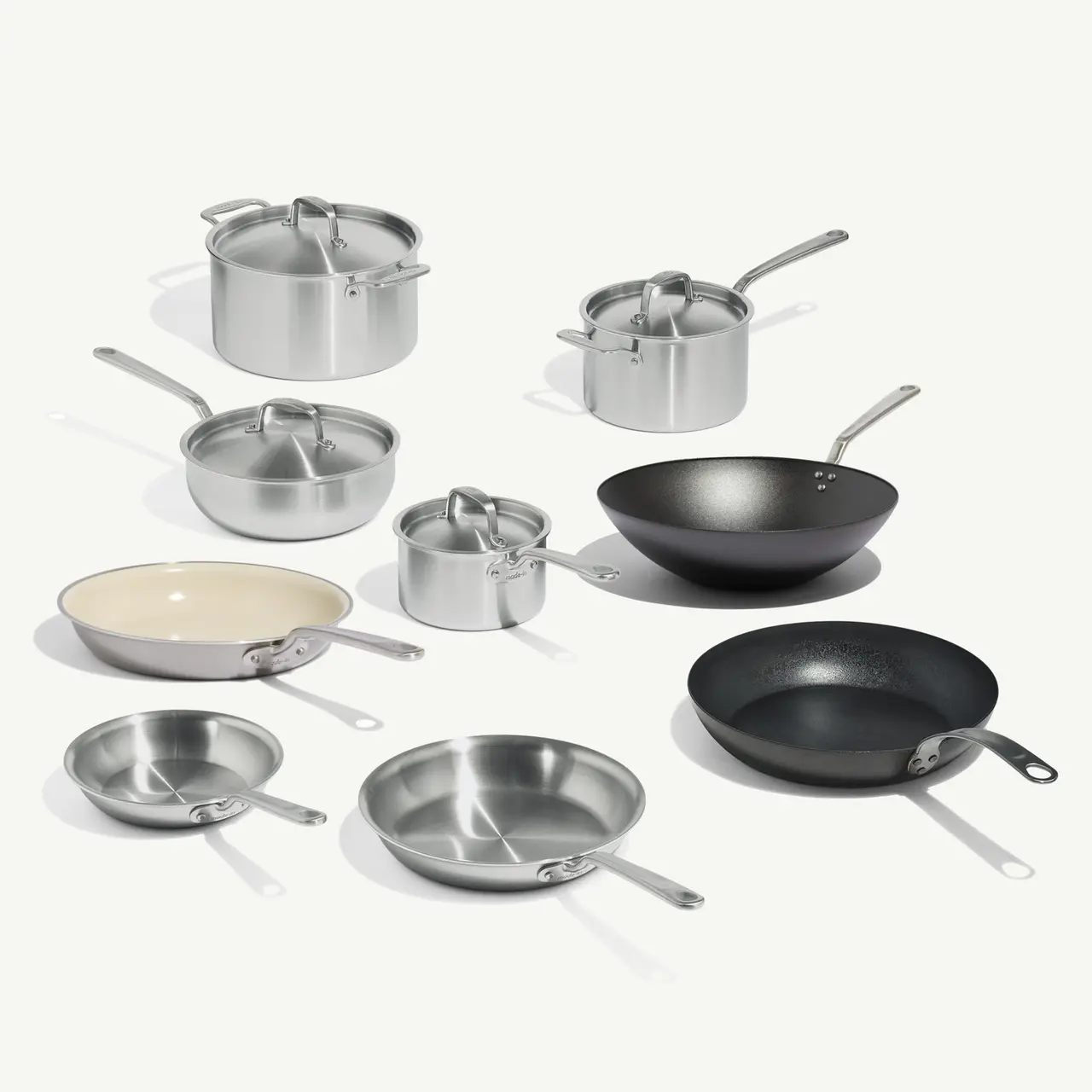
Credit: madeincookware.com
Popular Cookware Brands
Cookware plays a key role in every kitchen. People want pots and pans that last long and cook food well. Many popular cookware brands come from different countries. Each brand has its own style, materials, and ways of making cookware. Knowing where these brands come from helps buyers trust the product’s quality and value. This section looks at popular cookware brands and where they are made.
Brand Location Examples
Many well-known cookware brands come from specific countries known for their metalwork and design. Here are some examples:
| Brand | Country of Origin | Notes |
|---|---|---|
| All-Clad | USA | Made in Pennsylvania; known for stainless steel |
| Le Creuset | France | Famous for colorful cast iron cookware |
| Tefal | France | Non-stick pans with innovative coatings |
| Calphalon | USA / China | Mix of manufacturing locations; quality varies |
| Scanpan | Denmark | Known for eco-friendly non-stick technology |
Some brands produce all products in one country, while others use factories worldwide. This helps keep prices competitive and offers variety.
- European brands often focus on craftsmanship and tradition.
- American brands emphasize innovation and durability.
- Asian factories can offer lower costs and large-scale production.
Understanding brand locations gives insight into cookware quality and design.
Quality And Craftsmanship
Cookware quality depends on materials, design, and how it is made. Brands from certain countries often have strong reputations for craftsmanship.
European brands like Le Creuset and Scanpan focus on hand-finishing and durable materials. Their cast iron and stainless steel pans last for decades. They use thick bases for even heat and apply coatings carefully to avoid peeling.
American brands such as All-Clad use layers of metal bonded together. This creates pans that heat quickly and cook food evenly. They test products for durability and safety. Many parts are made by skilled workers in local factories.
Some brands use advanced technology to improve cookware. For example:
- Non-stick coatings that last longer and resist scratching.
- Multi-layer bases for better heat distribution.
- Eco-friendly materials that are safe and recyclable.
Check the following points to assess cookware quality:
- Material: Stainless steel, cast iron, aluminum, or ceramic.
- Weight: Heavier pans often mean stronger build.
- Finish: Smooth coating without bubbles or cracks.
- Handles: Secure and heat-resistant for safety.
Well-crafted cookware improves cooking and lasts longer. It also offers better value over time.
Impact Of Country On Quality
The country where cookware is made greatly affects its quality. Different nations have unique methods and rules for producing cookware. These factors shape the durability, safety, and performance of the final product. Understanding how the country of origin impacts quality helps buyers make wise choices. The quality depends mainly on two key aspects: material sourcing and manufacturing standards.
Material Sourcing
Material sourcing plays a crucial role in cookware quality. The source of metals and coatings used can vary widely by country. Some countries have access to high-grade raw materials, while others may use cheaper or recycled metals. This difference affects the cookware’s strength and heat distribution.
Countries known for quality cookware often use:
- Pure stainless steel with high chromium content
- Heavy-gauge aluminum for even heat
- Non-toxic, durable non-stick coatings
In contrast, cookware from less regulated countries may include materials that wear out quickly or release harmful chemicals.
| Country | Common Materials Used | Material Quality |
|---|---|---|
| Germany | 18/10 Stainless Steel, Anodized Aluminum | High-grade, corrosion-resistant |
| China | Stainless Steel, Aluminum, Various Coatings | Varies greatly; some low quality |
| Japan | High-purity Stainless Steel, Copper Layers | Premium, excellent heat conduction |
Material sourcing affects not only durability but also cooking safety and taste. Quality metals prevent contamination and last longer.
Manufacturing Standards
Manufacturing standards differ between countries and affect cookware reliability. Countries with strict rules enforce quality control at every stage. This ensures consistent thickness, smooth finishes, and safe coatings.
Key manufacturing standards include:
- ISO certifications for quality management
- Food safety compliance (e.g., FDA, EU regulations)
- Environmental controls during production
- Testing for heat resistance and durability
In countries with lax standards, cookware may have defects like uneven surfaces or peeling coatings. These flaws reduce cookware lifespan and pose health risks.
Manufacturing technology also matters. Advanced machinery helps achieve precise shapes and strong bonds between layers in multi-ply cookware. Skilled labor improves craftsmanship, resulting in better handles and lids.
| Country | Typical Manufacturing Standards | Impact on Cookware |
|---|---|---|
| USA | Strict FDA and ISO standards | Safe, long-lasting cookware |
| India | Varied standards, growing regulation | Quality varies; some premium options |
| Italy | High craftsmanship, EU safety norms | Durable, aesthetically pleasing |
Overall, the country impacts cookware quality through its control over materials and production processes. Buyers benefit from knowing these differences.
Global Cookware Market
The global cookware market plays a key role in kitchens everywhere. It includes pots, pans, and other cooking tools made from various materials. Cookware is produced in many countries, each offering unique styles and quality levels. Understanding where cookware is made helps buyers choose the right products. The market changes constantly due to new trends, technology, and consumer needs. This section explores the global cookware market, focusing on export and import trends and consumer preferences.
Export And Import Trends
Cookware moves around the world through active export and import channels. Some countries export large amounts of cookware to meet global demand. Others import cookware to supply their local markets. The trade patterns show where cookware is made and where it is most needed.
Key exporters of cookware include:
- China – Largest exporter, known for affordable and diverse cookware.
- India – Famous for traditional and stainless steel cookware.
- Germany – Known for high-quality, premium cookware.
- Italy – Exports stylish, durable cookware.
Top importers often include countries with large populations or growing middle classes. These countries import cookware to satisfy increasing kitchen needs. Some examples are the United States, Canada, Japan, and Australia.
| Country | Role | Cookware Type | Trade Volume (2023) |
|---|---|---|---|
| China | Exporter | Non-stick, aluminum, stainless steel | 5.2 billion USD |
| India | Exporter | Stainless steel, traditional cookware | 1.1 billion USD |
| USA | Importer | Various types | 3.8 billion USD |
| Germany | Exporter | Premium cookware | 900 million USD |
The global cookware market also faces challenges such as tariffs and shipping delays. These factors impact prices and availability. Exporters and importers adapt by diversifying supply chains and focusing on quality and innovation.
Consumer Preferences
Consumers influence the cookware market with their choices. Different regions prefer different materials and styles. The demand affects how and where cookware is made.
Main consumer preferences include:
- Material: Stainless steel and non-stick surfaces are popular worldwide.
- Durability: Buyers want cookware that lasts long and stays safe.
- Design: Stylish and easy-to-clean cookware attracts modern buyers.
- Price: Affordable options are preferred by many consumers.
Eco-friendly and health-safe cookware is growing in demand. Consumers want products free from harmful chemicals. This trend pushes manufacturers to use safer materials and coatings.
The table below shows popular cookware types by region:
| Region | Popular Cookware Type | Common Material | Key Feature |
|---|---|---|---|
| North America | Non-stick pans | Aluminum, ceramic coating | Easy cleaning |
| Europe | Stainless steel sets | Stainless steel | Durability |
| Asia | Traditional pots and pans | Copper, cast iron | Heat retention |
Consumers also look for cookware compatible with induction and gas stoves. Convenience features like dishwasher safety and oven use matter. Brand reputation and reviews influence many buying decisions.
Identifying Authentic Origins
Identifying authentic origins of cookware is crucial for buyers wanting quality and safety. Knowing where a product is made helps understand its craftsmanship and materials. Cookware labeled “Made In” often signals the country of manufacture, but spotting genuine items requires attention. Many brands produce in multiple countries, and some sellers use misleading labels. Authentic cookware offers durability and cooking performance. Fake or mislabeled products may use cheap materials, harming health and wasting money. Learning to verify origins protects buyers from poor choices and supports trusted manufacturers.
Reading Labels And Marks
Labels and marks provide key information about cookware origins. Genuine products usually have clear, permanent markings on the base or handle. These marks include the country name, brand logo, and sometimes a serial or batch number. Labels may be engraved, stamped, or printed on tags. Always check for:
- Clear country of origin: Look for phrases like “Made in [Country]” or “Manufactured in [Country]”.
- Official brand logos: Ensure the logo matches the brand’s authentic mark.
- Material information: Some cookware lists the material type, such as stainless steel or cast iron.
Here is a simple table showing common label types and their meanings:
| Label Type | Description | Example |
|---|---|---|
| Stamped Mark | Metal stamp on base with country and brand | “Made in Italy” with brand name |
| Printed Tag | Paper or plastic tag attached to handle | “Manufactured in USA” label |
| Engraved Logo | Logo cut into cookware surface | Brand symbol with country code |
Check labels carefully before buying. Authentic markings are usually permanent and hard to remove. Faded or missing marks can be warning signs. Some brands also provide online verification for serial numbers. Use this service to confirm authenticity and origin.
Avoiding Counterfeits
Counterfeit cookware looks like original but lacks quality and safety. Fake products can cause health risks or break easily. Spotting counterfeits requires careful observation and research. Follow these steps:
- Buy from trusted sellers: Official stores or authorized dealers reduce risk of fakes.
- Compare prices: Extremely low prices often signal counterfeit items.
- Examine packaging: Genuine cookware comes in branded, well-made boxes with clear information.
- Check product weight: Authentic cookware feels solid; fakes may be lighter due to cheap materials.
- Look for quality finish: Uneven edges or rough surfaces indicate poor manufacturing.
Use this checklist to avoid counterfeits:
- Clear and permanent “Made In” label
- Consistent brand logo and design
- Proper packaging with product details
- Reasonable pricing within market range
- Positive reviews from verified buyers
Always ask for warranty or authenticity certificates when possible. Some brands offer customer support to verify products. Staying informed and cautious helps avoid counterfeit cookware and ensures genuine quality and safety.

Credit: prudentreviews.com
Frequently Asked Questions
Where Is Made In Cookware Manufactured?
Made In Cookware is primarily manufactured in Italy and South Korea. These locations ensure high-quality materials and craftsmanship. The brand combines traditional techniques with modern technology to produce durable cookware. This focus on quality helps Made In Cookware maintain its reputation among professional chefs and home cooks.
Are Made In Cookware Products Made In The Usa?
No, Made In Cookware products are not made in the USA. The brand focuses on manufacturing in Italy and South Korea. These countries are known for their expertise in cookware production. This strategy allows Made In to offer premium quality at competitive prices.
What Materials Are Used In Made In Cookware?
Made In Cookware uses high-grade stainless steel, aluminum, and non-stick coatings. These materials ensure excellent heat distribution and durability. The cookware is designed for professional performance and long-lasting use. This makes Made In a popular choice for serious cooks.
Is Made In Cookware Considered High Quality?
Yes, Made In Cookware is known for its high quality. The brand uses premium materials and skilled craftsmanship. Its products are tested for durability and performance. Many chefs and home cooks trust Made In for reliable cookware.
Conclusion
Made In cookware is crafted with care in the United States. This ensures high quality and strong materials. Many people trust these products for daily cooking. The brand focuses on good design and durability. Choosing cookware made in the USA supports local jobs.
It also means better control over the production process. For those who want reliable kitchen tools, Made In is a solid choice. Knowing where your cookware comes from helps make smart decisions. Quality and origin matter in every kitchen.

Hello, This is Annie Walker, a 38-year-old blogger, founder, and editor of Cookware Guider from NY, USA. I am a cookware fanatic and passionate cooker. I love to cook with different types of cooking appliances (example: all types of cookware, rice cookers, slow cookers, etc) almost every day in my kitchen. I love to share my experience with my readers in my blog. Also, I enjoy helping people to solve their problems through my website. You can follow me on Twitter & Pinterest. To know details about my blog please check the about us page.