
If you enjoy cooking, you know how important a sharp knife is. A dull knife makes cutting harder and less safe. But many home cooks don’t realize how easy it is to keep their knives sharp with a knife sharpener rod. In this guide, you’ll learn everything you need to use a knife sharpener rod correctly, safely, and confidently. Even if you’re a beginner, you’ll soon be able to sharpen your kitchen knives like a pro.
What Is A Knife Sharpener Rod?
A knife sharpener rod is a long, thin tool used to maintain the edge of a knife. It’s also called a honing rod or sharpening steel. Most rods are made from steel, ceramic, or diamond-coated metal.
Some people confuse sharpening rods with other tools. A sharpening rod does not remove much metal from the blade. Instead, it realigns the edge. For knives that are badly dull or damaged, you’ll need a whetstone or other sharpening device.
Types Of Knife Sharpener Rods
There are three main types of rods:
- Steel rods: Most common, and often included with knife sets. Good for regular maintenance.
- Ceramic rods: Harder than steel, can sharpen and hone. Useful for slightly dull knives.
- Diamond rods: Coated with tiny diamond particles. Sharpen quickly, but can wear blades faster.
Here is a comparison of these rods:
| Type | Material | Uses | Longevity | Price Range |
|---|---|---|---|---|
| Steel | High-carbon steel | Honing | High | $10-$40 |
| Ceramic | Ceramic | Sharpening & honing | Medium | $20-$60 |
| Diamond | Diamond-coated steel | Sharpening | Medium | $30-$80 |
Many home cooks use steel rods for daily maintenance and ceramic or diamond rods for deeper sharpening.
Why Use A Knife Sharpener Rod?
A sharp knife is safer and more effective. Using a sharpener rod regularly keeps your knives in good shape. Here are some benefits:
- Safety: Sharp knives need less force. This reduces accidents.
- Precision: Clean cuts make cooking easier and food looks better.
- Longevity: Proper maintenance extends the life of your knives.
- Saves money: You won’t need to buy new knives or pay for professional sharpening as often.
Research shows that regular honing can increase the lifespan of a kitchen knife by up to 30%. Using a rod also prevents uneven wear on the blade.
Credit: www.youtube.com
How Often Should You Use A Knife Sharpener Rod?
This is a common question. The answer depends on how often you use your knives and what you cut.
- For home cooks: Use the rod every 2-3 uses.
- For professionals: Use the rod daily or after each meal prep.
If you cut hard foods (like raw carrots or bones), your knife edge wears faster. Soft foods (like bread or tomatoes) are gentler.
Here’s a quick reference:
| Usage Level | Recommended Frequency | Typical Foods |
|---|---|---|
| Light (1-2 meals/week) | Every week | Fruit, bread, soft vegetables |
| Medium (daily cooking) | Every 2-3 uses | Meat, potatoes, onions |
| Heavy (professional) | Every use | Large cuts, hard veggies, bones |
Preparing To Use The Knife Sharpener Rod
Before you start, you need to set up safely. Never rush this step.
Choose The Right Rod
Pick a rod that matches your knife’s material and size. For example, ceramic knives need a ceramic rod. Large chef knives need longer rods (at least 10-12 inches).
Clean Your Knife And Rod
Dirt and oil can affect sharpening. Wash your knife with warm water and soap. Dry it completely. Wipe the rod with a clean cloth.
Find A Stable Surface
Sharpening on a slippery surface is dangerous. Use a cutting board or countertop that does not move. Some rods have a non-slip base; if yours does not, place a damp cloth underneath.
How To Hold The Knife And Rod
Correct grip is vital for safety and results.
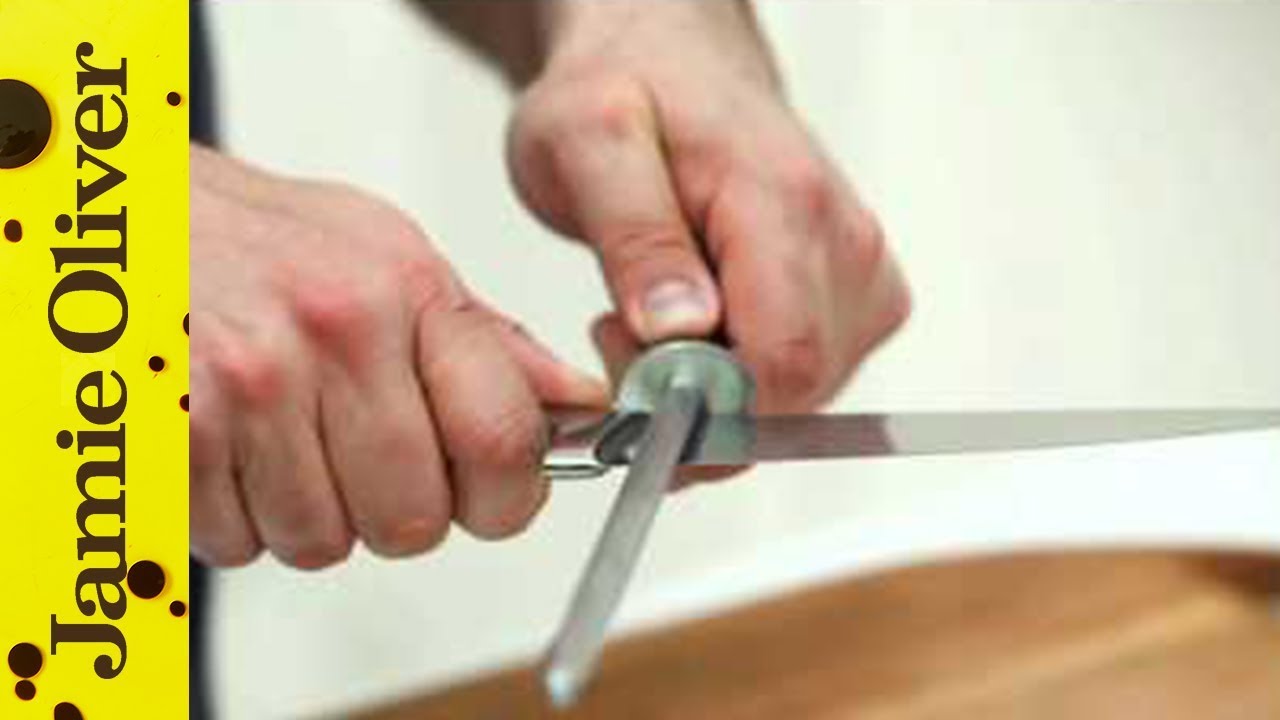
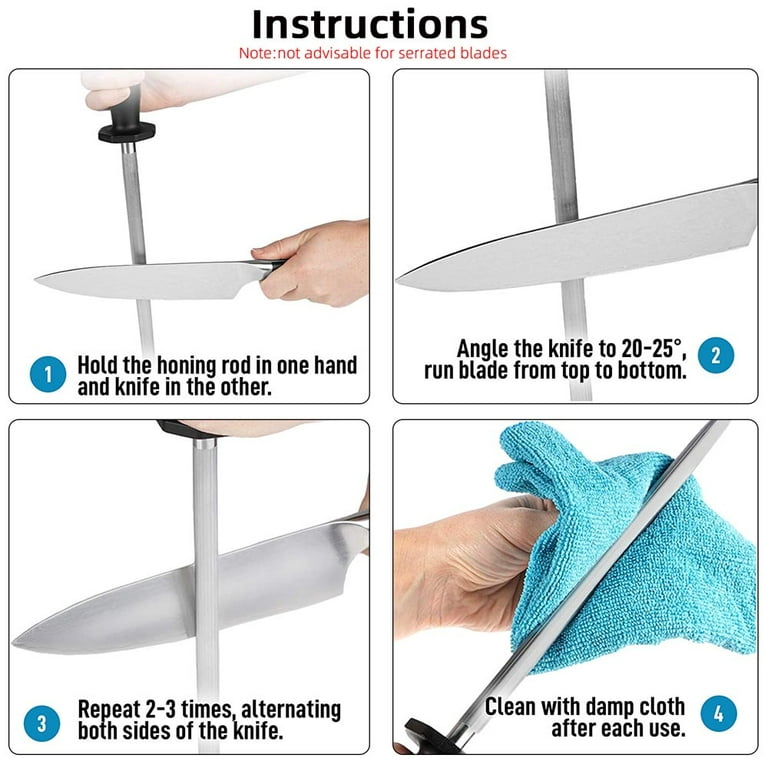
- Hold the rod vertically, tip resting on the stable surface.
- Grip the handle firmly with your non-dominant hand.
- Hold the knife by the handle, with the blade facing away from you.
The angle between the knife blade and the rod should be about 15-20 degrees. For most Western knives, 20 degrees is best. Japanese knives may use 15 degrees.
Step-by-step: Using A Knife Sharpener Rod
Here are the steps to sharpen your knife with a rod. Go slowly and focus on technique.
1. Position The Rod
Stand with the rod tip on the surface. Hold the rod upright, handle at the top.
2. Set The Knife Angle
Place the knife heel (the base of the blade) against the rod. Tilt the blade to the correct angle (15-20 degrees).
3. Draw The Knife Down And Across
Pull the knife down the rod, moving from heel to tip. The motion is smooth and controlled. Imagine slicing off a thin layer from the rod.
4. Alternate Sides
After one stroke, switch to the other side of the blade. Repeat the motion, drawing the opposite side down the rod.
5. Repeat 5-10 Times Per Side
For maintenance, 5 strokes per side is enough. For duller knives, do 10 strokes per side.
6. Check The Edge
Wipe the blade and test sharpness. Try slicing a piece of paper or a tomato. If it cuts cleanly, you’re done.
7. Clean Up
Wipe the rod and knife. Small metal particles may be left on the blade. Wash the knife again before using it on food.
Common Mistakes Beginners Make
Many beginners make mistakes that can damage their knives or reduce effectiveness. Here are the most frequent errors:
- Wrong angle: Using too steep or shallow an angle leads to poor results.
- Too much pressure: Pressing hard can bend the edge or scratch the rod.
- Uneven strokes: Not alternating sides equally causes uneven wear.
- Using a dirty rod: Dirt or metal particles affect sharpening.
- Moving too fast: Rushing can lead to accidents or missed spots.
One non-obvious insight: Most beginners think more pressure means better sharpening, but gentle, consistent strokes are far more effective.
How To Sharpen Different Knife Types
Not all knives are sharpened the same way. Here are tips for popular types:
Chef’s Knife
Most common in kitchens. Use a 20-degree angle, 8-10 strokes per side. Chef’s knives can handle steel, ceramic, or diamond rods.
Paring Knife
Small blade, good for fruit and vegetables. Use a 15-18 degree angle. Hold carefully, as the blade is short.
Serrated Knife
Serrated knives (like bread knives) need a special rod. Use a thin, tapered rod and sharpen each serration individually. This is slow but necessary.
Japanese Knife
Many Japanese knives have a harder steel and a sharper edge. Use a 15-degree angle and avoid diamond rods unless the blade is very dull.
How To Test Knife Sharpness
After honing, you need to check if your knife is truly sharp. Here are three simple tests:
- Paper test: Hold a piece of paper and try slicing it. A sharp knife will cut smoothly.
- Tomato test: Try slicing a ripe tomato. If the blade cuts without squashing, it’s sharp.
- Fingernail test: Gently rest the blade on your fingernail. If it catches, the edge is sharp.
Most experts recommend the paper test for best results.
Maintaining Your Knife Sharpener Rod
A rod lasts a long time, but only if you care for it.
- Clean after each use: Wipe with a dry cloth.
- Deep clean monthly: Wash with warm water and mild soap. Avoid harsh cleaners.
- Store safely: Keep in a drawer or knife block. Don’t let the rod touch other metal tools.
If your rod is ceramic or diamond, avoid dropping it. Ceramic rods can break easily.
Credit: www.walmart.com
Knife Sharpening Rod Vs Other Sharpeners
Many people wonder if a rod is better than other sharpeners. Here’s a comparison:
| Sharpener Type | Function | Best For | Ease of Use | Price Range |
|---|---|---|---|---|
| Sharpener Rod | Honing, light sharpening | Regular maintenance | Easy | $10-$80 |
| Whetstone | Sharpening, reshaping | Repairing dull knives | Intermediate | $20-$100 |
| Electric Sharpener | Sharpening, polishing | Quick results | Very easy | $40-$200 |
A rod is best for everyday care. If your knife is very dull or damaged, use a whetstone or electric sharpener.
Safety Tips When Using A Knife Sharpener Rod
Safety is always important. Here are tips to protect yourself:
- Keep fingers away: Hold the rod handle, not the shaft.
- Sharpen slowly: Rushing increases accident risk.
- Use a stable base: Prevent slips and falls.
- Check surroundings: Make sure children and pets are not nearby.
- Wear gloves: If you are worried about cuts, use cut-resistant gloves.
A non-obvious insight: Many accidents happen because people try to sharpen knives in the air. Always use a stable surface.
How To Choose The Right Knife Sharpener Rod
Choosing the best rod for your needs is important. Consider these factors:
Material
- Steel rods: Good for most knives. Not for ceramic blades.
- Ceramic rods: Sharpen and hone. Fragile but effective.
- Diamond rods: Sharpen quickly. Use sparingly to avoid blade wear.
Length
Longer rods (10-12 inches) are better for larger knives. Shorter rods (6-8 inches) fit small blades.
Handle
Look for a comfortable, non-slip handle. Some rods offer ergonomic designs.
Price
Good rods range from $20-$80. Higher price usually means better build, but not always.
Brand
Reputable brands include Wüsthof, Victorinox, and DMT. Avoid cheap rods from unknown brands.
Knife Sharpening Rod Maintenance: Deep Dive
If you want your rod to last, follow these steps:
- Monthly cleaning: Wash the rod with warm soapy water. Scrub gently with a sponge.
- Check for wear: Inspect for chips, cracks, or worn coating.
- Store upright: Keep the rod in a knife block or hang it on a rack.
- Avoid moisture: Water can cause rust on steel rods.
If you see rust spots, remove them with baking soda paste and a soft brush.
Real-life Example: Sharpening A Chef’s Knife
Let’s walk through a real example:
Maria, a home cook, uses her chef’s knife daily. After a week, she notices the blade feels dull. She grabs her 12-inch steel rod.
- She cleans the knife and rod.
- She places the rod tip on her cutting board.
- She sets the knife at a 20-degree angle.
- She draws the blade down and across the rod, alternating sides.
- After 8 strokes per side, she tests the knife with a tomato. It slices easily.
- Maria wipes the knife and rod, then stores them safely.
This simple routine keeps Maria’s knife sharp and ready.
How To Sharpen Specialty Knives
Cleaver
Use a steel or diamond rod. Hold at a 20-degree angle. Cleavers are thick, so use more strokes.
Fillet Knife
These are thin and flexible. Use a 15-degree angle, with gentle strokes.
Pocket Knife
Small blades need short rods. Use a ceramic or diamond rod. Hold at 18-20 degrees.
Some specialty knives require professional sharpening. If in doubt, check the manufacturer’s instructions.
How To Sharpen A Serrated Knife
Serrated knives are tricky. Here’s how:
- Use a tapered rod (often ceramic).
- Insert the rod into each serration.
- Move the rod back and forth gently.
- Repeat for each serration.
- Wipe the blade and test sharpness.
This process takes time, but keeps bread knives effective.
Sharpening Rods For Professional Kitchens
In professional kitchens, speed and efficiency matter. Chefs often use steel rods multiple times a day. Some kitchens use diamond rods to sharpen knives quickly. Most professionals combine rods with whetstones for best results.
A study from the National Restaurant Association found that chefs who maintain their knives daily reduce prep time by 15-20%.

Credit: www.americastestkitchen.com
Sharpening Rods For Outdoor And Survival Knives
Outdoor knives need extra care. Use diamond rods for tough blades. Always clean after sharpening, as dirt and moisture can cause rust.
In survival settings, a rod can double as a fire starter if made from ferrocerium. But most sharpening rods are not designed for this.
How To Troubleshoot Knife Sharpening Problems
Sometimes sharpening does not work as expected. Here’s how to fix common issues:
- Still dull: Increase the number of strokes. Try a ceramic or diamond rod.
- Edge feels rough: Use lighter strokes. Clean the rod.
- Blade is chipped: Use a whetstone first, then the rod.
If problems persist, consider professional sharpening.
The Science Behind Knife Sharpening Rods
A rod works by realigning the microscopic edge of the blade. After cutting, the edge bends and twists. The rod straightens it, restoring sharpness.
Steel and ceramic rods use friction. Diamond rods use abrasion. Most sharpening happens at the microscopic level.
Sharpening Rod Myths: What’s True And What’s Not
Many myths surround sharpening rods. Let’s clear up a few:
- Myth: More pressure is better. Fact: Gentle strokes work best.
- Myth: You can sharpen any knife with any rod. Fact: Match rod to blade material.
- Myth: Sharpening rods last forever. Fact: They wear out after years of use.
Practical Tips For Perfect Sharpening
- Use consistent angles every time.
- Clean tools before and after sharpening.
- Start slow, then build speed with experience.
- Store knives and rods safely.
- Watch professional videos for technique.
One insight: Even skilled cooks sometimes forget to clean the rod, leading to poor results.
Resources For Knife Sharpening
If you want more information, visit WikiHow’s guide for step-by-step instructions.
Frequently Asked Questions
How Do I Know If My Knife Sharpener Rod Is Worn Out?
If your rod feels smooth or has visible grooves, it’s worn. Steel rods last 5-10 years with regular use. Ceramic and diamond rods may wear faster. Replace the rod if sharpening takes longer or the results are poor.
Can I Use A Knife Sharpener Rod On All Knives?
Most kitchen knives can be honed with a rod. Ceramic knives need ceramic rods. Serrated knives require a thin, tapered rod. Avoid using diamond rods on very soft blades.
What’s The Difference Between Honing And Sharpening?
Honing realigns the blade edge. Sharpening removes metal to create a new edge. A rod hones; a whetstone or electric sharpener sharpens. Use both for best results.
Should I Wash My Knife After Using A Sharpener Rod?
Yes. Tiny metal particles may be left on the blade. Wash with warm water and soap before using the knife for food.
How Do I Store My Knife Sharpener Rod?
Keep the rod in a knife block, drawer, or hang it on a rack. Avoid storing with other metal tools to prevent scratches and damage.
A knife sharpener rod is a simple tool that can transform your kitchen experience. With regular use, your knives stay sharp, safe, and ready for any meal. Follow the steps in this guide, avoid common mistakes, and soon you’ll sharpen knives with confidence.
Whether you cook for your family or work in a restaurant, a sharpener rod is your best friend for lasting, effective knives.

Hello, This is Annie Walker, a 38-year-old blogger, founder, and editor of Cookware Guider from NY, USA. I am a cookware fanatic and passionate cooker. I love to cook with different types of cooking appliances (example: all types of cookware, rice cookers, slow cookers, etc) almost every day in my kitchen. I love to share my experience with my readers in my blog. Also, I enjoy helping people to solve their problems through my website. You can follow me on Twitter & Pinterest. To know details about my blog please check the about us page.