
Are you tired of guessing which pots and pans will work on your induction cooktop? Using the wrong cookware can waste your time and energy, or even damage your stove.
But don’t worry—finding the right induction-compatible cookware is easier than you think. You’ll discover exactly what types of cookware work best with induction technology. By the end, you’ll know how to choose the perfect pieces that heat quickly, cook evenly, and make your kitchen life simpler.
Keep reading to unlock the secrets to smart cooking with induction!
Induction Cooking Basics
Induction cooking uses a special way to heat pots and pans quickly and safely. This method needs cookware that works with magnetic fields. Knowing which cookware is induction compatible helps you get the best results in your kitchen. Induction cooking basics explain how this technology works and why many people prefer it over traditional cooking methods.
How Induction Works
Induction cooktops use magnetic fields to heat cookware directly. Unlike gas or electric stoves, induction does not heat the cooktop surface. Instead, it creates an electromagnetic field that passes through the cooktop to the pan. The pan itself heats up, cooking the food inside.
This process depends on the cookware’s material. Cookware must be made of magnetic materials like cast iron or some stainless steels. Non-magnetic materials like glass, aluminum, or copper will not work unless they have a magnetic layer at the bottom.
- Electromagnetic coil: Located under the cooktop surface.
- Magnetic field: Created when the cooktop is turned on.
- Cookware: Must contain ferromagnetic material to heat up.
- Heat transfer: Directly to the pan, not the cooktop.
| Cookware Material | Induction Compatible? |
|---|---|
| Cast Iron | Yes |
| Stainless Steel (magnetic grade) | Yes |
| Aluminum | No |
| Copper | No |
| Glass | No |
Cookware with a flat bottom works best. This ensures full contact with the cooktop and efficient heating.
Benefits Of Induction Cooktops
Induction cooktops offer many advantages for home cooks. They heat food faster than gas or electric stoves. This can save time during busy cooking. The cooktop surface stays cool, reducing burn risks. This makes it safer for families with children.
Energy use is more efficient because heat goes directly to the pan. This lowers electricity bills and reduces wasted heat in the kitchen.
- Fast heating: Cooks food quickly and evenly.
- Energy efficient: Uses less power than traditional cooktops.
- Cool surface: Safer to touch during and after cooking.
- Easy to clean: Spills do not burn onto the surface.
- Precise control: Allows quick changes in cooking temperature.
Induction cooktops respond instantly to temperature changes. This control helps prevent overcooking or burning food. The cooktop also turns off automatically if no pan is detected. This feature adds extra safety in the kitchen.
Credit: www.frigidairearabia.com
Materials That Work With Induction
Choosing the right cookware for induction cooktops means understanding which materials can work with the magnetic field. Induction cooking uses magnets to heat pots and pans directly. Only certain materials react to this magnetic energy, allowing the cookware to heat up efficiently. Knowing these materials helps pick the best pots and pans for quick and even cooking.
Magnetic Metals
Magnetic metals are the key to induction compatibility. These metals have magnetic properties that react to the induction cooktop’s magnetic field. When the magnetic field touches the metal, it creates heat inside the cookware. This direct heat transfer makes cooking faster and more energy-efficient.
Here are the main types of magnetic metals used in induction cookware:
- Cast Iron: Very magnetic and heats evenly. Heavy but retains heat well.
- Carbon Steel: Magnetic and lighter than cast iron. Heats quickly and is good for searing.
- Magnetic Stainless Steel: Some stainless steel types contain iron and are magnetic, making them induction-friendly.
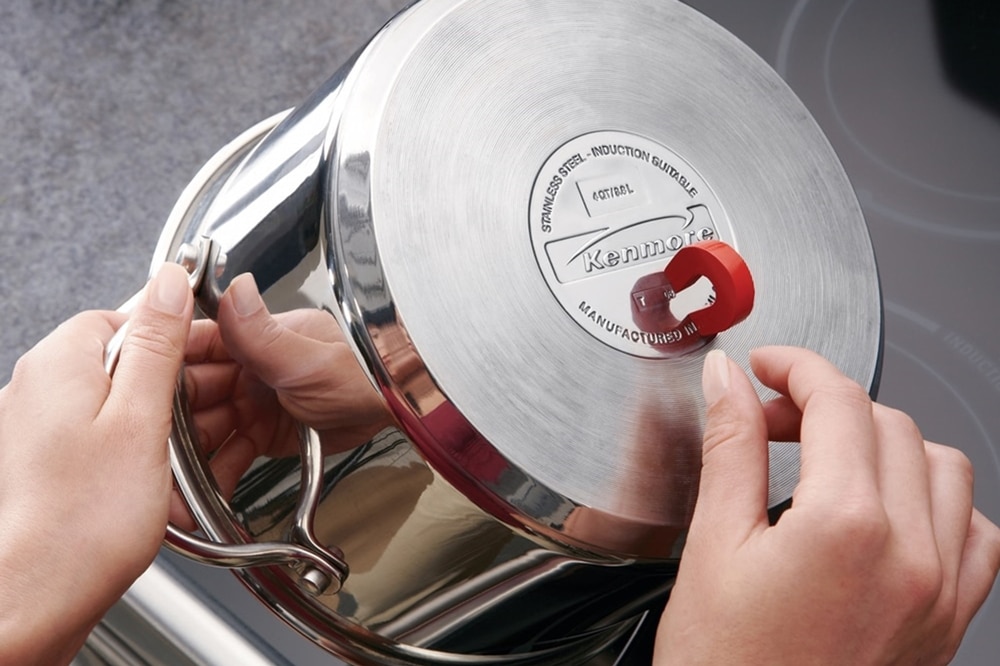
Not all stainless steel is magnetic, so check for the right grade. A simple test is to place a magnet on the bottom of the pan; if it sticks well, the cookware will work on induction.
| Metal Type | Magnetic Property | Heat Retention | Weight |
|---|---|---|---|
| Cast Iron | Strongly Magnetic | Excellent | Heavy |
| Carbon Steel | Magnetic | Good | Light to Medium |
| Magnetic Stainless Steel | Variable (depends on alloy) | Good | Medium |
Common Compatible Metals
Besides magnetic metals, some other metals work well with induction cooktops due to their layered construction or magnetic bases. These metals may not be magnetic themselves but become compatible because of their design.
Here are some common metals and how they fit with induction cooking:
- Stainless Steel: Often used with a magnetic base. Pure stainless steel may not work alone.
- Aluminum: Not magnetic but sometimes paired with a magnetic layer at the base to work on induction.
- Copper: Like aluminum, copper is not magnetic but can be induction-compatible with a magnetic base.
- Multi-Ply or Clad Cookware: Layers of different metals combined to add magnetic properties and improve cooking performance.
The table below shows common metals and their induction compatibility:
| Metal | Magnetic | Induction Compatible | Notes |
|---|---|---|---|
| Stainless Steel (Pure) | Usually No | No | Needs magnetic base for induction |
| Aluminum | No | Only with magnetic base | Often layered with magnetic metal |
| Copper | No | Only with magnetic base | Used with induction-friendly bottom |
| Multi-Ply (Clad) | Depends on layers | Yes | Magnetic layer added for induction |
Materials That Don’t Work
Not all cookware works on induction stoves. Induction cooking uses magnetic fields to heat pots and pans. Cookware must have magnetic properties to work well. Some materials do not have these properties and will not heat up on induction cooktops. Knowing which materials don’t work helps avoid wasted money and frustration.
Non-magnetic Metals
Many metals are poor choices for induction cooking because they lack magnetism. Metals like aluminum, copper, and pure stainless steel usually do not work unless they have a magnetic layer added to the base. These metals fail to create the magnetic field needed for induction heating.
Here are common non-magnetic metals:
- Aluminum: Lightweight and a good heat conductor, but not magnetic.
- Copper: Excellent heat conductor, but no magnetic response.
- Pure Stainless Steel: Some types are non-magnetic and won’t work on induction.
Some cookware brands add a magnetic plate to the bottom of aluminum or copper pans. This layer makes them induction compatible. Without this, the stove won’t detect the pot and won’t heat it.
| Metal | Magnetic | Induction Compatible |
|---|---|---|
| Aluminum | No | No, unless base has magnetic layer |
| Copper | No | No, unless base has magnetic layer |
| Pure Stainless Steel (some types) | No | No |
Always check if the cookware label mentions induction compatibility. Non-magnetic metals without a magnetic base will not work.
Glass And Ceramic Cookware
Glass and ceramic materials do not have magnetic properties. They do not respond to the magnetic field created by induction cooktops. This means they cannot heat up directly on induction stoves.
Many people like glass and ceramic cookware for slow cooking or baking. But these materials are not suitable for induction cooking because:
- They do not contain metal or magnetic parts.
- They cannot generate heat through induction.
- They may crack or break on direct induction surfaces.
Some ceramic pans have a metal base added for induction use. Pure glass or ceramic cookware without metal layers will not work.
Common types that won’t work on induction:
- Glass baking dishes
- Ceramic pots and pans
- Stoneware
To test if glass or ceramic cookware works, place a magnet under the base. If it sticks, the cookware might work. Usually, it won’t.

Credit: stahlkitchens.com
Testing Cookware For Induction
Testing cookware for induction compatibility is simple and important. Not all pots and pans work with induction cooktops. Induction cooking uses magnets to heat the pan directly. Cookware must have a magnetic base to work. Testing your cookware saves time and money by ensuring it heats correctly on induction stoves.
Magnet Test
The easiest way to check if cookware is induction compatible is the magnet test. Most induction-ready cookware contains iron or other magnetic metals in the base. You only need a small magnet, like one from a fridge, to test this.
- Take a magnet and press it against the bottom of the pan.
- If the magnet sticks firmly, the pan will work on induction.
- If the magnet does not stick or is weak, the pan is not induction compatible.
This quick test works for all types of cookware: stainless steel, cast iron, aluminum, and more. Some pans have a thin layer of magnetic metal added to the base. The magnet test can detect this layer easily.
| Cookware Type | Magnet Test Result | Induction Compatible? |
|---|---|---|
| Cast Iron | Strongly sticks | Yes |
| Stainless Steel (magnetic grade) | Sticks | Yes |
| Aluminum | Does not stick | No |
| Copper | Does not stick | No |
Keep in mind, some cookware may have a magnetic base only. Test the bottom, not the sides. This method is fast, cheap, and accurate for everyday use.
Manufacturer Labels
Cookware manufacturers often label their products as induction compatible. These labels provide clear guidance and save testing time. Look for specific words or symbols on the packaging or pan itself.
- Induction-ready or induction compatible text on the box or bottom of the pan.
- A coil symbol that looks like a series of loops or waves.
- Instructions or icons in the user manual stating induction use.
These labels mean the cookware base contains magnetic metals. Some manufacturers include detailed information about the base layers and materials. The labels help users buy the right cookware for induction cooking.
Here is a simple guide to common manufacturer labels:
| Label | Meaning |
|---|---|
| Induction Ready | Cookware will work on induction stoves |
| Coil Symbol | Magnetic base included for induction |
| Compatible on Gas/Electric Only | Not suitable for induction cooking |
Rely on these labels to avoid guesswork. They are especially useful when buying new cookware online or in stores. Always check for the induction symbol before purchasing.
Popular Induction-friendly Cookware Types
Induction cooking uses magnetic fields to heat pots and pans directly. Not all cookware works with induction cooktops. Only cookware made of magnetic materials can heat up on induction stoves. Certain types of cookware stand out as popular choices for induction cooking because of their magnetic properties and cooking performance. These types include cast iron, stainless steel, and enameled cookware. Each offers unique benefits and suits different cooking needs. Understanding these options helps choose the right pots and pans for induction cooking.
Cast Iron
Cast iron is one of the best materials for induction cooking. It has excellent magnetic properties, which makes it highly compatible with induction cooktops. Cast iron heats evenly and retains heat well, which is great for slow cooking and frying.
Key benefits of cast iron cookware for induction:
- Strong magnetic base: Works perfectly on induction stoves.
- Excellent heat retention: Keeps food warm for a long time.
- Durable and long-lasting: Can last for decades with proper care.
- Versatile: Suitable for searing, baking, frying, and slow cooking.
Cast iron does have some downsides:
- Heavy and can be hard to handle.
- Needs seasoning to maintain a non-stick surface.
- Can rust if not dried properly.
| Feature | Cast Iron |
|---|---|
| Induction Compatibility | Excellent |
| Heat Retention | Very High |
| Weight | Heavy |
| Maintenance | Requires seasoning |
Stainless Steel
Stainless steel cookware is another popular choice for induction cooking. Not all stainless steel pans work on induction, but many are designed with a magnetic base layer. This makes them compatible with induction stoves while offering a sleek, modern look.
Benefits of stainless steel induction cookware include:
- Durable and resistant: Does not rust or stain easily.
- Lightweight compared to cast iron: Easier to handle.
- Non-reactive surface: Does not react with acidic foods.
- Good heat conduction: Especially when combined with aluminum or copper layers.
Some things to keep in mind:
- Pure stainless steel is not magnetic; look for multi-ply or magnetic bases.
- Can develop hot spots without a layered base.
- Usually requires more care to avoid discoloration.
| Feature | Stainless Steel |
|---|---|
| Induction Compatibility | Depends on base material |
| Heat Retention | Moderate |
| Weight | Light to Medium |
| Maintenance | Easy to clean |
Enameled Cookware
Enameled cookware combines a cast iron or steel core with a smooth enamel coating. This coating prevents rust and eliminates the need for seasoning. Enameled pieces work well on induction cooktops as long as the core is magnetic.
Advantages of enameled cookware include:
- Magnetic core: Compatible with induction stoves.
- Non-stick surface: Easier to clean than bare cast iron.
- Rust-resistant: No seasoning needed.
- Available in many colors: Adds style to your kitchen.
Consider these points:
- Usually heavier than stainless steel but lighter than bare cast iron.
- Can chip if dropped or handled roughly.
- More expensive than bare cast iron or stainless steel options.
| Feature | Enameled Cookware |
|---|---|
| Induction Compatibility | Yes, if core is magnetic |
| Heat Retention | High |
| Weight | Medium to Heavy |
| Maintenance | Low, no seasoning required |
Tips For Choosing Induction Cookware
Choosing the right cookware for induction cooking is important for the best results. Induction cooktops use magnetic fields to heat pots and pans directly. This means not all cookware works well. You need pieces that are induction compatible. The right cookware improves cooking speed and saves energy. It also lasts longer and is easier to clean. Below are useful tips for selecting the best induction cookware for your kitchen.
Size And Shape Considerations
Cookware size and shape affect how well it works on an induction stove. Induction cooktops require a flat and smooth bottom to touch the cooking surface properly. Curved or warped bottoms do not make good contact, reducing heat transfer.
Consider these points:
- Flat base: Ensure the cookware has a flat and wide base for even heating.
- Size matching: Use pots and pans that match the size of the burner to avoid energy loss.
- Shape matters: Round or oval pans work well on circular burners. Square pans may not heat evenly.
Here is a quick guide on how size affects performance:
| Cookware Base Diameter | Burner Size | Heat Efficiency |
|---|---|---|
| Smaller than burner | Large | Low |
| Matches burner size | Same | High |
| Larger than burner | Smaller | Moderate |
Picking the right size and shape helps food cook evenly and saves energy. Avoid cookware that is too small or has a warped bottom.
Weight And Handling
The weight of induction cookware affects comfort and safety. Heavy pots and pans can be hard to lift, especially when full. Light cookware is easier to handle but may not heat as evenly.
Consider the following:
- Balance: Choose cookware that feels balanced in your hand.
- Handle comfort: Look for handles that stay cool and provide a good grip.
- Material weight: Stainless steel with aluminum core is usually lighter than cast iron.
Here is a comparison of common induction cookware materials by weight and ease of use:
| Material | Weight | Handling |
|---|---|---|
| Cast Iron | Heavy | Hard to handle |
| Stainless Steel (with aluminum core) | Medium | Easy to handle |
| Enamel Coated Steel | Medium | Moderate |
Good cookware should feel sturdy but not too heavy. Check handles for secure attachment and comfort. Handles that get hot can cause burns.
Durability And Maintenance
Durability is key for induction cookware since it faces high heat and frequent use. Choose materials and finishes that resist wear and tear. Stainless steel is a top choice for its strength and corrosion resistance.
Maintenance affects how long your cookware lasts. Some pieces need special care to keep their surface smooth and magnetic.
- Rust resistance: Pick cookware that does not rust easily.
- Non-stick coatings: Look for durable coatings that do not peel or scratch easily.
- Easy cleaning: Dishwasher safe cookware saves time.
- Avoid abrasive cleaners: Use soft sponges to protect the surface.
Here is a summary of maintenance tips for induction cookware:
- Hand wash if possible to extend life.
- Dry thoroughly to prevent rust.
- Do not overheat empty pans.
- Use wooden or silicone utensils to avoid scratches.
Proper care keeps cookware working well and looking good. Choose pieces built to last and easy to maintain for the best cooking experience.

Credit: linarie.com.au
Frequently Asked Questions
What Cookware Materials Work With Induction Cooktops?
Induction cooktops require magnetic materials like cast iron, stainless steel, or enameled steel cookware. Aluminum, copper, or glass won’t work unless they have a magnetic base. Always check for an induction-compatible label or use a magnet test to ensure compatibility.
How To Test If Cookware Is Induction Compatible?
Place a magnet on the cookware’s base. If it sticks firmly, the cookware is induction compatible. This simple test helps avoid guesswork and ensures efficient cooking on induction stoves.
Can Non-stick Pans Work On Induction Stoves?
Yes, non-stick pans with a magnetic stainless steel or iron base work on induction cooktops. Check the product details or perform a magnet test to confirm compatibility before use.
Why Is Induction Cookware Different From Regular Cookware?
Induction cookware contains ferromagnetic metals to generate heat through magnetic fields. Regular cookware without magnetic properties won’t heat on induction cooktops. This difference ensures efficient and rapid heating.
Conclusion
Choosing the right cookware matters for induction cooking. Cast iron, stainless steel, and some magnetic cookware work best. Check the bottom of your pots for compatibility symbols. Non-magnetic materials like aluminum or glass won’t heat well. Using proper cookware saves energy and cooks food evenly.
Your kitchen becomes safer and easier to manage. Now you know what to pick for your induction stove. Cook smart, cook safe. Enjoy your meals with the right tools.

Hello, This is Annie Walker, a 38-year-old blogger, founder, and editor of Cookware Guider from NY, USA. I am a cookware fanatic and passionate cooker. I love to cook with different types of cooking appliances (example: all types of cookware, rice cookers, slow cookers, etc) almost every day in my kitchen. I love to share my experience with my readers in my blog. Also, I enjoy helping people to solve their problems through my website. You can follow me on Twitter & Pinterest. To know details about my blog please check the about us page.