
Rust on your cast iron cookware can be frustrating. You love how it cooks, but seeing that orange layer creeping in makes you worry.
The good news? You don’t have to toss your favorite pan or spend a fortune replacing it. With the right steps, you can bring back your cast iron’s shine and keep it performing like new. In this guide, you’ll learn simple, effective ways to clean rust off your cast iron cookware—so you can cook with confidence again.
Keep reading, and let’s save your pan together!
Causes Of Rust On Cast Iron
Rust on cast iron cookware happens when the metal reacts with water and oxygen. This reaction creates a reddish-brown layer called rust. Rust weakens the cookware and affects its cooking quality. Understanding what causes rust helps keep your cast iron in good shape.
Common Triggers
Moisture is the main cause of rust on cast iron. Leaving the cookware wet after washing invites rust. Storing cast iron in a damp place also causes rust to form. Acidic foods can wear down the protective seasoning layer, exposing the metal. Scrubbing too hard or using harsh cleaners removes the seasoning and leads to rust.
Effects On Cookware
Rust makes the surface rough and sticky. It can change the taste of food cooked in the pan. Rust weakens the cast iron, leading to cracks or holes over time. Cooking on rusty cast iron is unsafe. The pan loses its non-stick quality and looks bad. Fixing rust early saves your cookware and keeps it safe to use.

Credit: www.youtube.com
Tools And Materials Needed
Cleaning rust off cast iron cookware needs a few simple tools and materials. These items help remove rust safely and restore your pan’s surface. Most tools are easy to find at home or in stores.
Household Items
Start with common household items. White vinegar is great for soaking rusted areas. Baking soda works well as a gentle scrubbing powder. A sponge or soft cloth helps wipe away rust without scratching. Steel wool or a scrubbing pad removes tougher rust spots. Dish soap cleans the pan after scrubbing. Warm water rinses away residue quickly.
Specialized Tools
Some tools speed up rust removal. A wire brush or wire wheel fits on a drill for heavy rust. Sandpaper with fine grit smooths rough patches. A plastic scraper lifts stubborn rust without damage. You may also use a rust remover product designed for cast iron. Always choose tools that protect the pan’s seasoning and surface.
Step-by-step Rust Removal
Removing rust from cast iron cookware can bring it back to life. Follow these simple steps carefully to clean your pan and protect it from further damage. Each step helps you get rid of rust safely and effectively.
Initial Cleaning
Start by washing the cookware with warm water and mild soap. Use a soft cloth or sponge to remove any loose rust and dirt. Avoid harsh soaps or steel wool at this stage. Dry the cookware with a clean towel.
Scrubbing Techniques
Use a scrub brush or fine steel wool to scrub the rusted areas gently. Apply firm pressure but avoid scratching the surface deeply. Scrub in circular motions until the rust begins to lift. Repeat as needed for stubborn spots.
Using Vinegar And Baking Soda
Soak the cookware in a mixture of equal parts white vinegar and water. Leave it for one to two hours to break down the rust. After soaking, sprinkle baking soda on the rusted spots. Scrub again to neutralize the vinegar and remove rust particles.
Rinsing And Drying
Rinse the cookware thoroughly with warm water to remove all residues. Dry it immediately with a soft cloth to prevent new rust from forming. Heat the pan on the stove for a few minutes to ensure complete dryness.
Restoring The Seasoning
Restoring the seasoning on cast iron cookware is key after removing rust. Seasoning protects the pan and stops rust from returning. It also makes cooking easier and food taste better.
The process involves coating the pan with oil and heating it. This forms a strong, non-stick layer on the surface. Proper seasoning keeps your cast iron in great shape for years.
Applying Oil
Start by choosing a good cooking oil. Flaxseed, vegetable, or canola oil works well. Pour a small amount on the pan’s surface.
Use a cloth or paper towel to spread oil evenly. Cover all areas, inside and outside. Wipe off extra oil. The pan should look shiny but not sticky.
Baking Process
Place the oiled pan upside down in a cold oven. Set the oven temperature to 450°F (230°C). Bake for one hour to let the oil bond with the metal.
After baking, turn off the oven. Leave the pan inside to cool slowly. This step helps the seasoning harden and last longer.
Tips To Prevent Future Rust
Preventing rust on cast iron cookware keeps it in good shape for years. Small habits make a big difference. Follow simple steps to stop rust from forming again. Protect your investment with easy care tips.
Proper Cleaning Habits
Clean cast iron right after use. Use warm water and a soft brush or sponge. Avoid soap or harsh detergents. Dry the cookware thoroughly with a towel. Heat it on the stove for a few minutes to remove all moisture. Apply a thin layer of cooking oil after drying. This layer blocks water and air, stopping rust.
Storage Recommendations
Store cast iron in a dry place. Avoid damp cabinets or areas near the sink. Use paper towels or cloth between stacked pans to absorb moisture. Leave the lid off when storing cookware with lids. Good airflow prevents rust by keeping the surface dry. Check your cast iron regularly for any signs of rust or moisture.
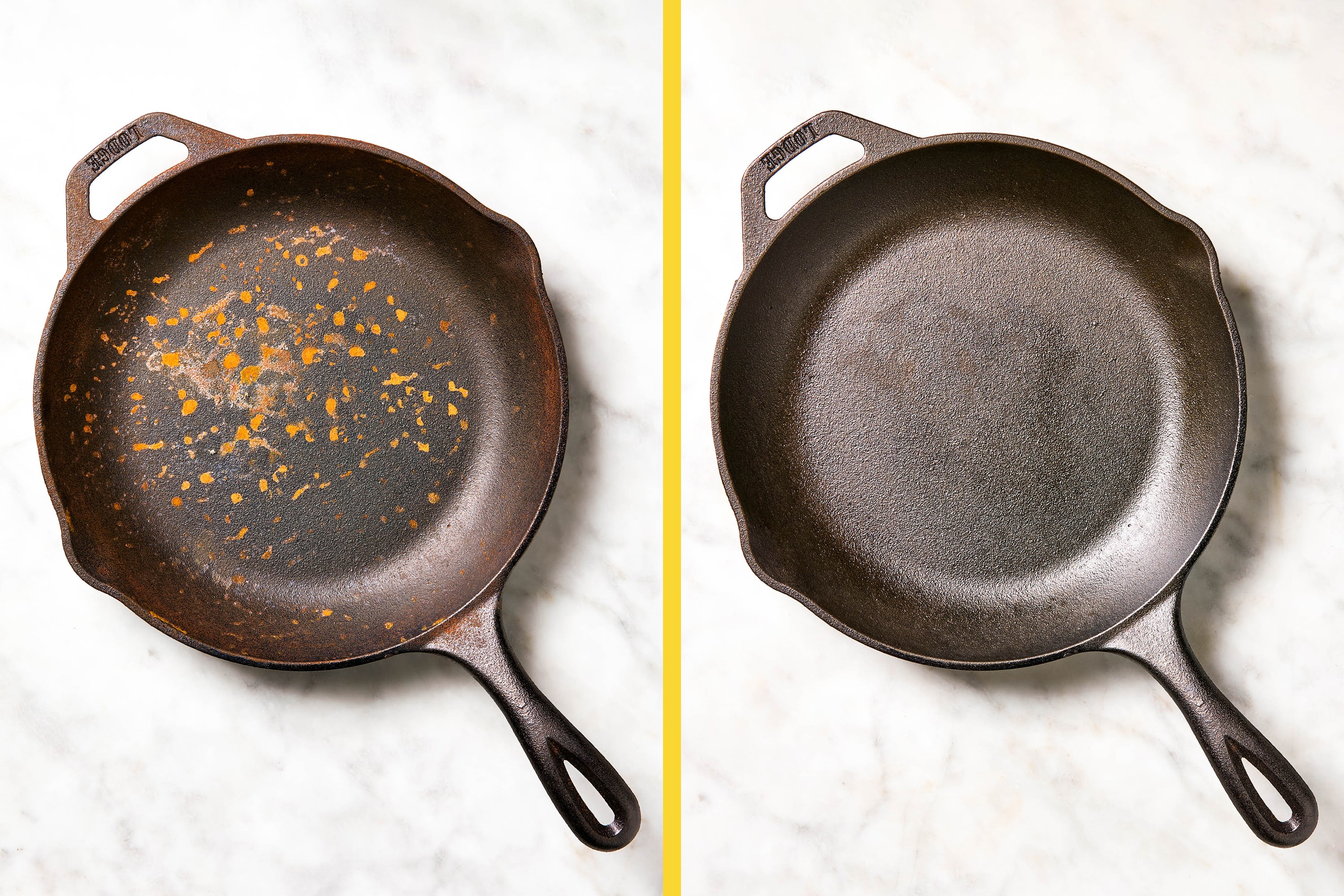
Credit: www.thekitchn.com
Alternative Rust Removal Methods
Rust on cast iron cookware can be tricky to remove. Some people prefer simple scrubbing, but there are other effective ways to clean rust. These methods may save time and effort. They can also protect your cookware better. Below are two alternative rust removal methods you can try.
Chemical Rust Removers
Chemical rust removers use acids to dissolve rust fast. These products are available in spray or gel form. Apply the remover on the rusty area and wait a few minutes. Then scrub the rust off with a brush or sponge. Always follow the instructions on the label. Wear gloves to protect your skin. Rinse the cookware thoroughly after treatment. This method works well for heavy rust spots.
Electrolysis Technique
The electrolysis technique uses electricity to remove rust safely. It requires a power source, water, washing soda, and a sacrificial metal. Submerge the rusty cookware and the metal in the solution. Connect the power source to both metals. The rust will transfer from the cookware to the sacrificial metal. This process can take several hours. Afterward, clean and dry the cookware well. Electrolysis is gentle and preserves the cast iron surface.

Credit: southerncastiron.com
Frequently Asked Questions
How Do I Remove Rust From Cast Iron Cookware?
To remove rust, scrub the cookware with steel wool or a stiff brush. Use mild soap and warm water. Dry thoroughly and re-season the pan to restore its protective coating.
Can Vinegar Clean Rust Off Cast Iron?
Yes, soak the rusty cast iron in a vinegar-water solution for 1-2 hours. Then scrub off the rust and rinse. Avoid soaking too long to prevent damage.
How Often Should I Clean Rust From Cast Iron?
Clean rust immediately when noticed to prevent spreading. Regular maintenance after each use helps avoid rust buildup. Proper drying and seasoning are key.
Is Baking Soda Effective For Rust Removal On Cast Iron?
Baking soda is mildly abrasive and can remove light rust. Make a paste with water, scrub the rusted area gently, rinse, dry, and re-season the pan.
Conclusion
Cleaning rust off cast iron takes patience and care. Use gentle scrubbing with steel wool or a brush. Rinse well and dry completely to stop rust. Apply oil to keep the surface smooth and protected. Regular maintenance keeps your cookware in good shape.
Rust does not have to ruin your cast iron. A little effort brings back its usefulness and shine. Keep these steps in mind for long-lasting cookware. Enjoy cooking with clean, rust-free cast iron every day.

Hello, This is Annie Walker, a 38-year-old blogger, founder, and editor of Cookware Guider from NY, USA. I am a cookware fanatic and passionate cooker. I love to cook with different types of cooking appliances (example: all types of cookware, rice cookers, slow cookers, etc) almost every day in my kitchen. I love to share my experience with my readers in my blog. Also, I enjoy helping people to solve their problems through my website. You can follow me on Twitter & Pinterest. To know details about my blog please check the about us page.