
A cast iron frying pan is one of the most valuable tools in the kitchen. It’s famous for durability, even heat, and the unique flavor it brings to food. But many people worry about cleaning cast iron. Will washing ruin the pan? Is soap allowed? Can it rust? If you want your cast iron pan to last for generations, cleaning it the right way is essential. In this guide, you’ll learn how to clean a cast iron frying pan step-by-step, prevent rust, and keep your pan in perfect condition. Whether you’re new to cast iron or want to fix common mistakes, you’ll get practical advice and clear answers.
Why Cast Iron Needs Special Care
Cast iron is not like other cookware. Its surface is porous, which means it can absorb oils and flavors. This is why cast iron pans develop a special layer called seasoning—a natural, non-stick coating built from baked-on oil. If you clean cast iron wrong, you can strip away this seasoning or cause rust. Many beginners make mistakes like soaking the pan, using harsh soap, or scrubbing with steel wool. Understanding the unique properties of cast iron helps you treat it well.
Cast Iron Vs. Other Pans
Here’s a simple comparison to highlight why cast iron needs a different cleaning process:
| Feature | Cast Iron | Stainless Steel | Nonstick |
|---|---|---|---|
| Heat Retention | Excellent | Good | Average |
| Seasoning Needed | Yes | No | No |
| Rust Risk | High | Low | Low |
| Cleaning Method | Gentle, no soaking | Dishwasher-safe | Dishwasher-safe |
Essential Tools For Cleaning Cast Iron
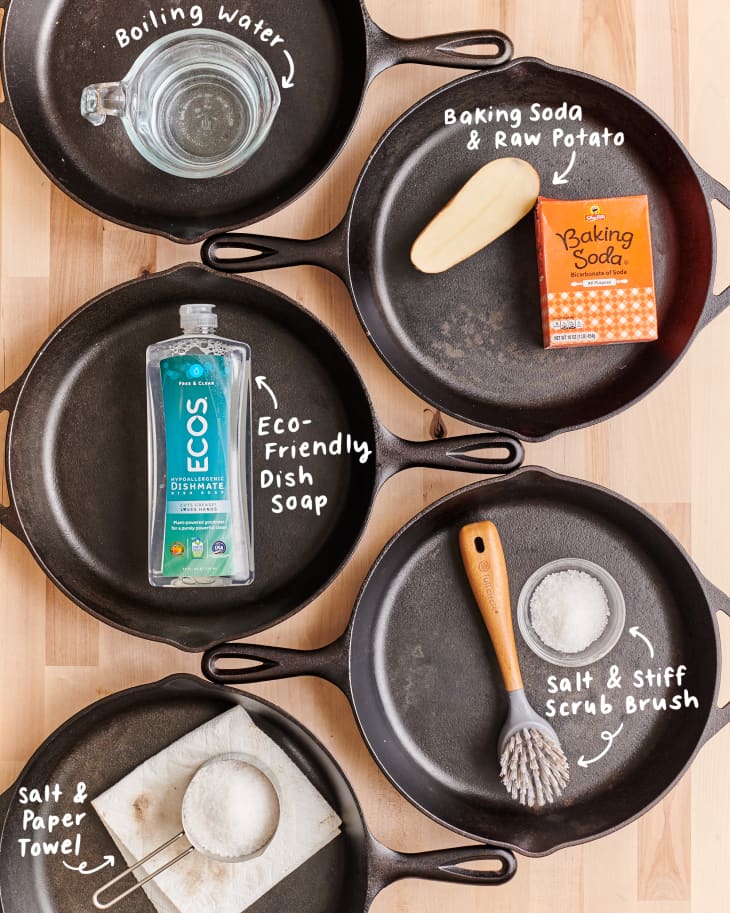
Before you clean your cast iron frying pan, gather the right tools. Using the correct items makes the process easier and prevents damage.
- Soft sponge or brush: Use nylon or silicone, not metal.
- Coarse salt: Helps scrub without scratching.
- Paper towels or clean cloth: For drying and wiping.
- Mild dish soap: Optional, only in small amounts.
- Vegetable oil: For re-seasoning after cleaning.
- Plastic scraper: Useful for stuck-on food.
- Oven or stovetop: For drying and seasoning.
Most homes have these items already. Avoid steel wool, harsh cleaners, or soaking the pan in water—these cause rust and remove seasoning.
Step-by-step Guide To Cleaning A Cast Iron Frying Pan
Cleaning cast iron is simple when you follow the right steps. Here’s a detailed process to keep your pan healthy and ready for cooking.
1. Let The Pan Cool Slightly
After cooking, let the pan cool for a few minutes. Never put a hot cast iron pan in cold water; this can cause thermal shock and crack the metal. Let it reach a safe temperature for handling, but don’t let it sit overnight with food inside.
2. Remove Food Residue
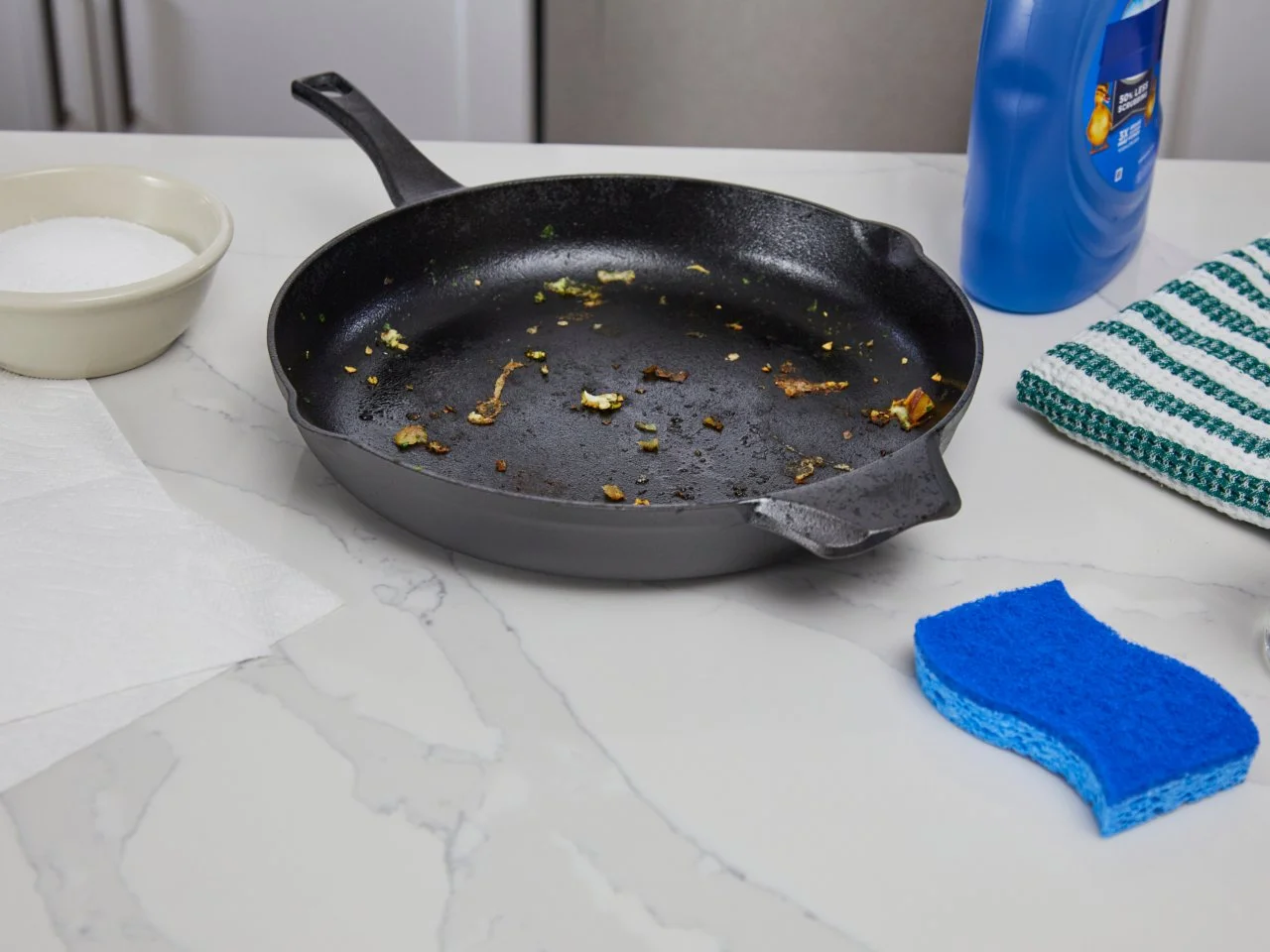
Wipe out loose food with a paper towel or cloth. For stuck-on bits, use a plastic scraper or a soft brush. If the food is stubborn, pour some coarse salt into the pan and gently scrub with a damp sponge. Salt acts as a mild abrasive but won’t damage the seasoning.
3. Wash Gently With Water
Rinse the pan with warm water. If needed, use a drop of mild dish soap—contrary to old myths, a little soap won’t ruin seasoning, especially modern cast iron. Avoid soaking the pan. Work quickly and dry immediately.
4. Dry Completely
Water is the enemy of cast iron. Dry the pan right away with a towel. For extra safety, place the pan on the stovetop over low heat for 3–5 minutes. This evaporates any hidden moisture and prevents rust.
5. Re-season The Pan
After every wash, rub a thin layer of vegetable oil or melted shortening over the pan’s surface. Use a paper towel to spread the oil evenly. Heat the pan on the stove or in the oven for 10–15 minutes (350°F is ideal). This step keeps the seasoning strong and protects the pan.
6. Store Properly
Keep your cast iron frying pan in a dry place. If you stack pans, place a paper towel between them to absorb moisture. Never store cast iron with the lid on; trapped humidity causes rust.
Deep Cleaning For Tough Stains And Rust
Sometimes, your pan needs more than a quick wash. Maybe there’s burnt food, sticky residue, or even rust. Here’s how to deep clean without ruining the pan.
Removing Burnt Or Sticky Residue
- Fill the pan with water and boil for 5 minutes.
- Use a wooden spoon to scrape off loosened bits.
- Pour out the water and scrub with coarse salt.
Fixing Rust
If rust appears, don’t panic. Follow these steps:
- Scrub the rusty area with a steel wool pad (only for rust, not general cleaning).
- Wash and dry as usual.
- Apply a thick layer of oil and bake the pan upside down in the oven at 400°F for 1 hour. Place foil underneath to catch drips.
- Let cool and wipe off excess oil.
Restoring Lost Seasoning
If the pan looks dull, sticky, or uneven, re-season it:
- Wash and dry thoroughly.
- Rub oil all over the pan, inside and out.
- Bake upside down at 350°F for 1 hour.
- Repeat 2–3 times if needed.
Common Mistakes To Avoid
Many people damage their cast iron frying pan without realizing it. Here are mistakes to watch out for:
- Soaking the pan: Causes rust and removes seasoning.
- Using harsh soap or chemicals: Strips the nonstick layer.
- Scrubbing with metal tools: Scratches the surface.
- Leaving the pan wet: Leads to corrosion.
- Not oiling after cleaning: Seasoning weakens over time.
- Storing with the lid on: Traps moisture.
Avoid these errors and your pan will last for decades.
How Often Should You Clean And Season Cast Iron?
Cleaning frequency depends on how often you cook. Most cooks clean their cast iron frying pan after every use. Seasoning should be done lightly every time you wash, and more deeply every few months.
Simple Cleaning And Seasoning Schedule
| Task | Frequency |
|---|---|
| Basic Cleaning | After each use |
| Light Oil Seasoning | After each cleaning |
| Deep Seasoning (Baking) | Every 2–3 months or as needed |
| Rust Removal | When rust appears |
How To Clean Cast Iron After Cooking Different Foods
Cleaning steps can change depending on what you cooked. Here are practical examples:
After Cooking Meat
Meat often leaves sticky residue or fat. Wipe out grease with a towel, then scrub gently with salt and water. Dry and oil as usual.
After Frying Eggs Or Pancakes
These foods rarely stick. Simply wipe and rinse with water, dry, and oil. Avoid soap unless needed.
After Cooking Acidic Foods (tomatoes, Vinegar)
Acidic ingredients can damage seasoning. Clean promptly, rinse thoroughly, and oil generously. If the seasoning looks dull, deep-season soon.
Real-world Example: Cleaning A Cast Iron Pan After Making Steak
Imagine you’ve cooked a steak in your cast iron pan. There’s some stuck-on residue and grease.
- Let the pan cool for 5 minutes.
- Wipe out grease with paper towel.
- Sprinkle coarse salt and scrub with a damp sponge.
- Rinse with warm water, use a tiny bit of soap if needed.
- Dry immediately with a towel.
- Place on the stove for 3 minutes to remove all moisture.
- Rub a thin layer of oil, heat for 10 minutes.
- Store in a dry place.
Following these steps keeps your pan ready for the next meal.

Credit: www.youtube.com
Data: How Long Does A Cast Iron Pan Last?
Cast iron cookware is famous for lasting lifetimes. With proper care, a cast iron frying pan can last over 100 years. In fact, many families pass down cast iron pans for generations. According to a survey from Cookware Manufacturers Association, over 60% of cast iron users keep their pans for more than 20 years.
What Seasoning Is And Why It Matters
Seasoning is more than just oil. It’s a layer of polymerized fat that bonds to the iron, creating a smooth, non-stick surface. The process works like this:
- Oil is applied to the pan.
- Heat transforms the oil into a hard, black coating.
- This coating protects against rust and improves cooking.
Without seasoning, cast iron is rough and sticky. With seasoning, it’s slick and easy to cook on.
Seasoning: Natural Vs. Factory
Some pans come pre-seasoned from the factory. Others need seasoning before first use. Both types need regular oiling and baking to stay healthy.
Should You Use Soap On Cast Iron?
This is a common question. Many people think soap ruins cast iron. In reality, a small amount of mild soap won’t harm the seasoning, especially if your pan is well-seasoned. Avoid harsh soaps or soaking, but don’t fear gentle washing. Modern cast iron is tougher than old myths suggest.
How To Clean Cast Iron While Camping Or Outdoors
If you use cast iron frying pans for outdoor cooking, cleaning can be challenging. Here’s a simple method:
- Let the pan cool.
- Wipe with leaves or paper towels to remove food.
- Scrub with sand or salt if needed.
- Rinse with clean water.
- Dry over the fire.
- Oil the pan before packing.
Never leave the pan wet or dirty; bugs and rust can ruin it.
Cleaning Cast Iron For Professional Chefs
Professional kitchens use cast iron for its reliability. Chefs follow strict rules:
- Never soak cast iron.
- Dry immediately.
- Oil after every use.
- Deep-season regularly.
Some restaurants keep special cast iron pans for certain dishes, like steak or cornbread. Their pans are often decades old, showing the power of proper care.
Myths And Misconceptions About Cast Iron Cleaning
Many myths surround cast iron cleaning. Let’s clear up a few:
- Soap destroys seasoning: Not true, if used in moderation.
- Only animal fat works for seasoning: Vegetable oil is just as good.
- Rust means the pan is ruined: Rust can be removed easily.
- Cast iron is hard to maintain: With practice, it’s simple.
Understanding these facts helps you care for your pan confidently.
Environmental Benefits Of Cast Iron
Cast iron frying pans are eco-friendly. Unlike nonstick pans, they don’t use chemicals like Teflon. They last for decades, reducing waste. A single cast iron pan can replace many cheap cookware items over a lifetime.
Comparing Popular Cast Iron Brands
When buying a cast iron frying pan, brand matters. Here’s a quick comparison of top brands:
| Brand | Price Range | Pre-Seasoned? | Warranty |
|---|---|---|---|
| Lodge | $25–$50 | Yes | Lifetime |
| Le Creuset | $100–$200 | Yes | Lifetime |
| Camp Chef | $35–$70 | Yes | Limited |
| Victoria | $20–$45 | Yes | Limited |
Choose a brand based on your budget, needs, and whether you prefer pre-seasoned pans.
Credit: www.thekitchn.com
Practical Tips For New Cast Iron Owners
- Use your pan often. Regular use builds seasoning.
- Clean right after cooking. Don’t let food dry out.
- Keep oiling. Even a thin layer protects the surface.
- Store dry. Moisture is the enemy.
- Don’t fear mistakes. You can always restore cast iron.
Many beginners are afraid of cast iron, but it becomes easier with practice. If you make a mistake, you can fix it.
Non-obvious Insights: What Beginners Often Miss
- High heat helps fix seasoning problems: If your pan is sticky or uneven, bake it at 400°F for 1 hour. This repairs many issues.
- Avoid acidic foods early on: Until your seasoning is strong, skip tomatoes or vinegar. These can damage new seasoning.
- Oiling the exterior is important: Many people forget to oil the outside. Rust can start anywhere, so cover all surfaces.
Where To Learn More About Cast Iron
Want to dive deeper? Visit Wikipedia for history, science, and detailed guides on cast iron cookware.
Frequently Asked Questions
How Do I Clean A Cast Iron Frying Pan After Cooking Bacon?
After cooking bacon, wipe out excess grease with a paper towel. If there’s sticky residue, scrub gently with coarse salt and a damp sponge. Rinse quickly with warm water, dry well, and apply a thin layer of oil.
Can I Use Soap Every Time I Clean Cast Iron?
You can use a little mild soap if needed, especially for tough messes. Avoid soaking or using harsh chemicals. Always dry and oil the pan after washing.
What Should I Do If My Cast Iron Pan Rusts?
Scrub the rust with steel wool, wash and dry thoroughly, then re-season the pan by applying oil and baking it. Rust is easy to fix, and your pan will be as good as new.
Is It Safe To Cook Acidic Foods In Cast Iron?
Yes, but only if your seasoning is strong. Acidic foods like tomatoes can damage weak seasoning. Clean and oil after cooking acidic dishes, and deep-season regularly.
How Can I Prevent My Cast Iron Pan From Sticking?
Build up seasoning by using your pan often and oiling after each cleaning. Avoid cooking acidic foods until the seasoning is strong. If sticking happens, re-season by baking oil onto the surface.
Caring for a cast iron frying pan is easy once you know the right steps. With gentle cleaning, regular oiling, and proper storage, your pan can last a lifetime. Cast iron brings flavor, durability, and tradition to your kitchen. Treat your pan well, and it will reward you with perfect meals for years to come.
Credit: www.foodnetwork.com

Hello, This is Annie Walker, a 38-year-old blogger, founder, and editor of Cookware Guider from NY, USA. I am a cookware fanatic and passionate cooker. I love to cook with different types of cooking appliances (example: all types of cookware, rice cookers, slow cookers, etc) almost every day in my kitchen. I love to share my experience with my readers in my blog. Also, I enjoy helping people to solve their problems through my website. You can follow me on Twitter & Pinterest. To know details about my blog please check the about us page.