
Cooking at home is both satisfying and fun, especially when you learn to master simple techniques. One vegetable that often confuses home cooks is asparagus. You might wonder if you should boil, steam, grill, or bake it. But there’s one method that stands out for its simplicity and flavor: pan frying. This technique brings out the natural sweetness of asparagus, gives it a perfect crisp-tender bite, and adds a lovely golden color.
Whether you want a quick side dish or a healthy addition to your meal, learning how to pan fry asparagus is a skill worth having. This guide will show you everything you need, from choosing the best asparagus at the store to getting that perfect finish in your own kitchen.
Along the way, you’ll find tips and insights that make the difference between limp, soggy asparagus and bright, delicious spears. Let’s get started.
Why Pan Fry Asparagus?
Pan frying is a technique that means cooking food in a small amount of oil over medium-high heat. When you pan fry asparagus, you get a few big benefits:
- Flavor: Pan frying brings out a nutty, sweet taste you don’t get from boiling or steaming.
- Texture: The outside gets a slight crisp while the inside stays tender.
- Speed: It cooks in just a few minutes—perfect for busy nights.
- Versatility: You can easily add spices, garlic, or lemon for extra flavor.
Another reason to choose pan frying is the control you have over the cooking process. You can quickly adjust the heat, add ingredients, or finish with a splash of lemon juice for brightness.
Choosing And Preparing Asparagus
Great results start with great ingredients. Here’s how to pick and prep your asparagus for pan frying.
Selecting The Best Asparagus
Freshness is key. Here’s what to look for:
- Color: Fresh asparagus is bright green, sometimes with purple tips.
- Firmness: Stalks should be straight and firm, not limp.
- Tips: Closed, compact tips are a sign of freshness. Avoid spears with mushy or spread-out tips.
- Size: Thicker stalks work well for pan frying, as they stay crisp outside but tender inside. However, thin stalks cook faster and are also great—choose based on your preference.
A little-known tip: If you’re not cooking asparagus the same day, store it upright in a glass of water (like flowers) in your fridge. Cover the tops loosely with a plastic bag. This keeps the stalks fresh for up to 3 days.
How Much Asparagus Per Person?
A common serving size is 6–8 spears per adult, or about ½ pound (225g) per person if it’s the main vegetable side.
Trimming And Cleaning
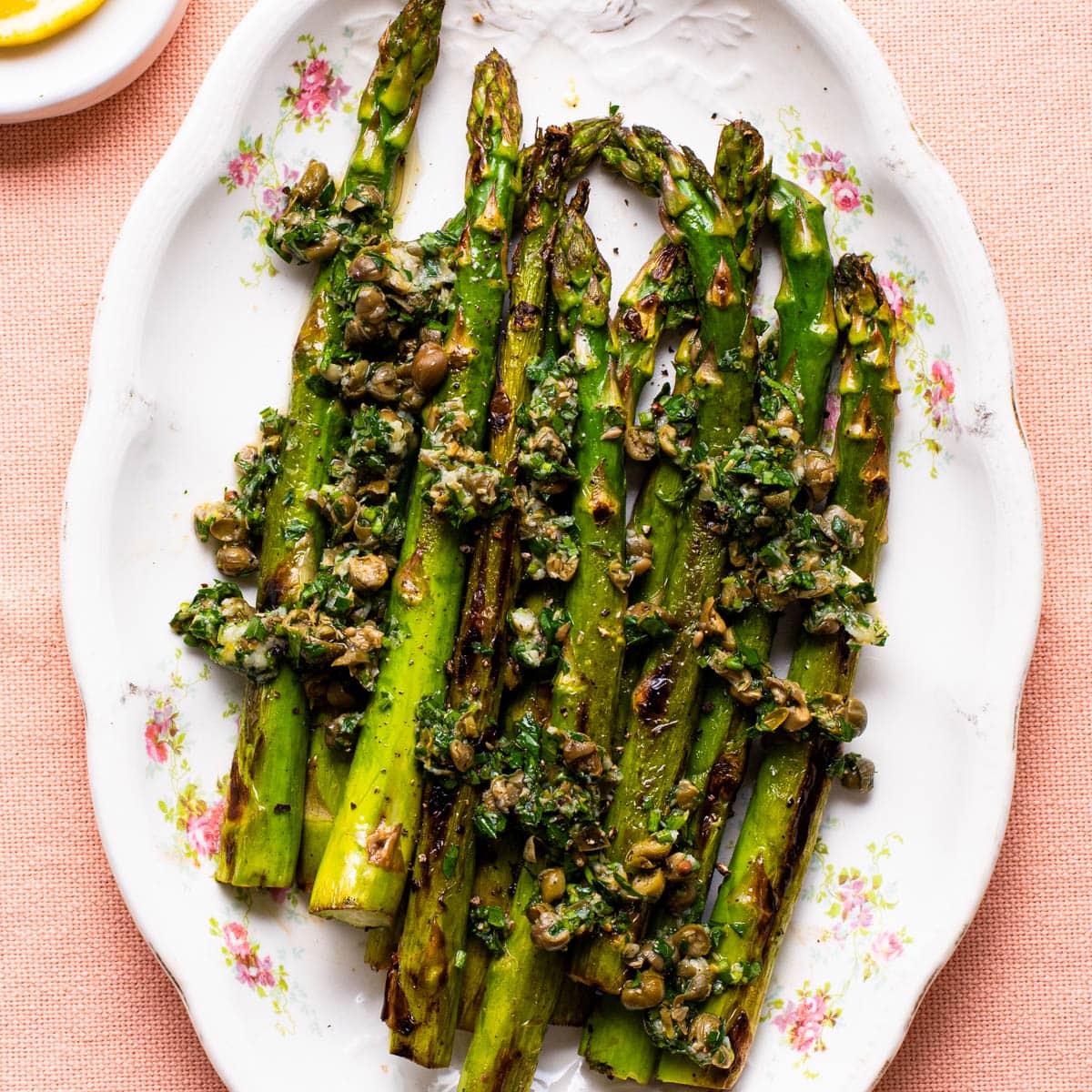
Asparagus has a woody end that’s tough and unpleasant to eat. Here’s how to remove it:
- Snap Method: Hold the stalk near the base and bend gently. It will naturally break where the tough part ends.
- Knife Method: Line up the stalks, cut about 1–2 inches (2.5–5 cm) from the bottom.
Rinse the stalks under cold water to remove any dirt or sand, paying close attention to the tips.
Credit: thenewbaguette.com
Essential Tools And Ingredients
Pan frying asparagus doesn’t require special equipment, but the right tools make it easier and more enjoyable.
Tools
- Large skillet or frying pan: Non-stick or stainless steel works best.
- Tongs: For turning and removing spears.
- Sharp knife: To trim woody ends.
- Cutting board
Basic Ingredients
You only need a few ingredients for classic pan fried asparagus:
- Asparagus: 1 pound (about 450g)
- Olive oil or butter: 1–2 tablespoons
- Salt: ½ teaspoon, or to taste
- Pepper: Freshly ground, to taste
Optional add-ons:
- Garlic: 1–2 cloves, minced
- Lemon: Zest or juice, for brightness
- Parmesan cheese: For a savory finish
- Red pepper flakes: For a little heat
A quick note: Olive oil adds great flavor, but you can use avocado or canola oil for a neutral taste.
Step-by-step: How To Pan Fry Asparagus
Now let’s walk through the process from start to finish.
1. Preheat The Pan
Place your skillet over medium-high heat. Let it warm for about 1–2 minutes. A hot pan helps the asparagus brown instead of steaming.
2. Add Oil
Pour in 1–2 tablespoons of olive oil or butter. Swirl to coat the bottom evenly. If you’re using both, add oil first, then butter for flavor.
3. Add The Asparagus
Place the trimmed spears in a single layer in the pan. Don’t overcrowd; if your pan is small, cook in batches.
4. Season
Sprinkle with salt and pepper. Add optional flavorings like minced garlic or red pepper flakes now if you like.
5. Cook And Toss
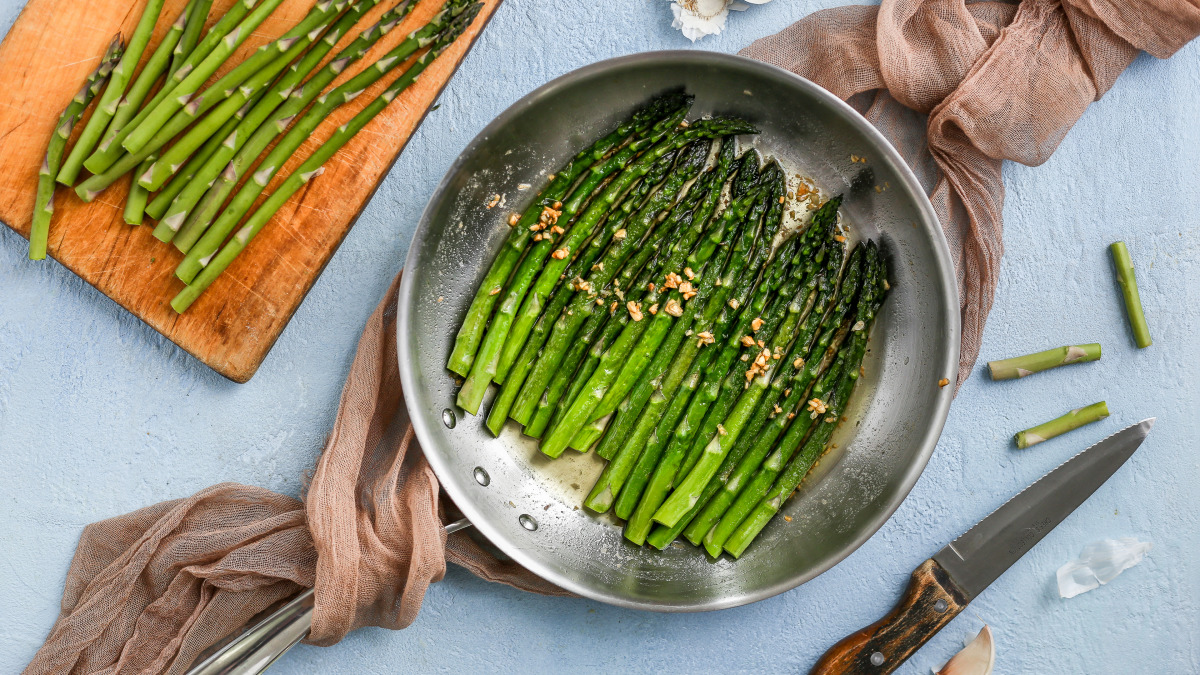
Let the asparagus cook for about 2 minutes without moving it. This helps develop a golden color. After 2 minutes, use tongs to turn the spears. Continue to cook, tossing every 1–2 minutes, until the asparagus is bright green and just tender—about 5–7 minutes total, depending on thickness.
6. Finish
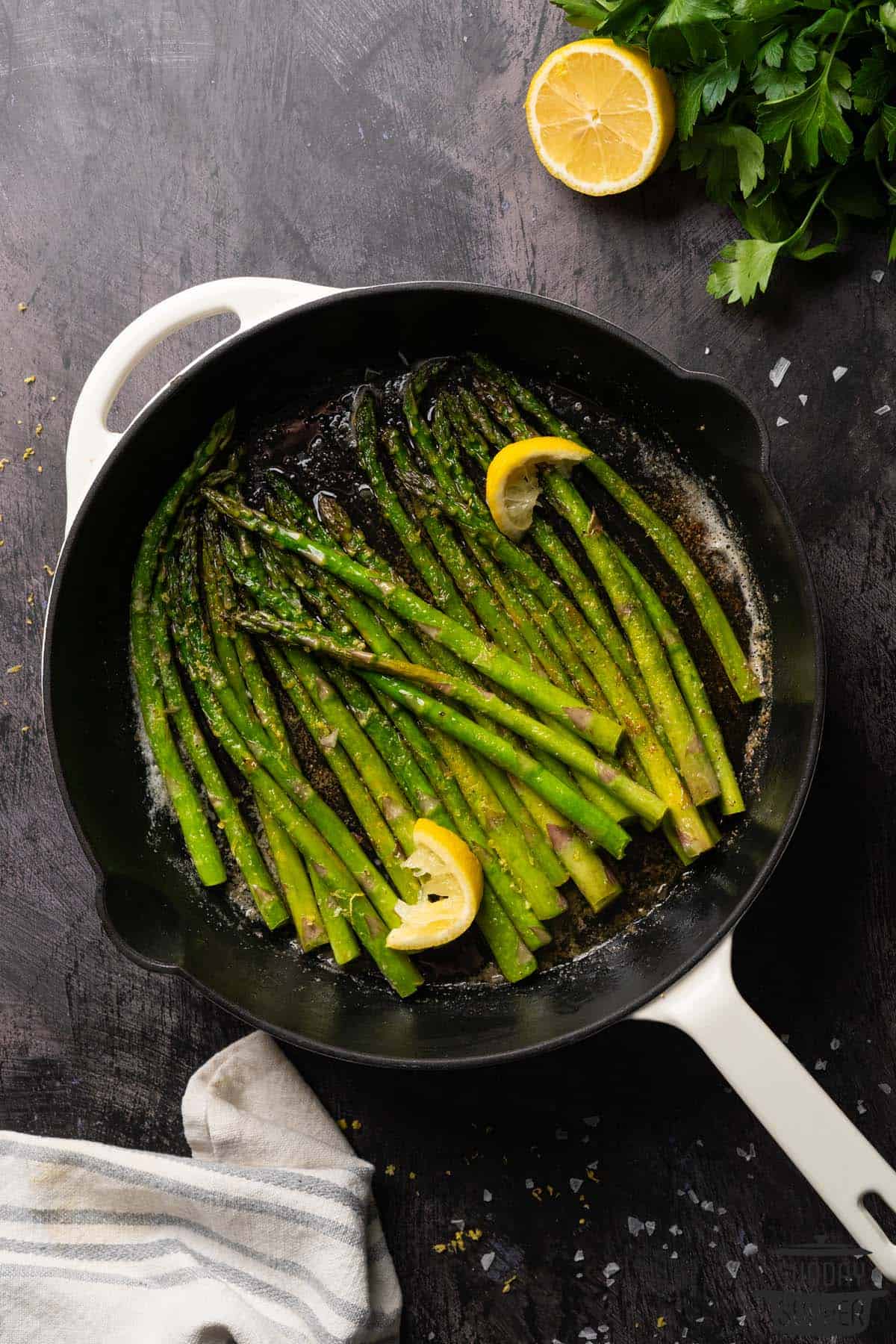
For extra flavor, add a squeeze of lemon juice or a sprinkle of lemon zest in the last minute. Grated Parmesan cheese is another great topping.
7. Serve Immediately
Remove from the pan and serve hot for the best texture.
Cooking Time Guide
The exact time depends on the thickness of your asparagus. Here’s a quick reference:
| Asparagus Thickness | Approximate Cooking Time |
|---|---|
| Thin (pencil-like) | 3–4 minutes |
| Medium | 5–6 minutes |
| Thick | 7–8 minutes |
A good way to test doneness is to pierce a stalk with a fork. It should go through easily but the asparagus should still feel firm.
Flavor Variations And Add-ins
Pan fried asparagus is delicious with just olive oil and salt, but you can make it unique every time. Try these ideas:
- Garlic Lemon Asparagus: Add minced garlic in the last 2 minutes of cooking, finish with lemon juice and zest.
- Parmesan Crusted: Sprinkle grated Parmesan over hot asparagus just before serving.
- Spicy Kick: Add red pepper flakes or a splash of hot sauce.
- Herb Blend: Toss with chopped parsley, basil, or dill.
- Asian-Inspired: Use sesame oil instead of olive oil; add a splash of soy sauce and toasted sesame seeds.
Don’t be afraid to experiment. Asparagus pairs well with many flavors, including balsamic vinegar, pine nuts, or even a fried egg on top.
Pan Frying Vs. Other Cooking Methods
You might wonder why pan frying is better or different than other ways to cook asparagus. Here’s a comparison of common methods:
| Method | Flavor | Texture | Cooking Time | Best For |
|---|---|---|---|---|
| Pan Frying | Nutty, sweet, slightly caramelized | Crisp-tender, browned | 5–7 min | Quick meals, flavor variety |
| Boiling | Mild, sometimes bland | Soft, can get mushy | 3–4 min | Large batches, salads |
| Steaming | Fresh, light | Tender, less color | 4–5 min | Diet meals, simple sides |
| Grilling | Smoky, charred | Crisp, sometimes chewy | 6–8 min | Outdoor cooking |
| Roasting | Deep, caramelized | Soft inside, crisp edges | 12–15 min | Meal prep, oven use |
Non-obvious insight: Pan frying lets you taste the natural sweetness of asparagus, which can be lost in boiling or steaming. Also, if you like a little char but don’t have a grill, pan frying is a perfect indoor alternative.
Credit: sundaysuppermovement.com
Common Mistakes When Pan Frying Asparagus
Even experienced cooks can make mistakes that spoil asparagus. Here’s what to avoid:
- Overcrowding the Pan: Too many spears at once cause steaming, not frying. Cook in batches for best browning.
- Using Low Heat: This leads to soggy asparagus. Medium-high heat is key for caramelization.
- Skipping the Trim: Woody ends are tough and unpleasant. Always trim before cooking.
- Adding Garlic Too Early: Garlic can burn quickly. Add it in the last 2 minutes, not at the start.
- Overcooking: Asparagus should be bright green and crisp-tender. If it turns olive green or floppy, it’s overdone.
Extra tip: Pat the asparagus dry before frying. Wet spears steam instead of brown.
Nutrition And Health Benefits
Asparagus is not just tasty—it’s healthy, too. Here’s what you get in a 1-cup (134g) serving:
- Calories: Only 27
- Carbs: 5g
- Fiber: 3g
- Protein: 3g
- Fat: 0g
It’s loaded with vitamin K, folate, vitamin C, and antioxidants. Asparagus is also known for promoting healthy digestion and supporting heart health.
Pan frying with a small amount of oil adds flavor but keeps calories low compared to deep frying or heavy sauces.
Serving Suggestions
Pan fried asparagus is one of the most versatile sides you can make. Here are some ways to serve it:
- With Eggs: Top with a poached or fried egg for breakfast.
- Next to Fish or Chicken: It pairs well with salmon, chicken breast, or steak.
- In Salads: Cool and slice, then toss with arugula, tomatoes, and vinaigrette.
- On Pasta: Add to pasta with olive oil, lemon, and Parmesan.
- On Toast: Layer spears on buttered toast with a sprinkle of cheese for a simple snack.
For entertaining, arrange spears on a platter and finish with lemon zest and coarse salt for a beautiful presentation.
Storing And Reheating Leftover Asparagus
If you have leftovers, store them right to keep the best texture and flavor:
- Refrigerate: Place in an airtight container. Use within 2–3 days.
- Reheat: Warm gently in a pan over medium heat with a splash of water or oil. Avoid microwaving, as this can make asparagus mushy.
You can also chop leftover spears and add them to omelets, frittatas, or grain bowls.
Credit: www.food.com
Sustainability And Seasonal Tips
Asparagus is at its best in spring, usually from March to June in the US. During this time, it’s more affordable, fresher, and has the best flavor.
- Local asparagus has a lower carbon footprint than imported out-of-season spears.
- When possible, buy from farmers’ markets or local growers.
Non-obvious insight: Asparagus loses sweetness and tenderness quickly after harvest. The shorter the time from farm to table, the better the taste. If you see asparagus on sale in spring, it’s likely at peak quality.
Frequently Asked Questions
How Do I Know When Asparagus Is Done Cooking?
Asparagus is done when it’s bright green and a fork goes through easily but the stalk is still firm. Overcooked asparagus turns dull olive green and becomes mushy.
Can I Use Frozen Asparagus For Pan Frying?
Frozen asparagus can be pan fried, but it won’t be as crisp. Thaw and pat dry first. Use higher heat to help evaporate extra moisture. Still, fresh is best for texture and flavor.
Should I Peel Thick Asparagus Stalks?
For very thick stalks (wider than your finger), you can use a vegetable peeler to remove the tough outer layer from the bottom half. This makes the spears more tender and pleasant to eat.
What Oil Is Best For Pan Frying Asparagus?
Olive oil gives the best flavor, but you can use avocado, canola, or grapeseed oil for a milder taste. Butter adds richness but burns easily, so combine with oil for best results.
Where Can I Learn More About The Nutrition Of Asparagus?
You can find reliable nutrition data and research on asparagus at the Wikipedia Asparagus page.
—
Pan frying asparagus is a simple skill that offers delicious rewards. With a hot pan, fresh ingredients, and a few minutes, you can turn humble stalks into a vibrant, flavorful side. Remember to trim the woody ends, avoid overcrowding, and finish with your favorite toppings.
With the insights and tips in this guide, you’re ready to make perfect asparagus every time. Enjoy your cooking adventure!

Hello, This is Annie Walker, a 38-year-old blogger, founder, and editor of Cookware Guider from NY, USA. I am a cookware fanatic and passionate cooker. I love to cook with different types of cooking appliances (example: all types of cookware, rice cookers, slow cookers, etc) almost every day in my kitchen. I love to share my experience with my readers in my blog. Also, I enjoy helping people to solve their problems through my website. You can follow me on Twitter & Pinterest. To know details about my blog please check the about us page.