
Cooking bacon in a frying pan is more than just a kitchen task—it’s a ritual that fills the air with a savory aroma and brings people to the table. Whether you love your bacon crispy or chewy, learning to cook it perfectly can take your breakfasts, sandwiches, and salads to the next level.
While the process seems simple, there are small details that make a big difference in taste and texture. This guide will walk you through each step, share common mistakes, and reveal expert tips that most beginners miss. By the end, you’ll have all the knowledge you need to cook bacon in a frying pan with confidence, even if you’ve never tried before.
Why Choose The Frying Pan For Bacon?
The frying pan is a classic choice for cooking bacon. It offers direct heat, control, and flexibility. Unlike baking or microwaving, pan-frying lets you adjust the crispness and keep an eye on each strip. The frying pan method also allows bacon to cook in its own fat, enhancing flavor and texture.
Benefits Of Pan-frying Bacon
- Control: You can adjust the heat instantly, so you don’t burn the bacon.
- Texture Variety: Choose chewy, crispy, or something in between by changing the heat or cook time.
- Batch Size Flexibility: Cook one strip or a whole pan—it’s up to you.
- Immediate Feedback: You see and hear the bacon as it cooks, making it easy to avoid overcooking.
When Not To Use A Frying Pan
There are times when another method might be better. If you need to cook for a crowd or want hands-off cooking, the oven is easier. But for full control and the best flavor, nothing beats the frying pan.
Choosing The Right Bacon
Not all bacon is created equal. The type of bacon you choose affects the taste, cooking time, and even how much it splatters. Here’s what you need to know before you start.
Types Of Bacon
| Type | Description | Best For |
|---|---|---|
| Regular Cut | Standard thickness, most common in grocery stores. | Classic breakfast, sandwiches. |
| Thick Cut | About twice as thick as regular bacon. | Hearty BLTs, salads, as a topping. |
| Center Cut | Less fat, more meat; trimmed from pork belly center. | Healthier option, lighter dishes. |
| Turkey Bacon | Made from turkey; leaner and lower fat. | Low-fat diets, lighter flavor needs. |
What Really Matters When Choosing Bacon
- Freshness: Check the sell-by date. Fresher bacon tastes better and cooks more evenly.
- Fat-to-Meat Ratio: More fat means more flavor, but also more shrinkage and splatter.
- Sodium Content: Some brands are saltier than others. If you’re sensitive to salt, check the nutrition label.
- Added Ingredients: Some bacon has added sugar, smoke flavor, or preservatives. Choose according to your taste and dietary needs.
Non-obvious insight: Many cooks overlook the importance of bacon thickness. Thicker slices need lower heat and longer cooking to avoid burning the outside while leaving the inside undercooked.
Essential Tools And Preparation
Cooking bacon in a frying pan doesn’t need special gadgets, but a few well-chosen tools make the job easier and safer.
What You’ll Need
- Frying pan: Cast iron, stainless steel, or nonstick all work. Larger pans let you cook more strips at once.
- Tongs: For turning bacon safely.
- Paper towels: To drain excess grease and keep bacon crispy.
- Plate or tray: For resting cooked bacon.
- Splatter guard (optional): Helps keep your stovetop clean.
Preparing For Cooking
- Start with a cold pan. Placing bacon in a hot pan can make it curl and cook unevenly.
- Lay out strips flat. Don’t overlap the bacon—each strip needs its own space.
- Have a draining area ready. Line a plate with paper towels before you start cooking. This saves time and prevents bacon from getting soggy.
Practical tip: If your bacon package is hard to open, use kitchen scissors to cut along one side. This prevents tearing the strips.
Step-by-step Guide: How To Cook Bacon In The Frying Pan
Cooking bacon is straightforward, but following these steps makes a noticeable difference.
Step 1: Arrange The Bacon
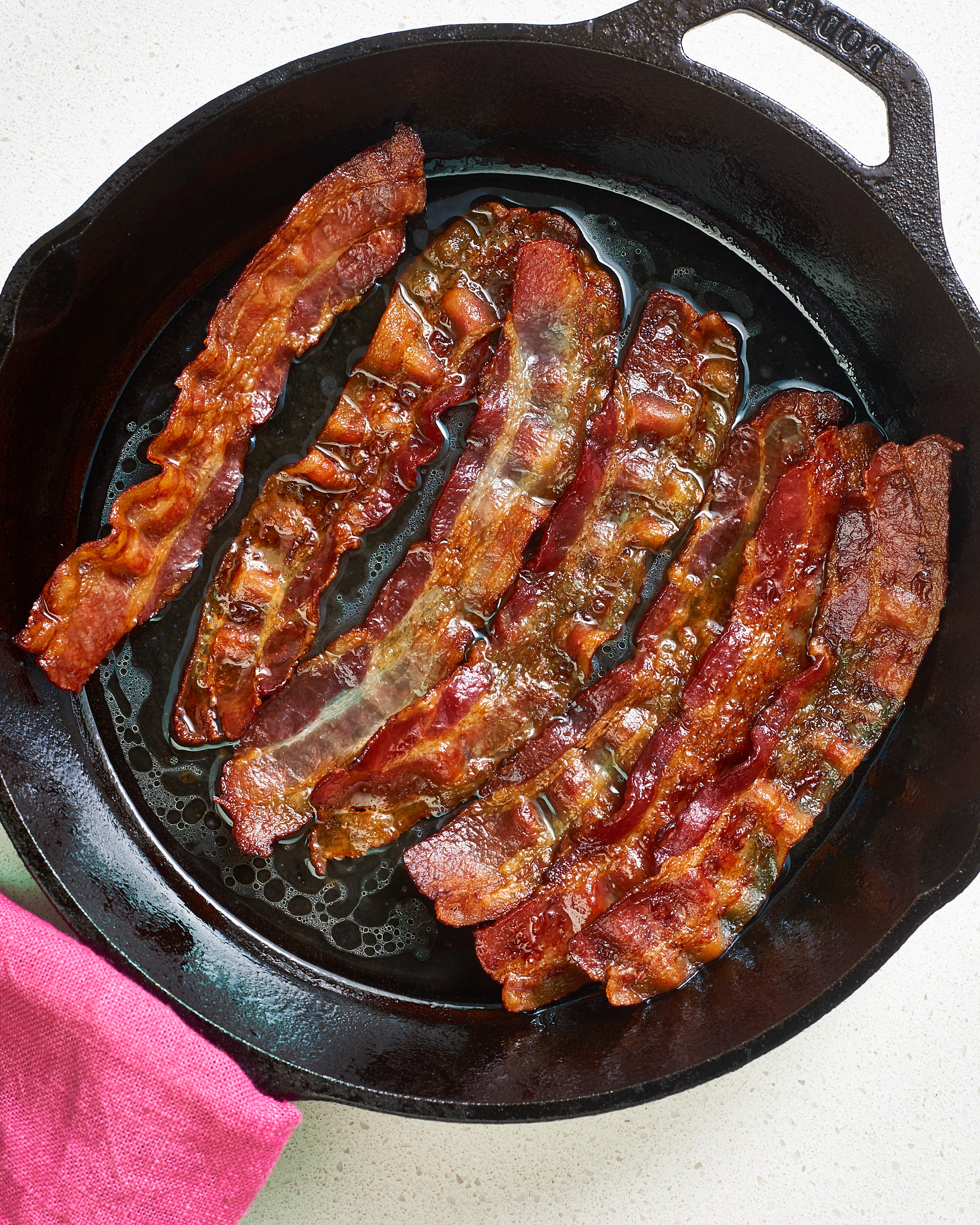
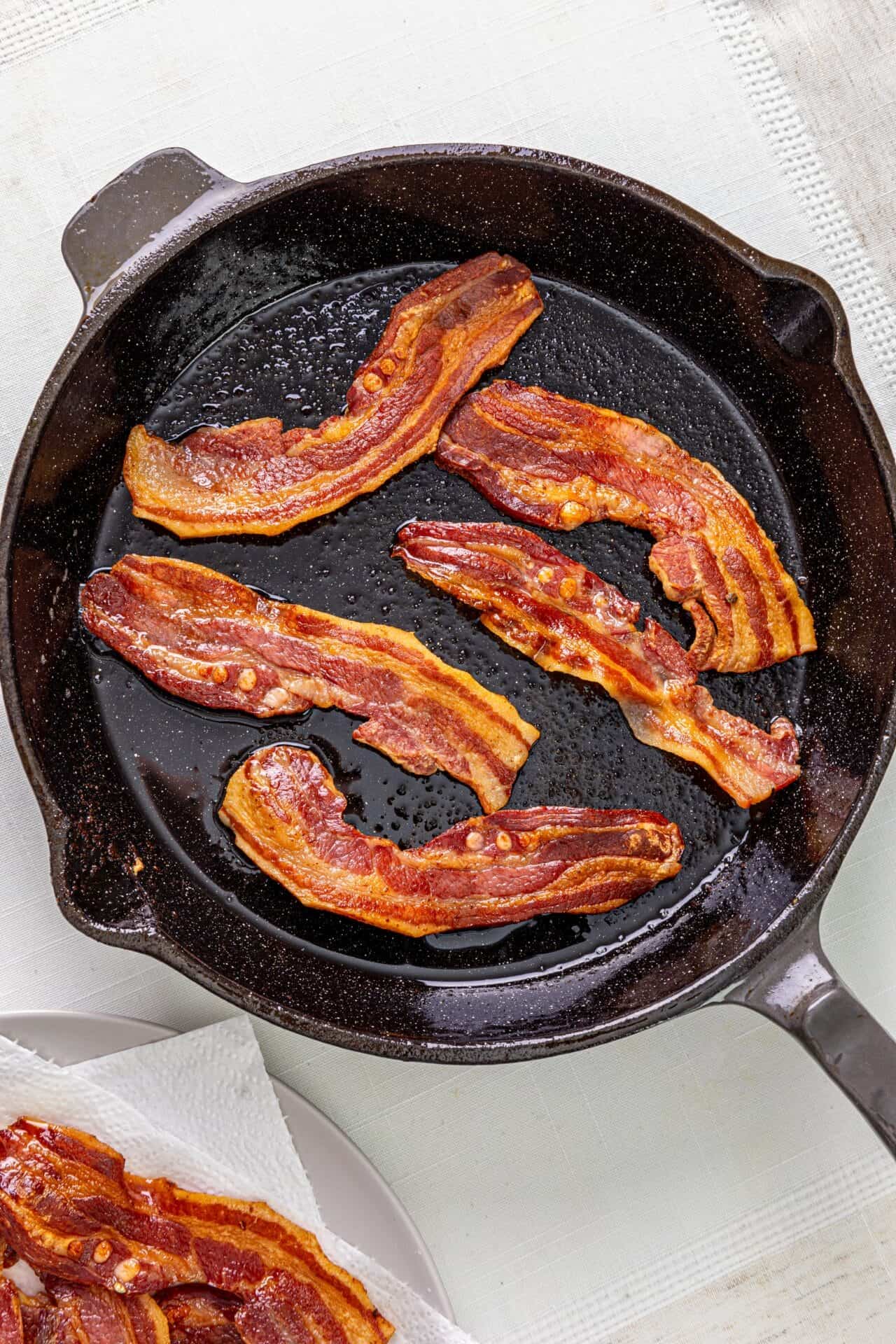
Place the bacon strips in a cold frying pan. Make sure each strip lies flat and doesn’t overlap. This helps all pieces cook evenly.
Step 2: Heat The Pan
Turn the heat to medium or medium-low. Bacon needs to cook slowly so the fat renders (melts) and the meat crisps without burning.
- Medium-low heat is best for thick-cut bacon.
- Medium heat works for regular cut.
Common mistake: High heat can burn the bacon outside while leaving the inside undercooked.
Step 3: Watch And Flip
As the bacon cooks, you’ll see fat begin to melt. The strips will shrink and curl slightly. Once you see the edges browning (usually 4–5 minutes), use tongs to flip each piece.
- Flip every 2–3 minutes after the first flip.
- Move strips around the pan if some areas cook faster than others.
Step 4: Adjust As Needed
If the pan gets too hot and the bacon starts to burn, lower the heat. If it’s cooking too slowly, turn the heat up a little.
Non-obvious insight: Rendered fat in the pan can pool. For extra crispy bacon, carefully pour off some fat halfway through cooking. Always use caution—hot fat can splatter.
Step 5: Remove And Drain
When the bacon reaches your desired crispness, use tongs to transfer it to a plate lined with paper towels. Let it rest for a minute or two; this helps it firm up and stay crispy.
- If you want less greasy bacon, place another paper towel on top and gently press.
Step 6: Save Or Discard Bacon Grease
Many cooks save the leftover bacon fat. It’s great for frying eggs, roasting vegetables, or adding flavor to other dishes. Pour the grease through a fine mesh strainer into a heatproof jar if you want to keep it. Otherwise, let it cool and discard it in the trash—never down the sink.
Typical Cooking Times
| Bacon Type | Heat Level | Cooking Time (per side) | Total Time |
|---|---|---|---|
| Regular Cut | Medium | 4–5 min | 8–10 min |
| Thick Cut | Medium-low | 5–6 min | 12–15 min |
| Turkey Bacon | Medium | 3–4 min | 6–8 min |
Credit: www.thekitchn.com
Achieving Your Perfect Bacon Texture
Everyone has their favorite bacon texture. The frying pan method lets you fine-tune the result to match your taste.
For Chewy Bacon
- Use medium-low heat and a shorter cook time.
- Remove the bacon just as the fat turns translucent but before it’s fully crisp.
- Rest on paper towels; it will firm up slightly as it cools.
For Crispy Bacon
- Use medium heat and cook longer.
- Let all the fat render and the strips turn deep golden brown.
- Flip often for even crispness.
- Drain thoroughly to remove excess grease.
Making Bacon Extra Flat
If you prefer flat bacon (great for BLTs and sandwiches), try this:
- Press the bacon with a bacon press or a clean, flat spatula during cooking.
- Start pressing once the fat begins to render.
- This helps prevent curling and makes the strips evenly shaped.
Expert tip: If you want perfectly straight, flat bacon but don’t have a press, lay a piece of parchment paper on top and use another pan to gently press down.
Common Mistakes When Cooking Bacon In The Frying Pan
Many beginners and even experienced cooks make small mistakes that affect bacon’s taste and texture. Here’s what to avoid:
- Starting with a hot pan: Bacon curls and cooks unevenly.
- Overcrowding: When strips overlap, they steam instead of crisp.
- High heat: Leads to burnt edges and chewy, undercooked centers.
- Not draining: Bacon left in grease becomes soggy.
- Pouring grease down the drain: This can clog pipes.
- Using thin, cheap pans: They heat unevenly and increase splatter risk.
Extra insight: Flipping too often can lower the pan temperature, slowing cooking and making bacon greasy.
:strip_icc()/BHG-recipes-breakfast-meats-how-to-cook-bacon-part-01-B-fd41614a5ecf477cb999da9f8a117194.jpg)
Credit: www.bhg.com
Bacon Grease: Save Or Discard?
Bacon grease is a flavorful byproduct that many home cooks throw away without thinking. But it’s actually a versatile ingredient.
How To Save Bacon Grease
- Let the grease cool a few minutes but not solidify.
- Pour through a fine mesh strainer into a clean, heatproof jar.
- Store in the fridge for up to a month.
Uses for bacon grease:
- Frying eggs, potatoes, or vegetables
- Adding to cornbread or biscuits
- Enhancing gravies and sauces
When To Discard
- If the grease is burned or smells off, it’s better to throw it away.
- Don’t pour it down the drain; it can cause plumbing problems. Let it cool and solidify, then put it in the trash.
Cleaning Up After Cooking Bacon
Bacon splatter is almost unavoidable, but cleaning up quickly makes the task easier.
How To Clean A Greasy Frying Pan
- Let the pan cool before handling.
- Pour excess grease into a container (not the sink).
- Wipe out remaining fat with paper towels.
- Wash with hot, soapy water. For cast iron, use a little salt as a scrub if needed, then dry immediately.
- For stubborn spots, soak the pan in hot water for a few minutes before scrubbing.
Dealing With Bacon Smell
Bacon’s aroma is delicious, but it can linger. Open windows, use your stove’s exhaust fan, or simmer a pot of water with lemon slices and vinegar after cooking.
Credit: bakedbree.com
Bacon In Different Dishes
Once you’ve mastered frying pan bacon, you can use it in more than just breakfast.
Popular Uses
- BLT sandwiches: Layer crispy bacon with lettuce and tomato.
- Salads: Crumbled bacon adds crunch and flavor.
- Pasta: Add crispy bits to carbonara or mac and cheese.
- Soups: Use bacon as a garnish for potato or bean soups.
- Burgers: Top with bacon for extra flavor.
Pro tip: Save some of the rendered fat and drizzle it on popcorn or roasted vegetables for a smoky twist.
Comparing Cooking Methods: Frying Pan Vs. Other Ways
It’s helpful to see how the frying pan method stacks up against baking or microwaving.
| Method | Control | Texture | Best For | Cleanup |
|---|---|---|---|---|
| Frying Pan | High | Crispy or chewy | Small batches, personalized results | Moderate (splatter) |
| Oven | Low | Even, mostly crispy | Large batches, hands-off cooking | Easy (lined tray) |
| Microwave | Low | Chewy, sometimes uneven | Quick, small servings | Easy (paper towels) |
Insight: Pan-frying is best when you want total control over doneness and texture, but it does require more attention than the oven or microwave.
Safety Tips For Cooking Bacon
Dealing with hot grease and splatter is part of cooking bacon. Here’s how to stay safe.
- Use long tongs to keep your hands away from hot fat.
- Wear an apron to protect your clothes.
- Keep a splatter guard handy to minimize mess and burns.
- Never leave bacon unattended on the stove.
- Clean up spills immediately to avoid slips.
Expert tip: If you do get a grease burn, run cool water over it right away and seek medical help if it’s severe.
Troubleshooting: Bacon Problems And Solutions
Even with the best technique, things can go wrong. Here’s how to fix common bacon problems.
- Curled bacon: Press flat with a spatula or use a bacon press.
- Uneven cooking: Rearrange strips in the pan; move them if one side cooks faster.
- Tough, rubbery bacon: Lower the heat and cook longer to render more fat.
- Too much smoke: Lower the heat, and pour off some fat if needed.
- Burnt spots: Use a heavier pan and lower the heat.
Pro insight: Sometimes bacon seems done but is still soft. Let it rest on paper towels—it will crisp up as it cools.
Making Bacon Healthier
Bacon isn’t known as a health food, but you can make it a little lighter.
- Choose center cut or turkey bacon for less fat.
- Blot well after cooking to remove extra grease.
- Pair with fresh vegetables or whole grains to balance your meal.
- Limit portion size—one or two strips can add flavor without overdoing fat or calories.
For more on healthier bacon choices, visit the Wikipedia page on bacon.
Frequently Asked Questions
How Do I Know When Bacon Is Done?
Bacon is done when it turns a deep golden brown and is firm to the touch. For chewy bacon, remove it when the fat is mostly rendered but the meat is still soft. For crispy bacon, wait until all the fat has cooked off and the strips are rigid.
Remember, bacon will firm up more after you take it out of the pan.
Can I Cook Frozen Bacon In A Frying Pan?
It’s best to thaw bacon before cooking for even results. If you must cook from frozen, separate the strips and start on low heat. As it thaws, increase the heat to medium. Cooking frozen bacon takes longer and can lead to uneven texture.
What Should I Do With Leftover Bacon Grease?
You can save bacon grease for cooking or discard it safely. Strain it into a jar and refrigerate for up to a month. Use it to fry eggs, potatoes, or add flavor to other dishes. Never pour grease down the drain, as it can clog your pipes.
Why Is My Bacon Shrinking So Much?
Bacon shrinks because fat and water render out during cooking. Thinner slices and higher fat content mean more shrinkage. To reduce shrinkage, cook on lower heat and choose thicker, center cut bacon.
How Do I Make Bacon Less Greasy?
Drain cooked bacon on paper towels right away. You can also blot the top with another paper towel to remove even more grease. Cooking slowly on medium heat helps render out more fat, resulting in less greasy bacon.
Cooking bacon in a frying pan is a simple pleasure that rewards attention to detail. With the right bacon, tools, and technique, you can enjoy perfectly cooked strips every time. Whether you like it chewy or crispy, pan-frying gives you control and great flavor.
Don’t be afraid to experiment—try different cuts, add spices, or save the grease for other dishes. With these tips, you’ll not only impress yourself but also anyone lucky enough to share your next bacon breakfast.

Hello, This is Annie Walker, a 38-year-old blogger, founder, and editor of Cookware Guider from NY, USA. I am a cookware fanatic and passionate cooker. I love to cook with different types of cooking appliances (example: all types of cookware, rice cookers, slow cookers, etc) almost every day in my kitchen. I love to share my experience with my readers in my blog. Also, I enjoy helping people to solve their problems through my website. You can follow me on Twitter & Pinterest. To know details about my blog please check the about us page.