
Few foods are as satisfying as a juicy hamburger, especially when cooked right at home. While grilling might be the classic method, pan frying hamburgers is a game changer. It’s quick, easy, and delivers delicious results—no fancy equipment needed. Even if you live in a small apartment or just want to cook indoors, learning how to pan fry hamburgers opens up new possibilities for your meals.
But pan frying is more than just tossing a patty in a skillet. The right technique can make a burger that’s crispy outside, juicy inside, and full of flavor. For beginners, it’s easy to worry about undercooking, overcooking, or ending up with dry meat. This guide breaks down everything: from meat selection and seasoning, to flipping tips, temperature, and mistakes to avoid. By the end, you’ll know how to create restaurant-quality burgers on your stovetop.
Why Pan Fry Hamburgers?
Pan frying isn’t just for convenience—it changes the burger experience. The direct contact with a hot pan creates a crust that’s almost impossible to get from a grill alone. The fat from the beef stays with the patty, adding moisture and flavor. If you’ve ever wondered why diner burgers taste so good, the answer is often a hot, flat surface.
Another bonus: pan frying lets you cook all year round. Rain, snow, or no backyard? No problem. Plus, you can control every step, from the heat to the seasoning. And if you want to add extras like onions or cheese, the pan makes it easy.
Choosing The Right Meat
The foundation of any great burger is the meat. For pan frying, ground beef with a good fat content is best. Lean beef (like 90/10 or 95/5) may sound healthy, but it usually leads to dry, tough burgers. The fat melts during cooking, keeping the patty moist.
| Ground Beef Type | Fat Content | Juiciness | Best For |
|---|---|---|---|
| 80/20 | 20% | Very Juicy | Classic Burgers |
| 85/15 | 15% | Juicy | Lean but Flavorful |
| 90/10 | 10% | Medium | Healthier Option |
For the best pan-fried burger, aim for 80/20 ground beef. Some chefs like to blend different cuts—brisket, chuck, or short rib—but simple ground chuck is excellent for most home cooks.
Non-obvious insight: Avoid pre-formed frozen patties. They often have additives and can turn rubbery in the pan. Freshly ground beef, even from the supermarket, will brown better and taste fresher.
Prepping The Burger Patties
How you shape and season your patties affects the final taste and texture. Here’s what you need to know:
- Keep the meat cold. Warm fat melts too soon and can make the patty greasy.
- Divide the meat into equal portions. A kitchen scale helps, but you can eyeball it—about 4 to 6 ounces per patty is standard.
- Shape gently. Press the meat just enough to hold together. Overworking makes the burger tough.
- Make a small dimple in the center of each patty with your thumb. This helps the burger cook evenly and prevents it from puffing up.
Seasoning
Simple is best for classic burgers. Sprinkle salt and black pepper on both sides just before cooking. Salt draws out moisture if added too early, so wait until the last minute.
For extra flavor, you can add:
- Garlic powder
- Onion powder
- Smoked paprika
- A dash of Worcestershire sauce
But avoid mixing salt into the meat before shaping—this can make the texture dense.
Pro tip: If you want to experiment, try a small pinch of baking soda (1/8 teaspoon per pound of meat). It raises the pH of the meat’s surface, helping it brown better and stay juicy.
Choosing The Best Pan
A great burger starts with the right pan. The ideal options are:
- Cast iron skillet – Retains heat, creates a great crust, and is easy to clean.
- Stainless steel skillet – Also works well, but can stick if not heated and oiled properly.
- Nonstick pan – Okay for leaner meat, but won’t give as much browning.
Avoid thin, lightweight pans—they can overheat and cook unevenly.
Size matters too. Choose a pan large enough so burgers aren’t crowded. Overcrowding causes steaming, not searing.
Preheating And Adding Fat
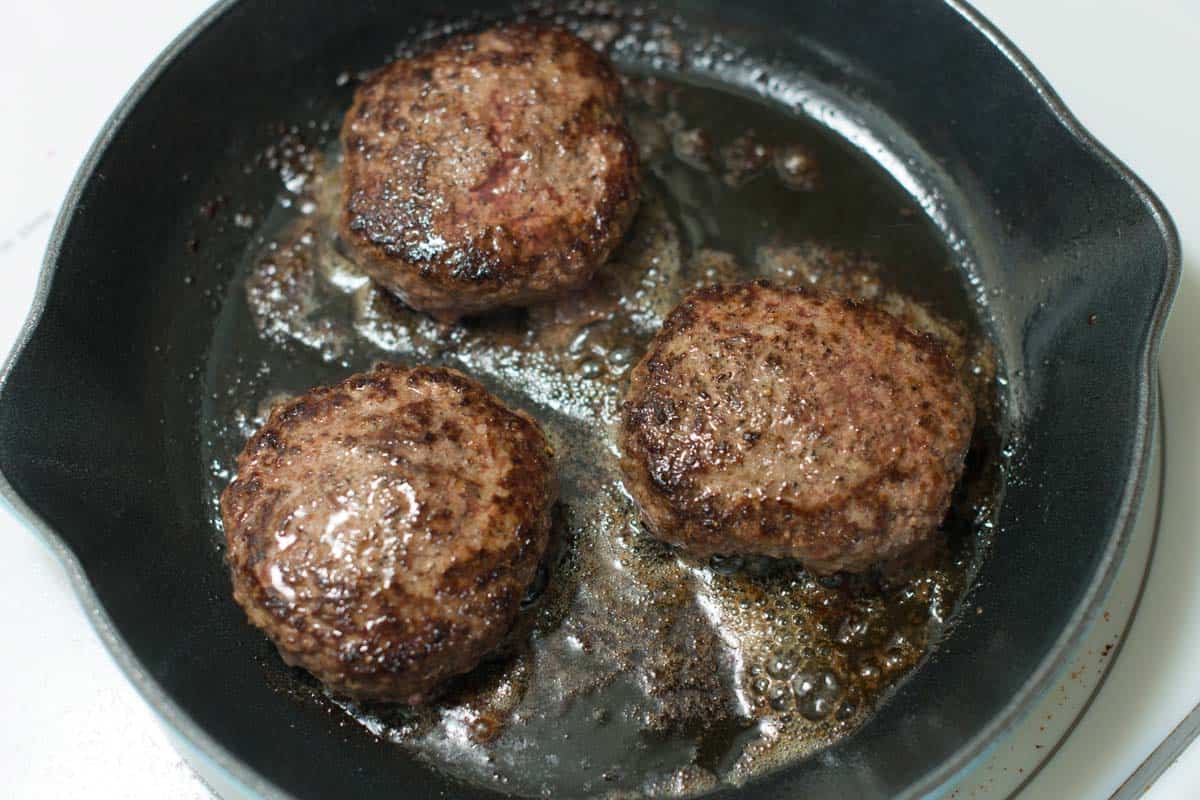
Before you cook, preheat the pan over medium-high heat for 3–5 minutes. A hot pan is key for the Maillard reaction, which is what gives burgers their crispy, brown crust.
Add a small amount of oil with a high smoke point (canola, vegetable, or avocado oil) to the pan. Even fatty meat needs a little oil to prevent sticking and help with browning.
Non-obvious insight: Butter adds flavor, but burns fast at high heat. If you want that buttery taste, add a small knob of butter halfway through cooking—not at the start.
Step-by-step: How To Pan Fry Hamburgers
Let’s break down the process for perfect pan-fried burgers every time.
- Shape and season the patties.
- Make sure they’re cold and gently formed.
- Season with salt and pepper just before cooking.
- Preheat the pan.
- Heat over medium-high for at least 3 minutes.
- Add 1–2 teaspoons of oil and swirl to coat.
- Place the patties in the pan.
- Lay them gently, leaving space between each one.
- Do not press down with a spatula—this squeezes out juices.
- Cook the first side.
- For 4–5 ounce patties, cook for 3–4 minutes without moving.
- The bottom should develop a dark brown crust.
- Flip once.
- Use a thin spatula to flip.
- Cook for another 3–4 minutes for medium, or longer for well-done.
- If adding cheese, place it on top in the last minute and cover with a lid to melt.
- Rest the burgers.
- Remove from pan and let them rest on a plate for 2–3 minutes.
- This lets juices redistribute for a juicier bite.
Doneness Guide
Knowing when your burger is done can be tricky without cutting it open. Use an instant-read thermometer for best results.
| Doneness | Internal Temp (°F) | Color |
|---|---|---|
| Rare | 120–125 | Red center |
| Medium-rare | 130–135 | Warm pink center |
| Medium | 140–145 | Slightly pink |
| Medium-well | 150–155 | Little pink |
| Well-done | 160+ | Brown throughout |
Safety note: The USDA recommends ground beef be cooked to at least 160°F. However, many chefs and home cooks prefer medium or medium-rare for juiciness. If you grind your own beef or trust your source, you can cook it less.
Common Mistakes To Avoid
Even experienced cooks can slip up. Here are some frequent mistakes and how to avoid them:
- Pressing the patties with a spatula. This forces out flavorful juices, making the burger dry.
- Overcrowding the pan. Too many burgers drop the temperature, causing steaming instead of browning.
- Using cold pans. Without enough heat, you won’t get a good crust.
- Seasoning too early. Salt before cooking is fine, but mixing it into the meat can change the texture.
- Skipping the rest period. Cutting into the burger right away lets juices run out.
Adding Cheese And Toppings
Nothing beats a classic cheeseburger, but timing is important. Add cheese (American, cheddar, Swiss, etc. ) During the last minute of cooking. Cover the pan with a lid to trap steam and help melt the cheese evenly.
For toppings, there are endless choices:
- Lettuce, tomato, and onion for a fresh crunch
- Pickles for tang
- Bacon or sautéed onions for extra flavor
Toast your buns in the pan after cooking the burgers. A bit of leftover fat in the pan gives the bread a golden, flavorful crust.
Pro tip: If you like your toppings warm, add sliced onions or mushrooms to the pan after removing the burgers. Sauté in the beef drippings for maximum taste.

Credit: www.homeandplate.com
The Smash Burger Variation
Looking for something different? Try a smash burger. This style uses a ball of meat pressed hard into the pan for maximum surface contact. The result: a thin, crispy-edged burger with lots of flavor.
How to make it:
- Roll beef into balls (about 3 ounces each).
- Place in a very hot pan, then press down hard with a spatula or burger press for 10 seconds.
- Season, cook for 2–3 minutes, flip, and add cheese if you like.
Smash burgers cook fast and are great for double or triple stacks.
Comparing Pan Frying, Grilling, And Broiling
Not sure if pan frying is best for you? Here’s a quick comparison:
| Method | Flavor | Texture | Ease of Use | Best For |
|---|---|---|---|---|
| Pan Frying | Rich, beefy, crusty | Crispy outside, juicy inside | Very easy | Indoor, all weather |
| Grilling | Smoky, charred | Charred outside, variable inside | Moderate | Outdoor, summer |
| Broiling | Oven-roasted, slightly smoky | Evenly cooked | Easy | No pan, quick meals |
Pan frying gives you control and great results, especially when grilling isn’t possible.
Credit: www.inspiredtaste.net
Cleaning Up After Cooking
Cooking burgers can leave behind grease and bits of meat. Here’s how to clean up quickly:
- Let the pan cool slightly, but not completely.
- Pour off excess fat into a heat-safe container (never down the sink).
- Wipe the pan with a paper towel.
- Wash with hot water and a little soap. For cast iron, avoid soaking and always dry completely.
- If you have lingering smells, simmer a little vinegar and water in the pan.
Tip: Clean as you go—wipe up splatters right away to make final cleanup easier.
Burger Variations And Advanced Tips
Once you master the basics, try these ideas:
- Stuffed Burgers: Place cheese or cooked onions inside the patty before cooking.
- Different meats: Use ground turkey, chicken, or lamb. (These need more oil and care to avoid dryness.)
- Seasoned crust: Brush the top with mustard or hot sauce before flipping for extra flavor.
- Steamed cheese: Add a tablespoon of water to the pan and cover for ultra-melty cheese.
If you want to learn more about food safety and meat handling, the USDA’s burger guide is a helpful resource.

Credit: www.themountainkitchen.com
Frequently Asked Questions
How Do I Keep Pan-fried Burgers From Sticking?
Make sure the pan is hot before adding the burgers, and use a small amount of oil with a high smoke point. Avoid moving the burger until it naturally releases from the pan, usually after 3–4 minutes.
What Is The Best Oil For Pan Frying Hamburgers?
Canola, vegetable, or avocado oil are best. They have high smoke points and neutral flavors. Olive oil can be used in a pinch, but it may burn at high heat.
Can I Pan Fry Frozen Hamburger Patties?
Yes, but for best results, thaw them first. If you must cook from frozen, use lower heat and cook longer to ensure the center is done. Expect less browning and more moisture loss.
How Do I Know When My Burger Is Done Without A Thermometer?
Look for juices running clear and no pink in the center, though this is less precise. For safety, especially with store-bought meat, a thermometer is recommended.
What’s The Secret To A Juicy Burger?
Use beef with at least 15–20% fat, don’t overwork the meat, avoid pressing the burger while cooking, and let it rest after cooking. These steps help keep juices inside.
Pan frying hamburgers is a skill any home cook can master. With the right meat, simple seasoning, a hot pan, and patience, you’ll get burgers that rival your favorite diner—crispy, juicy, and packed with flavor. Try out different toppings, experiment with cheese, and soon you’ll have your own signature burger.
Happy cooking!

Hello, This is Annie Walker, a 38-year-old blogger, founder, and editor of Cookware Guider from NY, USA. I am a cookware fanatic and passionate cooker. I love to cook with different types of cooking appliances (example: all types of cookware, rice cookers, slow cookers, etc) almost every day in my kitchen. I love to share my experience with my readers in my blog. Also, I enjoy helping people to solve their problems through my website. You can follow me on Twitter & Pinterest. To know details about my blog please check the about us page.