
Cooking a perfect T-bone steak on a frying pan is a skill every home cook can master. The T-bone is famous for its unique shape, rich flavor, and tender meat. Many people believe you need a grill to get a great steak, but a frying pan—especially a heavy one like cast iron—can deliver amazing results. If you follow a few simple steps, you can make a juicy, flavorful steak right in your kitchen. This guide explains everything you need to know, from choosing the right steak to finishing with the perfect touch.
What Makes T-bone Steak Special
The T-bone steak is cut from the short loin of the cow. It has two different types of meat: the tenderloin (soft and mild) and the strip steak (firm and flavorful). The bone in the center forms a “T” shape, which gives the steak its name. Because it combines two prized cuts, T-bone is popular for those who want both tenderness and taste.
A typical T-bone steak weighs between 16 and 24 ounces and is about 1 to 1. 5 inches thick. This thickness is important because it allows for a juicy center and a crispy, brown crust.
Choosing The Right T-bone Steak
Picking the right steak is the first step. Here are a few things to check:
- Thickness: Choose a steak that is at least 1 inch thick. Thicker steaks are easier to cook evenly.
- Marbling: Look for small white lines of fat inside the meat. This is called marbling. More marbling means more flavor and tenderness.
- Freshness: The meat should look bright red and moist, not dull or dry.
- Bone size: The bone should be clean and not too large, so you get more meat.
Many stores offer USDA grades like Prime, Choice, and Select. Prime has the most marbling and is the best for frying pan cooking, but Choice is also good. Select is leaner and less juicy.
Preparing Your Steak
Before cooking, you need to prepare the steak. Preparation is key for great results.
Ingredients And Tools
You will need:
- 1 T-bone steak (16–24 oz, 1–1.5 inches thick)
- Salt (preferably coarse, like kosher salt)
- Black pepper (freshly ground)
- 2–3 tablespoons of oil (canola or vegetable oil)
- 1–2 tablespoons of butter
- 2–3 cloves of garlic (optional)
- Fresh herbs like thyme or rosemary (optional)
Tools:
- Heavy frying pan (cast iron works best)
- Tongs
- Meat thermometer
- Paper towels
Steak Preparation Steps
- Dry the steak: Pat both sides dry with paper towels. Moisture prevents browning.
- Season generously: Sprinkle salt and pepper on both sides. Don’t be shy—seasoning brings out the flavor.
- Let it rest: Leave the steak at room temperature for 30–45 minutes. This helps it cook more evenly.
Cooking The T-bone Steak On A Frying Pan
This is the main step. Cooking on a pan is simple, but there are tricks to get the best results.
Preheat The Pan
Heat your frying pan on high heat for at least 5 minutes. The pan should be very hot so the steak sizzles as soon as it touches the surface. Cast iron pans are best because they keep heat well and make a great crust.
Add Oil
Pour oil into the hot pan and swirl it to cover the surface. Use oils with high smoke points—like canola or vegetable oil—so they do not burn.
Sear The Steak
Place the steak in the pan. It should sizzle loudly. Press it down gently with tongs so the surface touches the pan.
- Sear for 2–3 minutes on one side, until it has a deep brown color.
- Flip and sear the other side for another 2–3 minutes.
If your steak is thick, you can sear the sides as well by holding it with tongs.
Add Butter And Aromatics
Lower the heat to medium. Add butter, garlic, and herbs to the pan. As the butter melts, tilt the pan and use a spoon to baste the steak with melted butter. This adds flavor and keeps the meat moist.
Finish Cooking
Continue cooking the steak, flipping every minute, until it reaches your desired doneness. Use a meat thermometer for accuracy. Here are the common doneness levels:
| Doneness | Internal Temp (°F) | Texture |
|---|---|---|
| Rare | 120–125 | Cool red center, very soft |
| Medium Rare | 130–135 | Warm red center, soft |
| Medium | 140–145 | Pink center, firm |
| Medium Well | 150–155 | Slightly pink, firm |
| Well Done | 160+ | No pink, very firm |
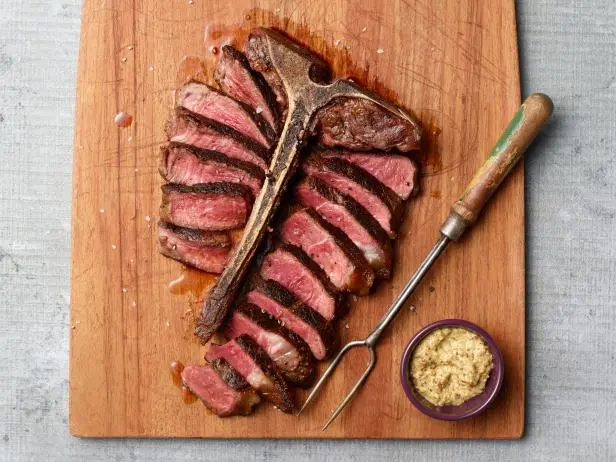
Most chefs recommend medium-rare for T-bone steak. At this stage, the steak is juicy and tender.
Credit: www.foodnetwork.com
Resting The Steak
After cooking, transfer the steak to a plate. Cover loosely with foil. Let it rest for 5–10 minutes. Resting is important because it lets the juices move back into the meat, making it moist and flavorful.
If you cut the steak too soon, the juices will spill out and the meat will be dry.
Cutting And Serving
Slice the steak against the grain. The grain is the direction the muscle fibers run. Cutting against the grain makes the meat softer and easier to chew.
You can remove the bone and slice each section separately:
- The tenderloin (smaller part)
- The strip steak (larger part)
Arrange the slices on a plate. Serve with your favorite sides, like mashed potatoes, grilled vegetables, or salad.
Comparing Pan-fried Vs. Grilled T-bone Steak
Many people wonder if pan-fried steaks are as good as grilled ones. Here’s a quick comparison:
| Cooking Method | Flavor | Texture | Ease |
|---|---|---|---|
| Pan-Fried | Rich, buttery, deep crust | Juicy, soft | Simple, indoor |
| Grilled | Smoky, charred | Firm, sometimes drier | Requires outdoor grill |
Pan-frying gives you more control, especially in small kitchens. You can add butter and herbs for extra flavor, which is harder to do on a grill.
Common Mistakes To Avoid
Even experienced cooks make mistakes with T-bone steaks. Here are some you should watch out for:
- Using a cold pan: The pan must be very hot. Otherwise, the steak won’t brown.
- Not drying the steak: If the steak is wet, it will steam instead of sear.
- Overcrowding the pan: Cook one steak at a time. Too many pieces drop the temperature.
- Skipping the rest: Always let the steak rest before slicing.
- Cooking past medium-well: T-bone can become tough if cooked too long.
An insight many beginners miss: The bone in the T-bone can make the meat near it cook slower. Always check the temperature near the bone and in the center. This helps avoid raw spots.
Credit: www.springcanyon.org
Practical Tips For Perfect Pan-fried T-bone
- Use cast iron: It keeps heat and makes a better crust.
- Don’t move the steak too much: Let it sear before flipping.
- Try basting: Spoon butter over the steak for extra flavor.
- Let the steak come to room temp: Cold meat cooks unevenly.
- Use a thermometer: Don’t guess doneness; check the temperature.
A lesser-known tip: If you want a thick crust, sprinkle a small pinch of sugar on the steak along with salt. The sugar caramelizes and boosts browning, but use only a tiny amount.
Nutritional Facts And Steak Data
T-bone steaks are high in protein and minerals like iron and zinc. Here is a breakdown for a typical 16 oz steak:
| Nutrient | Amount (per 16 oz) | % Daily Value |
|---|---|---|
| Calories | 1100 | 55% |
| Protein | 96g | 192% |
| Fat | 78g | 120% |
| Iron | 7mg | 39% |
| Zinc | 12mg | 80% |
Steak is a good source of nutrients but also high in fat, so it’s best enjoyed in moderation.

Credit: www.youtube.com
Step-by-step Summary For Beginners
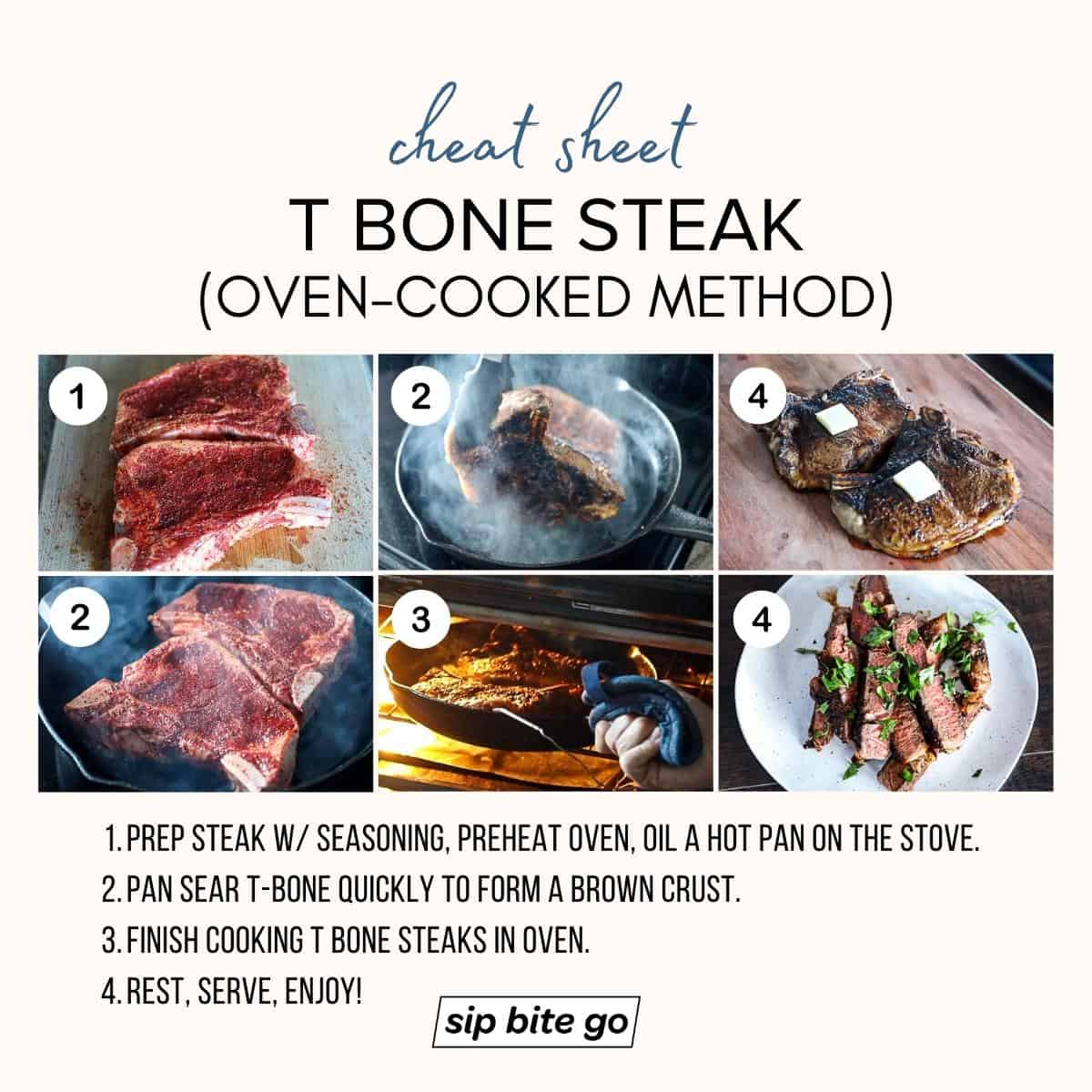
If you want a quick reminder, follow these steps:
- Buy a thick, marbled T-bone steak.
- Dry and season with salt and pepper.
- Heat a cast iron pan until very hot.
- Add oil, then steak. Sear both sides for 2–3 minutes.
- Add butter, garlic, and herbs. Baste the steak.
- Cook to desired doneness, checking with a thermometer.
- Let the steak rest for 5–10 minutes.
- Slice against the grain and serve.
Frequently Asked Questions
How Long Should I Cook A T-bone Steak On A Frying Pan?
For a 1-inch thick steak, sear each side for 2–3 minutes. Then finish cooking for another 3–6 minutes, flipping every minute. Use a thermometer for best results.
Should I Use Oil Or Butter To Cook The Steak?
Start with oil for high heat, then add butter and aromatics after searing. Butter adds flavor but burns easily.
What Is The Best Pan For Cooking T-bone Steak?
A cast iron pan is best. It holds heat well and creates a great crust.
How Do I Know When The Steak Is Done?
Use a meat thermometer to check the internal temperature. See the doneness chart above for details.
Can I Use Frozen Steak?
It’s best to cook a fresh or thawed steak. Frozen steak won’t brown well and may cook unevenly.
Cooking T-bone steak on a frying pan is simple, but it takes attention to detail. With the right steak, a hot pan, and careful timing, you can create a restaurant-quality meal at home. For more information about steak cuts and cooking, you can check Wikipedia.
Enjoy your steak and impress your family or guests with your cooking skills. Remember, practice makes perfect—each time you cook, you learn a little more about how to make the ideal T-bone steak.

Hello, This is Annie Walker, a 38-year-old blogger, founder, and editor of Cookware Guider from NY, USA. I am a cookware fanatic and passionate cooker. I love to cook with different types of cooking appliances (example: all types of cookware, rice cookers, slow cookers, etc) almost every day in my kitchen. I love to share my experience with my readers in my blog. Also, I enjoy helping people to solve their problems through my website. You can follow me on Twitter & Pinterest. To know details about my blog please check the about us page.