
Cooking sausages in a frying pan is a simple skill, but doing it well can make your meal tastier and safer. Many people choose sausages because they are easy to prepare and full of flavor. But if you don’t cook them right, you may get burnt outsides and raw insides, or greasy and dry results.
This guide will help you cook sausages perfectly every time, even if you are new to cooking or English. You will learn what type of pan to use, how to prepare the sausages, how long to cook them, and how to avoid common mistakes.
There are also tables with useful comparisons, practical tips, and answers to questions people ask about frying sausages.
Choosing The Right Sausages
There are many types of sausages in stores. You may see pork sausages, beef sausages, chicken sausages, or even vegetarian sausages. Each type cooks a little differently. Here’s what matters most:
- Fresh sausages need full cooking. They are raw and must reach a safe temperature.
- Pre-cooked sausages (like hot dogs) only need reheating.
- Thick sausages take longer than thin ones.
If you want the classic breakfast sausage experience, choose fresh pork or beef sausages. For a lighter meal, chicken or turkey are good options. Vegetarian sausages often use beans or soy, and usually cook faster.
Comparing Sausage Types
Here is a quick comparison to help you decide:
| Type | Cooking Time (Pan) | Flavor | Common Use |
|---|---|---|---|
| Pork | 10-15 min | Rich, savory | Breakfast, dinner |
| Beef | 12-16 min | Bold, hearty | Barbecue, main dish |
| Chicken | 8-12 min | Light, mild | Healthy meals |
| Vegetarian | 6-10 min | Varies | Meat-free diets |
Essential Tools And Ingredients
You only need a few tools and ingredients to cook sausages in a frying pan. Here’s what you need:
- Frying pan: Use a heavy pan, like cast iron or non-stick, for even heat.
- Tongs: Easier than a fork for turning sausages.
- Paper towels: For drying sausages and cleaning grease.
- Cooking oil: Use vegetable or olive oil, about 1 tablespoon.
- Sausages: Choose your favorite type.
- Optional extras: Onions, peppers, or herbs for more flavor.
Ingredient Quantities
For a basic meal for 2-3 people:
- 6 sausages (about 350–400 grams)
- 1 tablespoon oil
- Salt and pepper (optional)
- 1 small onion or pepper (optional)
Preparing Sausages For The Pan
Some steps before frying will help you get better results:
- Dry the sausages: Use paper towels to remove moisture. This helps them brown.
- Prick sausages lightly: Use a fork to prick once or twice. This stops them from bursting, but don’t over-prick or they lose juices.
- Bring to room temperature: Let sausages sit out for 10–15 minutes before cooking. They cook more evenly this way.
Many beginners skip drying or pricking. This is a common mistake. Wet sausages steam instead of frying, and unpricked sausages may burst.
Cooking Sausages In A Frying Pan: Step-by-step
Here is the process for cooking sausages in a frying pan. Follow these steps for juicy, evenly cooked sausages.
Step 1: Heat The Pan
Put your frying pan on the stove. Turn the heat to medium. Add 1 tablespoon oil and let it heat for 1–2 minutes. The oil should shimmer but not smoke.
Step 2: Add The Sausages
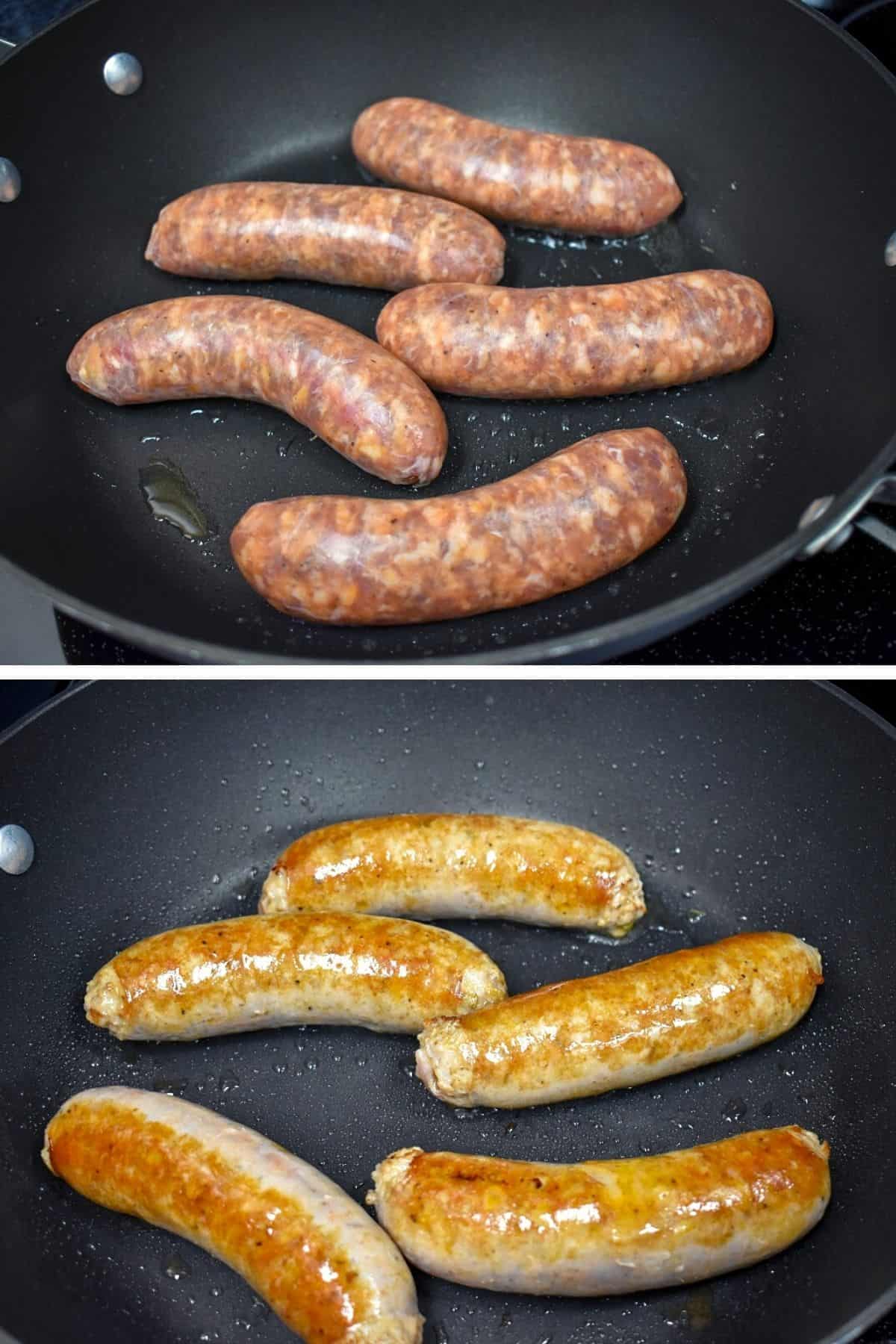
Place the sausages in the pan, leaving space between them. Don’t crowd the pan, or they won’t brown well.
Step 3: Cook And Turn
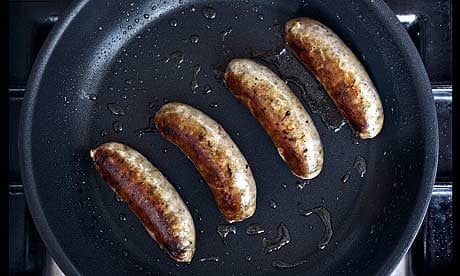
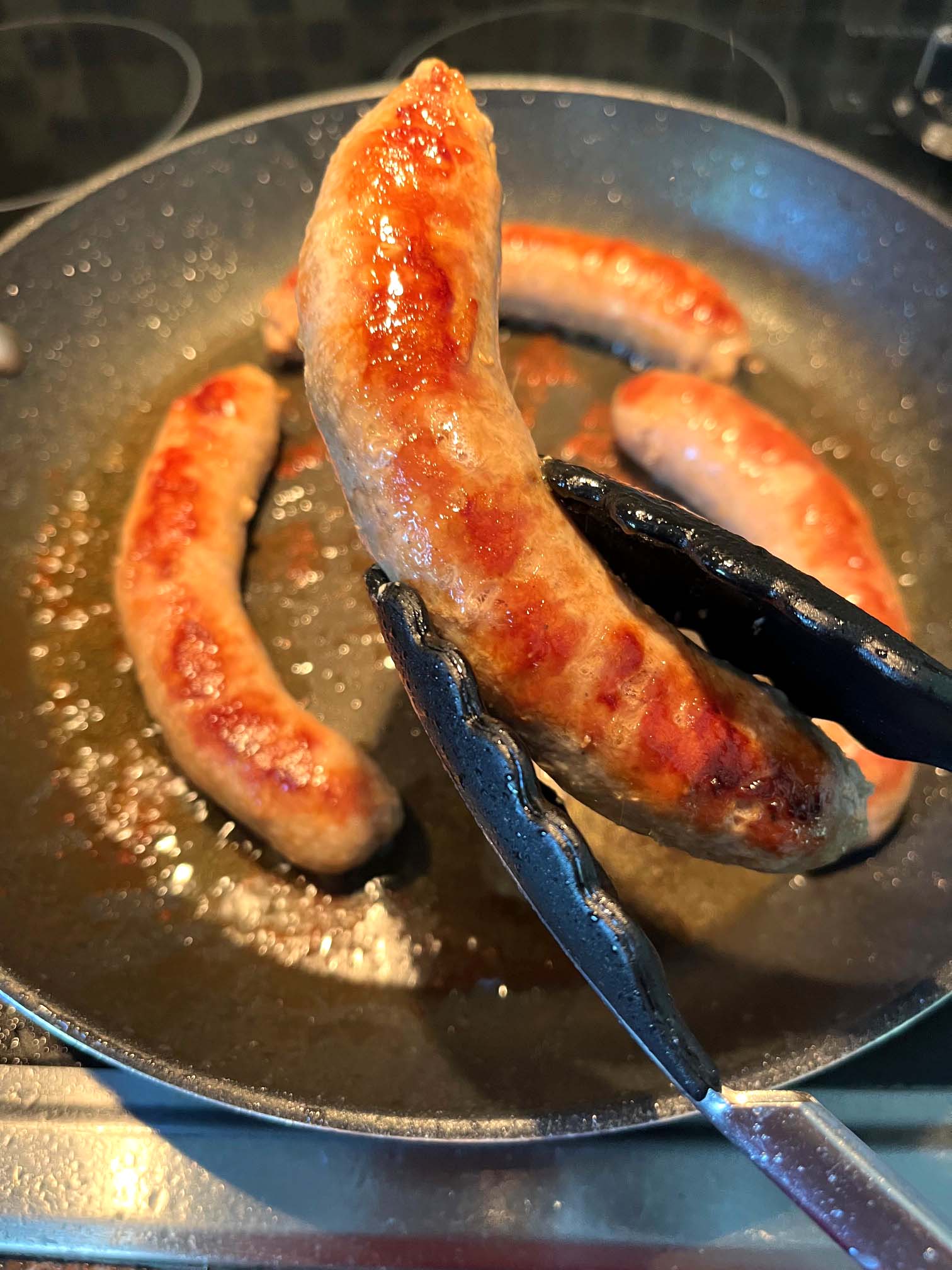
Let sausages cook for 2–3 minutes without moving. This helps form a crisp, brown skin. Use tongs to turn each sausage. Continue turning every 2–3 minutes so all sides get brown.
Step 4: Monitor The Heat
If the pan smokes or sausages brown too quickly, turn the heat down. If sausages cook too slowly, turn up a bit. The goal is a steady sizzle, not burning.
Step 5: Check For Doneness
Most fresh sausages need 10–15 minutes in the pan. They should feel firm, have an even brown color, and juices should run clear. For extra safety, use a meat thermometer. Sausages are safe at 160°F (71°C) for pork/beef, and 165°F (74°C) for chicken.
Step 6: Rest Before Serving
Remove sausages from the pan and let them rest for 3–5 minutes. This helps juices settle and keeps sausages moist.
Credit: www.theguardian.com
Cooking Time And Doneness
Knowing how long to cook sausages is important. Here are average times for common types:
| Sausage Type | Thickness | Cooking Time (Pan) | Safe Internal Temp |
|---|---|---|---|
| Pork | 1 inch | 12-15 min | 160°F (71°C) |
| Chicken | ¾ inch | 8-12 min | 165°F (74°C) |
| Vegetarian | ¾ inch | 6-10 min | Hot throughout |
If you don’t have a thermometer, cut into the thickest sausage. It should be firm, with no pink, and juices clear.
Adding Extra Flavor
You can add more taste to your sausages while frying. Try these ideas:
- Onions and peppers: Add sliced onions or peppers after sausages start browning. Cook together for a sweet, savory mix.
- Herbs: Rosemary or thyme sprigs add aroma and flavor.
- Garlic: Add chopped garlic in the last 2–3 minutes.
Adding vegetables also helps absorb extra fat from sausages, making your meal lighter.
Common Mistakes And How To Avoid Them
Even experienced cooks make mistakes. Here are frequent problems and how to fix them:
- Burnt outside, raw inside: This happens if the heat is too high. Keep the heat medium and turn often.
- Greasy sausages: Too much oil or not draining sausages can make them greasy. Use just enough oil and place cooked sausages on paper towels.
- Burst sausages: Not pricking sausages or cooking on high heat causes bursting. Prick lightly and cook at medium heat.
- Dry sausages: Overcooking or pricking too much makes sausages dry. Prick only once or twice and remove from heat as soon as they are done.
Practical Tips For Better Results
- Use a cast iron pan for more even browning.
- Let sausages rest before cutting, for juicier meat.
- Don’t pierce too many holes; 1–2 per sausage is enough.
- Cook in batches if needed; don’t overcrowd the pan.
Serving Suggestions
Sausages are flexible and match many foods. Here are some ways to serve them:
- With mashed potatoes and gravy for a classic meal.
- On a bread roll with mustard for a quick snack.
- With rice and vegetables for a balanced plate.
- Sliced and added to pasta or salads.
You can also serve sausages with fried eggs, beans, or sautéed greens for a full breakfast.
Credit: www.cook2eatwell.com
Cleaning Up After Cooking
Cleaning your pan right after cooking makes life easier. Here’s what to do:
- Let the pan cool: Never wash a hot pan; it can warp.
- Wipe extra grease: Use paper towels to remove oil and bits.
- Wash with warm, soapy water: Scrub gently with a sponge.
- Dry completely: Water left in the pan can cause rust, especially in cast iron.
- Store safely: Keep your pan in a dry place.
If the pan has stuck bits, soak for 10–15 minutes before washing.
Nutrition And Health
Sausages are tasty but can be high in fat and sodium. Here’s a quick comparison of nutrition for common sausage types:
| Type | Calories (per 100g) | Fat (g) | Protein (g) | Sodium (mg) |
|---|---|---|---|---|
| Pork | 290 | 24 | 14 | 680 |
| Chicken | 180 | 10 | 18 | 550 |
| Vegetarian | 130 | 4 | 11 | 480 |
If you want a healthier option, choose chicken or vegetarian sausages. You can also blot cooked sausages with paper towels to remove extra fat.
Credit: www.melaniecooks.com
Non-obvious Insights For Beginners
Many people think sausages should be cooked quickly, but slow and steady cooking gives better flavor and texture. Another tip: turning sausages often is key to even browning. Many beginners only turn once, but frequent turning prevents burning and keeps sausages juicy.
Also, resting sausages after frying makes a big difference. It lets the juices spread inside, so the meat stays moist when you cut it. If you skip this step, sausages may seem dry, even if cooked perfectly.
Frequently Asked Questions
How Do I Know When Sausages Are Fully Cooked?
You can check by cutting into the thickest sausage. It should be firm, with no pink, and the juices should be clear. For extra safety, use a thermometer. Pork and beef sausages are safe at 160°F (71°C), chicken at 165°F (74°C).
Can I Cook Sausages Without Oil?
Yes, but only if your sausages are fatty and your pan is non-stick. For lean sausages or cast iron pans, a little oil helps prevent sticking and gives better browning.
Is It Safe To Eat Sausages If They Split Or Burst?
Split sausages are safe as long as they reach the right internal temperature. Bursting is a sign of high heat or not pricking sausages, but the meat inside is still good.
Can I Add Vegetables To The Pan?
Yes. Onions, peppers, garlic, or even mushrooms can be cooked with sausages. Add them after sausages start browning for best flavor.
What’s The Best Pan For Frying Sausages?
A cast iron pan gives the best browning and keeps heat steady. Non-stick pans are easier for beginners and need less oil. Stainless steel pans work, but may need more attention to prevent sticking.
If you want to learn more about cooking techniques and food safety, you can visit Wikipedia’s sausage page.
Cooking sausages in a frying pan is easy and rewarding when you know what to do. With these steps, tools, and tips, your sausages will be crisp, juicy, and full of flavor. Try different types and add your own touches—soon you’ll have your own favorite way to cook them.

Hello, This is Annie Walker, a 38-year-old blogger, founder, and editor of Cookware Guider from NY, USA. I am a cookware fanatic and passionate cooker. I love to cook with different types of cooking appliances (example: all types of cookware, rice cookers, slow cookers, etc) almost every day in my kitchen. I love to share my experience with my readers in my blog. Also, I enjoy helping people to solve their problems through my website. You can follow me on Twitter & Pinterest. To know details about my blog please check the about us page.