
Cleaning an iron frying pan can feel confusing, especially if you are new to cast iron cookware. Maybe you worry about rust, or wonder if soap will ruin your pan. The good news? Once you learn the basics, caring for an iron frying pan is simple. This guide will show you practical steps, clear methods, and expert tips. You’ll learn how to keep your pan non-stick, rust-free, and ready for years of great cooking.
Why Iron Frying Pans Need Special Care
Iron frying pans, especially cast iron skillets, need a bit more attention than modern nonstick pans. Unlike stainless steel or ceramic, iron is porous. It absorbs oil and flavors, which helps build a natural non-stick surface called seasoning. But if you clean it the wrong way, you can strip away this seasoning or even cause rust.
A well-maintained iron frying pan can last for generations. In fact, many families pass down their pans as treasured kitchen tools. But the wrong cleaning method can shorten its life or ruin its surface. Understanding why iron pans need special care helps you see why each cleaning step matters.
What You Need Before Cleaning
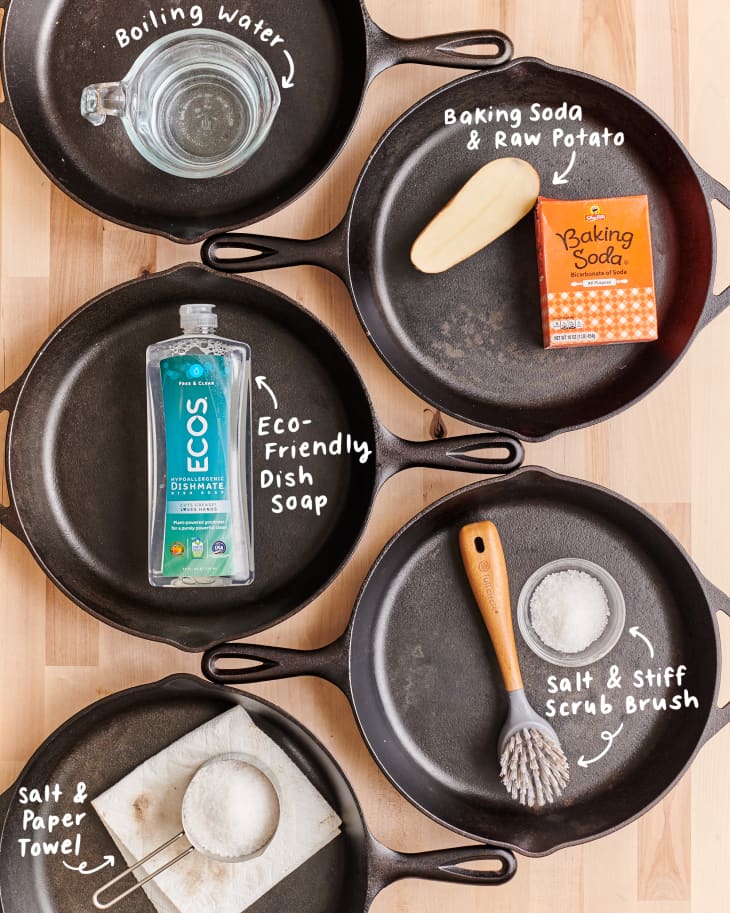
Before you start, gather a few simple tools:
- Soft sponge or stiff brush (no steel wool unless removing rust)
- Coarse salt (like kosher salt)
- Cooking oil (vegetable, canola, or flaxseed)
- Paper towels or a clean cloth
- Warm water
- Non-metal scraper (a plastic spatula or scraper helps with stuck bits)
Avoid using strong dish soaps, harsh scrubbers, or putting your pan in the dishwasher.
Credit: www.thekitchn.com
Step-by-step: How To Clean Your Iron Frying Pan
Let’s walk through the cleaning process, from simple daily care to deep cleaning.
1. Clean Immediately After Cooking
It’s best to clean your pan while it’s still a little warm. This prevents food from sticking.
- Pour out any excess oil.
- Wipe out food bits with a paper towel.
2. Rinse With Warm Water
Hold the pan under warm running water. Use a soft sponge or brush to gently remove food. For most meals, this is enough.
- Don’t soak the pan or leave it wet.
- If something is stuck, move to the next step.
3. Use Salt For Stubborn Bits
If food is stuck, sprinkle coarse salt into the pan.
- Scrub gently with a paper towel or cloth.
- The salt works like an abrasive but doesn’t damage seasoning.
- Rinse the salt out with warm water.
4. Dry Thoroughly
This step is critical to prevent rust.
- Dry with a towel right away.
- Place the pan on a low stove heat for 2–3 minutes to remove all moisture.
5. Re-oil The Surface
While the pan is still warm, add a few drops of cooking oil.
- Rub the oil around with a paper towel.
- Wipe away excess oil so the surface looks shiny, not sticky.
This keeps the seasoning strong and makes your pan ready for next time.
What To Do If Your Pan Gets Rusty
Rust can happen if water sits on the pan or it’s stored in a damp place. Don’t worry—rust is fixable with a bit of effort.
- Scrub away rust with steel wool or a stiff brush.
- Wash with mild soap and water (just this once).
- Rinse and dry completely.
- Re-season the pan by rubbing it with oil and baking it in a hot oven (about 450°F) for one hour.
This will restore the black protective layer known as seasoning.
Everyday Cleaning Vs. Deep Cleaning
It’s important to know the difference. Most of the time, a quick clean is enough. Deep cleaning is only for burnt-on messes or rust.
Here’s a quick comparison:
| Routine Cleaning | Deep Cleaning |
|---|---|
| Wipe, rinse, and oil | Salt scrub or steel wool |
| No soap | Use mild soap (rarely) |
| Air dry or heat dry | Oven re-seasoning |
| After daily use | For stuck food or rust |
Common Mistakes To Avoid
Even experienced cooks sometimes make mistakes with iron pans. Here are the most frequent ones to watch out for:
- Using soap regularly: Soap can strip the seasoning. Only use it for deep cleaning or when restoring a rusty pan.
- Soaking in water: Leaving your pan in water leads to rust.
- Not drying fully: Air drying is not enough. Always heat-dry to remove moisture.
- Storing with food or liquid: This can cause bad smells and rust.
- Using metal utensils: Metal tools can scratch the seasoning.
Understanding these common pitfalls will help you keep your pan in great shape.
How To Season Your Iron Frying Pan
Seasoning is the process that creates a natural non-stick layer. This is done by heating oil until it bonds to the metal.
Here’s how to season your pan after cleaning or if you need to restore it:
- Wash and dry the pan completely.
- Apply a thin layer of vegetable oil (or another neutral oil) all over, including the handle and bottom.
- Wipe off any extra oil. The surface should look just shiny, not wet.
- Place the pan upside down in the oven at 450°F (230°C) for 1 hour. Place a foil sheet below to catch drips.
- Let it cool in the oven.
Repeat this process 2–3 times for a deep seasoning layer. Some people do it after every use for the first week with a new pan.
How Iron Frying Pans Compare To Other Cookware
You might wonder why so many chefs love iron frying pans. Here’s how they stack up against other materials:
| Type | Pros | Cons |
|---|---|---|
| Cast Iron | Excellent heat retention, improves with age | Heavier, needs seasoning |
| Nonstick | Easy to clean, lightweight | Coating can scratch, wears out |
| Stainless Steel | Durable, dishwasher safe | Food sticks, uneven heating |
| Carbon Steel | Heats fast, lighter than cast iron | Also needs seasoning |
Iron pans are special because they get better with use and develop a unique flavor. But they do need more care than nonstick or stainless steel pans.
Removing Sticky Residue And Burnt Food
Sometimes, food gets stuck or a sticky layer builds up. Here’s what to do:
- Sprinkle coarse salt into the cooled pan.
- Add a little oil, then scrub with a cloth or paper towel.
- For very tough spots, pour a small amount of water into the pan and heat it until the water loosens the residue. Scrape gently with a non-metal spatula.
Never use harsh chemicals or put your iron pan in the dishwasher. These can ruin the seasoning and even damage the iron.
How To Store Your Iron Frying Pan
Proper storage matters as much as cleaning. After drying and oiling, store your pan in a dry place. If you stack pans, place a paper towel between pans to protect the seasoning.
If you live in a humid area, check your pan for rust from time to time. A quick wipe with oil before storage helps prevent problems.

Credit: www.youtube.com
Practical Tips For Long-lasting Iron Frying Pans
Here are some expert tips that many beginners miss:
- Preheat before cooking: Always warm your pan before adding food. This keeps food from sticking and protects seasoning.
- Avoid acidic foods: Foods like tomatoes or vinegar can remove seasoning if cooked for a long time. Use stainless steel for these recipes.
- Don’t panic about color: If your pan turns brown or gray, keep using and seasoning it. The black layer builds over time.
A small investment of care goes a long way. Many chefs say their oldest pans cook the best after decades of seasoning.
When To Replace An Iron Frying Pan
Iron pans can last for generations, but extreme damage means it might be time for a new one. Here are signs:
- Cracks or warping: This can happen if you drop the pan or heat it too quickly.
- Deep pits or holes: Usually from years of rust damage.
- Unusual smells: If a pan smells bad after cleaning, the seasoning may be contaminated.
Most problems are fixable, but severe physical damage is not. If you’re unsure, ask at a local cookware shop or check online forums for advice.
Credit: www.foodnetwork.com
Real-life Example: Restoring A Rusty Pan
Anna, a home cook, found her grandmother’s iron skillet in the basement. It was rusty and brown, but not cracked. She scrubbed off the rust with steel wool, washed it, and dried it over the stove. Then, Anna oiled and baked it three times in her oven.
The pan turned a shiny black and cooked her best cornbread yet.
This shows that even old, rusty pans can come back to life with the right cleaning and seasoning.
Frequently Asked Questions
How Often Should I Clean My Iron Frying Pan?
You should clean your pan after every use. Quick cleaning (wiping, rinsing, drying, and oiling) is usually enough. Deep cleaning is only needed for burnt food or rust.
Is It Safe To Use Soap On An Iron Frying Pan?
Mild soap is safe for deep cleaning or rust removal, but avoid using it every day. Soap can strip the seasoning that makes your pan nonstick.
Can I Cook Acidic Foods Like Tomatoes In My Iron Frying Pan?
Short cooking is fine, but long exposure to acids can remove the seasoning. For recipes with a lot of acid, use stainless steel or enamel pans.
What Oil Is Best For Seasoning An Iron Frying Pan?
Neutral oils with a high smoke point work best. Popular choices are vegetable oil, canola oil, or flaxseed oil. Olive oil is not ideal because it can get sticky.
Why Does My Iron Frying Pan Turn Brown Or Gray?
This is normal, especially with a new pan or after heavy cleaning. The black seasoning layer builds up with use. Keep cooking and oiling your pan, and it will darken over time.
Cleaning and caring for an iron frying pan is all about routine and a little patience. With these steps, your pan can last a lifetime and become your favorite tool in the kitchen. For more in-depth information on cast iron care, visit Wikipedia.

Hello, This is Annie Walker, a 38-year-old blogger, founder, and editor of Cookware Guider from NY, USA. I am a cookware fanatic and passionate cooker. I love to cook with different types of cooking appliances (example: all types of cookware, rice cookers, slow cookers, etc) almost every day in my kitchen. I love to share my experience with my readers in my blog. Also, I enjoy helping people to solve their problems through my website. You can follow me on Twitter & Pinterest. To know details about my blog please check the about us page.