
Is Electric Knife Sharpener Worth It
Sharp knives are a must in every kitchen. They make food prep easier, faster, and safer. But keeping knives sharp is not simple. Many people struggle to use manual sharpening stones or rods. This is why electric knife sharpeners are now popular in homes and even small restaurants. You may wonder: is buying an electric knife sharpener really worth the money and space? Let’s look closer at what these devices offer, where they shine, and where they fall short.
What Is An Electric Knife Sharpener?
An electric knife sharpener is a small machine designed to sharpen knife blades with little effort. You insert the knife into slots, and inside are spinning wheels or abrasive belts. These automatically grind and sharpen the blade at preset angles. Most electric sharpeners have several slots for different stages: coarse, medium, and fine.
Key features of electric knife sharpeners:
- Preset angles: The machine holds your knife at a fixed angle, so you don’t need to guess.
- Multiple sharpening stages: Most models offer at least two, often three steps for shaping, sharpening, and polishing.
- Electric motor: The sharpening wheels rotate quickly, making the process fast.
Why Do People Consider Electric Knife Sharpeners?
The appeal is simple: convenience and speed. Traditional sharpening methods, like whetstones, require time, practice, and a steady hand. Many home cooks don’t know the correct angle or pressure, so results vary. Electric sharpeners promise to make the process automatic and foolproof. For busy families, older adults, or anyone who values time, this is attractive.
But convenience is only part of the story. The real question is whether these machines deliver sharp, long-lasting edges without damaging your knives.
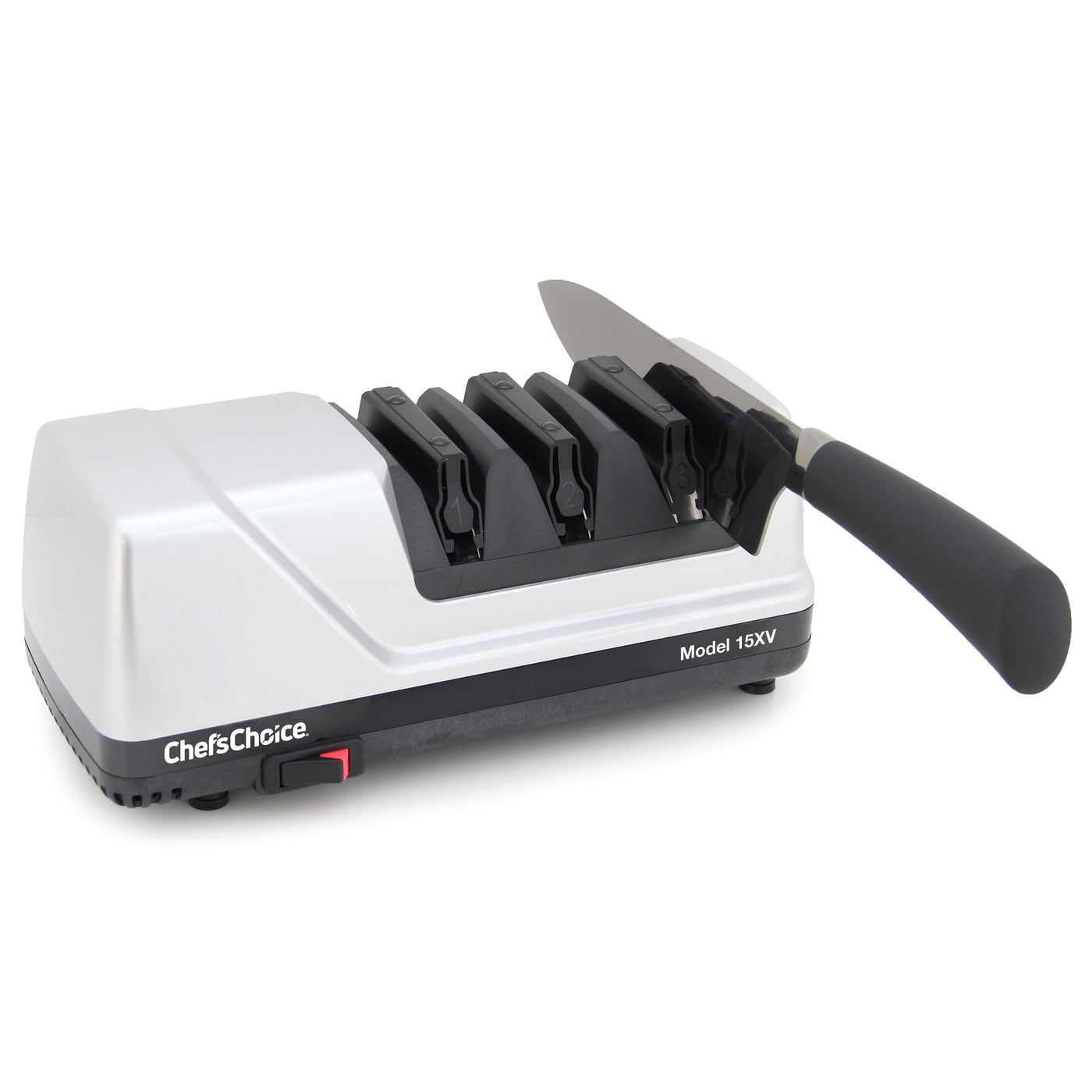
Credit: chefschoice.com
How Electric Knife Sharpeners Work
To understand if they are worth it, you need to know what happens inside. Most electric sharpeners use abrasive wheels made from materials like diamond, ceramic, or synthetic stone. When you pull the knife through, these wheels grind away metal to create a new edge.
Here’s a breakdown of the typical stages:
- Coarse sharpening: Removes more metal to shape a dull or damaged edge.
- Medium or fine sharpening: Refines the edge and removes burrs.
- Polishing/honing: Smooths the edge for sharpness and shine.
Some models add separate slots for scissors or serrated knives. Others let you select the sharpening angle.
Electric Vs Manual Knife Sharpeners
Choosing between electric and manual sharpeners is a key decision. Here’s a comparison to highlight main differences:
| Feature | Electric Sharpener | Manual Sharpener |
|---|---|---|
| Ease of Use | Very easy (just pull through) | Requires skill (angle, pressure, motion) |
| Speed | Fast (1–3 minutes) | Slower (5–15 minutes) |
| Edge Quality | Consistent (with good models) | Can be excellent with skill |
| Price | Higher ($50–$200+) | Lower ($10–$60) |
| Maintenance | Little to none | Clean and flatten stones |
| Knife Wear | Can remove more metal | Gentler on knives |
Non-obvious insight: Some high-end manual sharpeners have angle guides, making them much easier for beginners. However, electric models still offer the fastest path to a sharp edge.
Who Should Buy An Electric Knife Sharpener?
Electric sharpeners are not for everyone. Consider them if:
- You have many knives to sharpen regularly
- You want to save time and effort
- You’re not confident sharpening by hand
- You use mostly Western-style knives (not all sharpeners work well with Japanese or single-bevel blades)
- You have limited hand strength or dexterity
But if you own expensive Japanese knives, or you enjoy the ritual of sharpening, a manual method might suit you better.
Pros Of Electric Knife Sharpeners
1. Fast And Easy To Use
Electric sharpeners can restore a dull knife in 1–3 minutes. You don’t need to learn angles, techniques, or buy extra gear. This is a huge benefit for busy kitchens.
2. Consistent Results
Because the machine holds the blade at a set angle, you get the same edge every time. This is helpful if you want all your knives equally sharp.
3. Good For Multiple Knife Types
Most electric sharpeners handle straight-edged and serrated knives. Some models can also sharpen scissors, cleavers, and even hunting knives.
4. Built-in Safety
The design usually keeps your fingers away from the sharpening wheels. This is safer than using stones or rods where slips can happen.
5. Less Physical Effort
For people with arthritis, weak wrists, or limited hand mobility, electric sharpeners are much easier to use than manual stones or rods.
Cons Of Electric Knife Sharpeners
1. Can Remove Too Much Metal
Some machines are aggressive and grind away more steel than necessary. Over time, this can shorten the life of your knives.
2. Not Ideal For All Knives
Electric sharpeners are mostly designed for Western-style double bevel knives (e.g., chef’s knife, utility knife). They may not work well with:
- Japanese single-bevel knives (e.g., Yanagiba, Deba)
- Knives with a very thin or hard edge
- Custom or expensive blades
3. Noise And Power Use
These machines are not silent. The motor and wheels can be loud. They also need an outlet, unlike manual tools.
4. Price
A good electric sharpener costs more than most manual tools. Some models are $150 or more.
5. Less Control
With manual sharpening, you can adjust pressure and angle to suit each knife. Electric models do not allow this, so results may not be perfect for every blade.
How Much Do Electric Knife Sharpeners Cost?
Prices range widely. Basic models for home use start around $40–$60. Mid-range models from brands like Chef’sChoice or Work Sharp are $100–$180. Commercial-grade sharpeners can cost $200 or more.
What Do You Get For A Higher Price?
- Better abrasives (diamond or ceramic wheels)
- More sharpening stages
- Longer warranty
- Greater durability
But even entry-level models are good enough for most home cooks.
Do Electric Knife Sharpeners Damage Knives?
This is a common worry. The answer: it depends on the sharpener and how you use it.
Aggressive machines with coarse wheels can remove more metal than necessary. If you sharpen often, your knife will become thinner and eventually unusable. Cheap models may also overheat blades, which can affect the steel temper.
However, modern high-quality electric sharpeners use finer abrasives and control the sharpening angle more precisely. For typical home use (sharpening every few months), blade damage is minimal.
Non-obvious tip: If you start with a very dull or chipped knife, use the coarse slot only once, then switch to finer stages for maintenance.
Electric Knife Sharpener Vs Professional Sharpening Service
Some people send knives to a pro for sharpening. How does this compare with buying an electric sharpener?
| Aspect | Electric Sharpener | Pro Service |
|---|---|---|
| Convenience | Home use anytime | Drop off/pick up or mail in |
| Cost | One-time purchase | $5–$10 per knife |
| Edge Quality | Good/very good (with quality model) | Excellent (skilled sharpener) |
| Knife Wear | Some risk of metal loss | Usually gentle |
| Skill Needed | Very little | None |
If you have expensive knives, a pro may be better. For everyday kitchen knives, electric sharpeners save money in the long run.
Types Of Electric Knife Sharpeners
Not all electric sharpeners are the same. Here are the main types:
1. Pull-through Slot Sharpeners
The most common type. You pull the knife through preset slots. These are fast and simple but sometimes remove more metal.
2. Abrasive Belt Sharpeners
Use a flexible abrasive belt (like a mini sanding belt). These can sharpen at different angles and are more gentle on knives.
3. Multi-stage Sharpeners
Have two or three slots for different levels of sharpening and polishing. This gives a finer edge.
4. Specialty Sharpeners
Some models are designed just for serrated knives, scissors, or hunting knives.
When choosing, look for:
- Diamond abrasives (last longer, work on hard steels)
- Angle guides (for consistent results)
- Removable wheels or belts (for cleaning and replacement)
- Warranty and support
Real-world Examples And Experiences
Consider a busy home kitchen with 10 knives. Using a whetstone, sharpening all could take an hour or more, especially for beginners. With an electric sharpener, the job takes less than 20 minutes. Most users report that their knives go from struggling to slice tomatoes to cutting them cleanly in seconds.
In a small restaurant, cooks sharpen knives daily. An electric sharpener can help keep up with the workload, but many professionals still prefer stones for their best knives.
Important insight: Even with electric sharpeners, it’s best to hone your knives regularly with a honing rod. This keeps the edge aligned and reduces how often you need to use the sharpener.

Credit: www.amazon.com
What To Look For When Choosing An Electric Knife Sharpener
Buying an electric sharpener is an investment. Here are the most important factors:
1. Sharpening Angle
Most Western knives are sharpened at 20 degrees per side. Some Japanese knives need 15 degrees. Look for a model that matches your knives or offers adjustable angles.
2. Abrasive Material
Diamond abrasives are best for hard steels and last longer. Ceramic is gentle but can wear out faster.
3. Number Of Stages
A three-stage sharpener (coarse, medium, fine) gives better results than a single-stage model.
4. Compatible Knife Types
Check if the sharpener can handle your knives: straight, serrated, thick, thin, or specialty blades.
5. Size And Storage
Electric sharpeners are bigger than manual tools. Make sure you have counter or cabinet space.
6. Ease Of Cleaning
Sharpening creates metal dust. Some models have removable covers or trays for easy cleaning.
7. Warranty And Brand Reputation
Established brands like Chef’sChoice, Work Sharp, and Presto have good support and replacement parts.
8. Noise Level
Some models are very loud. Read reviews if noise matters to you.
Common Mistakes When Using Electric Knife Sharpeners
Even the best sharpener won’t help if you use it wrong. Here are mistakes to avoid:
- Sharpening too often: Every use removes metal. Sharpen only when knives are actually dull.
- Applying too much pressure: Let the machine do the work. Forcing the knife can damage both the blade and the sharpener.
- Skipping the honing step: Honing aligns the edge and makes sharpening less frequent.
- Using the wrong slot: Only use the coarse slot if the knife is very dull or chipped.
- Not cleaning the machine: Metal shavings can build up and reduce effectiveness.
Non-obvious tip: After sharpening, always wash your knife to remove any metal dust or particles before using it with food.
:max_bytes(150000):strip_icc()/faw-chefs-choice-edgeselect-professional-electric-knife-sharpener-nsimpson-1584-ce9f88088a234d4696c0bb0b725ca6f0.jpeg)
Credit: www.foodandwine.com
Alternatives To Electric Knife Sharpeners
If you’re not sure about buying an electric model, here are other options:
- Manual pull-through sharpeners: Less expensive, portable, but not always as effective.
- Sharpening stones (whetstones): Offer the best edge and are gentle, but require skill and practice.
- Professional sharpening services: Great for expensive knives, but cost adds up over time.
- Honing rods: These do not sharpen but keep the edge aligned.
Each method has pros and cons. Electric sharpeners offer the best mix of speed and ease for most home users.
Maintenance Tips For Electric Knife Sharpeners
To keep your sharpener working well:
- Clean out metal dust after every few uses.
- Replace abrasive wheels or belts when worn out (usually after years of home use).
- Store in a dry place to prevent corrosion.
- Read the manual for specific care instructions.
Some models have self-cleaning features or warning lights to tell you when maintenance is needed.
Environmental Impact: Is It Sustainable?
Electric sharpeners use electricity and plastic parts, but their impact is small compared to buying new knives every time yours get dull. By keeping your knives sharp, you extend their life and reduce waste.
If sustainability matters to you, look for models with replaceable abrasive wheels or belts. Some brands use recycled materials in their casings.
Final Thoughts: Is An Electric Knife Sharpener Worth It?
For most home cooks, the answer is yes—with some conditions. If you want a sharp knife without learning sharpening by hand, an electric sharpener is a wise investment. They save time, effort, and give consistent results. However, they are not perfect for everyone. Serious knife enthusiasts, chefs with expensive Japanese blades, or those who value tradition may prefer manual stones.
If you buy, choose a reputable brand, avoid the cheapest models, and use the device with care. Your knives will stay sharper, longer, and cooking will be safer and more fun.
For more details on sharpening techniques and knife care, the Wikipedia page on Sharpening is a helpful resource.
Frequently Asked Questions
How Often Should I Use An Electric Knife Sharpener?
For most home cooks, sharpening every 2–4 months is enough. If you cook daily and notice your knife dragging or crushing food instead of slicing, it’s time to sharpen. Honing with a rod between sharpenings will keep the edge in good shape.
Can I Use An Electric Sharpener On Expensive Knives?
You can, but use caution. Some electric sharpeners are too aggressive for high-end knives, especially Japanese blades. Check if your model is designed for your knife’s steel and edge angle. For expensive knives, manual sharpening or professional service is often safer.
Will An Electric Sharpener Work On Serrated Knives?
Some models have a special slot for serrated knives. These sharpen the tips but not the valleys of the serration. For best results, occasional professional sharpening is recommended for heavily used serrated knives.
Is It Difficult To Maintain An Electric Sharpener?
No. Most just need the metal dust emptied and the outside wiped clean. Some have removable covers for easy access. Replace abrasive wheels or belts if they wear down, which is rare with home use.
Can Electric Sharpeners Restore A Very Dull Or Chipped Knife?
Yes, if your sharpener has a coarse stage. This can reshape very dull or chipped blades. After that, use the finer slots to polish and refine the edge. For badly damaged knives, professional repair may still be needed.
With careful use and the right model, electric knife sharpeners can keep your kitchen knives sharp with almost no effort. They are a good investment for busy kitchens or anyone who wants sharp knives without the hassle.

Hello, This is Annie Walker, a 38-year-old blogger, founder, and editor of Cookware Guider from NY, USA. I am a cookware fanatic and passionate cooker. I love to cook with different types of cooking appliances (example: all types of cookware, rice cookers, slow cookers, etc) almost every day in my kitchen. I love to share my experience with my readers in my blog. Also, I enjoy helping people to solve their problems through my website. You can follow me on Twitter & Pinterest. To know details about my blog please check the about us page.