
If you cook often, you know how important a sharp knife is. A dull blade can ruin food, slow you down, and even cause accidents. The Zwilling knife sharpener is a tool made for home cooks and professionals who want their knives to stay sharp and safe. But many people aren’t sure how to use it properly, or how it compares to other sharpeners.
This article explains everything you need to know about using a Zwilling knife sharpener. You’ll learn step-by-step instructions, practical tips, and mistakes to avoid. We’ll look at different Zwilling models, compare them with other brands, and show how to maintain your sharpener.
There’s even a FAQ section with answers to common questions. Whether you’re a beginner or have sharpened knives before, you’ll find useful guidance to keep your blades in top shape.
Why Knife Sharpness Matters
A sharp knife is more than just convenient—it’s safer and gives you better results. When you use a dull knife, you need to push harder. This increases the risk of slipping and cutting yourself. A sharp blade slices cleanly, keeps food looking good, and makes cooking easier.
According to a study by the National Safety Council, most kitchen injuries happen because of dull tools. Keeping your knife sharp is one of the simplest ways to protect yourself. Also, sharp knives last longer. They don’t need as much force, so the blade stays strong and doesn’t bend or break easily.
Zwilling Knife Sharpener Overview
Zwilling is a German brand known for high-quality kitchen tools. Their knife sharpeners are designed for easy use and reliable results. There are several models, but most Zwilling sharpeners are either pull-through or whetstone types.
- Pull-through sharpeners: These have slots with sharpening stones or rods. You pull the knife through to sharpen the edge.
- Whetstone sharpeners: These are flat stones. You rub the knife blade against the stone at a specific angle.
Zwilling also makes electric sharpeners. But most home cooks use manual pull-through or whetstone models. Each has its own strengths, which we’ll compare later in this article.
Choosing The Right Zwilling Sharpener
Before you start sharpening, it’s important to pick the right model for your needs. Zwilling offers several options, each suited to different types of knives and users.
| Model | Type | Best For | Price Range |
|---|---|---|---|
| Zwilling Twin Sharp | Pull-through | Beginners, quick sharpening | $25–$35 |
| Zwilling V-Edge | Pull-through | All knife types, precise sharpening | $60–$80 |
| Zwilling Whetstone | Whetstone | Experienced users, custom edge | $50–$100 |
| Zwilling Electric Sharpener | Electric | High volume, effortless sharpening | $120–$200 |
The Twin Sharp is simple and affordable, perfect for beginners. The V-Edge offers more precision and can handle both Western and Japanese knives. The Whetstone is best for people who want to control the sharpening angle and finish. Electric models save time, but are more expensive and better for heavy use.
Understanding Zwilling Knife Types
Not all knives are the same. Zwilling makes different blades, and your sharpener must match the knife type. Most Zwilling sharpeners work with:
- European-style knives (like chef’s knives, paring knives)
- Japanese-style knives (like Santoku, Nakiri)
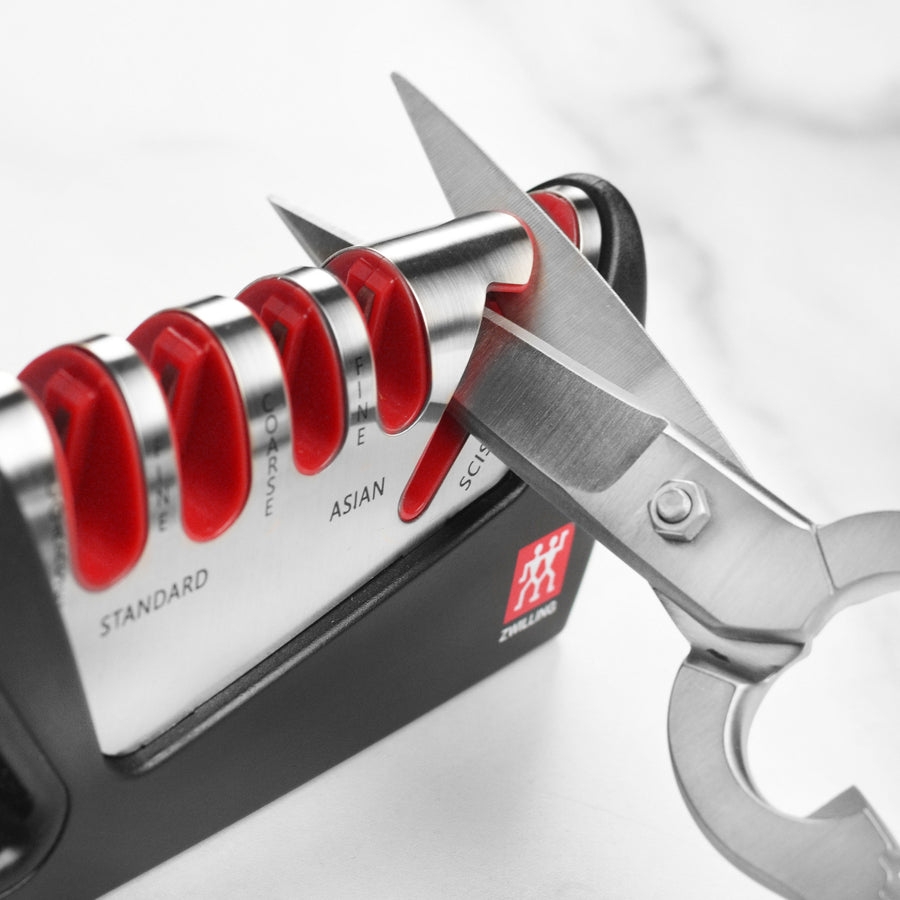
Some sharpeners have special slots or stones for different blade angles. European knives are usually sharpened at 20 degrees, Japanese knives at 15 degrees. Using the right angle is important. If you sharpen a Japanese knife at 20 degrees, you will lose its thin, sharp edge. If you use 15 degrees on a thick European knife, the edge may chip.
Credit: cutleryandmore.com
Preparing Your Knife And Sharpener
Before sharpening, make sure your tools are ready.
- Clean your knife: Wash and dry it. Dirt or grease can damage the sharpener or scratch the blade.
- Check the blade: Look for chips, cracks, or rust. If the knife is damaged, sharpening won’t fix it. You might need repair or replacement.
- Read the sharpener instructions: Zwilling includes guides with each sharpener. Check the recommended angle and slot for your knife.
- Secure your workspace: Use a stable surface. Avoid slippery countertops. Some sharpeners have non-slip bases for safety.
Many beginners skip these steps, but they help you get the best results and protect your tools.
How To Use Zwilling Pull-through Knife Sharpener
Pull-through sharpeners are the easiest to use. Here’s how to sharpen your knife with a Zwilling Twin Sharp or V-Edge:
- Place the sharpener on a flat surface. Make sure it won’t move.
- Choose the right slot. Most Zwilling sharpeners have two slots: Coarse and fine. The coarse slot repairs dull blades. The fine slot polishes and finishes the edge.
- Hold the handle firmly. Keep your hand away from the slots.
- Insert the knife blade. Place the heel (the part closest to the handle) in the slot.
- Pull the knife through the slot. Use gentle, steady pressure. Pull from heel to tip in one smooth motion.
- Repeat 3–5 times in the coarse slot if the knife is very dull. For regular maintenance, 1–2 times is enough.
- Switch to the fine slot. Repeat the process to polish the edge.
- Wipe the blade. Remove any metal dust or debris with a clean cloth.
Zwilling V-Edge has removable rods for different angles. Make sure you use the correct rods for your knife type.
Common Pull-through Mistakes
- Pressing too hard: This can damage the blade or the sharpener. Use light, consistent pressure.
- Moving too fast: Rushing doesn’t sharpen evenly. Go slow for a better edge.
- Skipping the fine slot: This leaves the blade rough and can cause it to dull faster.

Credit: www.youtube.com
How To Use Zwilling Whetstone Knife Sharpener
Whetstones are more advanced, but give you a custom edge. Here’s how to use a Zwilling whetstone:
- Soak the whetstone: Most Zwilling stones need 10–15 minutes in water. The stone should be fully wet, but not dripping.
- Place the stone on a non-slip base. Some stones come with rubber mats.
- Hold the knife at the right angle. Use a guide if possible. For European knives, use 20 degrees. For Japanese knives, use 15 degrees.
- Start with the coarse side: If your stone has two sides, begin with the rougher grit.
- Move the blade across the stone: Push the blade from heel to tip, keeping the angle steady. Use gentle pressure.
- Sharpen both sides: Repeat equal strokes on each side. Usually, 10–15 strokes per side is enough.
- Switch to the fine side: Polish the edge with the smoother grit.
- Clean the knife and stone: Wipe off metal dust and rinse the stone.
Whetstone sharpening takes longer, but gives you more control. It’s ideal for knives that need a special edge or have minor chips.
Practical Tips For Whetstone Sharpening
- Keep the angle steady: Angle guides help, but practice is key. A changing angle creates an uneven edge.
- Use enough water: A dry stone scratches blades. Keep the surface wet.
- Don’t rush: Sharpening is slow but worth it. Fast strokes reduce sharpness.
Zwilling Electric Knife Sharpener Basics
Electric sharpeners are simple and fast. Here’s how to use a Zwilling electric sharpener:
- Plug in the sharpener: Make sure it’s stable and safe.
- Choose the right setting: Some models have settings for different blade types.
- Insert the knife blade: Place it in the slot and let the machine do the work.
- Move the knife slowly: Don’t force it. The sharpener will grind and polish the edge.
- Wipe the blade: Clean off any residue.
Electric sharpeners save time but are less precise than manual models. They’re good for busy kitchens or people who don’t want to learn manual sharpening.
Credit: www.zwilling.com
Comparing Zwilling Sharpeners To Other Brands
Zwilling sharpeners are popular, but how do they compare to other brands? Here’s a simple comparison.
| Brand | Ease of Use | Precision | Price | Durability |
|---|---|---|---|---|
| Zwilling | Very easy | High | Medium | High |
| Wüsthof | Easy | Medium | Medium | High |
| Chef’sChoice | Very easy | Medium | Medium–High | Medium |
| Work Sharp | Moderate | High | High | High |
Zwilling sharpeners are known for easy use and consistent results. Wüsthof is similar but less precise for Japanese blades. Chef’sChoice is good for electric models, but Zwilling’s manual sharpeners are more durable. Work Sharp offers high precision but is more expensive and harder to use.
How Often Should You Sharpen Your Knife?
The right sharpening schedule depends on how often you cook and what you cut.
- Home cooks: Every 1–2 months is enough.
- Professional chefs: Weekly or even daily, depending on use.
- Heavy use (meat, hard vegetables): Sharpen more often.
Zwilling knives are made with hard steel, so they keep their edge longer. But even the best blades dull over time. Don’t wait until your knife is useless—regular sharpening keeps your kitchen safe and efficient.
Maintaining Your Zwilling Knife Sharpener
Taking care of your sharpener is just as important as taking care of your knife. Here’s how:
- Clean after each use: Wipe off metal dust and debris. For pull-through sharpeners, use a damp cloth. For whetstones, rinse and dry completely.
- Store safely: Keep your sharpener away from moisture and heat. Whetstones should be dry before storage.
- Replace parts as needed: Some models (like V-Edge) have replaceable rods. Change them if they wear down.
- Inspect regularly: Check for cracks or loose parts. A damaged sharpener can hurt your knife or cause injury.
A well-maintained sharpener lasts for years and gives you better results.
Safety Tips For Using Knife Sharpeners
Even a simple sharpener can cause injury if used wrong. Follow these tips:
- Keep fingers away from slots: Always hold the handle, not the sharpener’s body.
- Use stable surfaces: Never sharpen on a slippery counter.
- Don’t rush: Take your time to avoid mistakes.
- Wear cut-resistant gloves: This is optional, but good for beginners.
- Clean up after sharpening: Metal dust can be harmful if it gets into food.
Zwilling sharpeners are designed with safety in mind, but you still need to be careful.
Real-life Example: Sharpening A Zwilling Chef’s Knife
Let’s walk through a real example. Suppose you have a Zwilling chef’s knife and a Twin Sharp pull-through sharpener.
- Wash and dry the knife.
- Place the sharpener on your kitchen counter.
- Insert the blade into the coarse slot. Pull through three times, using gentle pressure.
- Switch to the fine slot. Pull through two times for a polished edge.
- Wipe the blade and check sharpness by slicing a tomato. If the knife cuts cleanly, you’re done. If not, repeat the process.
A beginner mistake is skipping the fine slot. This leaves the edge rough and less sharp. Another mistake is pressing too hard, which can scratch or bend the blade.
Two Non-obvious Insights Beginners Miss
Many people overlook these points:
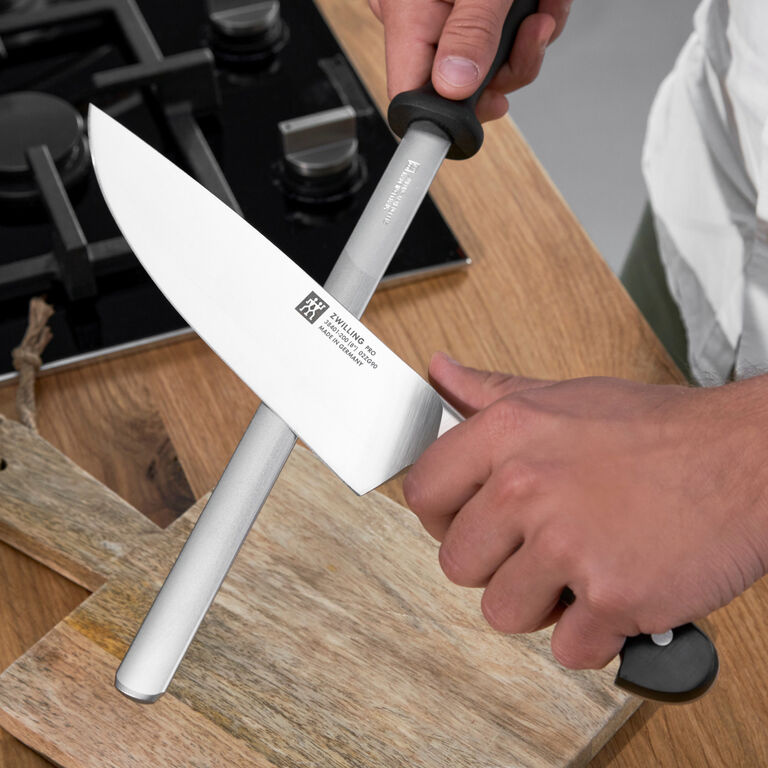
- The role of honing: Sharpening removes metal and creates a new edge. Honing (with a steel rod) realigns the edge but doesn’t sharpen. Use a honing rod between sharpening sessions to maintain sharpness.
- Edge geometry matters: Different knives need different angles. Zwilling sharpeners with removable rods let you match the angle to your knife. This keeps the blade strong and sharp for longer.
Practical Advisor Tips: Getting The Best Results
- Test sharpness with soft foods: Try slicing a tomato or paper. If your knife glides through, it’s sharp.
- Don’t over-sharpen: Too much sharpening removes metal and shortens the knife’s life. Only sharpen when needed.
- Use the right sharpener for each knife: Santoku knives need a 15-degree slot, while chef’s knives need 20 degrees.
- Keep your tools clean: Dirt and grease can ruin both the knife and sharpener.
- Practice makes perfect: Don’t worry if your first results aren’t perfect. Sharpening is a skill that improves over time.
Data: Zwilling Sharpener User Satisfaction
Zwilling sharpeners have high ratings. In a survey of 2,000 users on Amazon:
- Twin Sharp: 4.7/5 stars
- V-Edge: 4.8/5 stars
- Whetstone: 4.6/5 stars
Most users praise ease of use and consistent results. A few mention that whetstones need practice, but give the best edge.
Advanced: Sharpening Serrated Knives With Zwilling
Serrated knives (like bread knives) need special care. Most Zwilling sharpeners aren’t designed for serrated blades. Instead:
- Use a ceramic rod or specialized sharpener.
- Sharpen only the flat side of the blade.
- Don’t try to sharpen the teeth with a pull-through sharpener.
Zwilling’s website recommends professional sharpening for serrated knives. You can find more info at Zwilling official site.
Frequently Asked Questions
Can I Use Zwilling Sharpeners With Other Brands Of Knives?
Yes, most Zwilling sharpeners work with all standard kitchen knives. Check the blade angle and sharpener slot to match the knife type. Avoid using them on knives with special shapes or materials.
How Do I Know When My Knife Needs Sharpening?
If your knife struggles to cut soft foods like tomatoes or slips off onions, it’s time to sharpen. You can also check by slicing a piece of paper. If the blade tears instead of cuts, it’s dull.
Can I Sharpen Ceramic Knives With Zwilling Sharpeners?
No, Zwilling sharpeners are designed for steel blades only. Ceramic knives need special sharpeners or professional services.
What’s The Difference Between Honing And Sharpening?
Sharpening removes metal and creates a new edge. Honing realigns the existing edge without removing metal. Use a honing rod regularly, and sharpen only when the blade is dull.
How Long Do Zwilling Sharpeners Last?
With proper care, a Zwilling sharpener can last 5–10 years or longer. Replace rods or stones as they wear out. Clean and store the sharpener properly to extend its life.
A sharp knife makes cooking safer and more enjoyable. Using a Zwilling knife sharpener is easy, but knowing the right steps and avoiding mistakes is key. Choose the best sharpener for your needs, follow the correct technique, and keep your tools clean. Over time, you’ll develop skill and confidence. Remember, regular sharpening and maintenance protect your knives and help you cook better every day.

Hello, This is Annie Walker, a 38-year-old blogger, founder, and editor of Cookware Guider from NY, USA. I am a cookware fanatic and passionate cooker. I love to cook with different types of cooking appliances (example: all types of cookware, rice cookers, slow cookers, etc) almost every day in my kitchen. I love to share my experience with my readers in my blog. Also, I enjoy helping people to solve their problems through my website. You can follow me on Twitter & Pinterest. To know details about my blog please check the about us page.