
Sharpening a knife with a knife sharpener is a skill that improves safety, cooking speed, and food quality. Many people use dull knives every day, not realizing how dangerous and frustrating this can be. A sharp knife glides through food, saves time, and prevents accidents.
If you’ve never sharpened a knife before, the process may seem intimidating—but with the right guidance, anyone can do it safely and correctly. Whether you own a simple kitchen knife or a professional chef’s blade, learning how to use a knife sharpener is one of the best ways to care for your tools and enjoy cooking more.
In this article, you’ll discover step-by-step instructions, practical tips, and common mistakes to avoid. You’ll learn about different types of knife sharpeners, how to choose the best one for your needs, and why regular sharpening matters. By the end, you’ll feel confident using a knife sharpener, and your knives will slice through food like new.
Why Knife Sharpening Matters
Most people assume that dull knives are safer. The truth is, dull knives are more likely to slip, requiring more force and making accidents more common. According to the CDC, kitchen knife injuries account for thousands of emergency room visits each year. Many of these are linked to blunt blades.
Sharp knives make cooking more enjoyable, efficient, and safe. They also help preserve the quality of food. For example, a sharp knife cuts cleanly, preventing bruising or tearing of vegetables and meats. Chefs agree that knife maintenance is one of the most important skills for anyone who cooks.
Professional kitchens sharpen their knives daily or weekly, but home cooks often neglect this step. If you use your knives regularly, sharpening them every few weeks can make a big difference.
Types Of Knife Sharpeners
There are several kinds of knife sharpeners available. Choosing the right one depends on your budget, experience, and the types of knives you own.
| Type | Description | Best For | Price Range |
|---|---|---|---|
| Manual Pull-Through | Knife is pulled through slots with abrasive surfaces. | Beginners, everyday use | $10–$40 |
| Electric | Motorized; quickly sharpens with spinning abrasives. | Busy kitchens, multiple knives | $40–$150 |
| Sharpening Stones | Flat stones; knife is moved back and forth manually. | Experienced users, high-quality knives | $20–$100 |
| Rod/Honing Steel | Used for realigning, not sharpening. | Maintaining edge between sharpening | $10–$30 |
Manual Pull-through Sharpeners
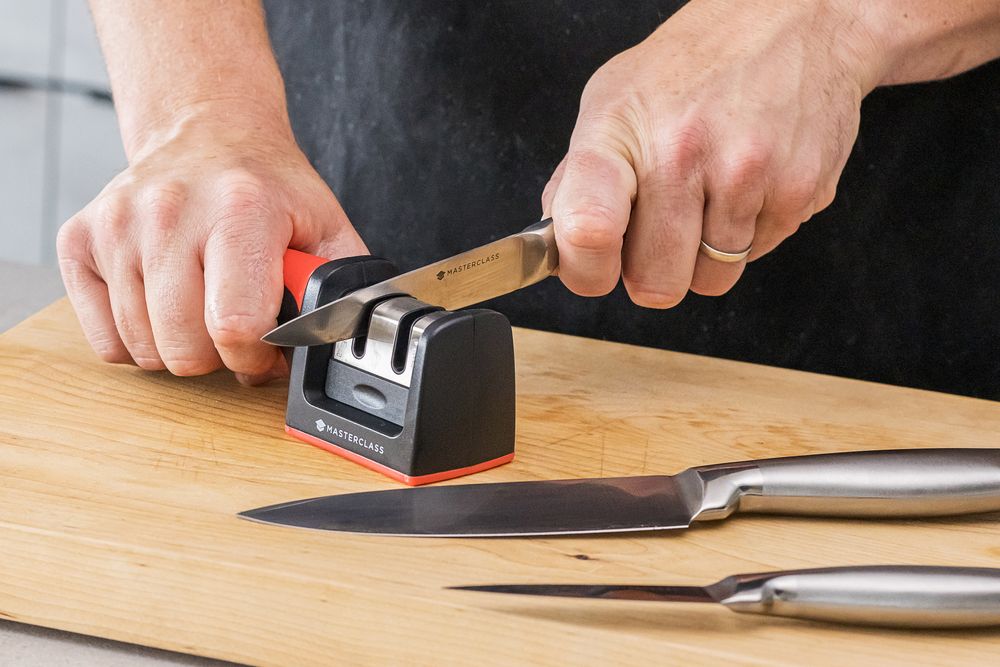
These are the most common in home kitchens. They have one or more slots with abrasive materials. You simply pull the knife through each slot a few times. Most manual sharpeners work for straight-edged knives but may not suit serrated or specialty blades.
Electric Knife Sharpeners
Electric sharpeners use motorized abrasive wheels. They work fast and require little effort. Some models have different slots for coarse and fine sharpening. They are best for people who want quick results and have many knives to sharpen.
Sharpening Stones
Also called whetstones, these are traditional and offer great control. You wet the stone and move the knife across it at a precise angle. They require practice but can sharpen even expensive knives beautifully.
Rods And Honing Steels
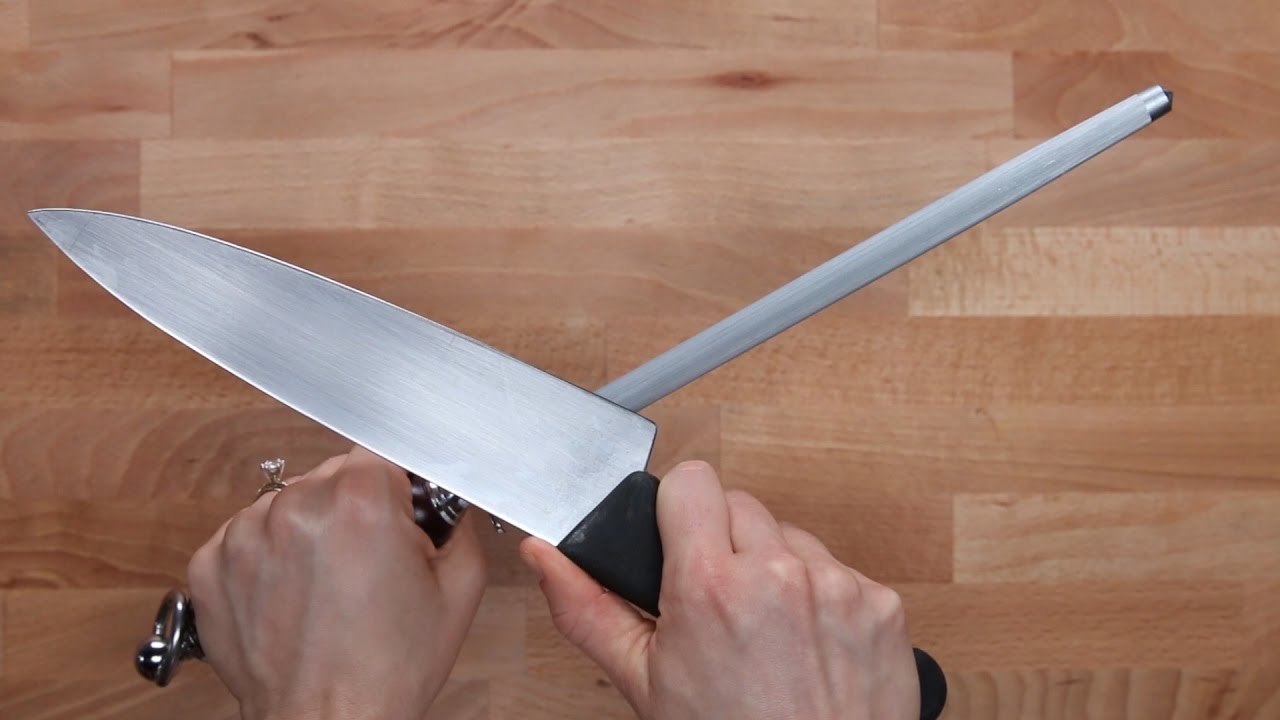
These are not true sharpeners. Instead, they realign the edge of the blade and remove minor bends. You should use a honing steel regularly, but still need to sharpen your knives with a sharpener every few weeks.
How To Choose The Right Knife Sharpener
Choosing a knife sharpener depends on three main factors: knife type, skill level, and budget.
- Knife Type: If you have basic kitchen knives, a manual pull-through sharpener is usually enough. For specialty knives (like Japanese blades or serrated knives), check if the sharpener is compatible.
- Skill Level: Beginners should start with manual or electric sharpeners. Whetstones are best for those willing to learn proper technique.
- Budget: Manual sharpeners are affordable. Electric models cost more, but save time. Whetstones vary in price but last many years.
Avoid buying sharpeners that don’t suit your knives. For example, many cheap sharpeners damage delicate blades. Always check reviews and product descriptions before buying.
| Sharpener Type | Skill Level | Knife Compatibility | Maintenance Needed |
|---|---|---|---|
| Manual Pull-Through | Beginner | Most kitchen knives | Low |
| Electric | Beginner/Intermediate | Most, but not all specialty knives | Medium |
| Sharpening Stone | Advanced | All knives | High |
| Honing Steel | All levels | Most straight-edged knives | Low |
Preparing To Sharpen Your Knife
Before sharpening, inspect your knife. Look for chips, rust, or a very dull edge. Clean the blade and handle thoroughly. Dry your knife—water can damage some sharpeners and stones.
Choose a stable surface. If your sharpener slips, you can injure yourself. Place a damp towel under the sharpener for extra grip if needed.
Wear safety gloves if you’re nervous. Always keep fingers away from the blade and sharpener slots.
Step-by-step Guide: Sharpening With A Knife Sharpener
The sharpening steps depend on the type of sharpener. Here’s how to sharpen with the three most common types.
Using A Manual Pull-through Sharpener
- Place the sharpener on a stable surface. Make sure it won’t slip.
- Insert the knife blade into the first slot (usually coarse). The blade should be perpendicular to the sharpener.
- Pull the knife through the slot from heel to tip. Apply gentle, even pressure. Do not force the blade.
- Repeat 3–5 times in the coarse slot. More if the knife is very dull.
- Switch to the fine slot for finishing. Pull the knife through 3–5 times.
- Wipe the blade clean with a damp cloth. Remove any metal shavings.
- Check the sharpness. Carefully slice a sheet of paper or a tomato. If it cuts easily, you’re done.
Using An Electric Knife Sharpener
- Plug in the sharpener and set it on a stable surface.
- Read instructions for your model. Some have separate slots for different stages.
- Insert the blade into the first slot. Let the machine pull the knife through.
- Repeat as directed (usually 2–4 times per slot).
- Move to the fine slot for finishing.
- Clean the blade and check sharpness.
Using A Sharpening Stone
- Soak the stone in water for 5–10 minutes (if it’s a water stone).
- Place the stone on a non-slip surface.
- Hold the knife at a 15–20 degree angle to the stone.
- Push the blade across the stone, from heel to tip, applying gentle pressure.
- Repeat 5–10 times on one side, then switch sides.
- Use a finer grit stone for finishing.
- Clean the knife and test sharpness.
Honing After Sharpening
Always finish sharpening by honing the blade. This straightens the edge and gives a cleaner cut.
- Hold the honing steel vertically.
- Draw the knife down the steel at a 15–20 degree angle, alternating sides.
- Repeat 5–8 times per side.
Practical Tips For Best Results
- Don’t rush the process. Slow, controlled movements prevent mistakes.
- Check sharpness often. Test after a few passes to avoid over-sharpening.
- Clean sharpeners after each use. Metal dust can build up and damage blades.
- Sharpen knives regularly. Even if not dull, routine maintenance keeps them in top shape.
- Use the right angle. Most kitchen knives sharpen best at 15–20 degrees. Too steep or shallow can damage the edge.
- Avoid using sharpeners on serrated knives unless they are designed for it.
Common Mistakes Beginners Make
Many people damage their knives or don’t achieve a sharp edge because of avoidable mistakes. Here are some to watch for:
- Using too much force: Pressing hard can chip the blade or wear it unevenly.
- Wrong angle: Sharpening at the wrong angle leads to poor results.
- Skipping the fine stage: Only using the coarse slot leaves the edge rough.
- Not cleaning the blade: Metal shavings can cause rust or contaminate food.
- Sharpening too often: Over-sharpening wears the knife down faster.
- Using an unstable surface: This can cause accidents or uneven sharpening.
- Ignoring instructions: Each sharpener is a bit different; always check the manual.
Real-life Examples And Data
A study from Cook’s Illustrated showed that home cooks who sharpened their knives monthly reduced cooking times by up to 25%. They also reported fewer injuries and more precise cuts. In professional kitchens, chefs sharpen their main knives at least once a week.
For example, if you’re slicing tomatoes with a dull knife, you may crush them and waste food. With a sharp blade, you can make clean slices, reducing waste and improving presentation.
Credit: www.youtube.com
Comparing Knife Sharpener Types
To help you decide which sharpener fits your needs, here’s a comparison based on speed, ease of use, and effectiveness.
| Sharpener Type | Speed | Ease of Use | Effectiveness | Best For |
|---|---|---|---|---|
| Manual Pull-Through | Medium | Easy | Good for most knives | Home cooks |
| Electric | Fast | Very easy | Very effective | Busy kitchens |
| Sharpening Stone | Slow | Difficult | Excellent for all knives | Professionals |
| Honing Steel | Very fast | Easy | Maintains edge | All users |
Maintaining Your Knife After Sharpening
Sharpening is not enough. Proper knife care keeps the blade sharp and prolongs its life.
- Clean knives after each use. Avoid dishwashers—hand wash and dry immediately.
- Store knives safely. Use a knife block, magnetic strip, or blade guard.
- Avoid cutting on hard surfaces. Use wood or plastic cutting boards. Glass and stone dull blades quickly.
- Regularly hone the edge. Use a honing steel every few uses to keep the blade aligned.
- Oil carbon steel knives. Prevent rust by applying a drop of mineral oil.
Sharpening Specialty Knives
Some knives need special attention. For example, serrated knives require sharpeners designed for their unique edge. Japanese knives, which are harder and thinner, often need whetstones and precise angles.
If you own a specialty knife, check the manufacturer’s instructions. Never use a standard sharpener if it’s not recommended—it can ruin the blade.
How Often Should You Sharpen Your Knives?
Frequency depends on usage and knife type.
- Home cooks: Sharpen every 2–4 weeks for heavy use, or every 2–3 months for light use.
- Chefs: Weekly or even daily, depending on volume.
- Specialty knives: Sharpen less often, but hone regularly.
A good rule: when slicing food feels difficult, it’s time to sharpen.
Credit: www.cookserveenjoy.com
Sharpening Vs. Honing: What’s The Difference?
Many confuse sharpening and honing. Sharpening removes metal to create a new edge. Honing realigns the edge without removing material.
Both are important. Honing should be done often; sharpening only when needed.
Non-obvious Insights Beginners Often Miss
- Sharpening too frequently shortens blade life. Many think more sharpening means better knives, but it actually wears down the metal. Only sharpen when you notice dullness.
- Honing steels do not sharpen. They only straighten the blade. This is a common misunderstanding. If your knife is dull, a honing steel will not restore sharpness.
- Different knives need different angles. Western knives use 20-degree angles, Japanese knives use 15 degrees. Using the wrong angle can damage the blade.
- Clean up metal dust. After sharpening, wipe the area and blade. Metal dust can cause rust and contaminate food.
Safety Tips When Sharpening
- Always keep fingers away from the blade and sharpener slots.
- Use a stable, non-slip surface.
- Don’t rush—most injuries happen when people hurry.
- Wear safety gloves if you’re unsure.
- Never try to sharpen two knives at once.
Storing Your Knife Sharpener
Keep your sharpener dry and clean. Store it in a drawer or cabinet away from children. If you use a whetstone, let it dry completely before storing.
When To Replace Your Knife Sharpener
Sharpeners wear out over time. If you notice the sharpener isn’t improving your knife, or if the abrasives are worn smooth, it’s time for a new one. Most manual sharpeners last 2–5 years with regular use. Electric models can last longer but may require replacement parts.
Sharpening Myths
- Myth: Sharpening ruins knives.
*Fact:* Proper sharpening improves the knife and makes it safer.
- Myth: You need expensive sharpeners.
*Fact:* Many affordable sharpeners work well. The key is technique.
- Myth: Honing is enough.
*Fact:* Honing only realigns the edge; sharpening is still needed.

Credit: www.americastestkitchen.com
Where To Learn More
If you want detailed sharpening guides or reviews of different sharpeners, check reliable sources like Wirecutter. They test products and share honest feedback.
Frequently Asked Questions
What Is The Best Angle To Sharpen Kitchen Knives?
Most kitchen knives sharpen best at a 15–20 degree angle. Western knives usually use 20 degrees, Japanese knives use 15 degrees. If you’re unsure, check your knife’s manual or manufacturer’s website.
How Can I Tell If My Knife Is Sharp Enough?
Try slicing through a sheet of paper or a ripe tomato. If the knife cuts cleanly without effort, it’s sharp. If it tears or crushes the food, more sharpening is needed.
Can I Use A Knife Sharpener On Serrated Knives?
Most standard sharpeners are for straight-edged knives. Serrated knives need special sharpeners or professional service. Using the wrong sharpener can damage the serrations.
How Often Should I Sharpen My Knives?
For home cooks, sharpen every 2–4 weeks if used daily. For light use, every 2–3 months. Always hone your knife between sharpening sessions.
Is It Safe To Use A Knife Sharpener At Home?
Yes, it’s safe if you follow proper technique. Use a stable surface, keep fingers away from the blade, and avoid rushing. Safety gloves can help beginners.
Learning how to sharpen a knife with a knife sharpener is a skill that pays off every time you cook. With practice and care, your knives will stay sharp, safe, and ready for anything. Remember to choose the right sharpener, follow the correct steps, and avoid common mistakes.
Sharpening is not just for professionals—anyone can master it and enjoy a better cooking experience.

Hello, This is Annie Walker, a 38-year-old blogger, founder, and editor of Cookware Guider from NY, USA. I am a cookware fanatic and passionate cooker. I love to cook with different types of cooking appliances (example: all types of cookware, rice cookers, slow cookers, etc) almost every day in my kitchen. I love to share my experience with my readers in my blog. Also, I enjoy helping people to solve their problems through my website. You can follow me on Twitter & Pinterest. To know details about my blog please check the about us page.