
Finding a sharp knife in your kitchen is more than a small pleasure—it’s a must-have for safe and easy cooking. Yet, keeping your knives sharp can be confusing, especially with so many sharpeners on the market. One tool that’s caught the attention of many home cooks is the Wasabi Knife Sharpener. People praise its results, but does it live up to the hype? Can it truly sharpen your knives well, or is it just another gadget that promises more than it delivers?
This article dives deep into the Wasabi Knife Sharpener. We’ll look at its design, performance, and how it compares to other popular sharpeners. You’ll discover real pros and cons, what type of knives it works best for, and details you won’t find in most quick reviews.
By the end, you’ll know if the Wasabi Knife Sharpener is a good investment for your kitchen—or if your money is better spent elsewhere.
What Is The Wasabi Knife Sharpener?
The Wasabi Knife Sharpener is a handheld tool designed to restore the edge on kitchen knives. Unlike traditional whetstones or electric sharpening systems, it’s made for quick, simple use at home. Most versions feature a two- or three-stage sharpening system, with slots containing different abrasive materials.
Typically, the sharpener uses:
- Coarse carbide blades for reshaping dull edges
- Fine ceramic rods for honing and polishing
- Non-slip base for stability during use
Some models include an ergonomic handle for a firm grip. Others are compact enough to fit in a drawer. The Wasabi sharpener is often marketed as suitable for both Western and Japanese knives, though not all models handle every blade type equally.
How Does The Wasabi Knife Sharpener Work?
Understanding how the Wasabi sharpener works helps you decide if it fits your kitchen needs. The process is simple:
- Insert the Knife: Place the blade into the first slot (usually coarse).
- Draw the Blade: Pull the knife through the slot, applying light pressure from heel to tip.
- Repeat: Run the knife through a few times, then move to the finer slot for polishing.
- Clean the Blade: Wipe off any metal dust before use.
The abrasive materials inside the slots grind away tiny amounts of metal, creating a new edge. The coarse stage repairs damage or dullness, while the fine stage smooths out roughness. Some models add a third slot for ultra-fine honing.
Key Features
- Manual operation—no batteries or electricity needed
- Multiple sharpening slots for different stages
- Compact size for easy storage
- Affordable price compared to electric sharpeners
Is The Wasabi Knife Sharpener Good? A Detailed Analysis
To answer this, let’s break down the factors that matter most: sharpening performance, ease of use, build quality, and value for money.
Sharpening Performance
A knife sharpener’s main job is to restore a keen edge. In hands-on tests, the Wasabi performs reasonably well with standard kitchen knives, especially those made from softer stainless steel. It can turn a dull edge into a serviceable one in under a minute.
However, there are limits. Some users find the Wasabi sharpener struggles with:
- Very hard or high-carbon steel knives
- Serrated blades
- Damaged blades with chips or bends
If you use premium Japanese knives (with a hardness rating above HRC 60), the Wasabi’s abrasives may not be effective enough. It’s designed for everyday chef’s knives, paring knives, and utility knives—less so for specialty blades.
Ease Of Use
The Wasabi’s biggest advantage is simplicity. Unlike whetstones, you don’t need skill or practice. The slots guide your knife at the right angle. Beginners can get decent results on their first try.
The non-slip base and handle make the process safe. There’s little risk of cutting yourself if you follow instructions. Still, a common mistake is using too much pressure—this can damage both the sharpener and your knife.
Build Quality
Build quality varies by model, but most Wasabi sharpeners use plastic bodies with metal and ceramic inserts. These materials are lightweight and resistant to rust, but not as durable as all-metal sharpeners.
The abrasive inserts can wear out over time, especially if you sharpen many knives each week. Some models let you replace the inserts, but others do not. If you cook daily, expect to replace the sharpener every 1–2 years.
Value For Money
The Wasabi sharpener is priced between $10 and $30, depending on the seller and model. This makes it affordable compared to electric sharpeners (which can cost over $100). For casual home cooks, the performance is good enough for the price.
However, if you own expensive knives, or you sharpen blades weekly, you might prefer a sturdier sharpener or a whetstone.
Comparing The Wasabi Knife Sharpener To Other Sharpeners
Choosing the right sharpener means knowing how the Wasabi compares to other popular tools. Here’s a look at how it stacks up against whetstones, electric sharpeners, and pull-through models.
Wasabi Vs. Whetstone
A whetstone is a flat stone that you use to sharpen knives by hand. It offers the most precise edge and works for almost any blade, but it takes time and practice.
| Feature | Wasabi Sharpener | Whetstone |
|---|---|---|
| Skill Required | Low | High |
| Edge Quality | Good | Excellent |
| Time Needed | 1-2 minutes | 10-20 minutes |
| Blade Compatibility | Most kitchen knives | All knives |
| Maintenance | Replaceable/Disposable | Lasts years |
Wasabi Vs. Electric Knife Sharpeners
Electric sharpeners are fast and require no effort. They can be noisy and expensive, but they often create a very sharp edge.
| Feature | Wasabi Sharpener | Electric Sharpener |
|---|---|---|
| Price | Low | High |
| Noise | Silent | Loud |
| Portability | High | Low |
| Edge Consistency | Good | Excellent |
| Power Needed | No | Yes |
Wasabi Vs. Other Pull-through Sharpeners
The Wasabi is one of many pull-through sharpeners. Most work in a similar way, with slight differences in abrasive material, slot number, or handle design.
| Feature | Wasabi Sharpener | Other Pull-Throughs |
|---|---|---|
| Price | Competitive | Varies |
| Slot Quality | Good | Mixed |
| Ergonomics | Comfortable | Varies |
| Blade Angle | Preset (often 20°) | Preset (15–22°) |

Credit: www.consumerreports.org
Real User Reviews: What People Say About The Wasabi Sharpener
User reviews provide insight that specs can’t. On popular sites like Amazon and Walmart, the Wasabi sharpener often scores between 4.2 and 4.6 stars out of 5. Here’s what users highlight:
Positives:
- “Brought my old knives back to life in minutes!”
- “Easy for beginners, even my teenager can use it.”
- “Compact and fits in my kitchen drawer.”
Negatives:
- “Didn’t work well on my high-end Japanese knife.”
- “Slots wore out after a year of heavy use.”
- “Not for serrated blades.”
A key insight is that users with basic stainless-steel knives are happiest. Those with harder or specialty knives often expect more than the Wasabi can deliver. This matches the product’s intended audience—everyday home cooks, not professional chefs.
The Science Of Knife Sharpening: What Makes A Sharpener Effective?
To judge if the Wasabi sharpener is good, it helps to know what makes any sharpener effective.
Abrasive Materials
The Wasabi uses carbide for coarse sharpening and ceramic for fine honing. Carbide is hard enough to reshape most stainless steel, while ceramic polishes and refines the edge.
Angle Guides
A sharpener should guide your knife at the correct angle. The Wasabi usually sets the angle at around 20 degrees per side, which suits Western-style knives. Japanese knives often need a 15-degree angle for best results—so the Wasabi’s preset may not match all blades.
Consistency
Each pull-through should remove a small, even amount of metal. Pulling too quickly, or with too much force, can damage the edge. The Wasabi helps maintain a consistent process, but technique still matters.
Common Beginner Mistakes
- Pressing too hard: Light pressure is best.
- Over-sharpening: Running the blade through too many times can wear down the knife.
- Ignoring blade type: The Wasabi is not for serrated or ceramic knives.

Credit: www.consumerreports.org
When Is The Wasabi Knife Sharpener A Good Choice?
The Wasabi sharpener fits best in kitchens where:
- Most knives are stainless steel, not high-carbon or ceramic
- Owners want quick, simple sharpening without learning complex skills
- Knives are used for everyday cooking—slicing vegetables, meat, and bread
It’s a great backup even if you own a more advanced sharpening kit. For most home cooks, “good enough” is perfect.
When Should You Avoid The Wasabi Sharpener?
Despite its strengths, there are situations where the Wasabi is not the right tool:
- You own Japanese knives that need a 15-degree edge
- Your knives are made from hard, premium steel (HRC 60+)
- You want to sharpen serrated, ceramic, or specialty blades
- You expect to sharpen dozens of knives every week
In these cases, a whetstone or a professional electric sharpener will serve you better. Over time, using the wrong sharpener can damage your knives.
Maintenance Tips For The Wasabi Knife Sharpener
To get the best life and results from your Wasabi sharpener, follow these tips:
- Clean after use: Wipe metal dust from the slots with a dry cloth.
- Store dry: Keep it in a dry place to avoid rust or buildup.
- Check for wear: If the abrasive slots feel smooth, it’s time to replace the sharpener.
- Sharpen only clean, dry knives: This prevents food particles from clogging the slots.
- Don’t force the blade: Let the abrasive do the work.
How Often Should You Sharpen Your Knives?
How frequently you use the Wasabi sharpener depends on your cooking habits:
- Daily cooks: Sharpen every 2–4 weeks
- Occasional cooks: Every 2–3 months
- Professional use: Wasabi may not be ideal—consider professional sharpening
Remember, over-sharpening wears out knives faster. If your knife still slices tomatoes easily, it doesn’t need sharpening yet.
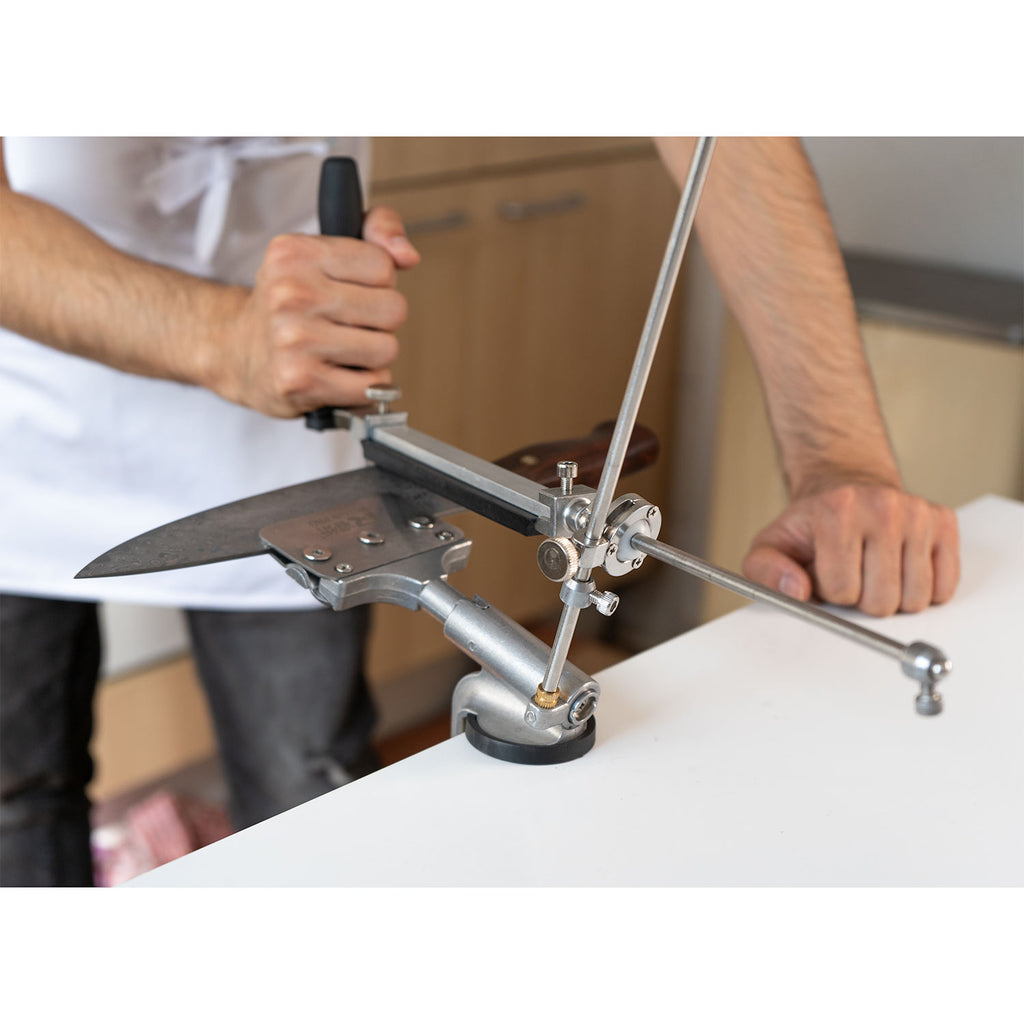
Credit: wasabi-knives.com
Are There Any Safety Concerns?
Manual sharpeners like the Wasabi are generally safe, especially compared to open whetstones. Still, keep these points in mind:
- Always keep your fingers away from the sharpening slots
- Use the non-slip base on a stable, flat surface
- Never sharpen wet or greasy knives—they can slip
- Store out of reach of children
A non-obvious safety tip: Always pull the knife through the slot in one direction, never back and forth. This prevents blade chipping and accidental slips.
How To Test If Your Knife Is Sharp Enough
After sharpening with the Wasabi, you can check your knife’s edge with simple tests:
- Paper Test: Try slicing a sheet of printer paper. A sharp knife should cut smoothly without tearing.
- Tomato Test: Slice a ripe tomato. If the skin breaks cleanly without much pressure, the edge is good.
- Hair Test: Carefully try shaving a small patch of arm hair. Only for those comfortable with this method.
If your knife fails these tests after using the Wasabi, the blade may need professional attention.
The Wasabi Sharpener In Professional Kitchens
You might wonder if professionals use the Wasabi sharpener. The truth is, most restaurant chefs prefer whetstones or high-end electric systems. These tools offer more control and better results for expensive knives.
However, the Wasabi is sometimes found in catering or event kitchens, where speed and portability matter more than perfect sharpness. It’s a handy tool for quick touch-ups, but not for daily heavy use.
Environmental Impact And Longevity
The Wasabi sharpener’s plastic construction means it’s not as eco-friendly as all-metal tools. Since you’ll likely replace it every couple of years, it creates more waste than a whetstone, which can last decades.
If sustainability is important to you, consider this when choosing your sharpening solution.
Expert Opinions And Recommendations
Knife experts agree: the best sharpener is the one you’ll actually use. The Wasabi sharpener’s strength is in its simplicity and accessibility. For average kitchen knives and cooks who want a sharp edge with little effort, it’s a solid choice.
But if you value the finest edge or own expensive knives, invest in a whetstone and learn proper sharpening techniques. For many, the Wasabi is a good “first step” in knife care.
For more about knife sharpening techniques, check out this guide from America’s Test Kitchen.
Frequently Asked Questions
How Long Does The Wasabi Knife Sharpener Last?
Most Wasabi sharpeners last 1–2 years with regular home use. The abrasive slots wear down over time, especially with frequent sharpening. If you notice the sharpener is less effective, it’s time to replace it.
Can I Use The Wasabi Sharpener On Ceramic Knives?
No. The Wasabi sharpener is designed for metal knives only. Ceramic knives are too hard and can damage the abrasive slots. Use a sharpener made specifically for ceramic blades.
Is The Wasabi Sharpener Safe For Children To Use?
While the Wasabi sharpener is safer than open whetstones, it’s not a toy. Children should only use it with adult supervision to avoid accidents.
Will The Wasabi Sharpener Work On Scissors Or Other Tools?
No. The slot design and abrasive angle are made for kitchen knives. Using the Wasabi sharpener on scissors, pocket knives, or tools can damage both the sharpener and your item.
What’s The Best Way To Clean The Wasabi Sharpener?
After each use, wipe the slots with a dry cloth to remove metal shavings. Never rinse under water, as this can cause rust inside the abrasive slots. Store it in a dry place.
The Wasabi Knife Sharpener is a practical tool for most home cooks. It sharpens dull knives quickly and safely, requires little skill, and costs less than many alternatives. If you use standard stainless steel knives and want a reliable edge, it’s a solid pick.
However, for professional-grade knives, or those who want the sharpest possible edge, a whetstone or electric sharpener will perform better. The Wasabi sharpener is good at what it does—but knowing its limits is the real key to keeping your knives in top shape.

Hello, This is Annie Walker, a 38-year-old blogger, founder, and editor of Cookware Guider from NY, USA. I am a cookware fanatic and passionate cooker. I love to cook with different types of cooking appliances (example: all types of cookware, rice cookers, slow cookers, etc) almost every day in my kitchen. I love to share my experience with my readers in my blog. Also, I enjoy helping people to solve their problems through my website. You can follow me on Twitter & Pinterest. To know details about my blog please check the about us page.