
Mobile knife sharpening is changing how people care for their blades, whether for home kitchens, restaurants, or businesses. Many still bring knives to shops, try to sharpen them with home gadgets, or leave them dull for too long. But a growing number now choose mobile sharpening services—and not just for convenience. The biggest benefit is safety.
Sharpening knives is not something to take lightly. A dull or badly sharpened knife can cause serious injuries, and incorrect sharpening can damage expensive blades. This article explains why mobile knife sharpening is not only easier but also much safer for you, your family, and your workplace.
Why Sharp Knives Are Safer Than Dull Ones
It may sound strange, but a sharp knife is much safer than a dull one. When a knife is dull, it does not cut food easily. You must use more force, which makes the blade more likely to slip and hurt your hand or fingers. In fact, studies show that most kitchen knife injuries happen with dull blades, not sharp ones.
A sharp knife:
- Cuts food with less effort
- Gives you better control
- Reduces the chance of slipping
- Makes tasks quicker and smoother
This is why keeping knives sharp is important—not just for better cooking but to avoid accidents.
What Is Mobile Knife Sharpening?
Mobile knife sharpening means a professional comes to your home, restaurant, or business with all their tools. They sharpen your knives on-site, often inside a van or with portable equipment. You do not have to pack and carry your knives to a store. The service is done at your location, so you see the process and get sharp knives back right away.
Mobile services use specialized machines, stones, and techniques to match the knife’s steel and shape. Many can sharpen different tools, including scissors and gardening shears.
The Hidden Risks Of Diy Knife Sharpening
Many people try to sharpen knives at home using cheap gadgets, pull-through sharpeners, or even whetstones. While this seems simple, it can be risky:
1. Incorrect Angle Control
Proper sharpening means holding the knife at the correct angle (usually 15-20 degrees). Home sharpeners often cannot do this well. If the angle is wrong, the knife edge becomes weak or uneven.
2. Inconsistent Pressure
Applying too much or too little pressure can ruin the edge or scratch the blade. Most people do not have the training to feel the right amount.
3. Poor Tools
Low-quality stones and gadgets can chip, bend, or overheat the blade, making it dangerous or useless.
4. Lack Of Safety Equipment
Professional sharpeners wear gloves and eye protection and know how to handle blades safely. Home users often skip these steps.
5. Risk Of Accidents
Slips are common. A hand-held sharpener can move unexpectedly, or the knife can jump, leading to cuts.
A survey from the U. S. Consumer Product Safety Commission noted thousands of emergency room visits each year from knife injuries, often during home sharpening.
How Mobile Sharpening Improves Safety
Mobile sharpening services focus on safety in several ways that most people overlook. Here’s what makes them safer:
Trained Professionals
A good mobile sharpener has years of experience working with all types of knives. They know different steels, blade shapes, and the correct sharpening methods. This expertise means:
- Less risk of damaging the knife
- Proper sharpening angles every time
- Safe handling of sharp tools
Specialized Equipment
Mobile vans are equipped with industrial-grade machines and stones. These tools are designed for safe, consistent sharpening—far better than what most people have at home.
| Home Sharpening Tool | Mobile Service Equipment |
|---|---|
| Pull-through sharpener | Precision belt grinder |
| Basic whetstone | Water-cooled sharpening machine |
| Inconsistent honing rod | Professional polishing wheel |
| No blade clamps | Secure blade holders and guides |
On-site Service
Since the sharpener comes to you, you do not need to travel with loose knives in bags. This reduces the risk of accidents during transport. Also, your knives never leave your sight, so you know they are being handled safely.
Immediate Use
With mobile sharpening, your knives are ready to use right after sharpening. There’s no waiting for pickup or using dull backup knives, which can lead to unsafe chopping.
Edge Testing And Finishing
Professionals test every knife edge before handing it back. They check for sharpness and smoothness, and sometimes even show you how to maintain the knife safely.

Credit: www.amazon.com
Comparing Mobile Sharpening To Other Options
When you look at safety, mobile sharpening stands out. Here’s a comparison with other common choices:
| Method | Safety Level | Typical Risks | Best For |
|---|---|---|---|
| Mobile Sharpening | High | Very low if handled by pro | Homes, restaurants, businesses |
| DIY Home Sharpening | Low | Improper angles, injuries | Occasional touch-ups |
| Knife Shop Drop-off | Medium | Transport accidents | People with many knives |
| Using Dull Knives | Very Low | Slips, force injuries | Not recommended |
Safety For Homes, Restaurants, And Businesses
The safety advantages of mobile knife sharpening benefit all types of users:
Home Kitchens
Families often ignore knife maintenance until a blade is dangerously dull. Mobile services provide:
- Safe, sharp knives for everyday cooking
- Less risk for children or guests who may help in the kitchen
- No need to store knives in bags or boxes for transport
Restaurants And Food Businesses
Restaurants must keep sharp knives to meet health codes and avoid staff injuries. Mobile sharpening means:
- No downtime—knives are sharpened during low-traffic hours
- No risk of losing knives in transit
- Regular service schedules to prevent dull blades
Other Businesses
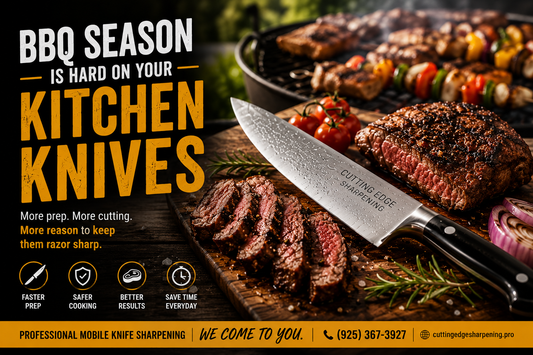
Butchers, caterers, and even salons (for scissors) use mobile sharpening to protect both staff and clients. Sharp tools reduce accidents and improve the quality of work.
Credit: cuttingedgesharpening.pro
The Environmental And Hygiene Benefits
Mobile sharpening can also be safer for the environment and public health:
- Reduces waste: Proper sharpening extends the life of each knife, so fewer are thrown away.
- Limits cross-contamination: Knives sharpened on-site avoid exposure to other people’s tools, reducing the risk of germs spreading between locations.
Some mobile services even follow strict sanitation protocols between jobs, especially when working for hospitals or food processors.
Common Mistakes People Make With Knife Sharpening
Many people believe they can sharpen knives safely at home, but even small mistakes can cause injuries or damage blades. Here are common errors:
1. Using The Wrong Tool
A cheap sharpener often removes too much metal or creates a wire edge that breaks off quickly.
2. Not Checking The Edge
Some people stop after a few strokes, not realizing the knife is still dull or uneven.
3. Improper Storage After Sharpening
People sometimes put newly sharpened knives back in a drawer unprotected, which can dull the edge or cut someone reaching in.
4. No Safety Gear
Not wearing gloves or using a non-slip mat can lead to slips and cuts.
5. Sharpening Too Often
Over-sharpening wears out the blade and makes it weaker. Professionals know the right schedule for your knives.
How To Choose A Safe Mobile Sharpening Service
Not all mobile sharpeners are the same. Here’s what to look for to ensure safety and quality:
1. Check Qualifications
Look for certifications from knife or blade organizations, or ask about their training.
2. Read Reviews
See what other customers say, especially about how the sharpener handled their knives and whether any were damaged.
3. Ask About Equipment
A good service uses machines with water cooling (to prevent overheating) and secure guides for accurate sharpening.
4. Sanitation Practices
Especially important for food businesses—ask if they clean their tools between jobs.
5. Insurance
A professional sharpener should have insurance in case of accidental damage.
Real-world Example: Restaurant Safety Improvement
One busy restaurant in Chicago switched from a drop-off sharpening service to mobile sharpening. Before, staff sometimes cut themselves while packing knives for transport. After switching, injuries dropped by 40% in six months. The knives were always sharp, staff did not have to handle them outside the kitchen, and the mobile sharpener checked every blade for safety.
Non-obvious Insights About Knife Safety
Many people overlook these important details:
- Dull knives are not just annoying—they can break during use, which is much more dangerous than a simple slip.
- Improper sharpening can weaken the steel at the edge, making it more likely to chip or crack. Mobile professionals know how to avoid this.
- Children and guests are less experienced with knives, so having consistently sharp blades at home prevents accidents, especially during family meals or parties.
The Cost Of Safety: Is Mobile Sharpening Worth It?
Some worry about the price of mobile sharpening. But when you consider medical bills, lost work time from injuries, or the cost of replacing damaged knives, the small fee for a professional service is a smart investment.
| Service Type | Average Cost per Knife | Risk of Injury | Long-term Savings |
|---|---|---|---|
| Mobile Sharpening | $8-$15 | Very Low | High |
| Knife Shop Drop-off | $5-$12 | Medium | Medium |
| DIY Sharpening | $0-$50 (tools) | High | Low (if mistakes) |
| No Sharpening | $0 | Very High | None |
Credit: www.cozzinibros.com
Frequently Asked Questions
Why Is A Sharp Knife Safer Than A Dull One?
A sharp knife cuts food with less force. You have better control, so it is less likely to slip and cut you. Dull knives require more pressure, making accidents more common.
How Often Should I Use A Mobile Knife Sharpening Service?
For home cooks, every 3-6 months is enough. Restaurants or heavy users may need monthly service. Mobile sharpeners can set a schedule based on your needs.
Is Mobile Sharpening Safe For Expensive Knives?
Yes. Professionals use the right equipment and angles for high-quality knives, protecting your investment. Many sharpeners specialize in Japanese or custom blades.
Can Mobile Sharpening Handle Scissors And Other Tools?
Most mobile services can sharpen scissors, garden tools, and even axes. Always ask what tools they service before booking.
Where Can I Learn More About Knife Safety?
You can find detailed information on knife safety from organizations like the National Sanitation Foundation.
In the end, mobile knife sharpening is not just about convenience—it is about protecting your hands, your family, and your investment in good knives. Trusting a trained professional means you enjoy sharp, safe tools and peace of mind every time you cook.

Hello, This is Annie Walker, a 38-year-old blogger, founder, and editor of Cookware Guider from NY, USA. I am a cookware fanatic and passionate cooker. I love to cook with different types of cooking appliances (example: all types of cookware, rice cookers, slow cookers, etc) almost every day in my kitchen. I love to share my experience with my readers in my blog. Also, I enjoy helping people to solve their problems through my website. You can follow me on Twitter & Pinterest. To know details about my blog please check the about us page.