
Glass bakeware is a favorite in kitchens all over the world. It looks clean, heats evenly, and does not react with food. But after baking, it often gets cloudy, sticky, or stained. Many people struggle to make their glass dishes sparkle again.
Some try scrubbing, others soak for hours, yet stains still linger. Cleaning glass bakeware is not just about making it look good—it’s about keeping it safe and lasting longer. If you want your glass pans to stay clear and strong, knowing the right cleaning methods is essential.
Why Glass Bakeware Gets Dirty
Glass bakeware collects food stains, grease, and burnt-on residue easily. Unlike metal pans, glass shows every mark. After baking casseroles or sweets, oils and sugars can stick to the surface. Over time, these build up and make the glass look dull or cloudy.
Hard water is another problem. If your water has high minerals, it can leave white spots or a filmy layer on glass. Some dishwasher soaps also cause cloudiness, especially if used in excess. Even handling glass with oily hands adds fingerprints and smudges.
Understanding why glass gets dirty helps you choose the best cleaning methods. It’s not just food; minerals, soap, and handling all play a role.
Essential Supplies For Cleaning Glass Bakeware
Before you start, gather the right tools. Using the correct supplies saves time and prevents scratches or damage.
- Non-abrasive sponges – Soft sponges clean without scratching the glass.
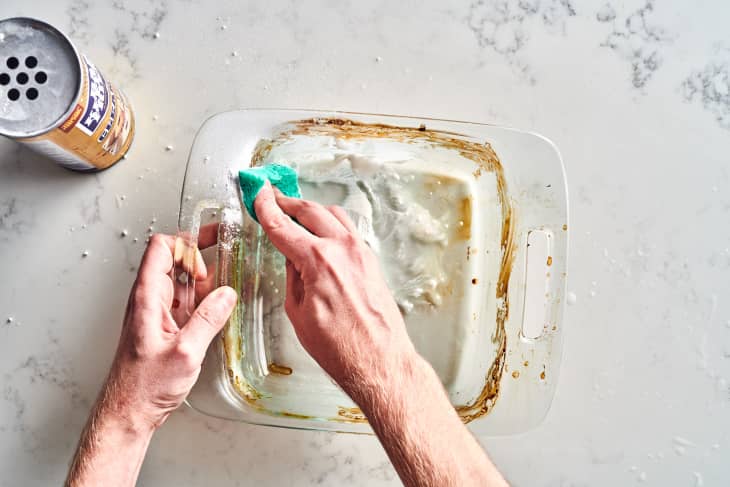
- Baking soda – A gentle, natural scrub for tough stains.
- White vinegar – Cuts grease and dissolves mineral deposits.
- Dish soap – Removes food residue and oils.
- Plastic scrapers – Help lift stuck-on food without scratching.
- Microfiber cloths – Polish and dry for a streak-free finish.
- Hot water – Loosens stubborn grime.
Avoid steel wool or rough scrubbers—they can scratch glass and weaken it over time.
Credit: www.thekitchn.com
Step-by-step Guide: Cleaning Glass Bakeware
Cleaning glass bakeware is simple if you follow the right steps. Here’s a proven process to make your dishes shine.
1. Let The Bakeware Cool
Never clean hot glass. Sudden temperature changes can cause thermal shock, making the glass crack. Wait until the bakeware is cool to the touch.
2. Remove Loose Food
Use a plastic scraper or soft sponge to lift off any loose food. Do this before adding water or soap for easier cleaning.
3. Soak In Warm, Soapy Water
Fill your sink with warm water and add a few drops of dish soap. Submerge the bakeware for 15–30 minutes. This loosens baked-on residue and makes scrubbing easier.
4. Scrub Gently
After soaking, use a non-abrasive sponge to scrub the surface. For stuck spots, sprinkle baking soda and gently rub. Baking soda is safe for glass and works well on greasy stains.
5. Rinse And Inspect
Rinse thoroughly with warm water. Check for any remaining stains or cloudiness.
6. Attack Stubborn Stains
If stains remain, make a paste with baking soda and water. Spread on the stain and let it sit for 10 minutes, then scrub gently. For mineral deposits, wipe the glass with white vinegar and rinse.
7. Dry And Polish
Use a microfiber cloth to dry and polish the glass. This prevents water spots and leaves a clear finish.
Comparing Cleaning Methods For Glass Bakeware
Some cleaning approaches work better than others. Here’s a quick comparison:
| Method | Effectiveness | Safety | Time Needed |
|---|---|---|---|
| Soaking in soapy water | Good for light stains | Very safe | 15–30 minutes |
| Baking soda scrub | Excellent for tough stains | Safe for glass | 10–20 minutes |
| Vinegar rinse | Great for mineral spots | Safe, but strong smell | 5–10 minutes |
| Dishwasher | Varies by detergent | Safe if not overloaded | 30–60 minutes |
| Steel wool | Removes stains fast | Can scratch glass | 5–10 minutes |
Baking soda and vinegar are the safest and most effective. Avoid steel wool, as scratches weaken glass.
:max_bytes(150000):strip_icc()/Simply-Recipes-PYREX-LEAD-01-2-9a0acc7db7b64e30b4ed32bfb471adae.jpg)
Credit: www.simplyrecipes.com
How To Remove Cloudiness From Glass Bakeware
Cloudiness is a common complaint. It’s usually caused by hard water or soap residue. Here’s how to fix it:
- Mix equal parts white vinegar and water.
- Dip a cloth in the solution and rub the cloudy areas.
- Rinse well and dry with a microfiber cloth.
If the cloudiness persists, repeat the process or try a baking soda paste. Sometimes, cloudiness is due to permanent etching—if so, the glass may not return to its original clarity.
Dealing With Burnt-on Food
Burnt food is the toughest to clean. Avoid harsh chemicals, which can damage glass or leave odors. Instead, try this:
- Fill the bakeware with hot water and add two tablespoons of baking soda.
- Let it soak for at least one hour, or overnight for severe burns.
- Use a plastic scraper to loosen burnt bits.
- Scrub gently with a sponge.
For heavy burns, repeat the soak or add a splash of vinegar to the water.
Cleaning Glass Bakeware In The Dishwasher
Dishwashers offer convenience, but not always perfect results. Glass bakeware is dishwasher-safe, but there are tips to improve cleaning:
- Place bakeware on the top rack, away from pots and pans.
- Use a detergent designed for glass.
- Avoid overcrowding, which blocks water jets.
- Check for leftover food before running the cycle.
Dishwashers may not remove heavy stains or burnt-on food. Pre-soaking helps, and hand washing is often better for tough cases.
Preventing Stains And Damage
Prevention saves time and keeps glass bakeware looking new. Here are some practical tips:
- Grease the bakeware lightly before baking. This reduces sticking.
- Avoid sudden temperature changes—never pour cold water into hot glass.
- Clean soon after use. The longer stains sit, the harder they are to remove.
- Store glass dry and separate from metal pans to prevent scratches.
Never use harsh chemicals like oven cleaners or bleach. They can damage glass and leave toxic residues.
Common Mistakes When Cleaning Glass Bakeware
Many people make errors that damage glass or waste time. Avoid these common mistakes:
- Using abrasive scrubbers – Scratches weaken glass and make it harder to clean next time.
- Cleaning hot glass – Sudden cooling can cause cracks.
- Skipping pre-soak – Trying to scrub burnt-on food without soaking makes cleaning harder.
- Ignoring cloudiness – Cloudy glass can hide stains or damage; tackle it early.
- Overusing dishwasher soap – Too much soap causes residue and cloudiness.
Glass Bakeware Vs. Metal Bakeware: Cleaning Differences
Glass and metal bakeware need different care. Here’s how cleaning compares:
| Type | Stain Visibility | Cleaning Difficulty | Recommended Tools |
|---|---|---|---|
| Glass Bakeware | High | Moderate to high | Non-abrasive sponge, baking soda, vinegar |
| Metal Bakeware | Low | Low to moderate | Soft sponge, mild soap |
Glass shows more stains, needs gentle scrubbing, and is sensitive to scratches. Metal pans hide marks better but can rust if not dried properly.
When Should You Replace Glass Bakeware?
Glass bakeware lasts for years, but sometimes it’s best to replace it. Here are signs:
- Deep scratches or chips – These weaken glass and may cause breakage.
- Persistent cloudiness – If vinegar and baking soda don’t fix it, the glass may be etched.
- Cracks – Even small cracks can lead to sudden breaks during baking.
Using damaged glass bakeware is risky. It can shatter during cooking, which is dangerous.
Non-obvious Tips For Sparkling Glass Bakeware
Most guides stop at scrubbing, but these extra steps make a difference:
- Buff with a microfiber cloth after drying. This removes streaks and leaves a crystal-clear shine.
- Rotate bakeware use – Don’t always use the same dish. This prevents uneven wear and helps all your glass dishes last longer.
Few people realize that storage matters. Keep glass bakeware separated from metal pans to avoid scratches. Also, letting glass air dry upside down prevents water spots.

Credit: www.youtube.com
How Often Should You Deep Clean Glass Bakeware?
Regular cleaning is important, but deep cleaning is needed every few months or after messy recipes. Deep cleaning involves soaking, scrubbing with baking soda, and vinegar rinses. This prevents buildup and keeps glass looking new.
If you bake often, deep clean every 3–4 weeks. For occasional use, every 2–3 months is enough.
Safe Cleaning Products For Glass Bakeware
Not every cleaner is safe for glass. Stick to:
- Mild dish soap
- Baking soda
- White vinegar
- Commercial glass-safe cleaners
Avoid bleach, ammonia, or strong oven cleaners. These can damage glass or leave harmful residues.
If you want to learn more about safe cleaning products, visit Good Housekeeping.
Frequently Asked Questions
How Do I Remove Baked-on Grease From Glass Bakeware?
Soak the dish in hot, soapy water for at least 30 minutes. Sprinkle baking soda on greasy spots and scrub gently with a non-abrasive sponge. Rinse and dry with a microfiber cloth.
Why Does My Glass Bakeware Look Cloudy After Washing?
Cloudiness is often caused by hard water or soap residue. Try wiping with white vinegar and rinsing thoroughly. Dry with a clean cloth for a clear finish.
Is It Safe To Use The Dishwasher For Glass Bakeware?
Yes, but place glass on the top rack and avoid overcrowding. Pre-soak for tough stains, and use a glass-friendly detergent. Dishwashers may not remove burnt-on food, so hand washing is sometimes necessary.
Can Scratches Be Removed From Glass Bakeware?
Scratches are permanent and cannot be polished out. Deep scratches weaken glass and may cause breakage. If your bakeware is heavily scratched, it’s safer to replace it.
What Should I Avoid When Cleaning Glass Bakeware?
Avoid steel wool, harsh chemicals like bleach or oven cleaner, and cleaning hot glass. These can cause scratches, cloudiness, or cracks. Always use gentle cleaners and tools.
Glass bakeware is a smart choice for cooking and baking, but it needs careful cleaning to stay clear and strong. With the right methods, supplies, and habits, your glass dishes can shine for years. Remember, prevention is easier than repair—clean soon after use, use gentle tools, and tackle stains early.
If you follow these tips, your glass bakeware will always look its best and work safely in your kitchen.

Hello, This is Annie Walker, a 38-year-old blogger, founder, and editor of Cookware Guider from NY, USA. I am a cookware fanatic and passionate cooker. I love to cook with different types of cooking appliances (example: all types of cookware, rice cookers, slow cookers, etc) almost every day in my kitchen. I love to share my experience with my readers in my blog. Also, I enjoy helping people to solve their problems through my website. You can follow me on Twitter & Pinterest. To know details about my blog please check the about us page.