
Have you ever wondered how to measure a saucepan the right way? Whether you’re shopping for new cookware or checking if your current pan fits your recipe, knowing how to measure it correctly can save you time and frustration.
You might think it’s just about the size, but there’s more to it—diameter, depth, and even capacity all play a part. In this guide, you’ll discover simple steps to measure your saucepan accurately, so you can cook with confidence every time.
Keep reading, and you’ll never second-guess your saucepan size again!
Choosing The Right Saucepan Size
Choosing the right saucepan size is important for cooking success. The right size helps cook food evenly and saves energy. It also fits your cooking needs better. Knowing how to measure a saucepan helps pick the best one for your kitchen.
Common Saucepan Dimensions
Saucepans come in many sizes, usually measured by diameter and capacity. Diameter ranges from 14 cm to 24 cm. Capacity varies from 1 liter to 4 liters or more. Smaller pans hold less food, perfect for sauces or small meals. Larger pans cook more food and work for soups or stews.
Handles and lid size also matter. A good fit makes cooking easier and safer. Check these details before buying your saucepan.
Matching Saucepan To Cookware Needs
Think about the meals you cook often. Small pans suit simple sauces or boiling eggs. Medium pans work well for side dishes or grains. Large pans handle big meals or batch cooking.
Consider your stove size too. A pan too large or too small wastes heat. This affects cooking quality and time. Pick a saucepan that fits your burner for best results.
Credit: eatbydate.com
Tools Needed For Measuring
Measuring a saucepan accurately needs the right tools. Choosing the proper tools makes the process simple and exact. Two common tools help measure size and capacity. These tools are easy to find at home or in stores.
Measuring Tape Or Ruler
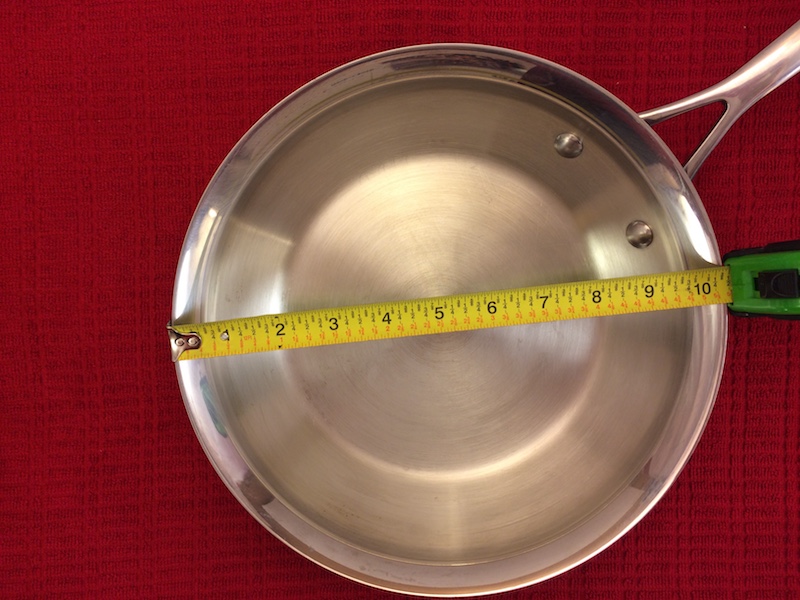
A measuring tape or ruler helps find the saucepan’s diameter and height. Place the tape across the top edge to get the diameter. Measure from the bottom to the top edge to find the height. Use a steel ruler for straight edges and a flexible tape for round shapes. These tools give clear numbers for size measurements.
Using A Measuring Cup
A measuring cup finds the volume or capacity of a saucepan. Fill the saucepan with water using the measuring cup. Count how many cups it takes to fill it up. This method shows how much liquid the pan can hold. Using a measuring cup is fast and gives a practical result.
Measuring The Diameter
Measuring the diameter of a saucepan is important for choosing the right size for your cooking needs. The diameter tells you how wide the pan is, which affects how much food you can cook at once. Knowing the correct diameter helps ensure even cooking and fits your stove properly.
Measuring Across The Top
Start by placing a ruler or tape measure across the top edge of the saucepan. Measure straight from one inner edge to the opposite inner edge. This gives you the true cooking surface size. Avoid measuring the outer rim, as it can be wider and less accurate.
Make sure the measuring tool is level and straight. This method works best for round saucepans. Write down the number in centimeters or inches for easy reference.
Measuring The Base Diameter
The base diameter is the width of the bottom part of the saucepan. This part sits on the stove and affects heat distribution. Use a ruler or tape measure to measure across the bottom, from one edge to the other.
Measure the inside base if possible. Sometimes the base is smaller than the top, especially in pans with sloped sides. Record this measurement to know how much heat area you have for cooking.

Credit: www.dimtsas.eu
Measuring The Depth
Measuring the depth of a saucepan helps determine its cooking capacity. Depth affects how much liquid or food the pan can hold. It also influences heat distribution during cooking. Getting this measurement right ensures better cooking results.
From Rim To Bottom
Start by placing the saucepan on a flat surface. Use a ruler or measuring tape for accuracy. Measure straight down from the inside rim to the bottom of the pan. Avoid measuring on the outside to get the true cooking depth. This distance shows the maximum liquid or food level you can fill safely.
Considering Saucepan Shape
Note that saucepans come in different shapes. Some have straight sides, others curve gently. Curved sides mean the depth may vary from the center to the edges. Measure the deepest point inside the pan for the most accurate reading. This helps understand real cooking space inside the pan.
Calculating Capacity
Calculating the capacity of a saucepan helps you know how much it can hold. This is important for cooking the right amount of food. Capacity is usually measured in liters or quarts. You can find this by using the saucepan’s size or by checking standard charts.
Understanding the capacity lets you choose the right pan for recipes. It also helps avoid spills or undercooking food. Let’s explore easy ways to calculate saucepan capacity.
Estimating Volume From Dimensions
Start by measuring the saucepan’s diameter and height. Use a ruler or measuring tape for accuracy. The diameter is the distance across the top of the pan. The height is how tall the pan is from base to rim.
Calculate the radius by dividing the diameter by two. Then use the formula for volume: Volume = π × radius² × height. This gives you the volume in cubic centimeters or inches. Convert this to liters by dividing by 1,000 (if in cm³) or to quarts by dividing by 57.75 (if in in³).
Using Standard Capacity Charts
Many saucepan brands provide capacity charts. These charts list common sizes and their volumes. Find your pan’s diameter and height in the chart. The chart shows the usual capacity for those dimensions.
Capacity charts save time and reduce errors. They work well for round and straight-sided saucepans. Charts may also show weight or cooking surface area. Use these details to pick the best pan for your kitchen.
Tips For Perfect Fit
Choosing the right saucepan means more than just picking a size. A perfect fit helps cooking work better. It saves heat and keeps the stove safe. Below are simple tips to find the best fit for your saucepan.
Checking Stove Burner Size
Start by measuring your stove burner. Use a ruler to check its diameter. A saucepan should match or be slightly smaller than the burner. This keeps heat focused on the pan, not wasted around it. Too big a pan can cause uneven cooking and burn handles.
Allowing Space For Handles
Handles need room to stay cool and safe. Measure the total width including handles. Make sure there is space around the pan on your stove. This prevents handles from touching other pans or the wall. A good fit means easy handling and fewer accidents.
Common Mistakes To Avoid
Measuring a saucepan seems simple but many make common mistakes. These errors can affect how well the pan fits your cooking needs. Avoiding these mistakes saves time and money. Pay attention to details beyond just the diameter.
Ignoring Handle Size
Many people measure only the pan’s width and forget the handle. Handle size affects storage and usability. A long handle may not fit in small cabinets. Handles that are too short can make lifting the pan hard. Always measure the handle length along with the pan diameter.
Overlooking Depth Importance
Depth matters as much as diameter. A shallow pan may spill food easily. Deep pans hold more liquid and ingredients. Check the depth to match your cooking style. Baking and frying need different depths. Measure from the bottom to the top edge carefully.

Credit: stahlkitchens.com
Frequently Asked Questions
How Do You Measure The Diameter Of A Saucepan?
Measure the saucepan’s diameter by placing a ruler or tape across the top edge. Measure from one inner edge to the opposite inner edge for accuracy.
What Is The Best Way To Measure Saucepan Height?
Use a ruler or tape measure vertically from the base to the rim of the saucepan. This gives the exact internal height.
How To Calculate Saucepan Capacity From Measurements?
Measure the diameter and height, then use the formula for volume of a cylinder: π × radius² × height. Convert to liters or quarts as needed.
Why Is Measuring A Saucepan Important For Cooking?
Proper measurement ensures the right size for recipes, prevents overflow, and helps with portion control during cooking.
Conclusion
Measuring a saucepan is simple once you know what to check. Focus on the diameter, height, and capacity for best results. Use a ruler or tape measure to get accurate sizes. Knowing these details helps you pick the right pan for cooking needs.
Keep measurements handy when shopping or organizing your kitchen. This way, you avoid guesswork and choose the perfect saucepan every time. Small steps lead to better cooking experiences.

Hello, This is Annie Walker, a 38-year-old blogger, founder, and editor of Cookware Guider from NY, USA. I am a cookware fanatic and passionate cooker. I love to cook with different types of cooking appliances (example: all types of cookware, rice cookers, slow cookers, etc) almost every day in my kitchen. I love to share my experience with my readers in my blog. Also, I enjoy helping people to solve their problems through my website. You can follow me on Twitter & Pinterest. To know details about my blog please check the about us page.