
If you love cooking with enameled cast iron, you know how important it is to keep your cookware in great shape. But cleaning it the wrong way can damage the enamel and shorten its life.
You want your pot or pan to look as good as new and keep performing perfectly every time you use it. You’ll discover simple, effective tips to clean your enameled cast iron without any hassle. By the end, you’ll feel confident knowing exactly how to care for your cookware and make it last for years.
Keep reading to learn the best cleaning secrets that will protect your investment and make your cooking experience even better.
Choosing The Right Cleaning Tools
Choosing the right cleaning tools is key for keeping enameled cast iron cookware in great shape. The right tools help remove food and stains without damaging the enamel surface. Using gentle tools will protect the cookware’s look and performance for years.
Soft Sponges And Brushes
Soft sponges work well to clean enameled cookware. They remove dirt without scratching the surface. Use sponges made for delicate dishes. Brushes with soft bristles also help clean hard-to-reach areas. These tools lift stuck food gently and safely.
Avoiding Abrasive Materials
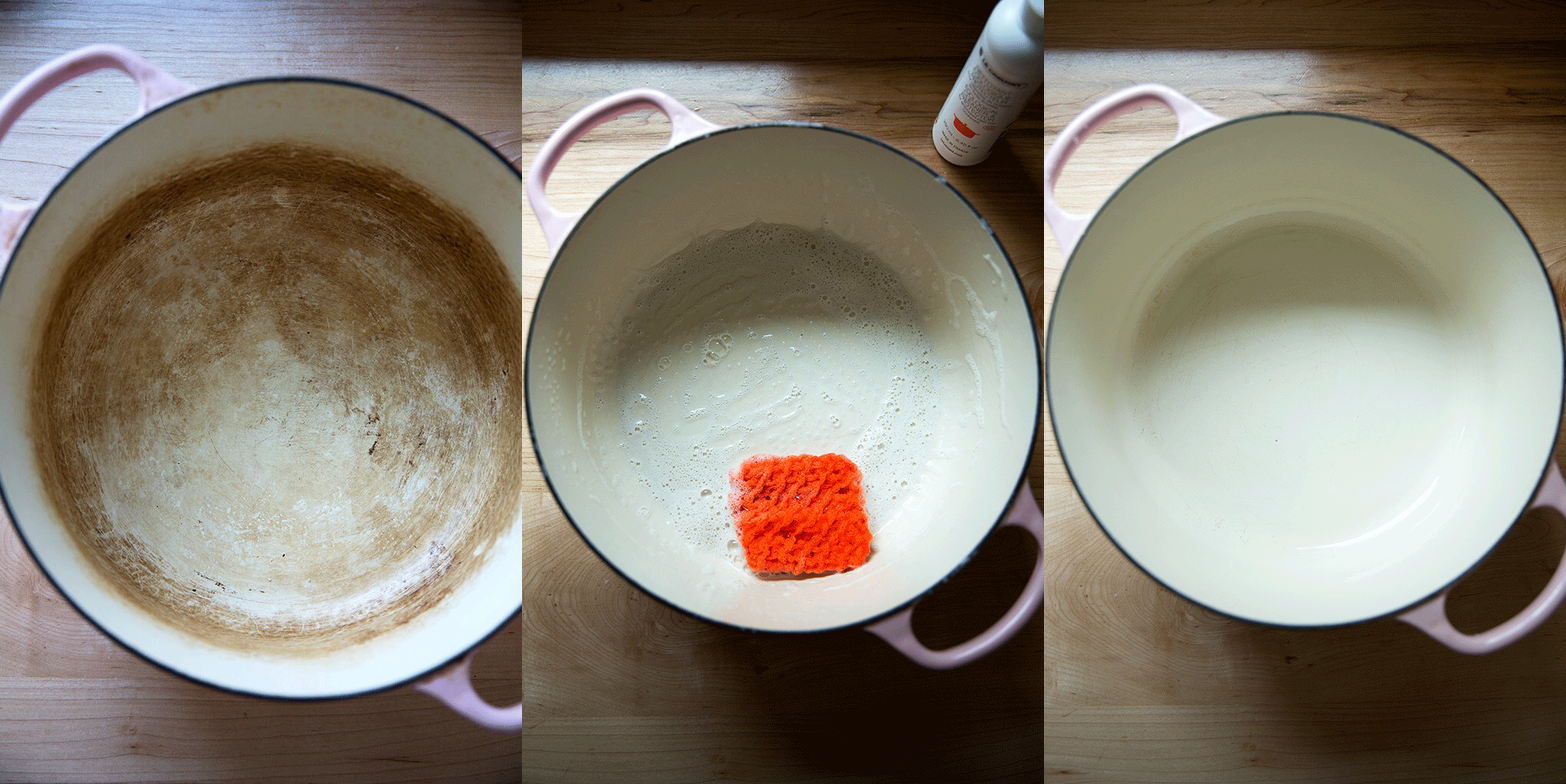
Avoid steel wool, rough scrubbers, or harsh scouring pads. These materials can scratch or chip the enamel. Damaged enamel can lead to rust and poor cooking results. Stay away from strong cleaners with harsh chemicals. They may dull or harm the enamel finish.
Credit: alexandracooks.com
Daily Cleaning Steps
Keeping your enameled cast iron cookware clean every day helps it last longer. Follow simple steps to remove food and stains without damage. Daily care stops build-up and keeps the surface smooth.
Rinsing After Use
Rinse the cookware with warm water right after cooking. This removes loose food and prevents stains. Avoid letting food dry on the surface. Use a soft sponge or cloth for gentle cleaning.
Using Mild Detergents
Use mild dish soap to clean the cookware. Harsh chemicals can damage the enamel coating. Mix soap with warm water and clean gently. Avoid abrasive pads or steel wool that scratch the surface.
Drying Properly
Dry the cookware thoroughly with a soft towel. Water left inside can cause rust on exposed cast iron. Air dry upside down if possible. Store in a dry place to keep the enamel bright and clean.
Removing Stubborn Stains
Stubborn stains on enameled cast iron cookware can be tough to remove. They often come from burnt food or strong spices. These stains don’t affect cooking but can make your cookware look dull. Cleaning them carefully keeps your pot or pan bright and fresh. Simple methods with common household items work well to lift these marks.
Baking Soda Paste Method
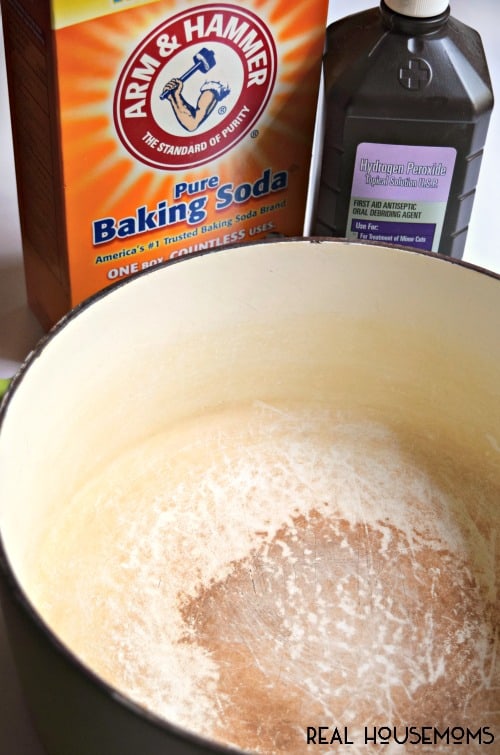
Baking soda is gentle yet effective. Make a thick paste by mixing baking soda with water. Spread this paste over the stained areas. Let it sit for 15 to 20 minutes. Then, use a soft sponge to scrub gently. Avoid harsh scrubbing to protect the enamel surface. Rinse with warm water and dry with a cloth.
Vinegar Soak Technique
White vinegar helps break down tough stains and mineral buildup. Fill the cookware with equal parts water and vinegar. Let it soak for about 30 minutes. After soaking, pour out the liquid. Use a sponge to wipe the stains away softly. Rinse well and dry completely. Vinegar also helps remove odors from the cookware.
Credit: realhousemoms.com
Dealing With Burnt Food
Burnt food on enameled cast iron cookware can be frustrating. It can stick tightly and look hard to clean. Careful cleaning is important to keep the enamel surface safe. Harsh scrubbing can damage the coating. Here are two simple ways to deal with burnt food without harming your cookware.
Boiling Water Solution
Fill the cookware with water to cover the burnt area. Heat the water on low to medium heat. Let it boil gently for 10 to 15 minutes. The hot water softens the burnt food stuck on the surface. Turn off the heat and let it cool slightly. Use a soft sponge to wipe away the loosened food. Repeat if needed, but avoid strong scrubbing. This method loosens burnt bits safely and cleans the cookware well.
Gentle Scraping Tips
Use a plastic or wooden spatula for scraping. Avoid metal tools as they can scratch the enamel. Gently scrape the burnt food in small sections. Do not force or dig hard into the surface. Work slowly and patiently to lift burnt bits. After scraping, wash the cookware with warm, soapy water. Rinse and dry thoroughly. This gentle method helps remove tough spots without damage.
Preventing Damage
Preventing damage to enameled cast iron cookware helps keep it looking new. Careful handling protects the enamel coating. This section covers key steps to avoid harm during use and storage.
Avoiding Thermal Shock
Thermal shock happens when the cookware changes temperature quickly. This can crack or chip the enamel surface. Always heat the pan slowly on low or medium heat. Never place hot cookware in cold water. Let it cool down naturally before washing.
Do not move the pan directly from the stove to the freezer. Sudden temperature changes stress the enamel. Use gentle heat changes to keep your cookware safe.
Safe Storage Practices
Proper storage prevents scratches and chips on the enamel. Avoid stacking heavy pots and pans inside your enameled cast iron. Use soft liners or cloth between pieces if stacking is necessary.
Store cookware in a dry place. Moisture can cause rust on exposed cast iron edges. Keep lids separate or upside down to avoid trapping moisture inside.
Credit: www.reddit.com
Maintenance Tips
Maintaining enameled cast iron cookware is simple with the right care. Proper maintenance keeps your pots and pans looking good and working well for years. Small daily habits make a big difference in preserving the enamel surface and preventing damage.
Seasoning Myths
Enameled cast iron does not need seasoning like traditional cast iron. The enamel coating protects the metal and stops rust. Adding oil to the surface will not improve it or create a non-stick layer. Avoid seasoning because it can cause sticky residue. Instead, focus on gentle cleaning and drying.
Regular Inspection
Check your cookware often for chips or cracks in the enamel. Small damages can get worse over time. Stop using any pot with a damaged enamel layer for cooking acidic foods. Use a soft sponge to clean and never use metal scrubbers. Look for signs of rust or discoloration inside and outside the pan.
Frequently Asked Questions
How Do I Remove Stains From Enameled Cast Iron?
Use a baking soda paste to scrub stains gently. Avoid harsh abrasives to prevent enamel damage. For tough stains, soak with warm water and mild detergent before scrubbing.
Can I Use Metal Scrubbers On Enameled Cookware?
No, metal scrubbers can scratch the enamel surface. Use soft sponges or nylon scrubbers instead. This preserves the cookware’s finish and extends its lifespan.
Is It Safe To Use Dishwasher For Enameled Cast Iron?
Dishwasher use is not recommended as it may dull the enamel. Hand wash with warm water and mild soap for best results. Dry thoroughly to prevent rust on exposed cast iron edges.
How To Prevent Odor Buildup In Enameled Cast Iron?
Clean immediately after use and avoid letting food sit inside. Use baking soda or vinegar rinses to neutralize odors. Proper drying also helps prevent lingering smells.
Conclusion
Cleaning enameled cast iron cookware is simple with the right steps. Use gentle tools and mild cleaners to protect the enamel. Avoid harsh scrubbing to keep the surface smooth and bright. Regular care helps your cookware last for years. Enjoy cooking with clean, shiny pots and pans every day.
Small efforts bring great results. Keep your kitchen tools in top shape easily and safely.

Hello, This is Annie Walker, a 38-year-old blogger, founder, and editor of Cookware Guider from NY, USA. I am a cookware fanatic and passionate cooker. I love to cook with different types of cooking appliances (example: all types of cookware, rice cookers, slow cookers, etc) almost every day in my kitchen. I love to share my experience with my readers in my blog. Also, I enjoy helping people to solve their problems through my website. You can follow me on Twitter & Pinterest. To know details about my blog please check the about us page.