
Cooking asparagus in a frying pan is a simple skill that can change your home meals. Whether you are new to cooking or just want a faster way to prepare this healthy vegetable, pan-frying delivers crisp, flavorful asparagus in minutes.
This guide will take you step by step, explain common mistakes, and share practical tips so your asparagus is always delicious.
Asparagus is rich in fiber, vitamins A, C, E, and K, and antioxidants. It’s also low in calories—just 20 calories per 100 grams—making it ideal for healthy eating. Frying asparagus preserves its nutrients and gives it a tasty, slightly charred flavor. Many people overcook asparagus or don’t season it well, leading to bland results. With the right method, you can enjoy tender, flavorful asparagus that pairs well with almost any meal.
Choosing And Preparing Asparagus
The first step is picking the right asparagus. Freshness matters, and the way you trim and wash the stalks affects texture and taste.
Picking Fresh Asparagus
Look for firm stalks with bright green color and closed tips. Avoid limp, wrinkled, or mushy stems. Thickness is a matter of preference:
- Thin stalks: Cook faster, taste slightly sweeter.
- Thick stalks: Have a meatier bite, require more cooking time.
Here’s a quick comparison:
| Type | Cooking Time | Texture | Flavor |
|---|---|---|---|
| Thin Asparagus | 2-4 minutes | Tender | Sweeter |
| Thick Asparagus | 5-7 minutes | Meaty | Earthy |
Washing And Trimming
Before cooking, rinse asparagus under cold water. Sand or dirt hides near the tips, so pay attention. Next, trim the woody ends. Hold a stalk and bend it gently; it will snap naturally where the tough part ends. For a neat look, you can cut all stalks to the same length.
Optional Peeling
For thick stalks, peeling the bottom third with a vegetable peeler removes tough skin and helps them cook evenly. This step is not needed for thin asparagus.
Ingredients And Tools
Cooking asparagus in a frying pan doesn’t need many ingredients. Here’s what you need for a basic recipe (serves 2):
- 1 pound asparagus (about 20 stalks)
- 1 tablespoon olive oil (or butter)
- Salt (½ teaspoon)
- Black pepper (¼ teaspoon)
- Optional: Lemon juice, garlic, parmesan cheese, red pepper flakes
You’ll need a large frying pan (10-12 inches), a spatula, and tongs.
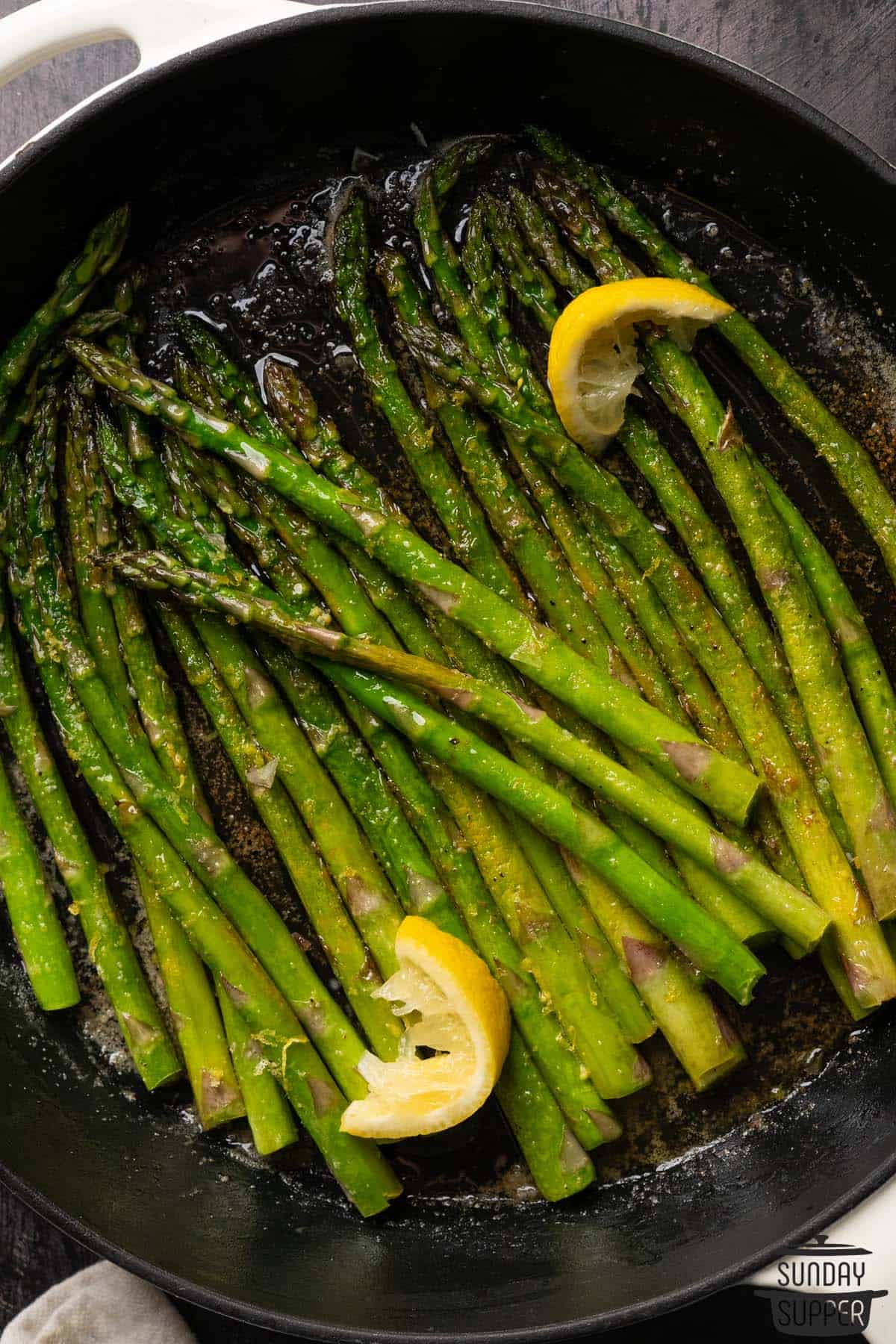
Credit: sundaysuppermovement.com
Step-by-step: Frying Pan Asparagus
Getting the timing and heat right is key. Here’s a practical guide:
- Heat the pan: Place your frying pan on medium-high heat. Add olive oil or butter and let it heat until shimmering (about 1 minute).
- Add asparagus: Place the trimmed stalks in a single layer. This ensures even cooking. If they don’t fit, cook in batches.
- Season: Sprinkle salt and pepper. Toss to coat all sides.
- Cook and toss: Let asparagus cook undisturbed for 1-2 minutes, then shake the pan or use tongs to turn them. Repeat every minute.
- Check doneness: After 4-6 minutes (thin stalks need less time), asparagus should be bright green, tender, and slightly browned. Pierce a stalk with a fork—if it goes through easily but still feels firm, it’s ready.
- Finish and serve: Remove from heat. Add a squeeze of lemon juice or sprinkle parmesan if you like. Serve hot.
Cooking Time Table
Here’s a summary of cooking times for different thicknesses:
| Stalk Thickness | Cooking Time | Result |
|---|---|---|
| Thin | 2-4 min | Tender, crisp |
| Medium | 4-5 min | Tender, juicy |
| Thick | 6-7 min | Meaty, slightly chewy |
Flavor Variations And Add-ons
Pan-fried asparagus tastes great with simple salt and pepper, but you can try different flavors. Here are some ideas:
- Garlic butter: Add 1 clove minced garlic during the last 2 minutes of cooking.
- Lemon zest: Sprinkle grated lemon peel at the end for brightness.
- Parmesan: Add 2 tablespoons grated parmesan after cooking for a savory touch.
- Balsamic glaze: Drizzle balsamic vinegar and cook for 1 minute to create a sweet, tangy finish.
- Red pepper flakes: For a spicy kick, add ¼ teaspoon during cooking.
These options make asparagus fit different meals, from breakfast eggs to grilled chicken or pasta.

Credit: butteryourbiscuit.com
Common Mistakes And How To Avoid Them
Even experienced cooks make mistakes with asparagus. Here are frequent problems and how to fix them:
Overcrowding The Pan
Asparagus needs room. If stalks overlap, they steam instead of fry, leading to limp texture. Cook in batches if needed.
Using Low Heat
Low heat makes asparagus soft and dull. Medium-high heat ensures browning and keeps the stalks crisp.
Overcooking
Asparagus cooks fast. Overcooked stalks turn mushy and lose flavor. Use a timer and check early.
Skipping Seasoning
A pinch of salt and pepper makes a big difference. Don’t wait until after cooking—season early for best taste.
Not Drying After Washing
Wet asparagus steams in the pan. Dry stalks with paper towels before cooking.
Nutrition Facts And Health Benefits
Asparagus is not only tasty but also good for your health. Here’s a quick look at its nutrition per 100 grams:
| Nutrient | Amount | % Daily Value |
|---|---|---|
| Calories | 20 | 1% |
| Fiber | 2.1 g | 8% |
| Vitamin C | 13 mg | 15% |
| Vitamin K | 55 mcg | 46% |
| Folate | 52 mcg | 13% |
Asparagus is also a natural diuretic and supports heart health. Its antioxidants help fight inflammation. According to Wikipedia, asparagus has been valued for centuries for its health benefits.
Tips For Perfect Pan-fried Asparagus
If you want your asparagus to impress, follow these practical tips:
- Use high heat for a quick cook and good color.
- Don’t stir constantly; let stalks brown before turning.
- Add finishing flavors after cooking so they stay fresh.
- Serve immediately; asparagus loses texture as it cools.
- Try different oils like sesame or avocado for new tastes.
Two extra insights: First, cutting thick asparagus in half lengthwise speeds up cooking and helps season penetrate. Second, if you want extra crispness, sprinkle a teaspoon of breadcrumbs during the last minute in the pan.
Serving Ideas
Pan-fried asparagus is versatile. Here are ways to use it:
- With eggs: Serve next to scrambled or poached eggs for breakfast.
- In salads: Slice and toss with greens, cherry tomatoes, and vinaigrette.
- With meat or fish: Place alongside grilled steak, chicken, or salmon.
- In pasta: Mix with cooked pasta, olive oil, and parmesan.
- On pizza: Add as a topping before baking for a fresh taste.
:max_bytes(150000):strip_icc()/18318-pan-fried-asparagus-beauty-4x3-0135064414802331-2d56bbd3ae8349999a142f6394081ae8.jpg)
Credit: www.allrecipes.com
Storing And Reheating Asparagus
If you have leftovers, store them properly:
- Refrigerate: Place cooked asparagus in an airtight container. It stays fresh for up to 3 days.
- Reheat: Warm in a frying pan over medium heat for 1-2 minutes. Avoid microwaving; it makes asparagus mushy.
- Avoid freezing: Cooked asparagus loses texture in the freezer.
Frequently Asked Questions
How Do I Know When Asparagus Is Done?
Asparagus is ready when it’s bright green, tender but still firm, and slightly browned. Pierce a stalk with a fork—if it goes through smoothly but doesn’t feel soft, it’s done.
Can I Use Frozen Asparagus?
Yes, but thaw and dry it first. Frozen asparagus tends to be softer and needs less cooking time. Fry for 2-3 minutes on high heat.
Is Frying Asparagus Healthy?
Pan-frying keeps most nutrients, especially if you use olive oil. Asparagus is low in calories and rich in vitamins. Avoid heavy oils or butter if you want the healthiest option.
What’s The Best Oil For Frying Asparagus?
Olive oil is popular for its flavor and health benefits, but you can use avocado oil or canola oil. Each gives a slightly different taste. Sesame oil works well for Asian-inspired dishes.
Why Does My Asparagus Taste Bitter?
Bitterness comes from overcooking or old asparagus. Use fresh stalks and avoid cooking too long. Adding lemon juice or parmesan can help mask bitterness.
Cooking asparagus in a frying pan is simple, quick, and rewarding. Once you master the basics, you can use this method for many meals and try new flavors. Remember to choose fresh stalks, use the right heat, and don’t crowd the pan.
With these tips, your asparagus will always be crisp, tasty, and healthy.

Hello, This is Annie Walker, a 38-year-old blogger, founder, and editor of Cookware Guider from NY, USA. I am a cookware fanatic and passionate cooker. I love to cook with different types of cooking appliances (example: all types of cookware, rice cookers, slow cookers, etc) almost every day in my kitchen. I love to share my experience with my readers in my blog. Also, I enjoy helping people to solve their problems through my website. You can follow me on Twitter & Pinterest. To know details about my blog please check the about us page.