
Cooking tuna steaks in a frying pan is one of the fastest and most rewarding ways to enjoy this healthy fish. Many people are surprised at how simple it is—and yet, a perfectly cooked tuna steak can rival even expensive restaurant dishes.
But getting that delicious, tender center and crisp outer crust does require some know-how. This guide will walk you through every step, share insider tips, and answer the most common questions, making sure you feel confident the next time you see fresh tuna at the market.
Why Choose Tuna Steaks?
Tuna steaks are packed with protein, low in fat, and rich in nutrients like vitamin D, B vitamins, and omega-3 fatty acids. Their meaty texture makes them popular with people who don’t usually like “fishy” fish. Unlike canned tuna, fresh tuna steaks are cut thick and have a mild, almost steak-like flavor. They cook quickly, making them ideal for weeknight dinners or when you want something special without spending hours in the kitchen.
If you’re new to seafood, tuna steaks are a fantastic place to start. Many top chefs compare cooking tuna to beef steak: both taste best when not overcooked. This means you get a fast, satisfying meal with lots of room for creativity.
What You Need: Essential Tools And Ingredients
Before you start, gather these basics. Having the right tools and ingredients is key to getting the best results.
Tools
- Heavy frying pan or skillet (cast iron or stainless steel works best)
- Tongs or a wide spatula
- Sharp knife for slicing
- Paper towels
- Cooking thermometer (optional but useful for beginners)
Main Ingredients
- Fresh tuna steaks (about 1 inch thick; yellowfin, ahi, or albacore)
- Salt and pepper
- Cooking oil (neutral oils like canola, grapeseed, or avocado oil)
- Lemon or lime (for finishing)
Optional Marinade And Seasonings
- Soy sauce
- Ginger
- Garlic
- Sesame oil
- Fresh herbs (parsley, cilantro, or dill)
Some cooks prefer a simple salt-and-pepper approach, while others like to marinate the tuna for extra flavor. Both methods work well—what matters most is the freshness and quality of the fish.
Choosing The Best Tuna Steaks
Not all tuna steaks are created equal. Here’s how to make sure you get the best ones for pan-cooking:
- Look for bright color: The flesh should be deep red or pink, not brown or gray.
- Smell matters: Fresh tuna should have a clean, ocean scent. Avoid fish with a strong, “fishy” odor.
- Firmness: The steaks should feel firm and springy, not mushy.
- Thickness: Aim for steaks at least 1 inch thick for even cooking and the best texture.
Never be afraid to ask your fishmonger questions. A good store will let you check the fish and may even cut steaks to your preferred size.
Prepping Your Tuna For The Pan
Patting Dry
Moisture is the enemy of a good sear. Pat each steak dry with paper towels. This helps the outside brown quickly and evenly.
Seasoning
For a classic approach, season both sides with salt and pepper just before cooking. If you want extra flavor, you can also add a little garlic powder, smoked paprika, or a squeeze of lemon juice.
Marinating (optional)
A quick marinade can add a punch of flavor, especially if you like Asian or Mediterranean tastes. Here’s a simple marinade for two steaks:
- 2 tablespoons soy sauce
- 1 tablespoon sesame oil
- 1 teaspoon grated fresh ginger
- 1 clove garlic, minced
Mix the marinade and coat the tuna steaks. Let them sit for 10–20 minutes at room temperature. Don’t marinate for more than 30 minutes or the texture can become mushy.
How To Cook Tuna Steaks In A Frying Pan
Now, let’s get to the main event. Cooking tuna steaks is fast, so have everything ready before you start.
Step 1: Heat The Pan
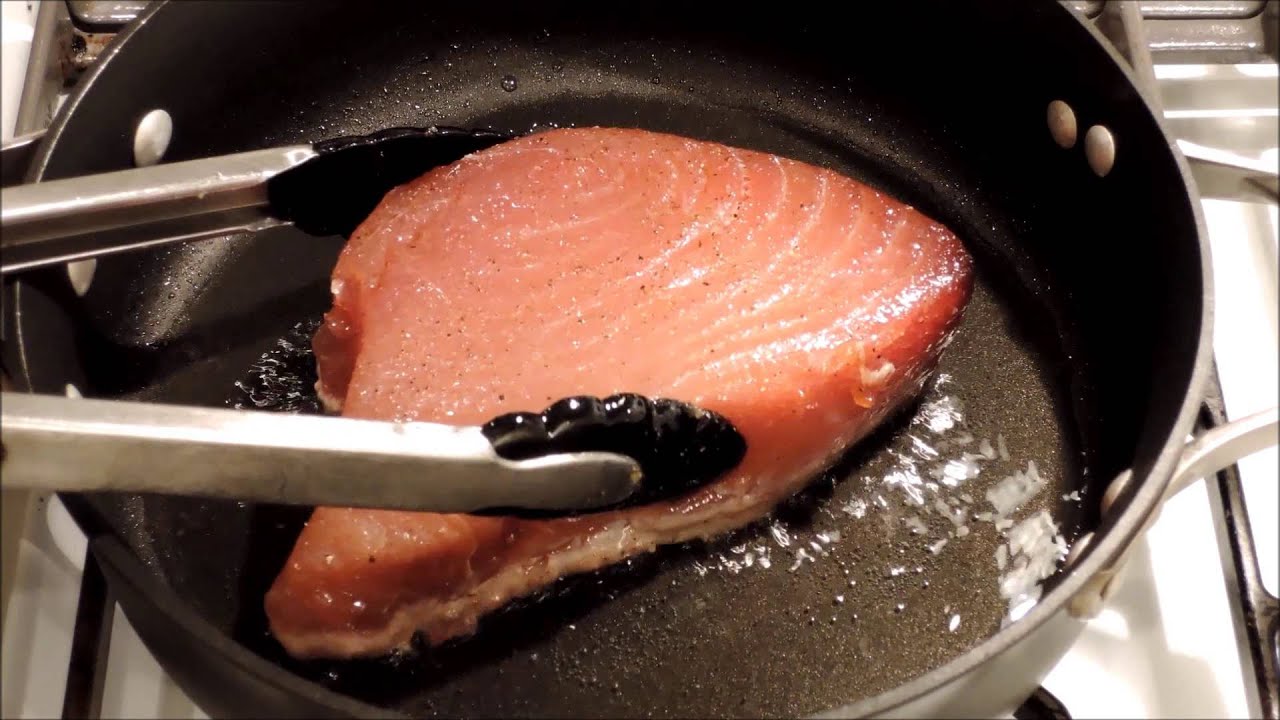
Place your frying pan over medium-high to high heat. Add 1–2 tablespoons of oil and let it get hot—almost smoking. A very hot pan is crucial for a good crust.
Step 2: Add The Tuna
Lay the steaks gently into the pan. You should hear a strong sizzle. Don’t crowd the pan; cook in batches if necessary.
Step 3: Sear Each Side
For 1-inch thick steaks, cook:
- 1 to 2 minutes per side for rare (deep pink in the center)
- 2 to 2.5 minutes per side for medium-rare (just a bit of pink in the center)
- 3 minutes per side for medium (almost cooked through)
Flip the steaks only once using tongs or a spatula. Press down gently so the surface touches the pan.
Step 4: Rest And Finish
Remove the steaks and let them rest for 2–3 minutes. This helps the juices redistribute. Squeeze a little lemon or lime on top before slicing.
Tuna Steak Doneness Guide
Here’s a quick reference for temperatures and appearance:
| Doneness Level | Internal Temp (°F) | Color | Texture |
|---|---|---|---|
| Rare | 90–100°F | Deep pink/red center | Very tender, moist |
| Medium-rare | 110–115°F | Light pink center | Tender, slightly firmer |
| Medium | 120–130°F | Just a hint of pink | Firm but juicy |
| Well-done | 140°F+ | Fully cooked, gray | Dry, tough |
Most chefs recommend rare or medium-rare for tuna steaks. Overcooked tuna becomes dry and chewy.
Serving Ideas For Pan-seared Tuna Steaks
Tuna steaks work well with many side dishes and sauces. Here are a few popular ways to serve them:
- On a bed of mixed greens with a light vinaigrette
- With steamed rice and sautéed vegetables
- Topped with a fresh salsa (like mango or tomato)
- Drizzled with a simple soy-lime sauce
- Sliced thin for a tuna salad bowl
You can also slice leftovers and use them in sandwiches, wraps, or poke bowls.
Troubleshooting: Common Mistakes And How To Fix Them
Even experienced cooks make mistakes with tuna steaks. Here are some common problems and how to avoid them:
1. Overcooking
This is the most frequent error. Because tuna is lean, it dries out quickly. Watch the color on the side as it cooks, and use a timer. When in doubt, undercook slightly—the center should still be pink.
2. Cold Tuna In The Pan
If you put fridge-cold tuna into a hot pan, it can cook unevenly. Let steaks sit at room temperature for 10–15 minutes before cooking.
3. Too Much Moisture
Wet fish steams instead of searing. Always dry the surface well with paper towels.
4. Not Enough Heat
A pan that isn’t hot enough won’t give you a crust and can make the fish stick. Preheat the pan for several minutes and use an oil with a high smoke point.
5. Cheap Or Old Tuna
Lower-quality tuna tastes bland and can be tough. Always buy the freshest, best-quality tuna you can afford.
Flavor Variations And Advanced Tips
If you want to take your tuna steaks to the next level, try these ideas:
Crusted Tuna
Press the seasoned tuna into a plate of sesame seeds or crushed peppercorns before cooking. This adds crunch and a nutty flavor.
Quick Sauces
- Ponzu Sauce: Mix soy sauce, lemon juice, and a little sugar.
- Herb Butter: Combine softened butter with chopped parsley and garlic, then melt over the hot steak.
Asian-style Glaze
Brush the cooked tuna with a mix of honey, soy sauce, and rice vinegar. Let it bubble in the pan for a few seconds.
Mediterranean Style
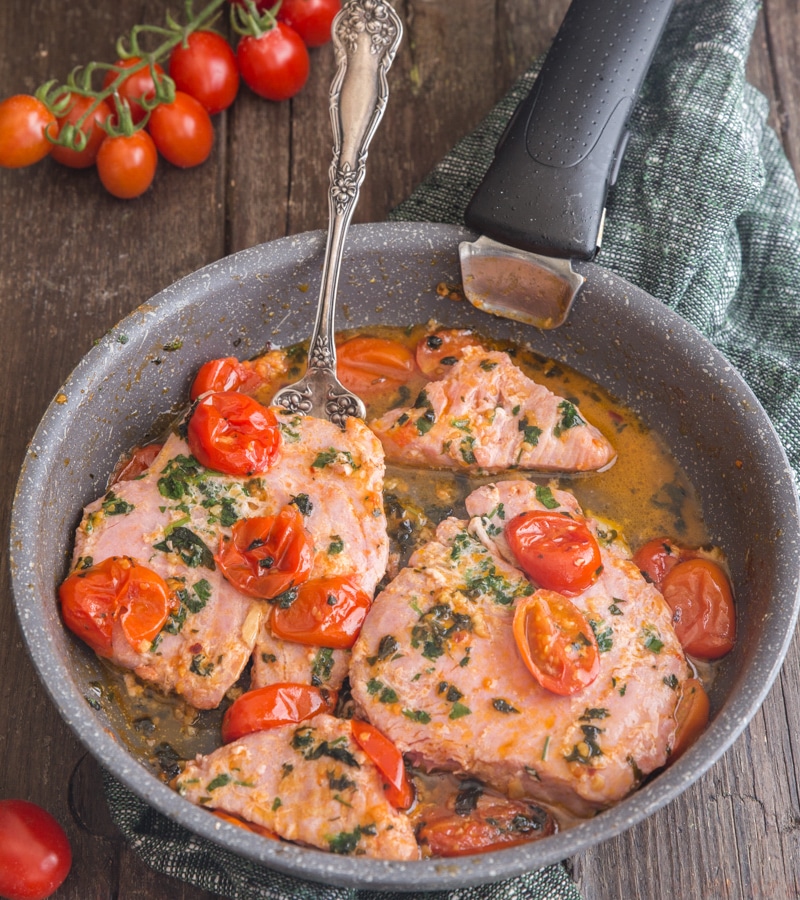
Add a topping of chopped tomatoes, olives, capers, and basil for a fresh, tangy finish.
Credit: www.youtube.com
Tuna Steak Nutrition Facts
Pan-seared tuna is as healthy as it is tasty. Here’s a look at the nutrition per 4-ounce (113g) cooked portion:
| Nutrient | Amount | % Daily Value* |
|---|---|---|
| Calories | 145 | 7% |
| Protein | 28g | 56% |
| Total Fat | 3g | 5% |
| Omega-3s | ~700mg | — |
| Sodium | 45mg | 2% |
| Vitamin D | 3mcg | 15% |
*Values based on a 2,000-calorie diet.
Sustainability: Choosing Tuna Responsibly
Overfishing is a real concern with tuna, especially bluefin. When shopping, look for sustainably caught tuna. Labels like “pole and line caught” or “MSC certified” are good signs. Some types, like skipjack or albacore, are considered more sustainable than others.
For more information on sustainable seafood choices, visit the Monterey Bay Aquarium Seafood Watch.
Comparing Tuna Steaks To Other Fish
Wondering how tuna steaks stack up against other popular fish? Here’s a quick comparison for pan-cooking:
| Fish Type | Best Thickness | Ideal Doneness | Cooking Time (per side) | Texture |
|---|---|---|---|---|
| Tuna | 1 inch | Rare/Medium-rare | 1–2 minutes | Meaty, firm |
| Salmon | 1 inch | Medium | 3–4 minutes | Rich, flaky |
| Mahi Mahi | 3/4 inch | Medium | 2–3 minutes | Firm, mild |
| Halibut | 1 inch | Medium | 3–4 minutes | Dense, lean |
Tuna’s short cooking time and steak-like texture set it apart from most other fish.
Storage And Leftovers
If you have leftover tuna steaks, store them properly for safety and best taste.
- Refrigerate within 2 hours of cooking. Wrap tightly or store in an airtight container.
- Eat within 2 days. Tuna dries out quickly, so sooner is better.
- Do not reheat over high heat—this can make it tough. Instead, eat cold on salads or in sandwiches.
For those who want to freeze cooked tuna, wrap tightly in plastic and foil. Use within 1 month for best flavor.
Credit: anitalianinmykitchen.com
Safety Tips When Cooking Tuna
Tuna is safe to eat rare or medium-rare, but it’s important to follow basic food safety:
- Buy from trusted sources.
- Keep tuna cold until just before cooking.
- Use clean utensils and surfaces.
- If you are pregnant, elderly, or have a weakened immune system, consider cooking tuna to at least 145°F.
Many people worry about mercury in tuna. Occasional consumption is safe for most adults, but small children and pregnant women should limit intake. For more details, the FDA offers guidelines on seafood safety.
Frequently Asked Questions
How Do I Know When Tuna Steaks Are Done?
Look for a crusty, browned surface and a pink (not raw) center. For rare, the inside will be deep pink and cool. Use a thermometer for accuracy—rare is 90–100°F, medium-rare is 110–115°F.
Can I Use Frozen Tuna Steaks?
Yes, but thaw them completely in the fridge and pat dry before cooking. Frozen tuna can have slightly softer texture but works well if handled properly.
What Oil Is Best For Frying Tuna Steaks?
Choose a neutral oil with a high smoke point, like canola, grapeseed, or avocado oil. Olive oil can work but may burn at high temperatures.
How Do I Stop Tuna From Sticking To The Pan?
Dry the surface of the fish well, preheat the pan, and use enough oil. A heavy skillet (cast iron or stainless steel) helps create a nonstick effect if hot enough.
Can I Cook Tuna Steaks Well-done?
You can, but they will be much drier and less flavorful. Most people prefer rare or medium-rare for tenderness and best taste.
Cooking tuna steaks in a frying pan brings out their best qualities: quick prep, simple seasoning, and a restaurant-worthy meal in minutes. With the right technique, you’ll enjoy perfectly cooked fish every time.

Credit: www.youtube.com

Hello, This is Annie Walker, a 38-year-old blogger, founder, and editor of Cookware Guider from NY, USA. I am a cookware fanatic and passionate cooker. I love to cook with different types of cooking appliances (example: all types of cookware, rice cookers, slow cookers, etc) almost every day in my kitchen. I love to share my experience with my readers in my blog. Also, I enjoy helping people to solve their problems through my website. You can follow me on Twitter & Pinterest. To know details about my blog please check the about us page.