
If you want to cook a steak that’s juicy on the inside and perfectly crispy on the outside, frying it in a cast iron pan is one of the best ways to do it. But getting that restaurant-quality sear at home can feel tricky.
Don’t worry—this guide will show you exactly how to fry steak in a cast iron pan so you get mouthwatering results every time. Whether you’re a beginner or just looking to improve your technique, you’ll learn simple steps that make a big difference.
Ready to impress yourself and anyone you share your steak with? Let’s get started.
:max_bytes(150000):strip_icc()/Cook-the-perfect-restaurant-steak-336360_final-d0c928820c5543d384d04f8e711b4196.png)
Credit: www.thespruceeats.com
Choosing The Right Steak
Choosing the right steak is key to a great pan-fried meal. The steak type affects taste, texture, and cooking time. Not all steaks work well in a cast iron pan. Picking the right cut and quality makes cooking easier and more delicious.
Understanding steak cuts and thickness helps you cook perfectly every time. This guide covers the best choices for pan frying.
Best Cuts For Pan Frying
Ribeye, sirloin, and filet mignon are top picks for pan frying. These cuts have good marbling, which adds flavor and tenderness. Ribeye is rich and juicy. Sirloin is lean and tasty. Filet mignon is very tender and cooks fast. Avoid very tough or fatty cuts for pan frying.
Thickness And Quality Matters
Steak thickness affects cooking time and final texture. A steak about 1 to 1.5 inches thick is ideal for pan frying. Thinner steaks cook too fast and may dry out. Thicker steaks cook unevenly. Choose fresh, high-quality steaks with a bright red color. Look for fine marbling and avoid dark or brown spots. Quality steak needs less seasoning and cooks evenly.
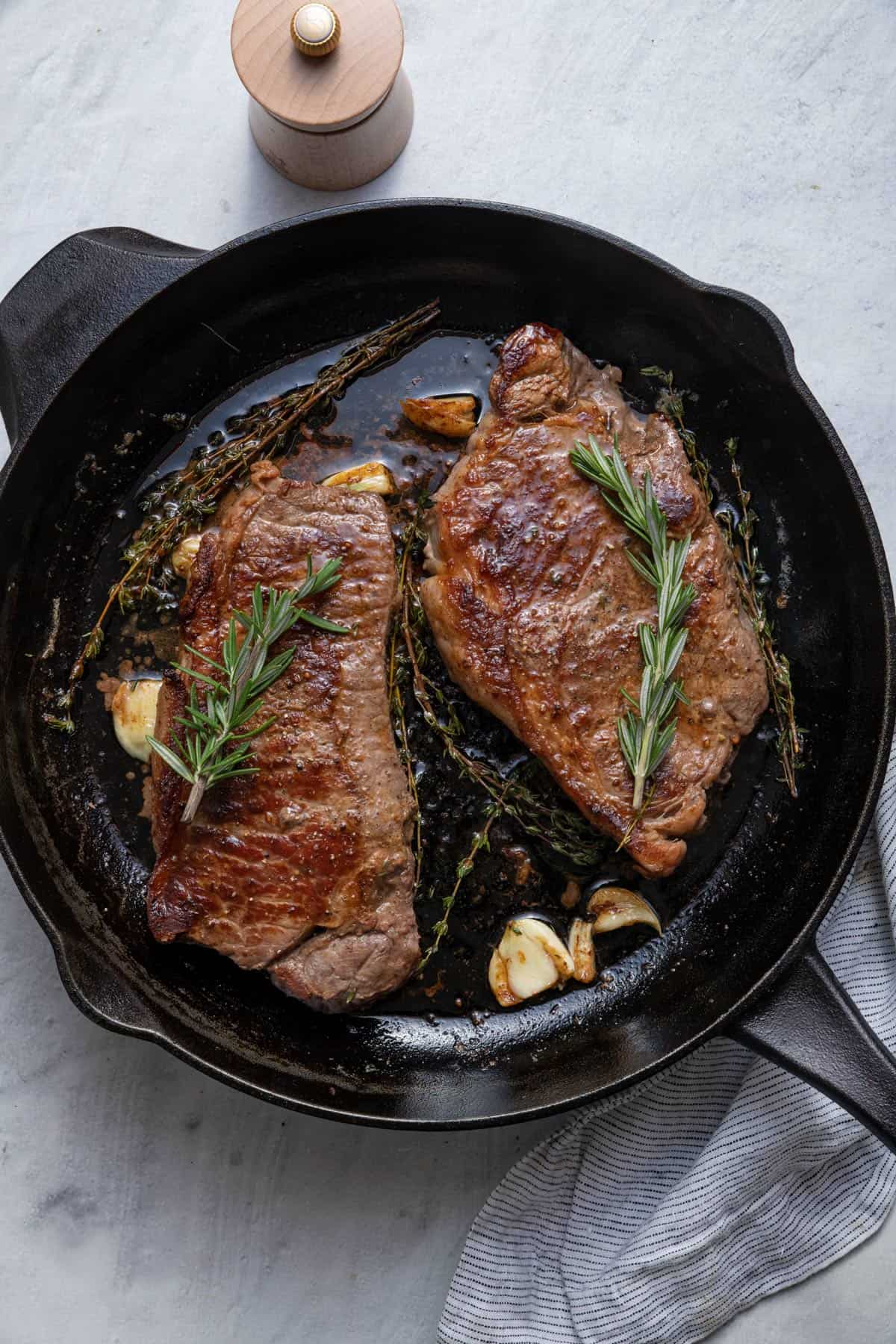
Credit: feelgoodfoodie.net
Preparing Your Steak
Preparing your steak well is key to a tasty meal. It helps the steak cook evenly and taste better. Simple steps before frying make a big difference.
Take your time with these preparation tips. They set the stage for a juicy, flavorful steak straight from your cast iron pan.
Bringing Steak To Room Temperature
Take the steak out of the fridge about 30 minutes before cooking. This lets it warm up slightly. Cold steak cooks unevenly and can stay tough inside.
Room temperature steak sears better. It forms a nice crust and cooks faster. Avoid skipping this step for the best results.
Seasoning Tips For Flavor
Keep seasoning simple to highlight the meat’s natural taste. Use salt and pepper generously on both sides. Salt helps form a crust and brings out flavor.
Add other spices only if you like. Garlic powder, paprika, or herbs work well. Season just before frying to keep the steak fresh and juicy.
Selecting And Heating The Cast Iron Pan
Selecting and heating the cast iron pan is the first step to frying a perfect steak. The right pan and the correct temperature make a big difference. A well-heated cast iron pan cooks the steak evenly and creates a delicious crust.
Why Cast Iron Works Best
Cast iron holds heat very well. It heats evenly across the surface. This helps to cook the steak uniformly. The heavy material keeps the temperature steady. It also creates a nice sear that locks in juices. Many chefs prefer cast iron for these reasons.
Proper Preheating Techniques
Start by placing the pan on medium heat. Let it warm for about 5 minutes. Avoid heating too fast; this can damage the pan. Test the heat by sprinkling a few drops of water. If they dance and evaporate quickly, the pan is ready. Preheating ensures the steak cooks perfectly and prevents sticking.
Cooking The Steak
Cooking a steak in a cast iron pan requires attention and care. The process starts with heating the pan and ends with a perfectly cooked steak. The key is to cook the steak evenly and develop a rich, brown crust. Each step affects the flavor and texture of the meat. Understanding how to manage heat, timing, and ingredients helps achieve great results.
Searing Without Crowding
Place the steak in the hot pan with space around it. Crowding causes the meat to steam, not sear. Searing creates a tasty crust by browning the surface. Cook one or two steaks at a time for best results. Avoid moving the steak too soon; let it form a crust.
Timing And Flipping
Cook the steak on one side for about 3-4 minutes. Flip it only once to cook the other side. Flipping too often stops the crust from forming. Use a timer to avoid overcooking. The steak should feel firm but still have some give.
Using Butter And Aromatics
Add butter, garlic, and herbs like rosemary or thyme to the pan. Spoon melted butter over the steak while it cooks. This adds flavor and keeps the meat moist. Aromatics infuse the steak with a rich taste. Keep basting for about 1-2 minutes before removing the steak.
Checking Doneness
Checking the doneness of your steak is key to a perfect meal. It ensures the steak is cooked just right. Too rare, and it feels raw. Too well done, and it becomes tough. There are simple ways to check doneness at home. Two popular methods are using a meat thermometer and the touch test.
Using A Meat Thermometer
A meat thermometer gives an accurate reading of the steak’s temperature. Insert the probe into the thickest part of the steak. Avoid touching the pan or bone for a true reading. For rare steak, look for 120°F to 130°F. Medium-rare is 130°F to 135°F. Medium cooks between 135°F and 145°F. Well-done steak reaches 155°F or higher. Remove the steak from the pan once it hits your target temperature. Let it rest for a few minutes before cutting.
Touch Test Method
The touch test helps estimate doneness by feel. Use your hand as a guide. Touch your thumb to your index finger and feel the fleshy part below your thumb. This is what a rare steak feels like. Touch your thumb to your middle finger for medium-rare. Ring finger touch means medium, and pinky touch is well done. Press the steak gently with your finger to compare firmness. Softer means rare, firmer means well done. This method takes practice but works well without tools.
:max_bytes(150000):strip_icc()/262181-cast-iron-pan-seared-steak-oven-finished-DDMFS-4x3-50c37d683f4a42c1bc9ff0fe3c24e417.jpg)
Credit: www.allrecipes.com
Resting And Serving
After frying your steak in a cast iron pan, resting and serving are key steps. Resting lets the juices settle inside the meat. Serving the steak the right way enhances the eating experience.
Importance Of Resting
Resting allows the steak to finish cooking evenly. The juices move back into the meat fibers. Cutting too soon makes the juices leak out. This results in a dry steak. Resting keeps the steak tender and juicy. A good rest time is 5 to 10 minutes. Cover the steak loosely with foil while resting. This keeps it warm without steaming the crust.
Serving Suggestions
Serve your steak simply to enjoy its full flavor. Add a pat of butter or garlic herb butter on top. Fresh herbs like rosemary or thyme add aroma. Pair with sides like roasted vegetables or a fresh salad. A simple sauce, like chimichurri or pepper sauce, works well. Slice the steak against the grain for easier chewing. Arrange slices neatly on a warm plate. This makes the dish look inviting and tasty.
Cleaning And Maintaining Cast Iron
Cast iron pans are great for frying steak. They hold heat well and create a nice crust. To keep your pan working well, cleaning and maintenance are important. Proper care helps the pan last longer and cook better every time.
Cleaning Tips After Cooking
Clean the pan while it is still warm. Use hot water and a soft brush or sponge. Avoid soap because it can remove the seasoning. For stuck food, scrub gently with coarse salt and water. Dry the pan completely with a towel or by heating it on the stove.
Seasoning Your Pan
Seasoning protects the pan and keeps food from sticking. After cleaning, apply a thin layer of oil to the surface. Use vegetable oil or flaxseed oil for best results. Heat the pan on low for 10 minutes to set the oil. Let it cool before storing. Repeat this process regularly for a smooth, non-stick finish.
Frequently Asked Questions
How Do I Prepare A Cast Iron Pan For Frying Steak?
To prepare, preheat the cast iron pan on medium-high heat for 5 minutes. Add a small amount of oil with a high smoke point. Ensure the pan is hot before placing the steak to achieve a perfect sear.
What Is The Best Oil For Frying Steak In Cast Iron?
Use oils with high smoke points like avocado, canola, or grapeseed oil. These oils handle high heat without burning. Avoid butter or olive oil initially, as they can burn at high temperatures.
How Long Should I Cook Steak In A Cast Iron Pan?
Cook steak for about 3-5 minutes per side for medium-rare. Timing varies with steak thickness and desired doneness. Use a meat thermometer for accuracy: 130°F for medium-rare.
Should I Season Steak Before Or After Frying?
Season steak generously with salt and pepper before frying. This enhances flavor and creates a tasty crust. Avoid adding salt too early to prevent moisture loss.
Conclusion
Frying steak in a cast iron pan is simple and rewarding. Start with a hot pan and a good cut of meat. Cook each side until it forms a brown crust. Let the steak rest before cutting. This keeps it juicy and tender.
With practice, you will cook steak just the way you like it. Enjoy the rich flavor that only cast iron can give. Try this method for a tasty meal anytime. Your kitchen will smell amazing. Give it a go and taste the difference.

Hello, This is Annie Walker, a 38-year-old blogger, founder, and editor of Cookware Guider from NY, USA. I am a cookware fanatic and passionate cooker. I love to cook with different types of cooking appliances (example: all types of cookware, rice cookers, slow cookers, etc) almost every day in my kitchen. I love to share my experience with my readers in my blog. Also, I enjoy helping people to solve their problems through my website. You can follow me on Twitter & Pinterest. To know details about my blog please check the about us page.