
Pan frying chicken thighs is a simple yet powerful cooking method. The process can turn a basic ingredient into a meal full of flavor, juicy texture, and crispy skin. Many home cooks and professionals choose this method because it is quick, uses fewer tools, and gives reliable results.
Whether you are new to cooking or want to improve your pan frying skills, you will find valuable insights here. This article covers everything you need to know, from picking the right chicken thighs to step-by-step instructions, seasoning tips, safety, troubleshooting, and more.
Understanding Chicken Thighs
Chicken thighs are often overlooked compared to chicken breasts, but they have unique advantages. Thighs come from the upper leg of the chicken. They have more dark meat, which means they contain more fat and connective tissue. This makes them juicy and rich in flavor, especially after cooking.
Why Choose Chicken Thighs?
- Better flavor: The fat and connective tissue add depth and richness.
- More forgiving: They stay moist even if slightly overcooked, unlike chicken breasts.
- Cost-effective: Usually cheaper than breasts or wings.
- Versatile: Suitable for many cooking methods, including pan frying, roasting, and grilling.
Skin-on Vs Skinless
- Skin-on thighs: Best for pan frying. The skin becomes crisp and golden, locking in moisture.
- Skinless thighs: Useful for lighter meals, but less crispy. Still juicy if cooked properly.
Bone-in Vs Boneless
- Bone-in thighs: Offer more flavor and juiciness. They take longer to cook and require careful handling.
- Boneless thighs: Faster and easier to cook, but a bit less flavorful.
Here’s a quick comparison:
| Type | Cooking Time | Flavor | Crispiness | Ease |
|---|---|---|---|---|
| Bone-in, skin-on | Longest | Excellent | High | Medium |
| Boneless, skin-on | Medium | Good | High | Easy |
| Boneless, skinless | Shortest | Moderate | Low | Very Easy |
Choosing Your Ingredients
High-quality ingredients make a big difference. Here is what you need for pan frying chicken thighs:
Chicken Thighs
- 4 bone-in, skin-on chicken thighs (about 1.5 lbs or 700 g)
Basic Seasoning
- 1 teaspoon salt
- 1/2 teaspoon black pepper
- 1/2 teaspoon garlic powder
- 1/2 teaspoon paprika
Optional Additions
- 1 tablespoon olive oil or vegetable oil
- 1/2 teaspoon dried thyme or rosemary
- 1/2 teaspoon cayenne pepper for heat
Why These Ingredients Matter
- Salt draws out moisture and helps form a crisp crust.
- Pepper and paprika give mild heat and color.
- Garlic powder adds savory notes.
- Oil helps crisp the skin and prevents sticking.
- Herbs and spices bring extra flavor.
Fresh chicken thighs are best. If possible, buy from a trusted butcher or store. Frozen thighs are fine, but thaw completely before cooking.
Preparing Chicken Thighs
Good preparation is essential for perfect pan fried chicken thighs.
Cleaning And Drying
- Remove chicken from the package.
- Pat dry with paper towels. Moisture leads to soggy skin.
- Trim excess fat or loose skin. Keep enough skin to cover the thigh.
Seasoning
- Mix salt, pepper, garlic powder, and paprika.
- Sprinkle evenly on both sides of each thigh. Rub gently to coat.
- For extra flavor, let the thighs sit for 15–30 minutes at room temperature.
Optional Marinating
Marinating is not required, but can add depth. Use a mix of oil, lemon juice, and herbs. Marinate for up to 2 hours in the fridge. Bring thighs to room temperature before cooking.
Equipment Needed
Pan frying chicken thighs does not need fancy tools, but the right equipment matters.
Essential Tools
- Heavy skillet: Cast iron or stainless steel works best. Size: 10–12 inches for 4 thighs.
- Tongs: For turning chicken.
- Instant-read thermometer: For checking doneness.
- Paper towels: For drying and draining.
- Splatter guard (optional): Reduces oil splatter.
Why Cast Iron Skillets Work Best
Cast iron holds heat well and gives even browning. Stainless steel is also good, but needs careful oiling to prevent sticking. Avoid nonstick pans for crispier skin.
Step-by-step Pan Frying Instructions
Here is a clear process for pan frying chicken thighs. The steps below give you juicy meat and crispy skin.
Step 1: Preheat The Pan
- Place skillet on stove over medium-high heat.
- Let it heat for 2–3 minutes.
- Add 1 tablespoon oil and swirl to coat.
Step 2: Add Chicken Thighs
- Place thighs skin side down in hot oil.
- Do not crowd the pan. Cook in batches if needed.
- Let thighs cook undisturbed for 6–8 minutes.
Step 3: Monitor And Adjust
- Check the skin after 6 minutes. It should be golden brown and crisp.
- If browning too fast, reduce heat slightly.
- If not browning, increase heat a bit.
Step 4: Flip And Cook Other Side
- Use tongs to flip thighs.
- Cook for another 6–8 minutes.
- Check internal temperature with a thermometer. Aim for 165°F (74°C).
Step 5: Final Check And Rest
- If thighs need more time, reduce heat to low and cover pan for 2–3 minutes.
- Remove thighs to a plate lined with paper towels.
- Let rest for 5 minutes. This keeps juices inside.
Step 6: Serve
- Slice or serve whole.
- Pair with rice, salad, or vegetables.
Cooking Times And Doneness
Chicken thighs are thicker than breasts, so cooking times vary. Here’s a quick guide:
| Type | Average Cooking Time | Internal Temperature |
|---|---|---|
| Bone-in, skin-on | 14–18 minutes | 165°F (74°C) |
| Boneless, skin-on | 10–14 minutes | 165°F (74°C) |
| Boneless, skinless | 8–12 minutes | 165°F (74°C) |
Always check the thickest part. Thighs should not be pink inside.
Tips For Perfect Pan Fried Chicken Thighs
Many cooks miss small details that change the final result. Here are practical tips:
- Dry skin is key: Moisture prevents crispiness. Pat thighs dry.
- Room temperature: Cold chicken cooks unevenly. Let thighs warm up before cooking.
- Don’t move chicken: Resist the urge to turn or lift often. Let the skin crisp.
- Use enough oil: Too little oil can lead to sticking and uneven browning.
- Monitor heat: Adjust as needed. Medium-high is best, but every stove is different.
- Rest after cooking: Juices settle in the meat. Slicing too soon causes dryness.
Non-obvious Insights
- Chicken fat renders during cooking: You can spoon off excess fat for a lighter meal.
- Smaller thighs cook faster: Uniform size means even cooking. Trim or flatten thighs for consistency.
Seasoning Variations And Flavor Ideas
You can keep chicken thighs simple or get creative with seasonings. Here are some options:
Classic American
- Salt, black pepper, garlic powder, paprika
Mediterranean
- Salt, pepper, oregano, lemon zest, olive oil
Asian-inspired
- Soy sauce, ginger, garlic, sesame oil
Spicy Cajun
- Paprika, cayenne, thyme, garlic powder
Indian Style
- Turmeric, cumin, coriander, chili powder
Try mixing seasonings in a bowl and rubbing on the thighs. For stronger flavors, marinate overnight.

Credit: www.wholesomeyum.com
Safety And Handling
Working with raw chicken needs care. Here’s how to stay safe:
- Wash hands before and after handling chicken.
- Clean surfaces: Use hot, soapy water for cutting boards and knives.
- Avoid cross-contamination: Keep raw chicken separate from cooked food.
- Cook to 165°F (74°C): This kills bacteria.
Storage
- Cooked chicken thighs can be stored in the fridge for up to 4 days.
- Freeze for up to 3 months. Thaw in the fridge before reheating.
Common Mistakes And Troubleshooting
Even experienced cooks make mistakes. Here are common problems and solutions:
Skin Doesn’t Crisp
- Too much moisture: Dry chicken well.
- Pan not hot enough: Preheat properly.
Chicken Sticks To Pan
- Not enough oil: Add more.
- Moving too soon: Let skin release naturally when browned.
Undercooked Meat
- Thighs too thick: Flatten for even cooking.
- Not checking temperature: Use a thermometer.
Overcooked, Dry Thighs
- Cooking too long: Set a timer.
- High heat for too long: Lower heat after browning skin.
Oil Splatter
- Use a splatter guard or lid.
- Reduce heat slightly.
Nutritional Information
Chicken thighs offer protein, vitamins, and minerals. Here is a rough guide for one cooked, skin-on thigh (about 3.5 oz or 100 g):
| Nutrient | Amount |
|---|---|
| Calories | 210 |
| Protein | 17g |
| Fat | 15g |
| Saturated Fat | 4g |
| Carbohydrates | 0g |
| Iron | 7% DV |
| Vitamin B6 | 30% DV |
Dark meat provides more iron and B vitamins than chicken breast. The skin adds fat, but also keeps the meat juicy.
Serving Suggestions
Pan fried chicken thighs can be served in many ways. Here are some ideas:
- With mashed potatoes and gravy
- Over rice pilaf
- With roasted vegetables
- Sliced in a salad
- As part of a sandwich or wrap
For a lighter meal, remove the skin after cooking. For extra flavor, drizzle with pan juices or a squeeze of lemon.

Credit: eatsimplefood.com
Cleaning Up After Cooking
Chicken fat and oil can leave a mess. Here’s how to clean up quickly:
- Let the pan cool before washing.
- Pour off excess oil into a container (never down the drain).
- Wipe with paper towels, then wash with hot, soapy water.
- For tough stains, soak the pan for 10 minutes.
Pan Frying Vs. Other Methods
Pan frying is not the only way to cook chicken thighs. Here’s how it compares to other methods:
| Method | Texture | Flavor | Time | Best Use |
|---|---|---|---|---|
| Pan Frying | Crispy skin, juicy meat | Rich | Medium | Quick meals |
| Baking/Roasting | Even, less crisp | Good | Long | Large batches |
| Grilling | Charred, smoky | Bold | Medium | Outdoor cooking |
| Slow Cooking | Very tender | Mild | Long | Stews, soups |
Pan frying stands out for crispiness and speed.
Making Pan Fried Chicken Thighs Healthier
If you want a healthier meal, consider these tips:
- Use skinless thighs: Less fat, but still moist.
- Drain excess oil: Place cooked thighs on paper towels.
- Use olive oil: Healthier than butter or lard.
- Pair with vegetables: Add fiber and vitamins.
- Limit salt: Use herbs and spices for flavor.
Advanced Tips For Experienced Cooks
If you’re comfortable with basics, try these:
- Finish in the oven: After browning, bake at 375°F (190°C) for 5–10 minutes for extra crisp.
- Deglaze the pan: Add a splash of wine or broth after cooking to create a sauce.
- Use compound butter: Add flavored butter during resting for richness.
- Sous vide then pan fry: For perfect doneness and crispy skin.
Real World Example
A home cook wanted crispy, juicy chicken thighs but always ended up with soggy skin. After learning to dry the thighs completely and not crowd the pan, their results improved. The skin became crisp, and the meat stayed moist. They also started checking the temperature, avoiding undercooked spots.
Where To Learn More
If you want to dive deeper into chicken cooking techniques, you can explore resources like Serious Eats for scientific explanations and advanced recipes.
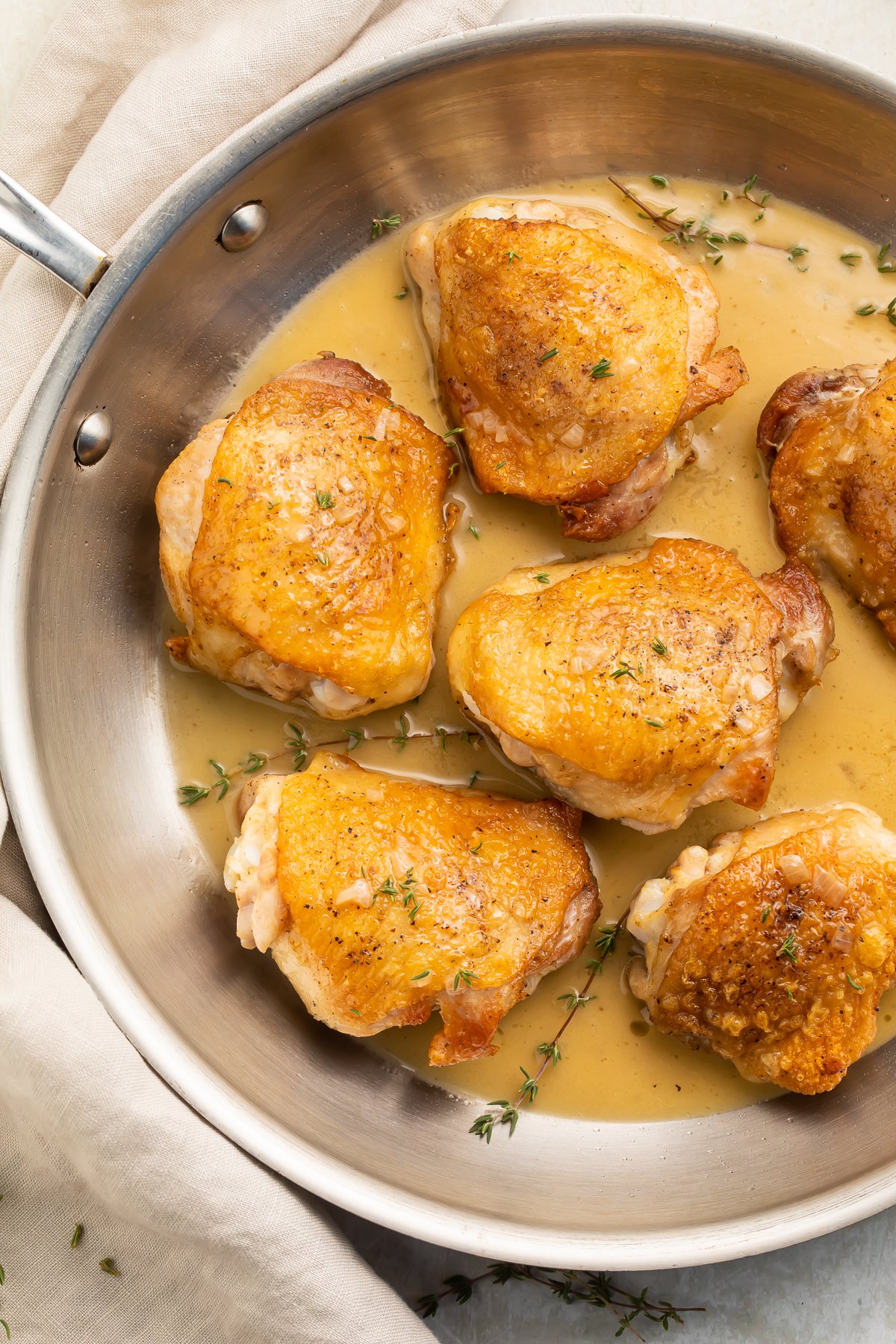
Credit: 40aprons.com
Frequently Asked Questions
How Do I Prevent Chicken Thighs From Sticking To The Pan?
Use enough oil and make sure the pan is hot before adding chicken. Don’t move the thighs until the skin forms a crust. Cast iron or stainless steel pans work best. If you use nonstick, the skin may not crisp as well.
Can I Use Frozen Chicken Thighs For Pan Frying?
Yes, but thaw them completely first. Frozen chicken releases water, making it hard to get crispy skin and even cooking. Thaw in the fridge overnight for best results.
What Oil Is Best For Pan Frying Chicken Thighs?
Choose oils with a high smoke point like vegetable oil, canola oil, or peanut oil. Olive oil works for lower heat, but can burn if overheated. Avoid butter alone, as it burns quickly.
How Do I Know When Chicken Thighs Are Fully Cooked?
Use an instant-read thermometer. Insert into the thickest part. The safe internal temperature is 165°F (74°C). If you don’t have a thermometer, slice into the thigh—juices should run clear, and there should be no pink inside.
What Should I Do With Leftover Pan Fried Chicken Thighs?
Store in an airtight container in the fridge for up to 4 days. Reheat in a skillet or oven to keep skin crispy. Leftovers can be added to salads, wraps, or rice dishes.
Pan frying chicken thighs is a skill worth mastering. It offers a balance of flavor, texture, and simplicity. With the right steps, equipment, and safety, you can make restaurant-quality chicken at home. Remember to adjust seasoning and cooking times to your taste.
Try different flavor profiles and serving styles. Practice and attention to detail make all the difference. Enjoy your cooking journey!

Hello, This is Annie Walker, a 38-year-old blogger, founder, and editor of Cookware Guider from NY, USA. I am a cookware fanatic and passionate cooker. I love to cook with different types of cooking appliances (example: all types of cookware, rice cookers, slow cookers, etc) almost every day in my kitchen. I love to share my experience with my readers in my blog. Also, I enjoy helping people to solve their problems through my website. You can follow me on Twitter & Pinterest. To know details about my blog please check the about us page.