
Is An Electric Knife Sharpener Good?
If you cook at home or work in a kitchen, you know how important sharp knives are. A dull knife makes cutting hard and unsafe. Many people use manual sharpeners or stones, but these take time and skill. Today, electric knife sharpeners promise quick, easy sharpening for everyone. But are they really good? Do they work well for all knives? Are there hidden drawbacks? Let’s look closely at electric knife sharpeners, their benefits, limits, and whether they suit your kitchen.
How Electric Knife Sharpeners Work
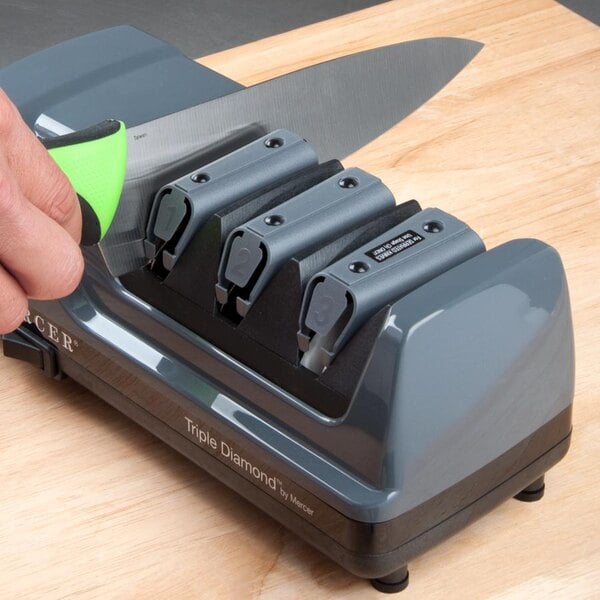
Electric knife sharpeners use motorized wheels or abrasive belts to sharpen the blade. You plug the device in, insert your knife, and the machine moves the blade against sharpening surfaces. Most models have different slots for coarse, medium, and fine sharpening. Some also polish the blade at the end.
The sharpening process is automatic. You don’t need to control the angle by hand—most sharpeners set the angle for you. This makes sharpening fast and simple, especially for beginners.
Common Features
- Multiple slots for different sharpening stages
- Preset angles for consistent results
- Abrasive materials like diamond, ceramic, or tungsten
- Safety guides to keep your fingers safe
Example: Chef’schoice 15 Trizor
This popular sharpener uses diamond abrasives and three slots. It sharpens, hones, and polishes in one device. The preset angle is 15 degrees, good for most kitchen knives.
Advantages Of Electric Knife Sharpeners
For many home cooks, electric knife sharpeners solve big problems. Let’s look at their main strengths.
Speed And Convenience
Electric sharpeners are fast. Most can sharpen a dull knife in less than two minutes. You don’t need special skills. Just insert your blade and let the machine work. This is much easier than learning to use a whetstone, which can take years to master.
Consistent Results
Manual sharpening often leads to uneven edges. Electric sharpeners use preset angles, so every knife gets a uniform edge. This gives you consistent sharpness every time.
Safety
The design protects your hands. You don’t touch the blade while sharpening, lowering the risk of cuts. For beginners or people with shaky hands, this is a big plus.
Versatility
Most electric sharpeners can handle various blade types:
- Straight-edge knives
- Serrated knives (some models)
- Scissors (rare models)
Example Data
A survey by Consumer Reports showed that 88% of users found electric sharpeners easier and faster than manual methods. Most rated their knives as “very sharp” after using these devices.
Limitations And Drawbacks
While electric knife sharpeners offer convenience, they have some downsides. Let’s look at the main concerns.
Limited Control Over Sharpening Angle
Many electric sharpeners use a fixed angle (often 15 or 20 degrees). If you have specialty knives (like Japanese knives with 12-degree edges), the preset angle may not match. This can change the blade’s shape over time.
Potential To Remove Too Much Metal
Electric sharpeners are powerful. They can remove more metal than needed, especially if you use the coarse slot too often. This may shorten the life of your knives.
Not Ideal For All Knife Types
Some sharpeners cannot handle ceramic knives or thick blades. Others struggle with serrated edges. Always check the device specs before buying.
Noise And Maintenance
Electric sharpeners can be noisy. They also need cleaning—metal shavings and dust build up inside. If you ignore maintenance, the device may break or lose efficiency.
Example Table: Common Problems
| Issue | Impact | Who Should Care? |
|---|---|---|
| Fixed angle | Not for specialty knives | Chefs, collectors |
| Metal removal | Shorter knife lifespan | Frequent users |
| Noise | Unpleasant in quiet homes | Families, apartments |
| Maintenance | Device can clog or break | Busy kitchens |
Comparing Electric And Manual Knife Sharpeners
To understand if an electric sharpener is good for you, it helps to compare it with manual options.
Manual Sharpeners
Manual sharpeners include whetstones, pull-through devices, and rod sharpeners. They give more control but require practice. Stones let you set any angle and sharpen almost any blade type. They are quiet and portable.
Electric Sharpeners
Electric models trade skill for speed. They are good for beginners or busy kitchens. However, you lose control over angle and sharpening style.
Example Table: Electric Vs Manual Sharpeners
| Feature | Electric Sharpener | Manual Sharpener |
|---|---|---|
| Ease of use | Very easy | Needs skill |
| Speed | Fast (1-2 min) | Slow (5-15 min) |
| Angle control | Preset only | Customizable |
| Versatility | Some limitations | All blade types |
| Noise | Loud | Silent |
| Maintenance | Needs cleaning | Minimal |
Credit: www.webstaurantstore.com
What Knives Work Best With Electric Sharpeners?
Electric sharpeners are not one-size-fits-all. Here’s which knives do well:
Standard Kitchen Knives
Most stainless steel chef’s knives, paring knives, and utility knives work well. The preset angle matches these blades, and the device sharpens quickly.
Some Serrated Knives
Certain models can sharpen serrated knives, but only the tips. Deep serrations may need a special tool.
Avoid With:
- Ceramic knives (most electric sharpeners cannot handle them)
- Specialty Japanese knives (angle may not match)
- Old or thin blades (risk of too much metal removal)
Practical Example
If you own a set of common kitchen knives (like those from Cuisinart or Victorinox), an electric sharpener will keep them sharp with little effort. If your collection includes a Shun Classic or Global chef’s knife, manual sharpening may be better.
Buying Guide: Choosing A Good Electric Knife Sharpener
Before you buy, consider these factors to pick the right sharpener for your needs.
1. Sharpening Angle
Check if the device offers multiple angles. If you have both Western and Japanese knives, look for a model with adjustable settings.
2. Abrasive Material
Diamond abrasives are strong and last long. Ceramic is gentler but may not sharpen very dull blades. Tungsten is common in budget models.
3. Number Of Slots
More slots mean a more complete sharpening process. Three-stage sharpeners (coarse, medium, fine) give the best results.
4. Compatibility
Make sure the sharpener can handle your knife types. Some models list specific blade styles or exclude ceramic and serrated knives.
5. Price And Warranty
Electric sharpeners range from $40 to $200. Higher-priced models offer more features and better build quality. Look for a warranty—it shows the manufacturer’s confidence.
Common Buyer Mistakes
- Choosing a device without checking compatibility
- Using coarse slots too often, wearing out knives
- Ignoring maintenance and cleaning
- Expecting a sharpener to fix damaged blades (most only sharpen, not repair)
:max_bytes(150000):strip_icc()/faw-knife-sharpeners-2-test-chefs-choice-rechargeable-angleselect-electric-nsimpson-131-6a35e76677c7454e9c2d635affb14a90.jpeg)
Credit: www.foodandwine.com
Real-world Performance: Data And Reviews
Most home cooks rate electric sharpeners highly for speed and convenience. Let’s look at some numbers and real experiences.
User Satisfaction
- Consumer Reports found that 7 out of 10 users prefer electric sharpeners for routine sharpening.
- On Amazon, the Chef’sChoice 15 Trizor has over 4,000 reviews, with an average rating of 4.7/5.
Performance Data
A test by Cook’s Illustrated showed that electric sharpeners restored a dull chef’s knife to 90% of original sharpness in under two minutes. Manual stones took 10-15 minutes for similar results.
Example Table: Real-world Data
| Sharpener Model | Average User Rating | Sharpening Time (min) | Knife Edge Retention |
|---|---|---|---|
| Chef’sChoice 15 Trizor | 4.7/5 | 2 | Excellent |
| Work Sharp E5 | 4.5/5 | 1.5 | Good |
| Presto EverSharp | 4.3/5 | 2 | Moderate |
Non-obvious Insights
- Many users don’t realize that sharpening too often can wear out knives quickly. Electric sharpeners make it easy to sharpen more than needed—use only when truly dull.
- Most electric sharpeners cannot fix chips or broken tips. For those repairs, manual stones or professional sharpening are needed.
Practical Tips For Using Electric Knife Sharpeners
To get the best results and protect your knives, follow these practical tips:
1. Use The Right Slot
Start with the coarse slot only if your knife is very dull. For regular maintenance, use the medium or fine slot.
2. Clean After Each Use
Metal dust builds up in the device. Wipe the slots and empty the tray after every sharpening.
3. Don’t Over-sharpen
Check your knife before sharpening. If it still cuts well, wait. Over-sharpening removes metal and shortens blade life.
4. Keep The Blade Straight
When inserting the knife, hold it straight and steady. If you twist or tilt, the edge may come out uneven.
5. Avoid Wet Blades
Make sure your knife is dry before sharpening. Water can damage the abrasive wheels and cause rust.
Electric Sharpeners For Professional Kitchens
In busy restaurants, speed matters. Many chefs use electric sharpeners to keep knives ready during service. However, professionals often pair electric sharpening with manual honing (using a steel rod) to maintain the edge longer.
A chef in a fast-paced diner may sharpen 10-20 knives daily. Electric sharpeners help save time, but for expensive knives, manual methods are often preferred to preserve blade quality.
Real Example
At Joe’s Steakhouse in New York, cooks use electric sharpeners before each shift. For their high-end Japanese knives, they use whetstones on weekends. This mix keeps both speed and blade health.
Are Electric Knife Sharpeners Good For Beginners?
For people new to cooking or knife maintenance, electric sharpeners are often the best choice. You get sharp knives without learning complex sharpening skills. This makes cooking safer and easier.
However, beginners should read instructions carefully and avoid sharpening too often. It’s also wise to check if their knives match the sharpener’s angle and compatibility.
Credit: chefschoice.com
Environmental And Longevity Considerations
Electric sharpeners use power and have moving parts. Over time, they may break or need replacement. Manual stones last longer and create less waste. If you care about sustainability, this is worth thinking about.
Non-obvious Insight
Most people forget that the abrasive wheels inside electric sharpeners wear out. Replacing them can be costly or difficult. Always check if spare parts are available before buying.
Electric Knife Sharpeners Vs Professional Sharpening Services
Some people use professional sharpening services. These experts use advanced tools and can fix damaged blades. Services cost $5–$10 per knife and often take several days.
Electric sharpeners are much cheaper over time and faster. For routine sharpening, they are more convenient. But for major repairs or specialty knives, professionals are best.
Summary: Who Should Use Electric Knife Sharpeners?
Electric knife sharpeners are:
- Great for home cooks who want quick, easy sharpening
- Good for busy kitchens needing speed
- Useful for beginners who lack sharpening skills
They are not ideal for collectors, people with specialty knives, or those who want maximum control. If you have expensive Japanese blades or ceramic knives, manual sharpening is safer.
For most standard kitchen knives, electric sharpeners offer a practical, effective solution. They keep blades sharp, reduce risk, and save time. Just follow usage tips and avoid over-sharpening.
Frequently Asked Questions
What Knives Can I Sharpen With An Electric Knife Sharpener?
Most stainless steel kitchen knives—chef’s knives, paring knives, and utility knives—work well. Some models can sharpen serrated knives but not ceramic or specialty Japanese knives. Always check the device specs.
Can Electric Sharpeners Damage My Knives?
If used too often or incorrectly, electric sharpeners can remove too much metal and shorten knife lifespan. Use only when knives are dull and follow the instructions for slot selection.
Are Electric Sharpeners Better Than Manual Methods?
They are faster and easier but give less control. Manual methods allow you to set any angle and handle all blade types. Electric sharpeners suit most standard kitchen knives and busy cooks.
How Often Should I Sharpen My Knives With An Electric Sharpener?
Sharpen only when knives feel dull or struggle to cut. For most home cooks, sharpening every 2–3 months is enough. Over-sharpening wears out blades quickly.
Where Can I Learn More About Knife Sharpening?
You can find detailed guides and comparisons at Wikipedia, which covers manual and electric methods, sharpening angles, and blade types.
Sharp knives make cooking safer and easier. Electric knife sharpeners are good for many kitchens, offering speed and convenience. Choose the right model, use it wisely, and your knives will stay ready for every meal.

Hello, This is Annie Walker, a 38-year-old blogger, founder, and editor of Cookware Guider from NY, USA. I am a cookware fanatic and passionate cooker. I love to cook with different types of cooking appliances (example: all types of cookware, rice cookers, slow cookers, etc) almost every day in my kitchen. I love to share my experience with my readers in my blog. Also, I enjoy helping people to solve their problems through my website. You can follow me on Twitter & Pinterest. To know details about my blog please check the about us page.