
If you work with knives often, you know how important a sharp blade is. Dull knives are frustrating and unsafe. You may have seen the Milwaukee Knife Sharpener Honing Rod and wondered: does it hone all the way around, or is it just a flat rod? Understanding how this tool works and how it compares to others can help you make the right choice for your kitchen, workshop, or job site.
What Is The Milwaukee Knife Sharpener Honing Rod?
The Milwaukee Knife Sharpener Honing Rod is a tool designed to keep knives sharp and safe. It’s made by Milwaukee, a brand known for durable tools. This honing rod is usually made from ceramic or steel and is used to realign the blade edge rather than remove metal like a sharpener.
Honing rods are sometimes called sharpening rods, but they do not actually sharpen a dull knife. Instead, they straighten the edge. The Milwaukee rod is shaped like a cylinder and, according to most product descriptions, features a 360-degree surface for honing. This means you can run your knife along any part of the rod, not just a flat or partial area.
Features Of The Milwaukee Honing Rod
- Full-round design: The rod is cylindrical, not flat.
- Durable materials: Usually steel or ceramic.
- Comfortable handle: Milwaukee rods have an ergonomic handle for a secure grip.
- Hanging loop: Easy storage.
These features make it a versatile choice for both professionals and home cooks.
How Does A Honing Rod Work?
A honing rod works by realigning the knife edge. When you cut, the knife’s edge gets bent or rolled. Even if it feels sharp, the edge is no longer straight. Honing rods fix this problem.
To use a honing rod:
- Hold the rod vertical, tip resting on a cutting board.
- Hold the knife at a 15–20 degree angle to the rod.
- Swipe the blade down and across the rod, alternating sides.
- Repeat 5–10 times per side.
With a 360-degree rod like Milwaukee’s, you can use the whole surface. This makes the process easier and faster.
Honing Vs. Sharpening
Many beginners confuse honing and sharpening. Honing keeps a knife sharp by realigning the edge. Sharpening removes metal to create a new edge. Use a honing rod often; sharpen only when the knife is truly dull.
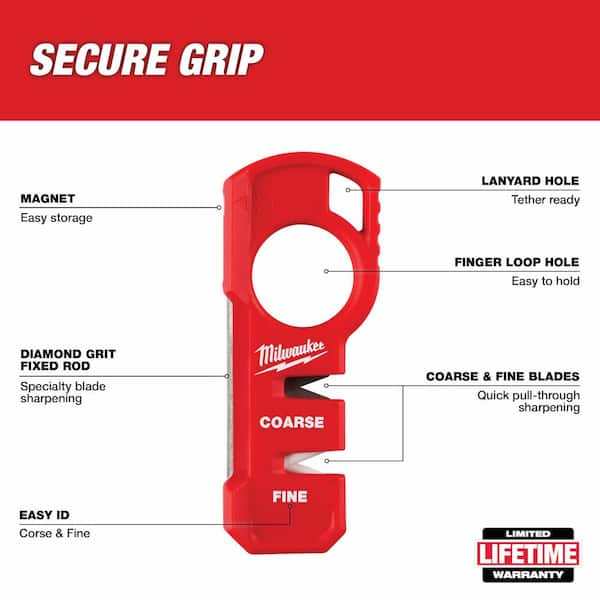
Credit: www.homedepot.com
Is The Milwaukee Honing Rod All The Way Around?
The main question: is the Milwaukee rod fully round or does it have flat sides? Most Milwaukee honing rods are cylindrical, offering a full 360-degree honing surface. This design is especially useful for:
- Consistent honing: No need to find a flat or specific spot.
- Longer lifespan: Wear is distributed across the entire rod.
- Versatility: Works for all knife sizes.
Some other brands offer flat or oval rods, but Milwaukee’s is designed for full-round honing.
Why Full-round Matters
A full-round rod gives you more control. You can hone at any angle, and the blade gets even contact with the rod. Flat rods limit your movements and can wear unevenly. Milwaukee’s design is meant for quick, efficient honing.
Comparing Milwaukee Honing Rod To Other Brands
Let’s see how Milwaukee’s 360-degree rod compares to other popular honing rods.
| Brand | Rod Shape | Material | Honing Surface | Handle Comfort |
|---|---|---|---|---|
| Milwaukee | Full-round | Steel/Ceramic | 360-degree | Ergonomic |
| Wüsthof | Round/Oval | Steel | Partial/Full | Ergonomic |
| Victorinox | Round | Steel | 360-degree | Standard |
| Henckels | Flat/Oval | Steel/Ceramic | Partial | Standard |
Milwaukee stands out for its full-round, 360-degree surface. This is not always true for other brands, especially budget options.
Rod Diameter And Length
Another important factor is rod size. Milwaukee rods are usually 10–12 inches long, which works for most kitchen knives.
| Brand | Length (inches) | Diameter (mm) | Best Use |
|---|---|---|---|
| Milwaukee | 10–12 | 12–15 | Kitchen/Workshop |
| Victorinox | 10 | 13 | Kitchen |
| Wüsthof | 10–12 | 15 | Professional |
| Henckels | 9–12 | 13 | Kitchen |
For most users, a 10-inch rod is ideal. It’s long enough for chef knives, but not too big for smaller blades.
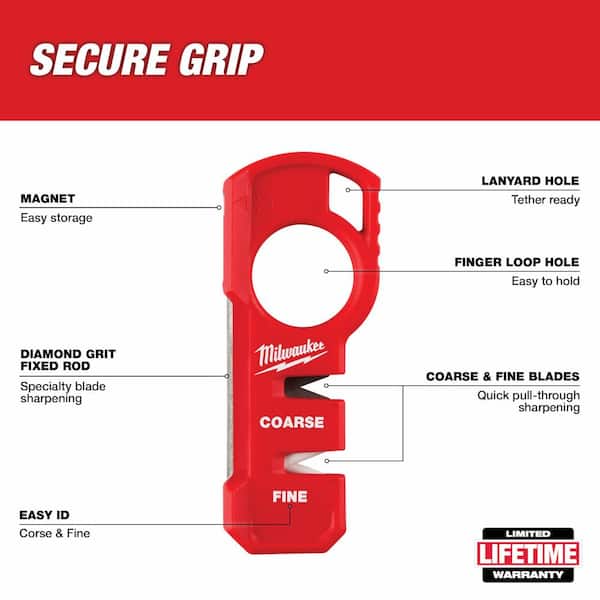
Credit: www.homedepot.com
Practical Benefits Of Milwaukee’s Full-round Honing Rod
1. Easier To Use
With a 360-degree rod, you don’t have to worry about positioning. Just swipe your knife along any part of the rod. This is helpful for beginners who may struggle to keep the blade at the right angle.
2. Even Wear And Longer Life
A rod that is honed on all sides wears more slowly. You’re not just using one flat area, so the rod lasts longer and stays effective.
3. Works For Different Knife Types
Milwaukee’s rod can handle chef knives, utility knives, workshop blades, and even scissors. The full-round surface adapts to different blade shapes.
4. Consistent Results
Since the rod is uniform all the way around, you get even edge alignment. This means better results every time you hone.
Common Mistakes When Using Honing Rods
Many people make mistakes when using honing rods. Here are some to avoid:
- Wrong angle: Too steep or too flat will not hone the edge.
- Too much pressure: Pressing hard can damage the blade.
- Not alternating sides: Always hone both sides equally.
- Using on dull knives: Honing rods are for maintenance, not sharpening.
Beginners often think more pressure means better results. Actually, gentle strokes are best. Also, some users only hone one side, which causes uneven blades.
How To Care For Your Milwaukee Honing Rod
To keep your honing rod in good condition:
- Clean after use: Wipe with a damp cloth. For steel rods, use mild soap.
- Avoid dropping: Ceramic rods can break if dropped.
- Store properly: Use the hanging loop or keep in a drawer.
- Check for wear: Replace if the surface becomes smooth.
If you use your rod often, clean it weekly. Metal particles can build up and reduce effectiveness.
Real-world Example: Chef’s Experience
Chef Maria works in a busy restaurant. She uses the Milwaukee Honing Rod every morning. Her knives stay sharp, and she saves time because the rod is fully round. She says, “I don’t need to find the right spot. I just hone and go. My knives last longer, and I feel safer.”
This example shows the practical value of a full-round honing rod for professionals and home cooks.

Credit: store.themeateater.com
How Often Should You Hone Your Knife?
Honing frequency depends on how much you use your knife:
- Daily use: Hone every few days.
- Weekly use: Hone once a week.
- Professional chefs: Hone daily.
Remember, honing is quick—just a minute per knife. Regular honing keeps blades sharp and reduces the need for sharpening.
Are There Downsides To Full-round Rods?
While full-round rods are convenient, there are some minor drawbacks:
- Storage: Cylindrical rods take up more space than flat ones.
- Weight: Some users find round rods heavier.
- Learning curve: Beginners may need practice to find the correct angle.
However, these issues are small compared to the benefits of a 360-degree honing surface.
Choosing The Right Honing Rod
When picking a honing rod, consider these factors:
- Material: Steel is durable; ceramic is gentler.
- Length: 10–12 inches is best for most knives.
- Shape: Full-round rods are more versatile.
- Handle comfort: Look for ergonomic design.
- Brand reputation: Milwaukee is trusted for quality.
Avoid rods that are too short (under 8 inches) or too thin. They don’t provide enough surface for safe honing.
Useful Data: Knife Edge Longevity With Regular Honing
Studies show that regular honing can double the lifespan of a knife edge. For example, a chef’s knife used daily without honing may need sharpening every month. With daily honing, sharpening may only be needed every 3–6 months.
| Frequency | Time Between Sharpenings | Edge Longevity |
|---|---|---|
| No honing | 1 month | Short |
| Weekly honing | 3 months | Medium |
| Daily honing | 6 months | Long |
This data shows the practical advantage of regular honing with a full-round rod like Milwaukee’s.
Non-obvious Insights For Beginners
- A honing rod does not sharpen. Many think it makes dull knives sharp, but it only realigns the edge. You still need a sharpener for truly blunt blades.
- The rod’s material matters. Ceramic rods are gentler and keep high-end blades sharper longer, while steel rods are tougher but can be too harsh for softer knives.
- 360-degree rods can handle serrated knives. By carefully running the serrated edge along the rod, you can improve performance. Flat rods can’t do this as easily.
These points can help you get the most from your Milwaukee Knife Sharpener Honing Rod.
Additional Resources
If you want more details about knife care and honing, you can check out this Wikipedia article on honing steels. It covers the science behind honing and sharpening.
Frequently Asked Questions
What Is The Difference Between Honing And Sharpening?
Honing realigns the blade’s edge, keeping it sharp between sharpenings. Sharpening removes metal to create a new edge. Use a honing rod regularly, but sharpen only when the knife is truly dull.
Can I Use The Milwaukee Honing Rod For Scissors And Tools?
Yes. The Milwaukee rod works for scissors, utility knives, and workshop blades. The full-round design allows you to hone different edge shapes safely.
How Do I Know If My Knife Needs Honing Or Sharpening?
If your knife feels dull but still cuts, try honing. If honing doesn’t help, you need to sharpen. Honing is for maintenance; sharpening is for restoration.
Is The Milwaukee Rod Safe For High-end Knives?
Yes. Milwaukee’s ceramic and steel rods are safe for most knife types. If you have very soft or specialty steel knives, consider a ceramic rod for gentler honing.
How Do I Clean The Milwaukee Honing Rod?
After each use, wipe the rod with a damp cloth. For steel rods, use mild soap if needed. Avoid soaking or harsh chemicals. Clean regularly to remove metal residue.
Keeping your knives sharp is not just about cutting well—it’s about safety and efficiency. The Milwaukee Knife Sharpener Honing Rod is fully round, offering all-around honing and making maintenance simple. Whether you are a chef, home cook, or worker, this tool can help you keep your blades performing their best. With the right technique and care, your knives will stay sharp and reliable for years.

Hello, This is Annie Walker, a 38-year-old blogger, founder, and editor of Cookware Guider from NY, USA. I am a cookware fanatic and passionate cooker. I love to cook with different types of cooking appliances (example: all types of cookware, rice cookers, slow cookers, etc) almost every day in my kitchen. I love to share my experience with my readers in my blog. Also, I enjoy helping people to solve their problems through my website. You can follow me on Twitter & Pinterest. To know details about my blog please check the about us page.