
Cooking scallops at home can feel intimidating, but with the right guidance, anyone can pan fry scallops to golden perfection. Scallops are a delicate seafood prized for their sweet flavor and tender texture. When cooked well, they offer a restaurant-quality experience in your own kitchen.
Whether you’re new to seafood or searching for a foolproof technique, this article will show you exactly how to pan fry scallops, step by step. You’ll learn what makes scallops special, how to choose the best ones, and practical tips for achieving a crisp crust and juicy center.
Along the way, you’ll discover common mistakes, expert tricks, and how to serve scallops for maximum flavor. Let’s get started and turn those scallops into your next dinner star.
What Makes Scallops Unique
Scallops are a type of shellfish found in oceans worldwide. The part we eat is the adductor muscle, which helps the scallop swim. This muscle is tender, slightly sweet, and cooks quickly. There are two main types: sea scallops and bay scallops. Sea scallops are larger and better for pan frying, while bay scallops are smaller and often used in soups or salads.
Scallops are also a healthy choice. A 3-ounce serving contains about 94 calories and 17 grams of protein, with very little fat. They are rich in vitamin B12, magnesium, and omega-3 fatty acids. Because scallops cook so fast, they are perfect for busy nights and special occasions alike.
Choosing And Preparing Scallops
Success starts with picking the right scallops. Not all scallops are equal, and understanding the differences helps ensure the best results in your pan.
Types Of Scallops
- Wet scallops: Treated with a chemical solution to preserve freshness. This can affect texture and taste, making them harder to sear.
- Dry scallops: Untreated and natural. They caramelize better and have a cleaner flavor.
Whenever possible, buy dry scallops for pan frying. If you are unsure, ask your fishmonger. Dry scallops might cost more, but the taste and texture are noticeably better.
Fresh Vs. Frozen
Both fresh and frozen scallops can work. Fresh scallops should smell clean—not fishy—and be firm to the touch. Frozen scallops are often flash-frozen at sea, locking in freshness. If using frozen, thaw them in the refrigerator overnight, never in the microwave.
Cleaning And Prepping
Even dry scallops need a little prep before cooking:
- Remove the side muscle: This small, tough piece can ruin the texture. Simply peel it off; it comes away easily.
- Pat dry thoroughly: Moisture prevents browning. Use paper towels to blot each scallop.
- Season simply: A pinch of salt and pepper is enough. Some cooks add a tiny bit of sugar to boost caramelization, but it’s optional.
Essential Ingredients And Tools
You only need a few basic ingredients and tools to pan fry scallops well. Keeping things simple lets the natural flavor shine.
Ingredients
- 1 pound of dry sea scallops (about 12 large scallops)
- 1 tablespoon oil (canola, grapeseed, or vegetable)
- 1 tablespoon unsalted butter
- Salt and pepper
Optional extras:
- Lemon wedges for serving
- Fresh herbs (parsley, chives, dill)
- Garlic or shallots
Tools
- Heavy-duty skillet (cast iron or stainless steel preferred)
- Spatula or tongs
- Paper towels
- Plate or tray for resting scallops
Some people use nonstick pans, but these often don’t create as crisp a crust. Cast iron or stainless steel pans reach higher temperatures and help with browning.
Step-by-step Guide: How To Pan Fry Scallops
Pan frying scallops is quick—most of the work is in the prep. Here’s how to do it, from start to finish.
Step 1: Prep Scallops
- Remove any side muscle.
- Pat scallops dry with paper towels.
- Season with salt and pepper on both sides.
Step 2: Heat The Pan
- Place your skillet over medium-high heat.
- Add oil and let it heat until shimmering. This usually takes 1–2 minutes.
Step 3: Sear The Scallops
- Add scallops to the pan, spaced apart. Overcrowding cools the pan and prevents browning.
- Cook for 1.5–2 minutes without moving. The bottom should turn deep golden brown.
Step 4: Flip And Finish
- Turn scallops over gently.
- Add butter and let it melt.
- Cook for another 1–1.5 minutes. Baste scallops with the melted butter for extra flavor.
Step 5: Remove And Rest
- Transfer scallops to a plate. Let them rest for 1 minute before serving.
- Serve with lemon wedges and herbs if desired.
Cooking Time And Doneness
Scallops cook fast. Total cooking time is 3–4 minutes. Overcooking makes them tough and rubbery. The center should be slightly translucent—think of it like medium-rare beef. If unsure, slice one open; it should be moist, not dry.
Why Pan Frying Works So Well
Pan frying is the best method for scallops because it creates a crispy crust while keeping the inside soft. The high heat caramelizes natural sugars and proteins, giving a sweet, savory flavor. Unlike boiling or steaming, pan frying concentrates the taste.
Here’s a quick comparison of cooking methods:
| Method | Texture | Flavor | Cooking Time |
|---|---|---|---|
| Pan Frying | Crispy outside, tender inside | Rich, caramelized | 3–4 min |
| Steaming | Soft throughout | Mild, less intense | 4–6 min |
| Boiling | Rubbery | Watery, bland | 3–5 min |
| Baking | Dry, sometimes chewy | Subtle, depends on seasoning | 10–12 min |
As you can see, pan frying is ideal for both texture and flavor.
Common Mistakes When Pan Frying Scallops
Even experienced cooks make errors with scallops. Avoiding these mistakes helps ensure perfect results.
- Not drying scallops enough: Moisture prevents browning and leads to steaming.
- Overcrowding the pan: Too many scallops lower the heat and cause soggy results.
- Overcooking: Scallops turn rubbery quickly. Stick to the recommended times.
- Using low heat: Scallops need a hot pan for caramelization.
- Moving scallops too soon: Let them sit undisturbed to develop a crust.
- Cooking wet scallops: If you only have wet scallops, pat them extra dry and expect less browning.
- Skipping the side muscle removal: This small step makes a big difference in texture.
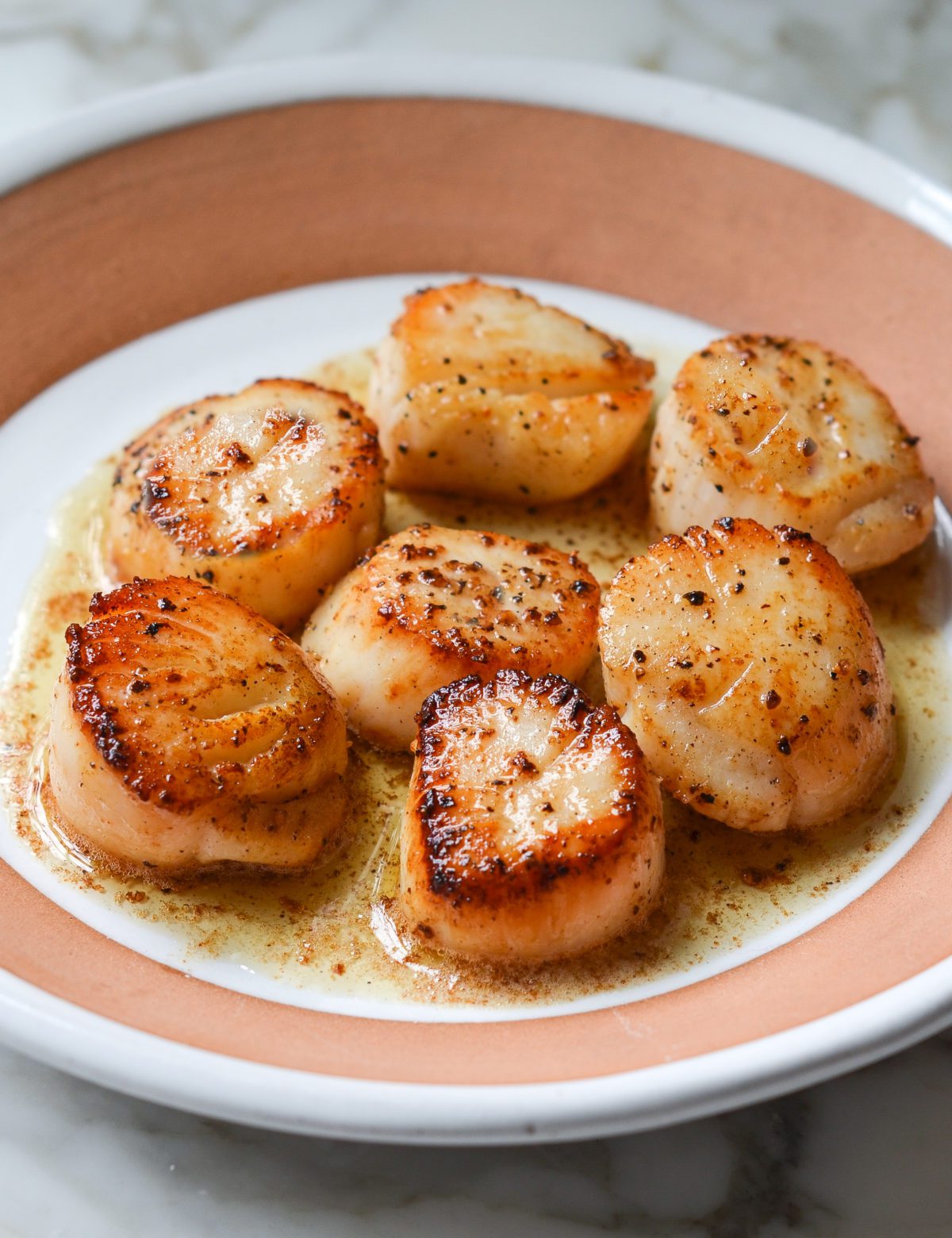
Credit: www.onceuponachef.com
Expert Tips For Perfect Scallops
Professional chefs use tricks to make their scallops stand out. Here are some non-obvious insights:
- Preheat the skillet extra well: Wait until you see faint smoke from the oil before adding scallops. This ensures a hot surface.
- Use clarified butter: Regular butter can burn, but clarified butter resists browning and adds rich flavor.
- Baste with butter and aromatics: Add garlic, thyme, or parsley to the pan during the last minute. Spoon melted butter over scallops for extra taste.
- Let scallops rest: A short rest after cooking keeps them juicy.
- Serve immediately: Scallops lose texture fast. Plate them as soon as they’re done.
Serving Suggestions
Scallops are versatile. They pair well with many sides and sauces. Here are some ideas:
- Lemon butter sauce: Mix melted butter, lemon juice, and fresh herbs.
- Herb salad: Toss arugula, parsley, and chives with olive oil.
- Creamy risotto: The richness of risotto complements scallops.
- Roasted vegetables: Try asparagus, peas, or carrots.
- Simple mashed potatoes: A classic comfort side.
For extra presentation points, garnish with microgreens or a drizzle of balsamic reduction.
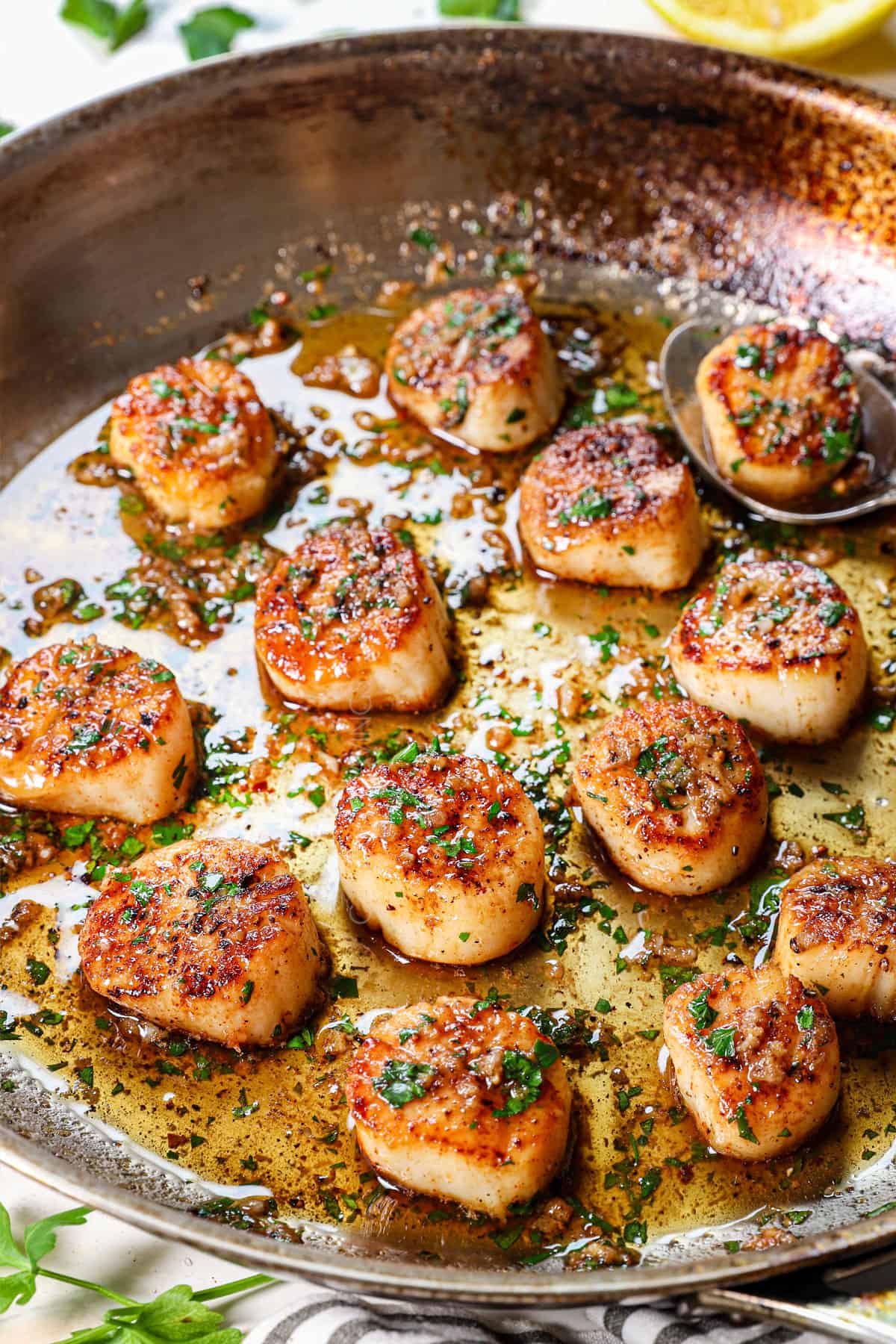
Credit: carlsbadcravings.com
Nutritional Benefits Of Scallops
Scallops are not just delicious—they are also healthy. Here’s a nutritional breakdown per 3-ounce serving:
| Nutrient | Amount | % Daily Value |
|---|---|---|
| Calories | 94 | 5% |
| Protein | 17g | 34% |
| Fat | 0.7g | 1% |
| Vitamin B12 | 1.4mcg | 58% |
| Magnesium | 30mg | 8% |
| Omega-3 | 220mg | – |
Scallops are low in cholesterol and sodium, making them heart-friendly. Their high protein content is ideal for muscle growth and repair.
Comparing Scallops With Other Seafood
How do scallops stack up against other popular seafood? Here’s a look:
| Seafood | Calories (per 3 oz) | Protein | Fat | Cooking Time |
|---|---|---|---|---|
| Scallops | 94 | 17g | 0.7g | 3–4 min |
| Shrimp | 84 | 18g | 0.5g | 2–3 min |
| Salmon | 175 | 19g | 10g | 6–8 min |
| Tilapia | 110 | 23g | 2g | 4–5 min |
Scallops are among the lowest in fat and calories, while offering a quick cook time and a special flavor.
Practical Advice For Buying Scallops
Buying scallops can be tricky. Here’s what matters:
- Ask for dry scallops: If buying from a fish market, always request dry scallops.
- Check freshness: Fresh scallops smell like the sea, not fishy or sour.
- Look for uniform size: Even-sized scallops cook evenly. Avoid mixed sizes.
- Frozen can be good: Don’t avoid frozen scallops—they are often fresher than “fresh” scallops sitting in a store.
One mistake beginners make is buying scallops labeled “wet. ” These often shrink during cooking and won’t brown well.
For more information on seafood buying, visit the Seafood Watch.
How To Store Scallops
Proper storage keeps scallops safe and tasty.
- Refrigerate fresh scallops: Use within 1–2 days.
- Store in a shallow dish: Cover with plastic wrap and place on ice in the fridge.
- Freeze for longer storage: Place scallops in a freezer-safe bag and use within 3 months.
- Do not refreeze thawed scallops: This harms texture and flavor.
If scallops smell sour or feel slimy, discard them.
Pan Fry Scallops: Recipe Summary
Here’s a concise recipe for quick reference:
- Remove side muscle and pat scallops dry.
- Season with salt and pepper.
- Heat oil in skillet over medium-high until shimmering.
- Add scallops, cook 1.5–2 minutes without moving.
- Flip, add butter, cook 1–1.5 minutes more.
- Rest for 1 minute, serve with lemon and herbs.
Makes: 2–3 Servings
Prep Time: 5 Minutes
Cook Time: 4 Minutes
Total Time: 9 Minutes
Frequently Asked Questions
How Do You Know When Scallops Are Done?
Scallops are ready when the outside is golden brown and the inside is slightly translucent. They should feel firm but not hard. Overcooked scallops become tough and dry.
Can You Use Frozen Scallops For Pan Frying?
Yes, frozen scallops work well if thawed properly. Thaw overnight in the fridge. Pat dry before cooking to ensure good browning.
What Oil Is Best For Pan Frying Scallops?
Use a high-smoke point oil like canola, grapeseed, or vegetable oil. Olive oil can burn at high heat, so avoid it for searing.
Why Do Scallops Sometimes Turn Out Rubbery?
Rubbery scallops are usually overcooked or cooked at low heat. Make sure your pan is hot and stick to the recommended cooking time.
Can You Add Flavors To Scallops While Pan Frying?
Yes. Add herbs, garlic, or lemon zest during the last minute of cooking. Don’t overload the pan or cover the scallops in sauce, as this prevents browning.
Pan frying scallops is a simple skill that brings big rewards. With the right technique, you can achieve restaurant-quality results at home. Remember to buy dry scallops, keep them dry, and use a hot pan. Avoid common mistakes, and serve your scallops fresh for best taste and texture.
Whether for a special meal or a quick weeknight dinner, pan fried scallops are always a treat worth mastering.

Credit: www.wellseasonedstudio.com

Hello, This is Annie Walker, a 38-year-old blogger, founder, and editor of Cookware Guider from NY, USA. I am a cookware fanatic and passionate cooker. I love to cook with different types of cooking appliances (example: all types of cookware, rice cookers, slow cookers, etc) almost every day in my kitchen. I love to share my experience with my readers in my blog. Also, I enjoy helping people to solve their problems through my website. You can follow me on Twitter & Pinterest. To know details about my blog please check the about us page.