
Juicy, flavorful, and quick to cook—pan-fried boneless chicken thighs are a favorite for many home cooks. But getting them just right depends on timing and technique. If you’ve ever wondered how long to pan fry boneless chicken thighs for perfect results, you’re not alone. Cooking times vary, but there are reliable ways to ensure your chicken is both safe and delicious. This guide will help you master pan frying boneless thighs, with clear steps, practical advice, and a few pro tips that most beginners overlook.
What Affects Pan Frying Time?
Pan frying boneless chicken thighs isn’t just about putting them in a hot pan and waiting. Several factors play a role in how long they need to cook:
- Thickness: Thicker thighs need more time than thin ones.
- Pan temperature: Medium-high heat is typical, but too hot can burn the outside before the inside cooks.
- Marinade or coating: Wet marinades can slow browning; flour or breadcrumb coatings may cook faster on the outside.
- Quantity: Cooking many pieces at once lowers pan heat, leading to longer cook times.
Most boneless chicken thighs are about 3/4 inch thick. If yours are thinner or thicker, adjust the cooking time as needed. For best results, cook in a single layer and avoid crowding.
Average Pan Fry Times For Boneless Chicken Thighs
Let’s get specific. Here’s the range you can expect:
- Thin thighs (½ inch): 4–5 minutes per side
- Average thighs (¾ inch): 6–8 minutes per side
- Thick thighs (1 inch): 9–11 minutes per side
The total time is usually 12–16 minutes for average thighs. But the real test is internal temperature.
| Thickness | Time per Side | Total Time |
|---|---|---|
| 1/2 inch | 4–5 min | 8–10 min |
| 3/4 inch | 6–8 min | 12–16 min |
| 1 inch | 9–11 min | 18–22 min |
How To Pan Fry Boneless Chicken Thighs: Step-by-step
The process is simple, but following each step ensures juicy, golden-brown results.
- Pat dry: Moisture causes steaming, not browning. Use paper towels to dry each thigh.
- Season well: Salt, pepper, and your favorite spices. Some chefs add garlic powder, paprika, or dried herbs.
- Preheat pan: Use a heavy skillet (cast iron or stainless steel). Heat to medium-high before adding oil.
- Add oil: 1–2 tablespoons of a neutral oil (like canola or avocado). Wait until shimmering.
- Place thighs in pan: Lay flat, not overlapping. Leave space between pieces.
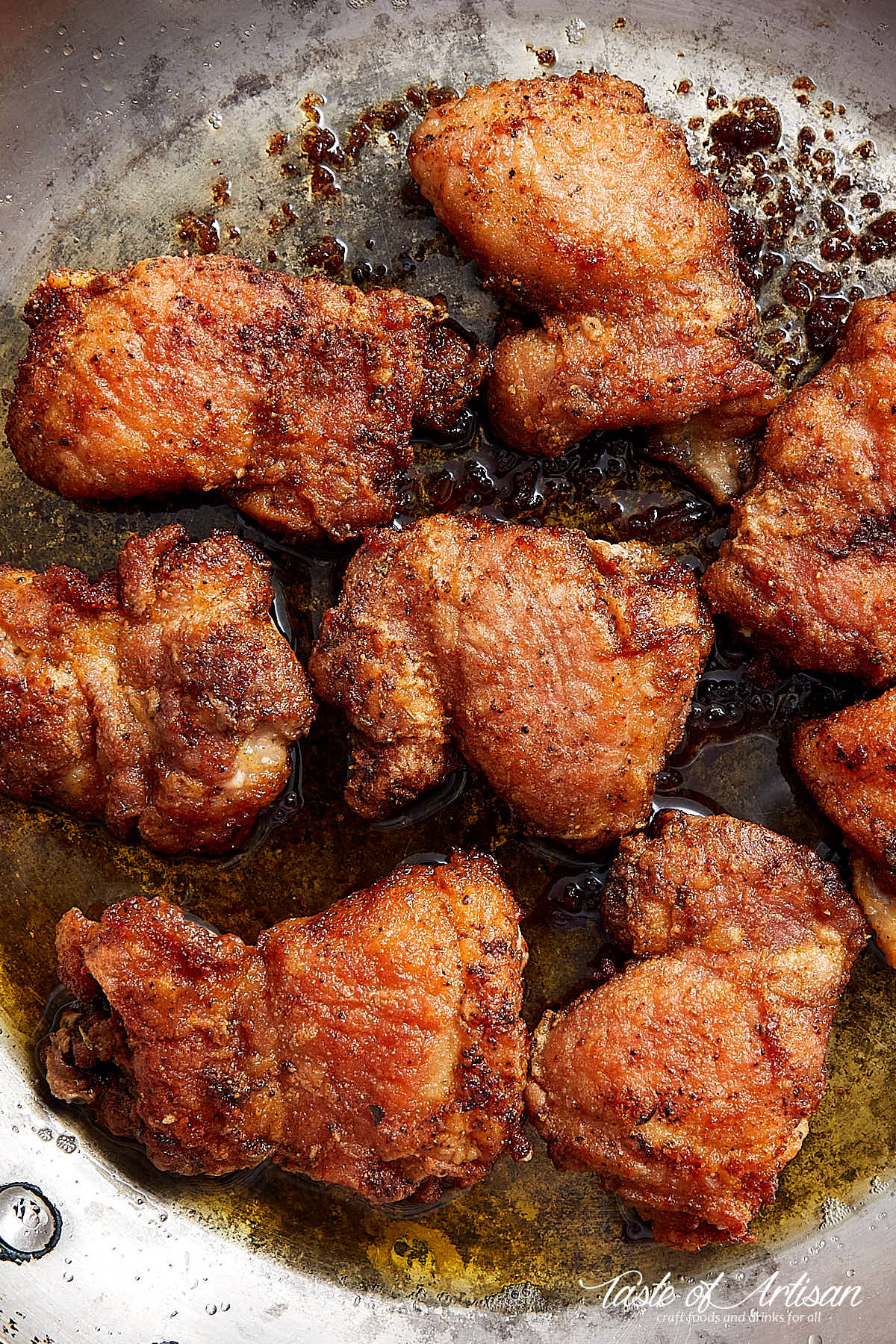
- Cook undisturbed: Let the first side cook for 6–8 minutes. Don’t move them—this builds a crisp crust.
- Flip and finish: Turn each thigh and cook another 6–8 minutes.
- Check doneness: Use a thermometer. USDA recommends 165°F for chicken. Insert in the thickest part.
- Rest: Let cooked thighs sit for 3–5 minutes before cutting. This locks in juices.
Example Cooking Sequence
Suppose you have four boneless thighs, each about ¾ inch thick.
- Preheat skillet for 2 minutes.
- Add oil and wait 30 seconds.
- Place thighs and cook 7 minutes on the first side.
- Flip and cook 7 more minutes.
- Test temperature; if below 165°F, cook another 1–2 minutes.
- Rest 3 minutes, then serve.
Choosing The Best Pan For Frying
The pan you use makes a big difference. Some pans heat unevenly or don’t allow for good browning.
| Pan Type | Heat Distribution | Browning Quality |
|---|---|---|
| Cast Iron | Excellent | Deep, crisp |
| Stainless Steel | Very good | Golden, even |
| Non-stick | Good | Mild, less crisp |
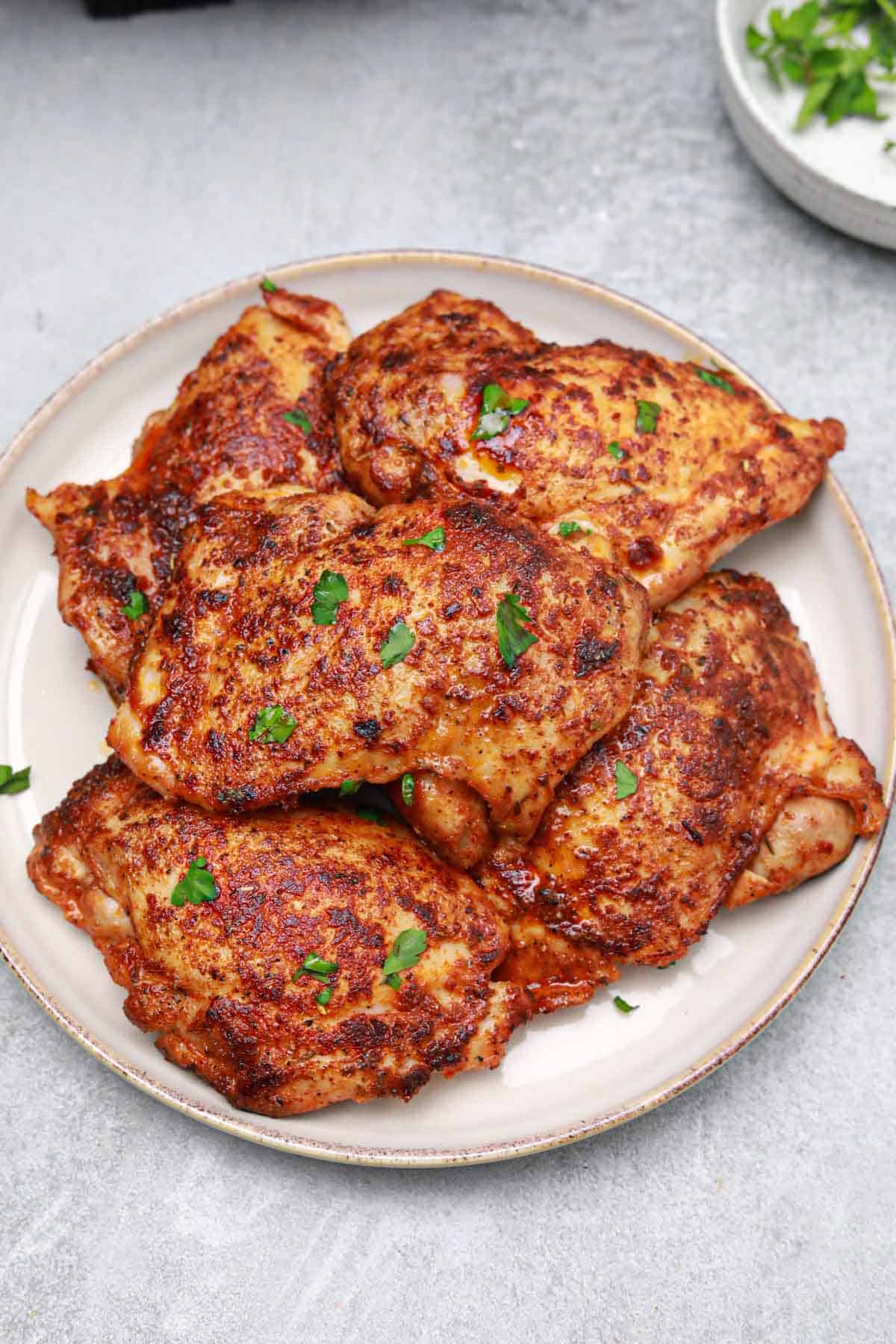
Cast iron is preferred for its high heat and ability to create a rich crust, but stainless steel works well too. Non-stick pans are easier for beginners but don’t always brown as deeply.
Credit: www.recipevibes.com
Oil Choices And Their Impact
Different oils affect cooking and flavor.
- Canola oil: Neutral, high smoke point, good for crispiness.
- Avocado oil: Very high smoke point, healthy, mild flavor.
- Olive oil: Lower smoke point, adds flavor but can burn if pan is too hot.
- Butter: Adds richness, but burns easily; best combined with oil.
For pan frying, choose oils with a smoke point above 400°F. This prevents burning and off flavors.
Checking Doneness: More Than Just Time
Timing is a guide, but temperature is the gold standard. Even experienced cooks sometimes guess, leading to dry or unsafe chicken.
Key steps to check doneness:
- Use an instant-read thermometer.
- Insert in the thickest part, avoiding bone (if any) and pan contact.
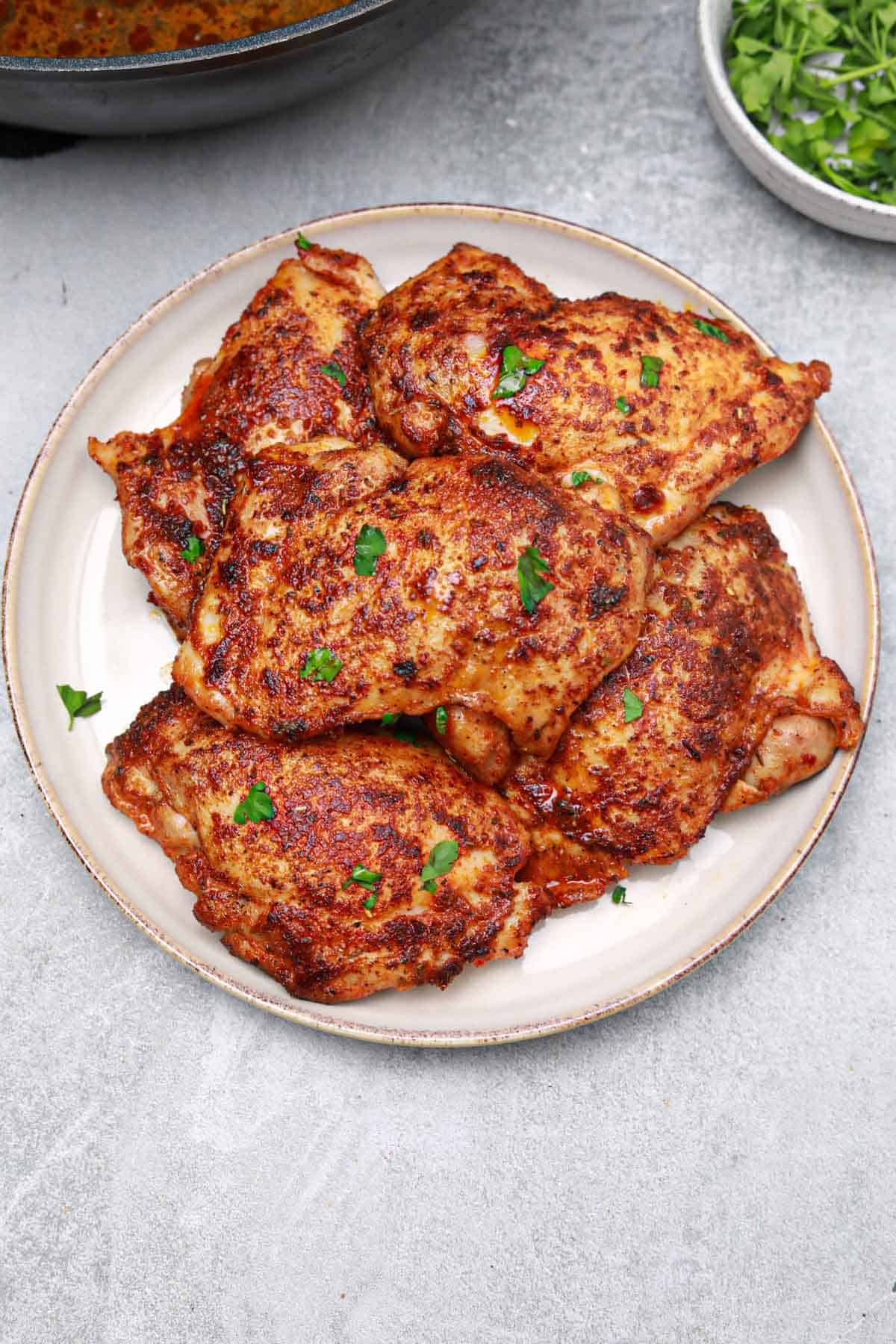
- Look for 165°F. If you don’t have a thermometer, cut into the center—juices should run clear, not pink.
Non-obvious tip: Some beginners forget to check all pieces. One thigh may cook faster than others, so test each one.
Credit: www.recipevibes.com
Common Mistakes When Pan Frying Chicken Thighs
Avoid these pitfalls for better results:
- Overcrowding the pan: Lowers pan temperature, leading to soggy thighs.
- Too much moisture: Wet chicken steams instead of browns.
- Not preheating the pan: Cold pans mean pale, uneven chicken.
- Skipping the rest: Cutting immediately loses juices.
- Guessing doneness: Always check temperature.
Another mistake: using only high heat. While it creates a crust, it can burn the outside before the center cooks. Medium-high is safer for most stoves.
Flavor Variations: Marinades And Rubs
Boneless chicken thighs taste great with simple seasoning, but marinades and rubs add extra depth.
- Simple rub: Mix salt, pepper, paprika, garlic powder.
- Asian-inspired marinade: Soy sauce, ginger, garlic, sesame oil.
- Herb marinade: Olive oil, lemon juice, rosemary, thyme.
Marinate for at least 30 minutes. For stronger flavor, marinate overnight in the fridge. Remember, wet marinades can slow browning, so pat dry before frying.
Comparing Boneless Vs Bone-in Chicken Thighs
Boneless thighs cook faster and more evenly than bone-in. Here’s a quick comparison:
| Type | Pan Fry Time | Texture | Ease of Cooking |
|---|---|---|---|
| Boneless | 12–16 min | Tender, easy to slice | Simple |
| Bone-in | 18–25 min | Juicier, more flavor | Needs more attention |
Bone-in thighs need extra time and careful temperature checks. If you prefer speed and convenience, boneless is your best bet.
Nutrition: Why Chicken Thighs Are Popular
Chicken thighs are rich in protein and B vitamins. They have more fat than breasts, leading to better flavor and moisture. A 3-ounce cooked thigh contains:
- Calories: 135–165
- Protein: 18–20 grams
- Fat: 7–9 grams
They’re also budget-friendly and forgiving—hard to overcook compared to chicken breast.
Practical Tips For Better Pan Frying
Here are extra insights to help you level up your chicken game:
- Bring thighs to room temperature before cooking for even results.
- Don’t use cold oil: Hot oil prevents sticking and helps browning.
- Clean pan between batches: Burnt bits can ruin flavor.
- Use a splatter guard: Keeps your stovetop cleaner.
Non-obvious tip: If you want ultra-crisp skin (for skin-on thighs), press gently with a spatula during the first few minutes.
Serving Ideas For Pan-fried Chicken Thighs
Once your chicken is cooked, it pairs well with many sides and sauces. Some favorites:
- Mashed potatoes and gravy
- Steamed rice with fresh herbs
- Roasted vegetables (carrots, broccoli, bell peppers)
- Salads with vinaigrette or creamy dressing
- Simple pan sauce: Deglaze pan with chicken broth and a splash of wine for a quick sauce
Slice or serve whole. For meal prep, let cool and store in airtight containers for up to 4 days.
Credit: cravingtasty.com
Safety: Handling And Storing Cooked Chicken
Handling chicken safely is important. Always wash hands and surfaces after touching raw chicken. Store leftovers in the fridge within 2 hours of cooking.
For reheating, use a microwave or oven. Heat to at least 165°F. Avoid reheating multiple times—this can dry out the meat and increase risk of foodborne illness.
For more details on food safety, check the USDA’s official guidance at USDA Food Safety.
Frequently Asked Questions
How Long To Pan Fry Boneless Chicken Thighs On Each Side?
For average-sized boneless chicken thighs (about ¾ inch thick), cook 6–8 minutes per side over medium-high heat. Thinner thighs need less time; thicker thighs need more. Always check internal temperature to ensure safety.
What Is The Best Oil For Pan Frying Chicken Thighs?
Canola oil and avocado oil are popular because they have high smoke points and neutral flavors. Olive oil adds taste but can burn if the pan is too hot. Butter is tasty but burns quickly, so mix it with oil if you want extra flavor.
How Do I Know When Boneless Chicken Thighs Are Done?
Use a thermometer to check for 165°F in the thickest part. If you don’t have a thermometer, cut into the center—juices should run clear, not pink, and the meat should be opaque.
Can I Pan Fry Frozen Boneless Chicken Thighs?
It’s best to thaw chicken before pan frying. Frozen thighs can cook unevenly and release extra moisture, making them less crispy. Thaw in the fridge overnight for safe results.
Why Are My Chicken Thighs Not Crispy?
Too much moisture or overcrowding the pan are common causes. Pat the chicken dry and cook in a single layer. Make sure the oil is hot enough before adding the chicken, and don’t move them until the crust forms.
Pan frying boneless chicken thighs is simple, but small details—like timing, pan choice, and temperature checks—make a big difference. With these tips, you’ll get juicy, golden, and safe-to-eat chicken every time. Enjoy experimenting with flavors, sides, and sauces to create meals that are fast, tasty, and satisfying.

Hello, This is Annie Walker, a 38-year-old blogger, founder, and editor of Cookware Guider from NY, USA. I am a cookware fanatic and passionate cooker. I love to cook with different types of cooking appliances (example: all types of cookware, rice cookers, slow cookers, etc) almost every day in my kitchen. I love to share my experience with my readers in my blog. Also, I enjoy helping people to solve their problems through my website. You can follow me on Twitter & Pinterest. To know details about my blog please check the about us page.