
A sharp knife makes cooking safer, easier, and more enjoyable. But many people struggle to keep their knives sharp at home. The Rada Knife Sharpener is a simple tool that promises quick results, even for beginners. If you want to know how to use it correctly, what makes it different, and how to avoid common mistakes, this guide will help you get the most from your Rada sharpener. Let’s explore every step and detail to sharpen your knives confidently.
What Is The Rada Knife Sharpener?
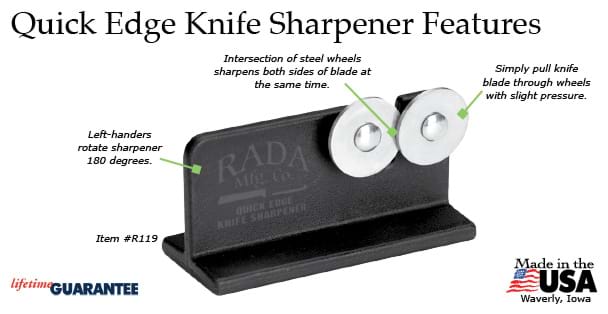
The Rada Knife Sharpener is a compact, manual device designed for home kitchens. It uses two industrial-grade wheels made of hardened steel. These wheels are set at a specific angle to sharpen blades quickly. Unlike many electric sharpeners or stones, the Rada sharpener works with a simple back-and-forth motion. It’s ideal for both stainless steel and carbon steel knives, making it a popular choice for home cooks and professionals.
Unique Features
- Small and lightweight: Easy to store or carry.
- Affordable: Costs much less than most electric sharpeners.
- No electricity needed: Works anywhere.
- Simple design: Minimal parts, easy to clean.
Why Choose Rada Over Other Sharpeners?
Many sharpeners can be confusing or expensive. The Rada Knife Sharpener stands out because:
- It requires no skill or setup.
- It sharpens knives in seconds.
- It fits easily in any kitchen drawer.
While it’s not designed for serrated knives or scissors, it’s highly effective for most standard kitchen knives.
Preparing Your Knife And Workspace
Before using the Rada Knife Sharpener, proper preparation ensures safety and better results. Here’s how to get ready:
- Clean your knife: Wipe the blade with a damp cloth to remove food, oil, or debris. A clean blade sharpens more evenly.
- Check your knife: Look for chips or cracks. The Rada sharpener works best on undamaged blades.
- Choose a stable surface: Place the sharpener on a flat countertop. If your surface is slippery, use a rubber mat or towel underneath.
- Hold the sharpener firmly: Use your non-dominant hand to keep the sharpener steady. Make sure your fingers are clear of the sharpening wheels.
- Keep children and pets away: Sharpening can be dangerous if others are nearby.
A safe and clean workspace helps prevent accidents and gives you a better sharpening experience.
Step-by-step: How To Use The Rada Knife Sharpener
Sharpening a knife with the Rada sharpener is simple, but the right technique gives the best results. Follow these steps:
1. Place The Sharpener
Set the sharpener on a stable surface. Hold it securely with your non-dominant hand.
2. Position The Knife
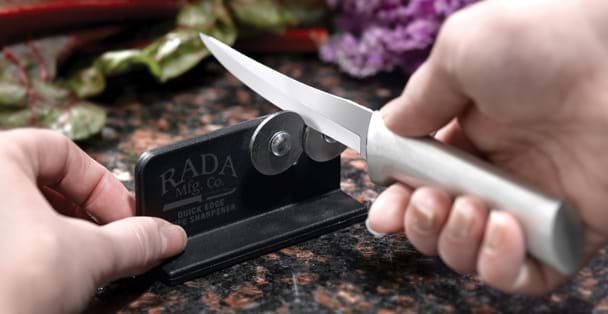
Hold the knife by the handle, blade facing downward. Place the blade between the two sharpening wheels. Start near the base (closest to the handle).
3. Pull The Knife Through
Pull the knife smoothly through the wheels, from base to tip. Use gentle, even pressure. Do not force the knife or press too hard—let the wheels do the work.
4. Repeat
Pull the knife through the sharpener 6–8 times. For dull knives, you may need more passes—up to 12. For regular maintenance, 3–4 passes are enough.
5. Test The Sharpness
After sharpening, carefully test the blade. One common method is slicing a piece of paper. If the knife cuts cleanly, it’s sharp. If not, repeat the sharpening steps.
6. Clean The Knife
After sharpening, wipe the blade with a damp cloth to remove any metal shavings. Dry the knife thoroughly.
7. Store Safely
Put away the knife and sharpener. Keep them out of reach of children.
Practical Example
Imagine you have a dull chef’s knife. After cleaning, you place it in the sharpener, pull it through eight times, and test it on a tomato. The knife slices easily, showing it’s sharp enough for cooking.
Comparing Rada Sharpener To Other Methods
Many people wonder how the Rada sharpener stacks up against other popular sharpening tools. Here’s a simple comparison:
| Sharpener Type | Ease of Use | Speed | Price Range | Best For |
|---|---|---|---|---|
| Rada Knife Sharpener | Very Easy | Seconds | $10–$15 | Home cooks, beginners |
| Whetstone | Medium/Hard | Minutes | $20–$80 | Professionals, enthusiasts |
| Electric Sharpener | Easy | Seconds | $30–$200 | Busy kitchens |
| Pull-through Sharpener | Easy | Seconds | $15–$40 | General use |
| Sharpening Steel | Medium | Seconds | $15–$50 | Knife maintenance |
The Rada sharpener is best for quick, easy sharpening and is one of the most affordable options. It’s not for advanced blade repair or specialty knives.
Tips For Best Results With Rada Sharpener
To get the sharpest edge and keep your knives in top condition, follow these expert tips:
Use Light Pressure
Many beginners push too hard. The Rada wheels are designed to sharpen with gentle pressure. Pressing too hard can damage the blade or wear the wheels.
Sharpen Regularly
Don’t wait until your knife is extremely dull. Sharpen lightly every week or two, depending on usage. This keeps your knife in good shape and makes sharpening faster.
Clean After Each Use
Metal shavings can build up on the wheels. Wipe the sharpener after every session. This prevents dirt and metal bits from dulling your next knife.
Angle Matters
The Rada sharpener sets a fixed angle. But keep your blade straight as you pull it through. Tilting the blade can create uneven edges.
Sharpen Both Sides
If your knife is double-sided (most kitchen knives are), pull it through the sharpener equally on each side. This keeps the edge balanced.
Avoid Serrated Blades
The Rada sharpener is not for serrated knives. Trying to sharpen them can damage the blade and the sharpener.
Common Mistakes To Avoid
- Sharpening dirty knives: Always clean first.
- Sharpening too fast: Quick motions can miss spots. Go slow and steady.
- Ignoring safety: Keep fingers clear, and never sharpen in a crowded area.
Caring For Your Rada Knife Sharpener
To keep your sharpener working for years, proper care is important.
Cleaning
After sharpening, wipe the wheels with a damp cloth. For deeper cleaning, use a cotton swab. Avoid soaking the sharpener in water.
Storage
Store in a dry place. Humidity can cause rust on metal parts. A kitchen drawer is ideal.
Inspect Regularly
Check the wheels for wear or damage. If they are rough or uneven, contact Rada for replacement parts.
Lifespan
With normal use, the Rada sharpener lasts 5–10 years. Heavy use may wear the wheels sooner.
Credit: products.radacutlery.com
When To Replace Your Sharpener
Most Rada sharpeners last for years, but certain signs mean it’s time to replace:
- Worn wheels: If the wheels are smooth, they won’t sharpen.
- Loose parts: If the sharpener feels unstable.
- Rust: If you see rust on the wheels, sharpening will be less effective.
Replacement is quick and inexpensive. Rada offers support for their products if you need help.
Sharpening Different Types Of Knives
The Rada sharpener works well for many kitchen knives, but not all. Here are examples:
Chef’s Knife
The most common kitchen knife. The Rada sharpener gives a sharp, durable edge.
Paring Knife
Small blade, easy to sharpen. Use the same technique as for larger knives.
Utility Knife
Medium size, works well in the Rada sharpener.
Steak Knife
If the blade is straight, it can be sharpened with Rada. If serrated, do not use.
Specialty Knives
Some knives, like Japanese santoku, have thinner blades. The Rada sharpener can work, but use fewer passes to avoid over-sharpening.
Safety Tips While Sharpening
Knife sharpening is simple but can be risky if done carelessly. Keep these safety tips in mind:
- Always sharpen away from your body.
- Keep hands clear of the blade.
- Do not rush the process.
- Never leave a sharpener unattended around children.
- Use a towel or mat under the sharpener for extra grip.
Most accidents happen from rushing or distraction. Take your time and stay focused.
The Science Behind Knife Sharpening
Knife blades dull because the edge wears down or bends. Sharpening removes tiny amounts of metal to create a new, sharp edge. The Rada sharpener uses hardened steel wheels, which scrape and realign the blade. This process is fast but gentle, perfect for everyday kitchen use.
Sharpening Angles
Most kitchen knives are sharpened at a 20-degree angle. The Rada sharpener’s wheels are set close to this angle, making it suitable for most blades. However, some specialty knives (like Japanese knives) use a finer angle, which the Rada sharpener may not match exactly.
Metal Removal
Each sharpening pass removes a thin layer of metal. Too many passes can reduce knife life, so use the sharpener only as needed.
How Often Should You Sharpen Your Knives?
Frequency depends on use. For most home cooks:
- Weekly sharpening: If you cook daily.
- Biweekly: For lighter use.
- Monthly: If you rarely use your knives.
If you notice your knife dragging or tearing food, sharpen immediately.
Signs Your Knife Needs Sharpening
- Difficulty cutting tomatoes or onions
- Blade slips off food instead of slicing
- Visible nicks or rough spots on the edge
Regular sharpening keeps your knives safe and efficient.
Rada Sharpener Maintenance Vs. Other Sharpeners
Proper maintenance extends the life of your sharpener and your knives. Here’s how Rada compares to other devices:
| Sharpener Type | Cleaning Needed | Replacement Parts | Maintenance Difficulty |
|---|---|---|---|
| Rada Knife Sharpener | Simple wipe | Available | Very Easy |
| Electric Sharpener | Clean internal parts | Sometimes | Medium |
| Whetstone | Wash stone | Not needed | Easy |
| Sharpening Steel | Wipe steel | Rare | Easy |
The Rada sharpener is one of the easiest tools to maintain. It needs only a quick wipe and occasional inspection.
Credit: products.radacutlery.com
Real-life Results: User Experiences
Thousands of home cooks and professionals trust the Rada sharpener. Here are a few examples:
- Home cook: “My knives were dull for years. I tried the Rada sharpener and within minutes, every knife was sharp again. No learning curve.”
- Restaurant chef: “We use Rada sharpeners for quick touch-ups during busy service. They’re reliable and fast.”
- Beginner: “I was afraid of sharpening knives. With Rada, I felt safe and got great results without any skill.”
Many users report knives cutting better after just a few passes. However, some note that extremely damaged or very high-end knives may need more advanced sharpening methods.
Where To Buy And Official Support
The Rada Knife Sharpener is widely available online and in stores. For official details, visit the manufacturer’s site: Rada Cutlery. Rada offers product support, replacement parts, and instructions. Buying from a reliable source ensures you get a genuine product.

Credit: www.youtube.com
Frequently Asked Questions
How Long Does It Take To Sharpen A Knife With The Rada Sharpener?
Usually, less than one minute. Most knives need only 6–8 passes for a sharp edge.
Can The Rada Sharpener Be Used On All Knife Types?
It works best on straight-edged kitchen knives. Do not use on serrated blades, scissors, or specialty knives with unusual angles.
How Often Should I Clean The Sharpener?
After every use. Wipe the wheels and body with a damp cloth to remove metal shavings.
What If My Knife Does Not Get Sharp After Using The Rada Sharpener?
Try more passes (up to 12). If still dull, check for blade damage, or consider professional sharpening for badly damaged knives.
Is The Rada Knife Sharpener Safe For Beginners?
Yes, it is very safe when used correctly. Always follow safety tips and keep fingers clear of the wheels.
Final Thoughts
Keeping your knives sharp is one of the best ways to improve your cooking. The Rada Knife Sharpener offers a fast, easy, and affordable solution for most home kitchens. With simple steps, regular maintenance, and careful use, you can keep your knives in top shape for years.
Remember to sharpen regularly, clean after each use, and follow safety advice for the best results. Whether you’re a beginner or a seasoned cook, the Rada sharpener makes knife care easy and reliable.

Hello, This is Annie Walker, a 38-year-old blogger, founder, and editor of Cookware Guider from NY, USA. I am a cookware fanatic and passionate cooker. I love to cook with different types of cooking appliances (example: all types of cookware, rice cookers, slow cookers, etc) almost every day in my kitchen. I love to share my experience with my readers in my blog. Also, I enjoy helping people to solve their problems through my website. You can follow me on Twitter & Pinterest. To know details about my blog please check the about us page.