
Sharpening a knife is a skill every cook, hobbyist, or homeowner should master. A sharp knife is safer, easier to use, and gives cleaner cuts. But many people misunderstand the process, especially when it comes to sharpening steel. Unlike a whetstone or electric sharpener, sharpening steel is not for grinding away metal, but for realigning the blade edge. Used correctly, it keeps knives sharp for longer and saves money on replacements. If you’ve ever wondered how to use a sharpening steel properly, this guide will make it clear—even for beginners.
What Is Sharpening Steel?
A sharpening steel is a rod, usually made of hardened metal or ceramic. It’s about 12 inches long, often with a handle and a protective guard. Its main job is to realign the edge of your knife blade, not to remove material or create a new edge.
Most home cooks confuse sharpening steel with a knife sharpener. Knife sharpeners (like whetstones or electric models) actually shave off metal to create a new edge. Sharpening steel, on the other hand, fixes tiny bends or folds in the blade that happen during regular use.
Types Of Sharpening Steel
There are three main types:
- Traditional steel rod: Made of tough metal, often with ridges.
- Ceramic rod: Harder than steel, can remove a small amount of metal.
- Diamond-coated rod: Has a coating of industrial diamond; can sharpen and hone, but is more abrasive.
Most home cooks use the traditional steel rod, but ceramic and diamond rods are also common. Each has its own advantages, which we’ll compare later.
Why You Should Use Sharpening Steel
A dull knife is dangerous. It slips easily, making accidents more likely. With sharpening steel, you keep your knife sharper, longer. Here’s why it matters:
- Efficiency: Cutting is quicker and smoother.
- Safety: Less risk of slipping and injury.
- Quality: Cleaner cuts mean better-looking food.
- Cost-saving: Well-maintained knives last longer.
According to a study by the University of Michigan, a sharp knife can reduce food preparation time by up to 30%. Plus, regularly using sharpening steel extends the life of your knives by years.
Credit: www.thekitchn.com
How Sharpening Steel Works
When you cut food, the edge of the blade bends microscopically. Even the best knives suffer this. Sharpening steel straightens these tiny bends, making the edge sharp again.
Sharpening steel does not grind away metal; it simply realigns the edge. If your knife is very dull, you’ll need a whetstone or a professional sharpener. But for daily maintenance, steel is ideal.
Choosing The Right Sharpening Steel
Picking the right sharpening steel depends on your knife, your skill, and your budget. Here are the main considerations:
- Material: Steel, ceramic, or diamond.
- Length: Most are 10–12 inches. Longer rods are safer and more effective.
- Shape: Round or oval. Oval rods have more surface area.
- Handle: Comfortable grip and finger guard are important.
Let’s compare the three main types in a simple table:
| Type | Material | Best For | Drawbacks |
|---|---|---|---|
| Traditional Steel | Hardened steel | Daily realignment | Does not sharpen dull knives |
| Ceramic Rod | Ceramic | Fine honing, some sharpening | Can break if dropped |
| Diamond Rod | Diamond-coated | Quick sharpening & honing | More abrasive, wears knives faster |
Traditional steel is best for everyday use. If you have expensive knives, avoid diamond rods—they can wear out the blade faster.
How To Sharpen A Knife With Sharpening Steel: Step-by-step
Sharpening with steel is simple, but technique matters. Here’s a reliable method:
1. Hold The Steel Correctly
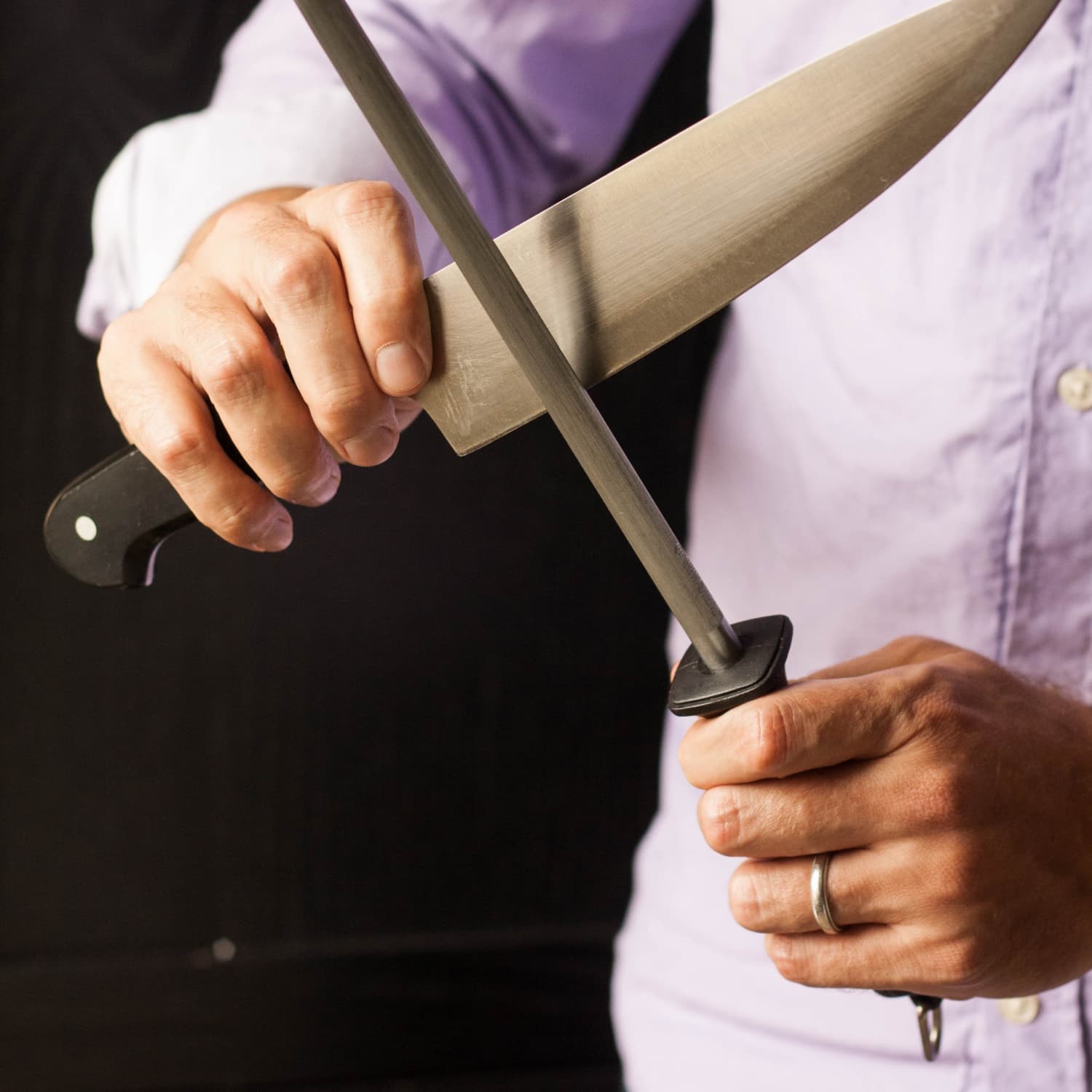
Grip the handle firmly, with your fingers wrapped around. Place the tip of the steel on a cutting board or towel. Some chefs prefer to hold the steel vertically; others hold it horizontally in the air. For beginners, vertical is safer.
2. Find The Right Angle
Most kitchen knives have a 20-degree edge angle. To achieve this, imagine the blade tilted slightly from perpendicular (90 degrees) to the steel. A 20-degree angle is about one-fourth of a right angle.
Tip: You can fold a piece of paper diagonally to find the angle, or buy angle guides.
3. Position The Knife
Place the heel (base) of the knife blade against the top of the steel. Make sure the blade is angled correctly.
4. Stroke Down And Across
Draw the blade down the steel, moving from heel to tip. Keep the angle steady. Use gentle pressure—don’t force it.
Repeat on the other side. Most experts recommend alternating strokes.
5. Repeat 5–10 Times Per Side
For maintenance, 5–10 strokes per side are enough. If the knife is very dull, more strokes won’t help—use a sharpener instead.
6. Clean The Knife
After honing, wipe the blade with a damp cloth. Tiny metal particles may stick to the edge.
7. Test The Edge
Carefully slice a piece of paper or tomato. A sharp knife will cut cleanly without tearing.
Common Mistakes To Avoid
Even experienced cooks make errors with sharpening steel. Here are frequent mistakes:
- Wrong angle: Too steep or too shallow dulls the edge.
- Too much force: Pressing hard damages the blade.
- Uneven strokes: Switching angles mid-stroke reduces effectiveness.
- Dirty steel: Food particles or rust can scratch the blade.
- Using steel on very dull knives: Steel can’t fix a badly worn edge.
Avoiding these mistakes helps your knives last longer and keeps them sharp.
How Often Should You Use Sharpening Steel?
How often depends on usage:
- Home cooks: Once a week is enough.
- Professional chefs: Daily or even after each use.
If you notice your knife tearing food, it’s time to hone. Regular maintenance means less sharpening in the long run.
Safety Tips When Using Sharpening Steel
Safety is crucial. Here are tips:
- Hold the steel firmly with fingers behind the guard.
- Keep the steel tip stable (on a board or towel).
- Use slow, controlled strokes.
- Always move the blade away from your body.
- Never hone near children or distractions.
A study by the US Consumer Product Safety Commission found that kitchen knife accidents are reduced by 20% when proper honing techniques are used. Safe sharpening protects you and keeps your kitchen running smoothly.
Sharpening Steel Vs. Other Sharpeners
Many people confuse sharpening steel with other tools. Here’s how they compare:
| Tool | Purpose | Edge Maintenance | Skill Level |
|---|---|---|---|
| Sharpening Steel | Realigns edge | Daily/weekly | Beginner |
| Whetstone | Sharpens (removes metal) | Monthly/yearly | Intermediate |
| Electric Sharpener | Sharpens (removes metal) | Monthly/yearly | Beginner |
| Professional Sharpening | Sharpens & polishes | Yearly | Expert |
Sharpening steel is for daily maintenance. When your knife feels very dull, use a whetstone or seek professional help.
How To Tell If Your Knife Needs Sharpening Steel
Not sure if your knife needs honing? Try these simple tests:
- Paper test: Slice a sheet of paper. If it cuts cleanly, the edge is sharp.
- Tomato test: Try cutting a tomato. A dull knife will crush instead of slice.
- Visual inspection: Look for shiny spots along the edge—these are usually blunt areas.
If your knife fails these tests, it’s time to use sharpening steel.
:max_bytes(150000):strip_icc()/sea-honing-steels-test-primary-ashlee-redger-16-ab14942666c942af8965fe4b980afcdf.jpeg)
Credit: www.seriouseats.com
Sharpening Different Types Of Knives
Not all knives are the same. Some need special care:
- Chef’s knife: Standard 20-degree angle.
- Paring knife: Same as chef’s knife; smaller strokes.
- Serrated knife: Do not use sharpening steel; use special sharpeners.
- Japanese knife: Some have a 15-degree angle—be careful.
Always check the manufacturer’s guide for your knife. Using the wrong angle can damage the blade.
Maintaining Your Sharpening Steel
Sharpening steel lasts for years if cared for properly. Here’s how:
- Clean after each use with a damp cloth.
- Avoid soaking in water; it can rust steel rods.
- Store safely—hang or keep in a knife block.
- Check for wear: If the rod is smooth or chipped, replace it.
Proper maintenance keeps both your steel and knives in top shape.
Myths And Misconceptions About Sharpening Steel
Many myths confuse beginners:
- Myth: Sharpening steel makes knives razor-sharp.
- Fact: It only realigns the edge; it doesn’t create a new one.
- Myth: More strokes mean sharper knives.
- Fact: More is not always better; proper technique is key.
- Myth: Any rod will work.
- Fact: Not all rods are made for knife honing; use only proper sharpening steel.
Understanding these facts will help you use sharpening steel more effectively.
Real-life Example: Sharpening Steel In A Restaurant
In professional kitchens, chefs use sharpening steel every day. Chef Maria, who runs a busy New York restaurant, says: “I hone my chef’s knife every morning. It takes two minutes, but saves hours. My staff has fewer cuts and we never struggle with slicing.”
This shows how regular honing is not just about sharp knives—it’s about efficiency and safety.
Data: Knife Sharpness And Kitchen Performance
Studies show that maintaining sharp knives improves kitchen performance. For example:
- Sharp knives reduce prep time by 30%
- Accidents decrease by 20%
- Knives last up to 3 times longer
These numbers come from research by kitchen safety organizations and chef surveys. Using sharpening steel regularly makes a real difference.
Advanced Tips: Getting The Most From Sharpening Steel
Beyond basic technique, here are advanced tips:
- Angle guides: Buy clip-on guides to keep the angle steady.
- Use both sides: Alternate strokes for even honing.
- Check for burrs: Feel the edge gently after honing; burrs mean you need to switch sides.
- Hone before and after use: Prevents dulling during cooking.
- Practice with cheap knives: Build skill before using expensive blades.
One insight many beginners miss: Sharpening steel works best on knives that are already sharp. Using it on dull knives is a waste of time.
Environmental Impact: Longevity Of Knives
Regular honing means fewer knives end up in landfills. Well-maintained knives can last 10–20 years, reducing waste and saving resources. If you care about sustainability, honing is a simple, effective habit.
Sharpening Steel For Different Knife Brands
Some brands recommend specific steels. For example:
- Wüsthof: Suggests their branded steel for best results.
- Global: Recommends ceramic rods.
- Victorinox: Compatible with most standard steels.
Check your brand’s official website for advice. Using the wrong tool can void warranties.

Credit: www.amazon.com
Sharpening Steel: Price And Value
Sharpening steels cost between $15 and $100. Higher price doesn’t always mean better quality. Look for:
- Hardness rating (Rockwell scale above 60 is good)
- Comfortable grip
- Durable materials
A $30–$50 steel is usually perfect for home cooks.
Here’s a quick comparison of typical sharpening steel features:
| Feature | Budget Steel ($15–$30) | Premium Steel ($50–$100) |
|---|---|---|
| Material | Basic steel | High-carbon steel, ceramic, diamond |
| Grip | Plastic | Ergonomic, rubber, wood |
| Length | 8–10 inches | 12 inches |
| Durability | 2–5 years | 5–10 years |
For most home users, mid-range steels are best. Avoid very cheap rods—they may bend or rust quickly.
Sharpening Steel For Outdoor Use
If you camp or fish, sharpening steel is handy. Choose portable, lightweight rods. Ceramic or diamond rods are often better outdoors—they don’t rust and are easier to clean.
Practical Mistakes Beginners Make
Many beginners:
- Skip cleaning: Dirty steel scratches knives.
- Use wrong angle: Causes uneven edges.
- Sharpen too often: Wears out blade.
- Use steel on serrated knives: Damages the teeth.
Fixing these mistakes improves results and protects your knives.
Resources For Learning More
Want to go deeper? The Wikipedia page for knife sharpening is full of expert information: Wikipedia.
Frequently Asked Questions
What’s The Difference Between Sharpening And Honing?
Sharpening removes metal to create a new edge. Honing (using steel) realigns the edge without removing metal.
Can I Use Sharpening Steel On All Knives?
No. Avoid using it on serrated knives or very dull blades. For Japanese knives, check the recommended angle.
How Long Does A Sharpening Steel Last?
With proper care, a steel lasts 5–10 years. Ceramic and diamond rods may last longer, but are more fragile.
How Do I Know If My Knife Is Sharp After Honing?
Try slicing paper or tomato. If the knife cuts cleanly, it’s sharp. If it tears or slips, more honing or sharpening is needed.
Can I Sharpen A Knife With Steel If It’s Very Dull?
No. Sharpening steel is for maintenance only. Use a whetstone or electric sharpener for dull knives.
A sharp knife makes cooking easier, safer, and more enjoyable. Learning how to use sharpening steel is a simple skill, but it pays off every day. With the right technique and regular care, your knives will stay sharp for years.

Hello, This is Annie Walker, a 38-year-old blogger, founder, and editor of Cookware Guider from NY, USA. I am a cookware fanatic and passionate cooker. I love to cook with different types of cooking appliances (example: all types of cookware, rice cookers, slow cookers, etc) almost every day in my kitchen. I love to share my experience with my readers in my blog. Also, I enjoy helping people to solve their problems through my website. You can follow me on Twitter & Pinterest. To know details about my blog please check the about us page.