
The right kitchen tools can turn simple cooking into something special. If you love using quality knives, you know how important it is to keep them sharp. A dull blade is not just annoying—it can be dangerous and ruin your ingredients. Wusthof knives are famous for their sharpness and durability, but even the best knives need regular sharpening. Using a Wusthof knife sharpener makes this job easy and keeps your knives performing like new.
Many home cooks struggle with knife sharpening. Some worry about damaging their expensive knives. Others feel confused by the different types of sharpeners and techniques. This article will guide you step-by-step on how to use a Wusthof knife sharpener correctly.
We’ll cover different models, sharpening methods, key safety tips, and common mistakes. By the end, you’ll feel confident sharpening your knives and understand how to keep them at their best.
Understanding Wusthof Knife Sharpeners
Wusthof offers several types of knife sharpeners, each designed for specific needs. Before sharpening, it’s important to know which model you have and how it works.
Types Of Wusthof Knife Sharpeners
1. Manual Pull-through Sharpeners
These are the most popular for home use. You pull the knife through slots with sharpening stones. They are simple, safe, and require no power.
2. Electric Sharpeners
These use motorized wheels to sharpen blades quickly. They are ideal for people who want fast results with minimal effort.
3. Sharpening Steel (honing Rods)
Often confused with sharpeners, these rods are for honing—aligning the blade’s edge, not actually sharpening it.
4. Whetstones
Flat stones for manual sharpening. They offer the most control but require skill and practice.
Wusthof Sharpener Models
The most common Wusthof models include:
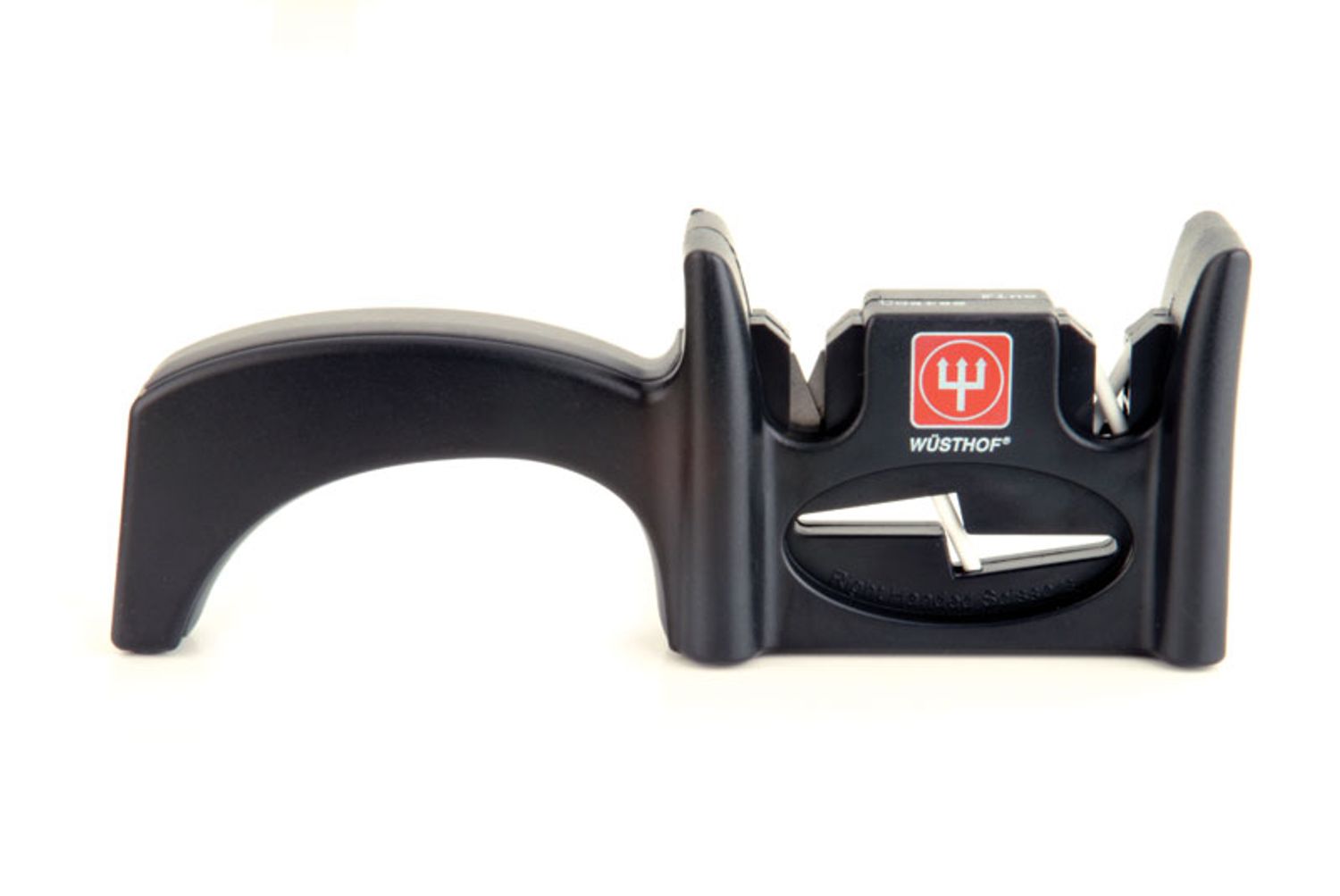
- Wusthof 2-Stage Pull-Through Sharpener
- Wusthof Electric Knife Sharpener
- Wusthof Sharpening Steel
Below is a quick comparison of their main features:
| Model | Sharpening Method | Best For | Ease of Use |
|---|---|---|---|
| 2-Stage Pull-Through | Manual | Home cooks | Easy |
| Electric Sharpener | Motorized | Frequent sharpening | Very easy |
| Sharpening Steel | Manual (honing) | Maintaining edge | Moderate |
| Whetstone | Manual | Experienced users | Challenging |
How To Choose The Right Sharpener
- For beginners or busy cooks, the 2-stage pull-through sharpener is best.
- If you own many knives and sharpen often, consider the electric model.
- Use sharpening steel weekly to maintain sharpness between full sharpening sessions.
- Whetstones are suitable if you want precision and already have sharpening experience.
Knowing your sharpener model is the first step. Now, let’s look at how to use each type effectively.
Preparing For Sharpening
Getting ready is important for both safety and results. Preparation helps you avoid mistakes and makes sharpening smoother.
What You Need
- Clean Wusthof knife
- Wusthof knife sharpener
- Clean towel
- Non-slip mat (optional but recommended)
- Protective gloves (if you are nervous or new)
Cleaning Your Knife
Always start with a clean, dry knife. Dirt or oil can affect sharpening and damage the sharpener. Wash your knife with warm water and mild soap, then dry it completely.
Setting Up Your Work Area
Choose a stable, flat surface with enough space. Place a non-slip mat under the sharpener for extra grip. Good lighting helps you see the blade edge clearly.
Inspecting Your Knife
Look at your knife’s edge. If you see chips, deep nicks, or excessive dullness, you may need to sharpen more than usual. If the edge is only slightly dull, sometimes honing is enough.
Step-by-step Guide: Using A Wusthof Pull-through Sharpener
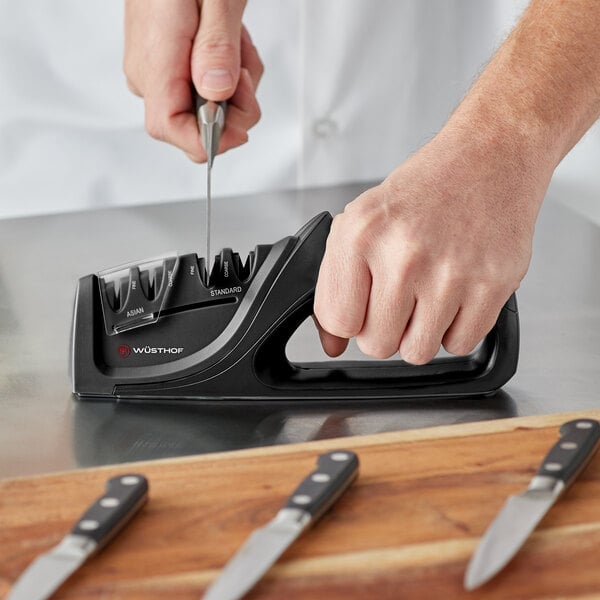
The pull-through sharpener is the most popular Wusthof model. It has two slots: one for coarse sharpening, one for fine honing. Here is how to use it:
1. Place The Sharpener On A Stable Surface
Set the sharpener on your counter or cutting board. Make sure it doesn’t slip. Use a non-slip mat if needed.
2. Identify The Coarse And Fine Slots
Most Wusthof models label their slots.
- Coarse slot: For dull knives or first sharpening.
- Fine slot: For regular maintenance or finishing.
3. Hold The Sharpener Firmly
Grip the handle with one hand, keeping your fingers away from the slots.
4. Insert The Knife
Place the heel of the knife (the part closest to the handle) into the slot. Hold the knife vertically.
5. Pull Through The Slot
Pull the knife smoothly through the slot from heel to tip. Use gentle pressure. Do not force or rush.
6. Repeat As Needed
- For dull knives: Pull through the coarse slot 3–5 times.
- For regular maintenance: Use the fine slot 2–3 times.
- Alternate between slots if needed, but always finish with the fine slot.
7. Check The Sharpness
Wipe the blade with a towel, then test by slicing a piece of paper or a tomato. If the blade is still dull, repeat the process.
8. Clean The Knife And Sharpener
After sharpening, clean the knife again. Wipe the sharpener with a dry cloth to remove any metal particles.
Practical Tips
- Never use too much force; it can damage the blade.
- Always pull the knife in one direction—never saw back and forth.
- Avoid sharpening serrated knives in pull-through sharpeners.
Using The Wusthof Electric Knife Sharpener
Electric sharpeners are powerful and easy. Here’s how to use a Wusthof electric sharpener safely and effectively.
1. Read The Manual
Each electric sharpener has slightly different instructions. Read the manual for your model before starting.
2. Plug In And Prepare
Place the sharpener on a stable surface and plug it in. Make sure you have good lighting.
3. Select The Sharpening Stage
Most models have multiple stages:
- Coarse: For dull blades
- Medium: For regular sharpening
- Fine: For polishing
4. Insert The Knife
Place the blade in the slot. Hold it straight and steady.
5. Draw The Knife Slowly
Pull the knife through the slot at a steady speed. The motorized wheels will sharpen the blade.
6. Repeat As Directed
Usually, 1–2 passes per stage are enough. Do not over-sharpen.
7. Finish And Clean
Unplug the sharpener. Wipe the blade and the sharpener. Check your knife’s sharpness.
Safety Tips
- Keep fingers clear of moving parts.
- Never use wet knives in electric sharpeners.
- Do not sharpen ceramic or serrated knives unless the model allows it.
Honing With Wusthof Sharpening Steel
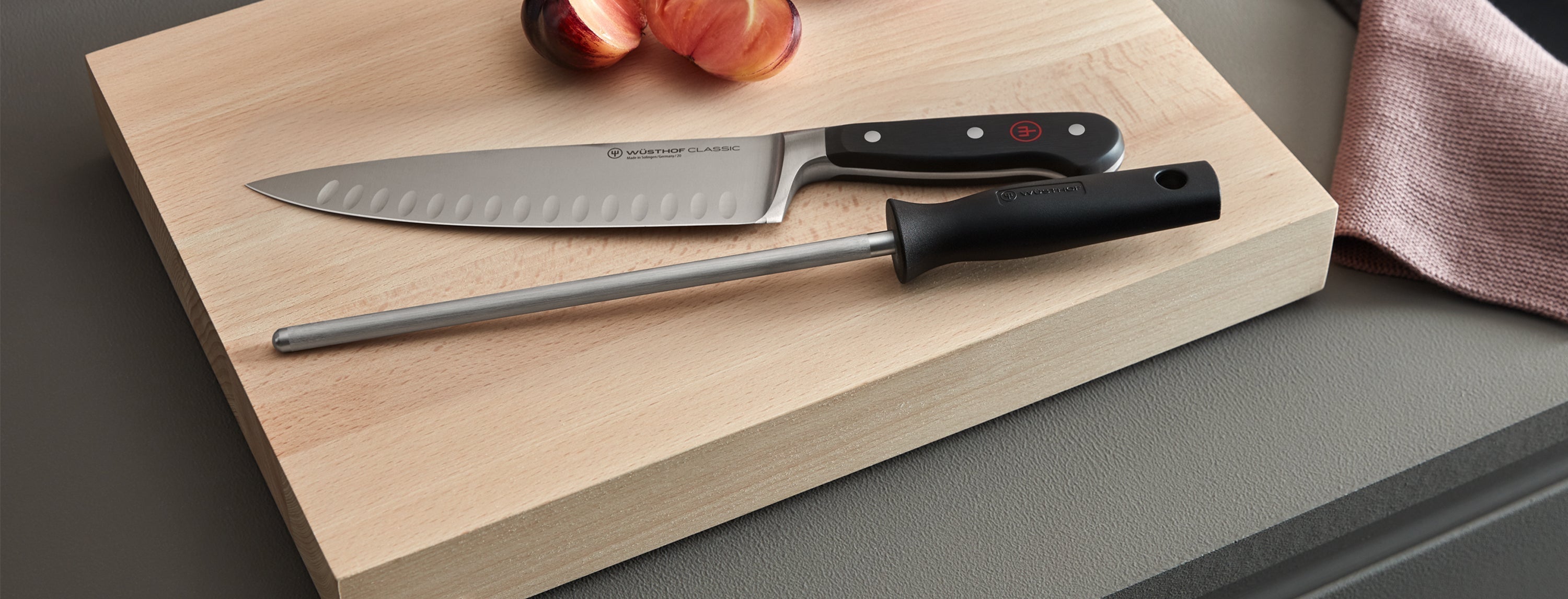
Sharpening steel is for honing, not sharpening. Honing straightens the blade edge and keeps it sharp between full sharpenings.
How To Use Sharpening Steel
- Hold the steel vertically, with the tip resting on a towel or cutting board.
- Hold the knife at a 20-degree angle to the steel.
- Swipe the blade down the steel, from heel to tip, alternating sides.
- Repeat 5–7 times per side.
Why Honing Matters
A common mistake is thinking honing is sharpening. Honing keeps your blade aligned. Sharpening removes metal and creates a new edge.
When To Hone
- Hone your knife every 2–3 uses.
- If your knife feels slightly dull but not damaged, try honing first.
Using A Whetstone (optional)
Some Wusthof users prefer whetstones for ultimate control. They require skill but offer the best results.
Steps For Whetstone Sharpening
- Soak the stone in water for 10–15 minutes.
- Place the stone on a stable surface.
- Hold the knife at a 15–20-degree angle.
- Move the blade across the stone in smooth strokes, alternating sides.
- Start with coarse grit, then switch to fine grit.
- Wipe the blade and test sharpness.
Beginner Mistakes
- Using the wrong angle
- Not soaking the stone enough
- Uneven strokes
If you are new, start with pull-through or electric models before trying whetstones.
Credit: www.knifecenter.com
How Often Should You Sharpen Your Wusthof Knife?
Frequency depends on usage. Below is a simple guide:
| Usage Level | Sharpening Frequency | Honing Frequency |
|---|---|---|
| Daily (professional) | Monthly | Every use |
| Weekly (home cook) | Every 3–4 months | Every 2–3 uses |
| Occasional | Twice a year | Once a month |
Remember: Over-sharpening can wear out your knife. Under-sharpening makes cooking harder and less safe.
Common Mistakes When Using A Wusthof Sharpener
Many beginners make errors that can damage their knives or sharpener. Here are some to avoid:
1. Using Too Much Force
Pressing too hard can ruin the blade and sharpener. Use gentle, steady pressure.
2. Sharpening Serrated Knives
Serrated knives need special sharpeners or professional service. Do not use standard Wusthof sharpeners.
3. Ignoring Blade Angle
Keeping the correct angle is critical. Most Wusthof knives are sharpened at 14–20 degrees. Too flat or steep an angle reduces sharpness.
4. Not Cleaning The Knife Before Sharpening
Dirt or food particles can scratch the blade and dull the sharpener.
5. Over-sharpening
Too many passes can remove excess metal and shorten the knife’s life.
6. Not Finishing With Honing
Always finish sharpening with a few passes in the fine slot or on sharpening steel.
Credit: www.webstaurantstore.com
Caring For Your Sharpener And Knives
Proper care extends the life of both your sharpener and knives.
Sharpener Maintenance
- Wipe the sharpener after each use.
- Remove metal shavings from slots.
- Store in a dry place.
Knife Storage
- Use a knife block, magnetic strip, or blade guards.
- Never store knives loose in a drawer.
Knife Cleaning
- Wash knives by hand; avoid dishwashers.
- Dry knives immediately to prevent rust.
Practical Tips
- Replace your sharpener if slots become worn or stones crack.
- If unsure, seek advice from Wusthof customer service or your local kitchen store.
Advanced Tips For Sharpening Wusthof Knives
Experienced users sometimes want a sharper edge or special care for their knives. Here are some advanced techniques:
1. Double-stage Sharpening
First use the coarse slot, then the fine slot, followed by honing steel for a polished edge.
2. Checking Sharpness
Try slicing a sheet of paper or a ripe tomato. A sharp knife will cut cleanly with no effort.
3. Sharpening Specialty Knives
For boning, fillet, or chef’s knives, use the fine slot for finishing after coarse sharpening.
4. Keeping Track
Record sharpening dates and frequency in a notebook. This helps avoid over-sharpening.
5. Using Lubricants
For whetstones, always use water or the recommended lubricant. Never use oil unless specified.
Credit: wusthof.com
Frequently Asked Questions
What Angle Should I Use When Sharpening Wusthof Knives?
Most Wusthof knives are sharpened at a 14–20-degree angle. For pull-through sharpeners, the angle is set automatically. For whetstones, aim for 15–20 degrees.
Can I Sharpen Serrated Wusthof Knives With A Standard Sharpener?
No. Serrated knives need special sharpeners or professional sharpening. Using a regular sharpener can damage the blade.
How Do I Know When My Knife Needs Sharpening?
If your knife struggles to cut tomatoes, onions, or paper, it’s time to sharpen. You may also notice slipping or tearing instead of clean cuts.
Is It Safe To Use A Wusthof Electric Sharpener For All Knives?
Most Wusthof electric sharpeners are designed for straight-edged knives. Always check the manual. Never use them for ceramic or serrated knives unless allowed.
Where Can I Find More Information About Wusthof Knife Care?
The official Wusthof site offers detailed guides and support. For more, visit Wusthof Knife Care.
Final Thoughts
Sharpening your Wusthof knife doesn’t have to be scary or confusing. With the right sharpener and technique, you can keep your knives at peak performance for years. Remember, preparation and safety matter. Choose the sharpener that fits your needs, follow clear steps, and avoid common mistakes. Regular maintenance—both sharpening and honing—makes cooking safer, easier, and more fun.
Whether you use a pull-through, electric, or whetstone, practice makes perfect. As you gain experience, you’ll notice sharper cuts and smoother cooking. Take care of your knives and sharpener, and they’ll reward you with great performance every time. If you need more help, consult the Wusthof website or your local kitchen store.
With this guide, you are ready to sharpen your knives like a pro.

Hello, This is Annie Walker, a 38-year-old blogger, founder, and editor of Cookware Guider from NY, USA. I am a cookware fanatic and passionate cooker. I love to cook with different types of cooking appliances (example: all types of cookware, rice cookers, slow cookers, etc) almost every day in my kitchen. I love to share my experience with my readers in my blog. Also, I enjoy helping people to solve their problems through my website. You can follow me on Twitter & Pinterest. To know details about my blog please check the about us page.