
A sharp knife is more than just a tool in the kitchen—it’s a source of confidence and safety for every cook. Dull knives make slicing harder, cause uneven cuts, and increase the risk of accidents. If you own Cutco knives, you already know their reputation for quality and durability.
But even the best blades need regular sharpening to stay effective. The Cutco Knife Sharpener is designed specifically for Cutco’s unique blades, making it easy for anyone to restore sharpness at home. Whether you’re a beginner or have sharpened knives before, using the Cutco sharpener correctly will keep your kitchen running smoothly.
This guide walks you step-by-step through using a Cutco Knife Sharpener. You’ll learn how to prepare your knives, operate the sharpener, and handle different blade types. Along the way, you’ll find useful tips, practical examples, and key mistakes to avoid.
By the end, you’ll understand not just the “how,” but also the “why”—ensuring your knives last longer and perform better. Let’s get started and make your kitchen experience safer and easier.
Understanding The Cutco Knife Sharpener
Before sharpening, it’s important to know what makes the Cutco sharpener special. Cutco knives are famous for their Double-D® edge—a unique serrated design that stays sharp longer. The Cutco sharpener is designed to work with both straight-edge and Double-D® blades, making it versatile for most kitchen tasks.
The sharpener features:
- Ergonomic handle: Comfortable grip for both left and right-handed users
- Carbide sharpening blades: Hard, durable material that reshapes the knife edge quickly
- Safety guard: Protects fingers during sharpening
- Simple pull-through mechanism: Easy for beginners
Cutco sharpeners are compact, lightweight, and require no electricity, making them ideal for home use.
How It Works
The sharpener uses carbide blades positioned at a precise angle. When you pull your knife through, the blades scrape away tiny bits of metal, reshaping the edge. For straight-edge knives, this restores a keen, clean cutting surface. Double-D® blades are serrated and require a different approach, which we’ll cover later.
Preparing Your Knife For Sharpening
Proper preparation is the first step to effective sharpening. A dirty or damaged knife can make sharpening difficult and unsafe.
Cleaning Your Knife
Always clean your knife before sharpening. Dirt, oil, or food residue can interfere with the sharpening process and damage the sharpener.
Steps:
- Wash the knife with warm, soapy water.
- Rinse thoroughly.
- Dry with a soft cloth.
Avoid sharpening knives with sticky or greasy handles, as this can cause slipping.
Inspecting For Damage
Check your knife for any visible damage. Look for:
- Chips or cracks in the blade
- Bent tips
- Deep rust spots
If you see serious damage, do not sharpen. Instead, contact Cutco customer service or a professional for repair. Minor spots or stains are fine, but sharpening won’t fix structural problems.
Choosing The Right Knife
The Cutco sharpener is designed for:
- Straight-edge knives (chef’s, paring, utility)
- Double-D® edge knives (serrated bread, steak knives)
Avoid using it on:
- Scissors
- Non-Cutco knives (unless similar blade material)
- Specialty knives (cleavers, fillet knives)
Step-by-step Guide: Sharpening Straight-edge Cutco Knives
Sharpening a straight-edge knife is simple with the Cutco sharpener. Follow these steps for the best results.
Step 1: Place The Sharpener On A Stable Surface
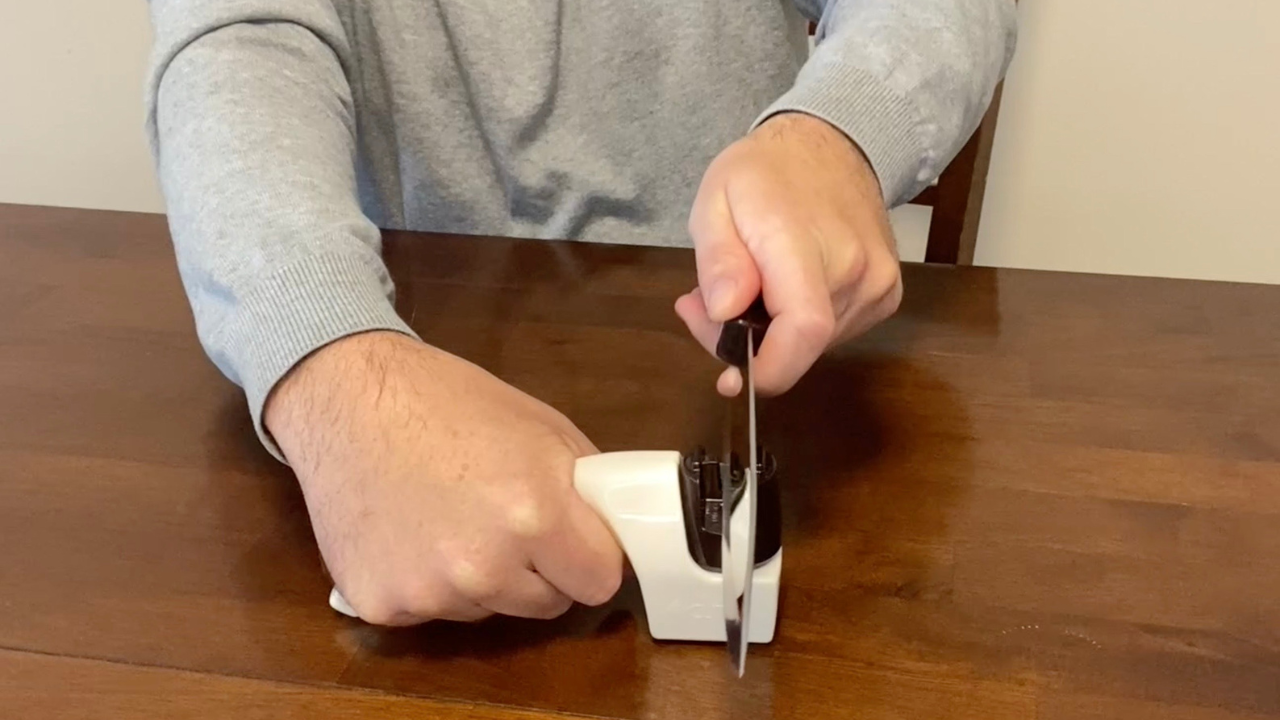
Set the sharpener on a flat, non-slip surface. A kitchen countertop is ideal. The sharpener’s base is designed to stay put, but holding it firmly adds extra safety.
Step 2: Hold The Sharpener Correctly
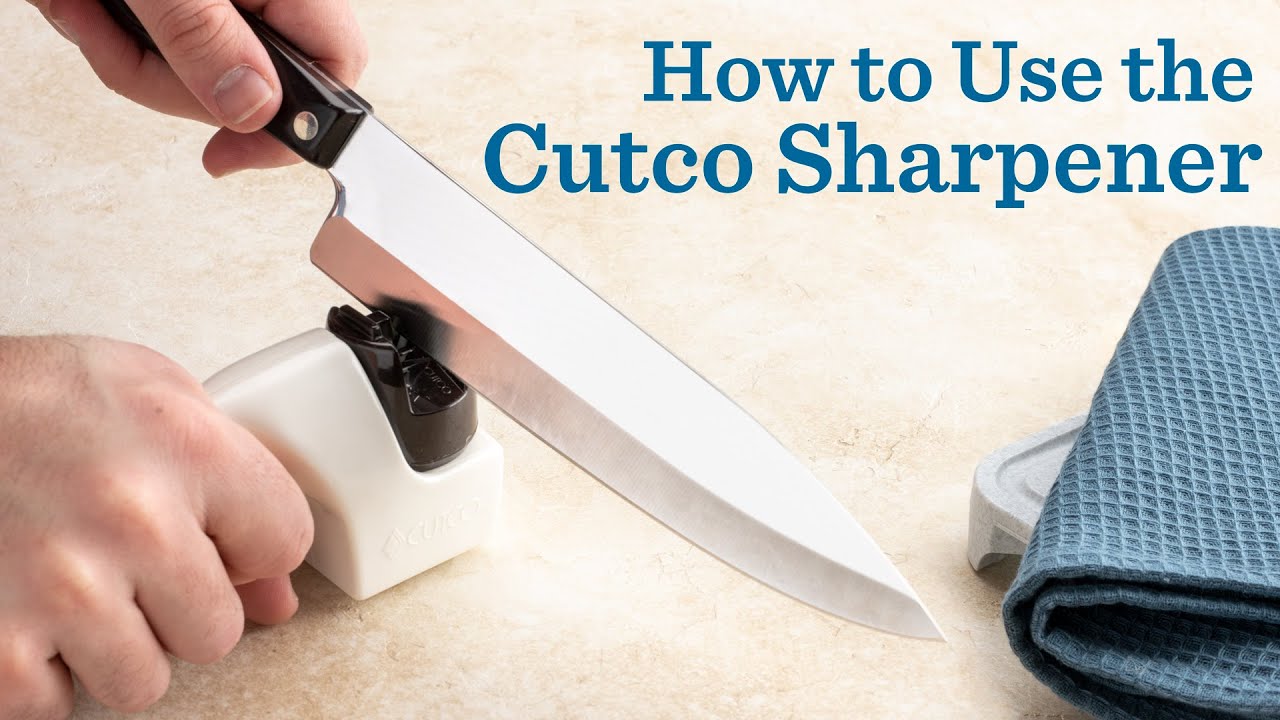
Grip the handle with your non-dominant hand. Place your fingers behind the safety guard. Your dominant hand will control the knife.
Step 3: Position The Knife
Insert the blade into the slot marked “straight edge. ” Make sure the tip points downward and the edge sits flat against the carbide blades.
Step 4: Pull Through
Apply gentle, even pressure. Pull the knife through the slot, from heel to tip, in one smooth motion. Do not saw back and forth.
Repeat this step 3-5 times. More is not always better—over-sharpening can wear down the blade.
Step 5: Test The Sharpness
After sharpening, test the knife by slicing a sheet of paper or a tomato. If it cuts cleanly, the edge is sharp. If not, repeat steps 3 and 4 once more.
Step 6: Clean And Store
Wipe the knife with a soft cloth to remove metal shavings. Clean the sharpener by brushing away any residue. Store both safely.
Sharpening Double-d® Edge (serrated) Cutco Knives
Double-D® edges are Cutco’s signature serrated blades. They stay sharp longer but require special care.
Can You Sharpen Double-d® Edge With A Cutco Sharpener?
The Cutco sharpener is not designed to fully restore the Double-D® edge at home. However, you can touch up the tips and smooth out minor damage. For deep sharpening, Cutco offers a free sharpening service.
Touch-up Steps
- Place the sharpener on a stable surface.
- Hold the handle firmly.
- Insert the blade into the slot, aligning only the flat side of the edge (not the serrations).
- Pull through gently, 2-3 times.
This process cleans up the tips and maintains performance. Do not force the blade or try to sharpen deep into the serrations, as this can damage the knife.
When To Use Cutco’s Sharpening Service
If your Double-D® knife is very dull or damaged, send it to Cutco for professional sharpening. Cutco’s service is free (except shipping), and they will restore the serrated edge to factory condition.
Credit: www.amazon.com
Common Mistakes And How To Avoid Them
Sharpening knives seems easy, but mistakes can ruin your blade or cause injury. Here are the most common errors—and how to prevent them.
- Using too much pressure: Heavy force can chip the blade and damage the sharpener. Use gentle, steady pulls.
- Sharpening dirty knives: Food residue scratches both the knife and sharpener. Always clean before sharpening.
- Back-and-forth motion: Sawing damages the edge. Pull in one direction only.
- Ignoring blade damage: Sharpening a cracked or bent blade can make it worse. Inspect knives first.
- Over-sharpening: More passes do not equal more sharpness. Limit to 3-5 pulls for straight-edge, 2-3 for Double-D®.
- Wrong slot selection: Using the serrated slot for straight-edge knives (or vice versa) can dull the blade.
- Skipping the test: Always check sharpness before storing. This prevents surprises during cooking.
Comparing Cutco Knife Sharpener With Other Brands
Choosing the right sharpener matters. Here’s a comparison of Cutco’s sharpener with other popular options.
| Sharpener | Works with Cutco Knives | Ease of Use | Price Range | Maintenance |
|---|---|---|---|---|
| Cutco Sharpener | Yes (straight & Double-D®) | Very easy | $40-$60 | Low |
| Chef’s Choice Electric | Sometimes (straight only) | Easy (electric) | $80-$150 | Medium |
| Manual Sharpening Stones | Yes (with skill) | Hard | $20-$70 | High |
| Pull-Through Generic Sharpener | No (not for Double-D®) | Easy | $15-$30 | Low |
Cutco’s sharpener stands out for its compatibility and ease, especially for non-experts.
Credit: www.youtube.com
Maintaining Your Cutco Sharpener
A well-maintained sharpener lasts longer and works better. Here’s how to care for your Cutco sharpener.
Cleaning Tips
- Use a dry brush or cloth to remove metal shavings after each use.
- Never wash the sharpener in a dishwasher—moisture can damage the carbide blades.
- If needed, wipe the exterior with a damp cloth and dry thoroughly.
Storage
Store the sharpener in a drawer or knife block, away from heat and moisture. Avoid placing heavy objects on top, which can bend or crack the handle.
Checking The Carbide Blades
Over time, the carbide blades may wear down. Signs include:
- Sharpening takes longer
- Blade edges feel rough, not smooth
- Visible grooves or chips in the carbide
If you notice these issues, contact Cutco for replacement or servicing.
How Often Should You Sharpen Cutco Knives?
Frequency depends on how often you use your knives and the type of food you cut.
General guidelines:
- Straight-edge knives: Every 2-3 months for regular home cooks
- Double-D® edge knives: Once a year, or when tips feel dull
Heavy use (daily cooking, tough foods) may require more frequent sharpening. Light use (occasional slicing) means less often.
Signs Your Knife Needs Sharpening
- Struggles to cut tomatoes or bread
- Snags or tears food instead of slicing cleanly
- Visible nicks or roughness along the blade
- Increased effort needed
Testing with a sheet of paper is a quick way to check sharpness.
Safety Tips For Sharpening Knives
Sharpening is safe if you follow key rules.
- Always keep fingers behind the safety guard.
- Do not rush—take your time and focus.
- Keep the sharpener on a stable surface.
- Never sharpen wet knives or with wet hands.
- Store the sharpener and knife out of reach of children.
Many injuries happen when people rush or ignore basic safety.
Advanced Tips For Sharpening Like A Pro
Beyond basics, there are ways to get the most from your Cutco sharpener.
- Angle control: The sharpener is preset for optimal angle, but keeping the blade flat ensures consistency.
- Routine maintenance: Sharpen knives before big cooking events (holidays, parties) for best performance.
- Polishing: After sharpening, use a honing steel to polish the edge for extra smooth cuts.
- Record keeping: Note sharpening dates if you own many knives, so none are neglected.
These steps help your knives stay sharp and reliable for years.
Real-world Example: Sharpening A Cutco Chef’s Knife
Imagine you’re preparing dinner and your Cutco chef’s knife struggles with tomatoes and onions. Here’s how you’d sharpen it:
- Clean and dry the knife.
- Place the sharpener on your kitchen counter.
- Hold the sharpener handle with your left hand, keeping fingers behind the guard.
- Insert the blade into the straight-edge slot.
- Pull the knife smoothly through the slot three times, from heel to tip.
- Test by slicing a tomato—if it cuts cleanly, you’re done.
- Wipe the blade, clean the sharpener, and store both.
This process takes less than five minutes and restores cutting power.
Comparing Sharpening Results: Before And After
Seeing the difference helps understand the value. Here’s a comparison of a Cutco knife before and after sharpening.
| Test | Before Sharpening | After Sharpening |
|---|---|---|
| Tomato Slice | Jagged, uneven | Smooth, clean |
| Paper Cut | Tears, struggles | Effortless slice |
| Onion Dice | Crushed, messy | Sharp, tidy |
The improvement is immediate and noticeable.

Credit: www.youtube.com
Cutco’s Free Sharpening Service
Cutco offers a Forever Guarantee and free sharpening service. If your knife needs deep sharpening (especially Double-D® edge), you can send it to Cutco.
Steps:
- Request sharpening service online or by phone.
- Pack your knife safely and ship to Cutco.
- Cutco sharpens and returns your knife (shipping fees may apply).
Learn more at the official Cutco website.
Frequently Asked Questions
How Do I Know If My Cutco Knife Is Sharp Enough?
A sharp knife should slice through paper or soft food (like tomatoes) easily. If the blade struggles, snags, or tears, it needs sharpening.
Can I Use The Cutco Sharpener On Other Brands?
The sharpener works best with Cutco knives. You can use it on similar straight-edge knives, but results may vary. Avoid using it on specialty or non-standard blades.
What Should I Do If The Sharpener Stops Working Well?
Clean the sharpener and check for worn carbide blades. If sharpening takes longer or feels rough, contact Cutco for repair or replacement.
Is It Safe To Sharpen Double-d® Edge Knives At Home?
You can lightly touch up Double-D® knives with the sharpener, but deep sharpening should be done by Cutco’s professionals. Never force the blade or try to reshape serrations yourself.
How Often Should I Clean The Cutco Sharpener?
After every use, wipe away metal shavings and residue. Deep cleaning is not needed, but avoid moisture and keep the sharpener dry.
Sharpening your Cutco knives at home is easy and safe with the right technique. By following these steps and tips, you’ll keep your knives sharp, reliable, and ready for any kitchen task. A well-maintained knife not only makes cooking easier but also protects your hands and enhances your food.
Remember, regular sharpening and care extend the life of your Cutco knives, keeping your investment strong for years to come.

Hello, This is Annie Walker, a 38-year-old blogger, founder, and editor of Cookware Guider from NY, USA. I am a cookware fanatic and passionate cooker. I love to cook with different types of cooking appliances (example: all types of cookware, rice cookers, slow cookers, etc) almost every day in my kitchen. I love to share my experience with my readers in my blog. Also, I enjoy helping people to solve their problems through my website. You can follow me on Twitter & Pinterest. To know details about my blog please check the about us page.