
Cooking bacon in a frying pan is a classic kitchen skill everyone can master, but many people still struggle to get it just right. Too often, bacon turns out burnt, rubbery, or unevenly cooked. Yet, when prepared correctly, bacon is crisp, flavorful, and a perfect addition to breakfast, salads, or sandwiches.
Whether you’re new to the kitchen or just want to perfect your method, learning how to cook bacon in a frying pan can make a big difference in your meals. This article gives you step-by-step guidance, real examples, and expert tips so you can make bacon that tastes just as good as in your favorite restaurant.
Why Frying Pan Bacon Stands Out
Cooking bacon in a frying pan is not just a tradition—it’s one of the most effective ways to unlock the full flavor and texture of bacon. Unlike microwaving or baking, the frying pan method gives you full control over crispness, color, and doneness.
The direct heat and open surface let you see and adjust the bacon as it cooks.
One of the biggest advantages is versatility. You can cook a few strips for yourself or a whole pan for family brunch. Also, pan-frying allows the bacon fat to render, which you can use for cooking eggs or vegetables, adding even more flavor to your meal.
Choosing The Right Bacon
Types Of Bacon
Not all bacon is the same. The kind you choose affects the taste, texture, and cooking time.
- Regular-cut bacon: The most common. It cooks quickly and becomes crispy.
- Thick-cut bacon: Takes longer to cook and stays chewy in the center.
- Turkey bacon: Lower in fat but can dry out faster.
- Uncured or artisanal bacon: Often has a stronger flavor but may cook unevenly.
What To Look For
- Color: Good bacon has a pinkish-red color with creamy white fat.
- Fat to meat ratio: More fat means more crispiness, but too much can be greasy.
- Packaging: Vacuum-sealed bacon stays fresh longer and prevents spoilage.
A common mistake is buying pre-cooked bacon or bacon bits for frying. These are meant for convenience and won’t give the same flavor or texture as raw bacon.
Essential Tools For Pan-frying Bacon
Before you start, it’s important to have the right tools. Using the correct equipment can prevent sticking, burning, and uneven cooking.
- Frying pan or skillet: A heavy-bottomed pan (preferably cast iron or stainless steel) distributes heat evenly.
- Tongs: Help you flip and move the bacon easily.
- Paper towels: For draining excess grease after cooking.
- Plate or tray: To hold the cooked bacon.
- Splatter guard (optional): Reduces mess from popping grease.
If you don’t have a cast iron skillet, a nonstick pan works, but it may not brown the bacon as well. Avoid using thin pans, as they cause hot spots and uneven cooking.
Preparing Bacon For The Pan
Bringing Bacon To Room Temperature
Cold bacon from the fridge can curl and cook unevenly. For best results, let bacon sit at room temperature for 10–15 minutes before cooking. This helps the fat render more slowly and evenly.
Separating The Slices
Carefully peel bacon slices apart. If they’re stuck together, use the edge of a knife or run your fingers gently along the edges. Avoid pulling too hard, as this can tear the bacon.
Cutting To Size
If your pan is small, you can cut the bacon slices in half. This makes flipping easier and ensures all pieces fit flat in the pan.
Step-by-step Guide: How To Cook Bacon In A Frying Pan
Here’s a proven method for cooking perfect bacon every time.
- Place Bacon in a Cold Pan
- Lay the strips flat in the pan without overlapping. Starting with a cold pan helps the fat render slowly and prevents burning.
- Turn Heat to Medium-Low
- Set your burner to medium-low heat. High heat causes bacon to burn on the edges while staying raw in the center.
- Let the Bacon Cook Slowly
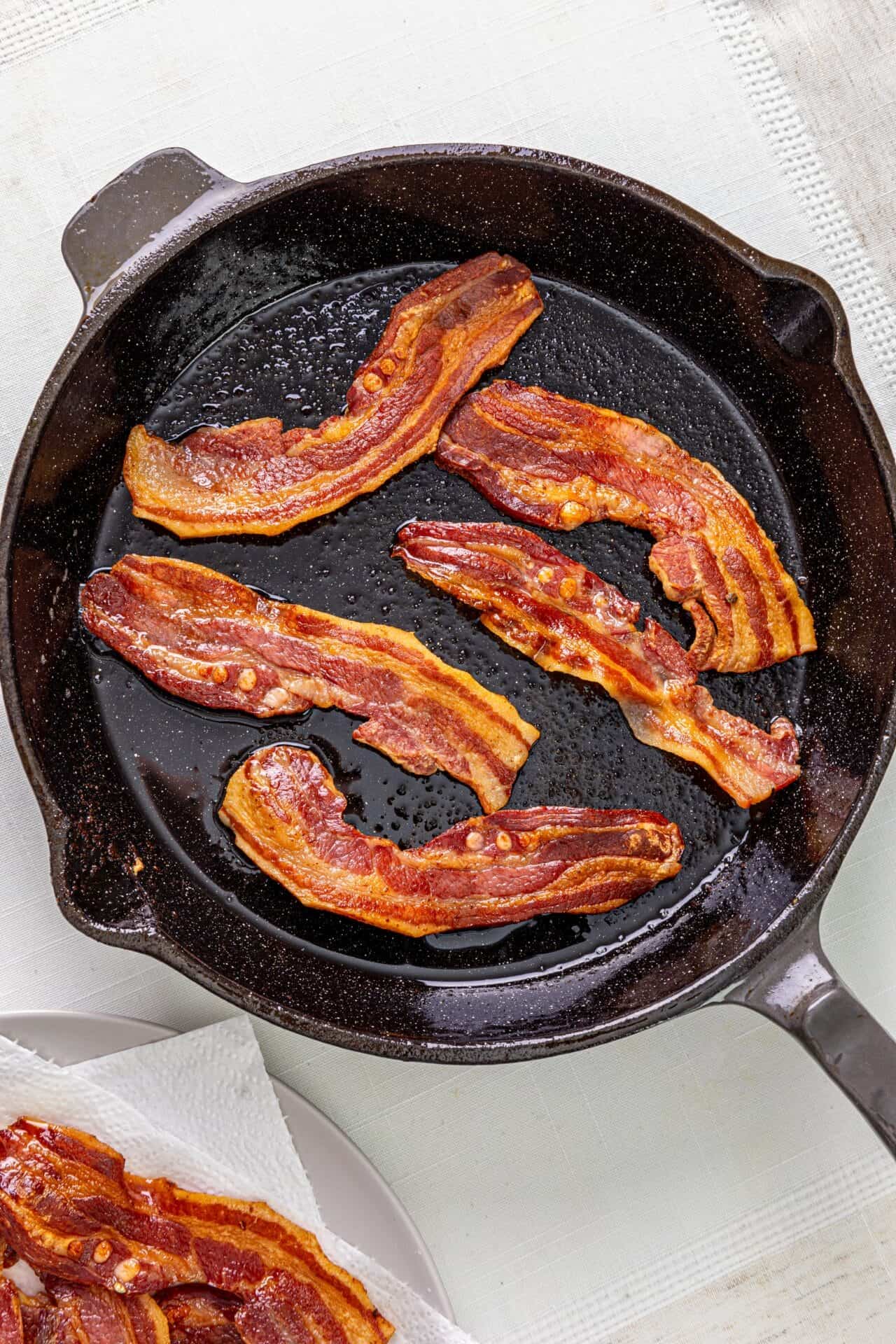
- Cook the bacon, letting the fat melt and bubble. You’ll see the edges curl and the color change.
- Flip Occasionally
- Use tongs to flip each strip every 2–3 minutes. Flipping helps bacon cook evenly and prevents sticking.
- Adjust Heat as Needed
- If the bacon is browning too fast or smoking, lower the heat. If nothing is happening after a few minutes, raise it slightly.
- Watch for Doneness
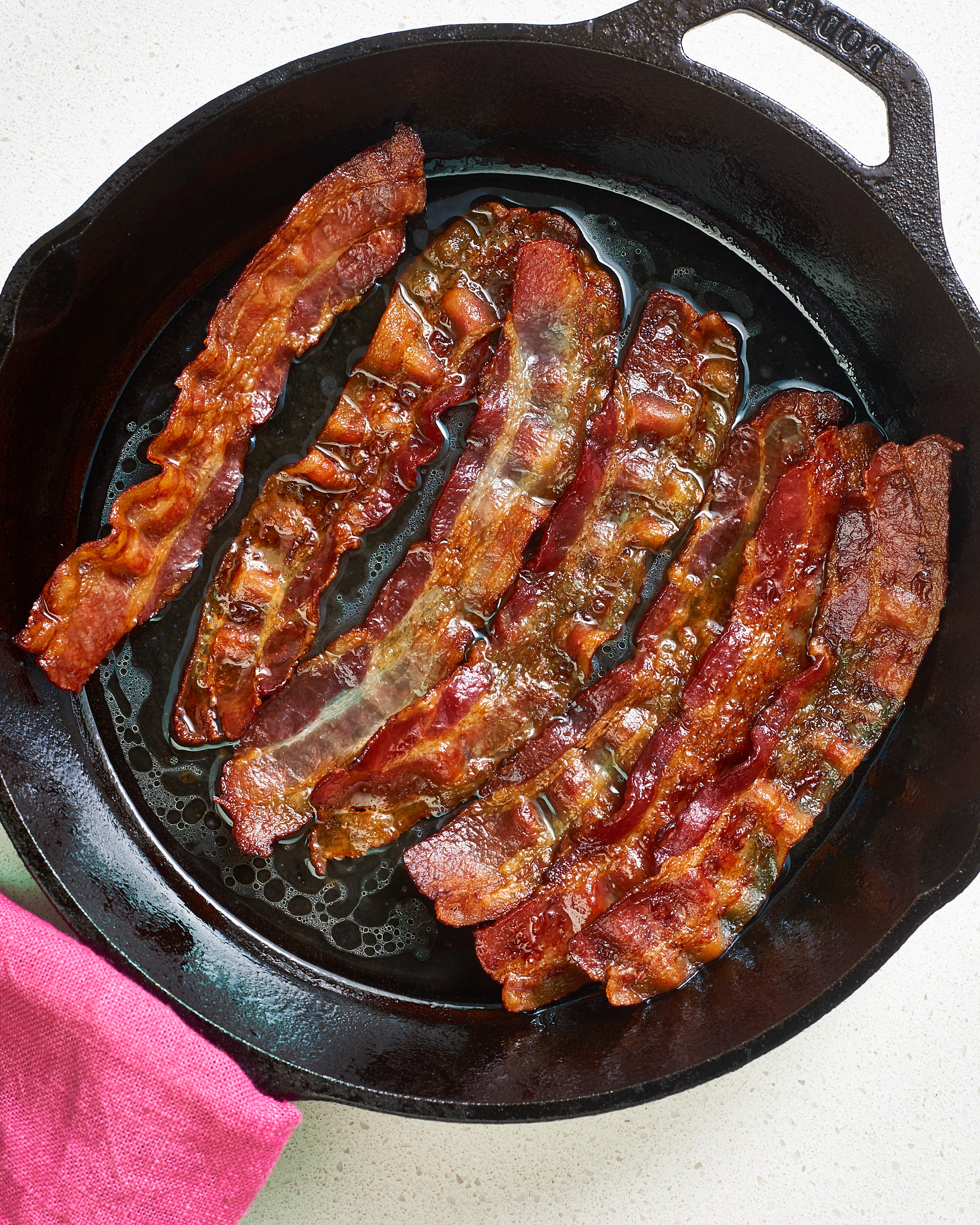
- Bacon is ready when it turns golden brown and crispy around the edges. Some people prefer it chewy; remove it earlier if you like it softer.
- Drain on Paper Towels
- Use tongs to move the bacon to a plate lined with paper towels. This step removes excess fat for a crisper result.
- Serve and Enjoy
- Bacon is best eaten hot, but you can store leftovers in the fridge for up to five days.
Cooking Times: A Quick Comparison
Cooking time can vary depending on the type and thickness of bacon. Here’s a quick reference:
| Bacon Type | Pan-Frying Time (per side) | Total Time |
|---|---|---|
| Regular-cut | 3–4 minutes | 6–8 minutes |
| Thick-cut | 4–6 minutes | 8–12 minutes |
| Turkey bacon | 2–3 minutes | 4–6 minutes |
Remember, these are average times. Always watch the bacon closely, as stove strengths and pan materials can affect cooking speed.
Credit: bakedbree.com
How To Achieve Your Preferred Bacon Texture
Everyone likes their bacon a little different. Here are tips for customizing texture:
- Extra crispy: Cook on low heat for longer. Allow fat to render completely.
- Chewy: Remove bacon when it’s still slightly pink in the center.
- Wavy or curly: This happens naturally if you start with a cold pan. For flat bacon, use a bacon press or place another pan on top.
Insight: Many people don’t realize that patience is key. Rushing the process with high heat leads to burnt and uneven bacon. It’s better to cook slowly and check often.
Managing Bacon Grease
Bacon fat is flavorful and useful for other cooking, but it can be messy.
Collecting And Reusing
After cooking, let the grease cool slightly. Pour it into a glass jar through a fine mesh strainer to remove bits. Store in the fridge for up to a month. Use this fat for frying eggs, sautéing vegetables, or making gravies.
Safe Disposal
Never pour hot grease down the sink. It can harden and block pipes. Instead, let it cool and solidify, then throw it in the trash.
Cleaning Up
Wipe the pan with a paper towel before washing to remove leftover fat. For stubborn grease, sprinkle a little baking soda in the pan and scrub gently.
Common Mistakes And How To Avoid Them
Even experienced cooks make errors when frying bacon. Here are the top mistakes and solutions:
- Overcrowding the pan
- Bacon needs space to cook evenly. If the strips touch, they’ll steam instead of crisp.
- Cooking on high heat
- High heat burns the outside and leaves the inside raw. Always use medium-low heat.
- Not flipping enough
- Bacon should be turned every few minutes for even browning.
- Skipping the paper towel step
- Draining on paper towels keeps bacon crispy and less greasy.
- Throwing away bacon fat
- Bacon fat is a valuable cooking ingredient. Save it if you can.
Non-obvious insight: The age and quality of your pan affect bacon results more than most people realize. A warped or scratched pan can cause uneven heating, so if your bacon often burns or stays raw in patches, consider upgrading your cookware.
Comparing Pan-frying With Other Cooking Methods
Some people wonder if pan-frying is really the best way to cook bacon. Let’s see how it stacks up against baking, microwaving, and using an air fryer:
| Method | Texture | Time | Control Over Crispness | Mess Level |
|---|---|---|---|---|
| Pan-frying | Crispy or chewy | 6–12 minutes | High | Medium |
| Baking | Evenly crispy | 15–20 minutes | Medium | Low |
| Microwaving | Often rubbery | 2–5 minutes | Low | Low |
| Air fryer | Very crispy | 8–10 minutes | Medium | Low |
Pan-frying stands out for its control and traditional flavor, but it does require more attention and cleaning.

Credit: www.bbcgoodfood.com
How To Flavor Your Bacon
Bacon is delicious on its own, but you can add simple flavors right in the pan.
- Black pepper: Sprinkle freshly ground pepper on the strips before cooking.
- Brown sugar: Adds a sweet, caramelized touch.
- Maple syrup: Brush on halfway through for sticky, sweet bacon.
- Chili flakes or paprika: For a spicy kick.
Apply seasonings only after the first side is cooked to prevent burning. Use sparingly—bacon is already salty.
Pro tip: If you’re making bacon for sandwiches, season only one side. This gives a burst of flavor without overpowering the dish.
Using Bacon Grease For More Than Just Bacon
The rendered fat from bacon is a secret weapon in many kitchens. Here’s how you can use it:
- Fry eggs: Gives eggs a smoky flavor.
- Roast vegetables: Toss potatoes or Brussels sprouts in bacon grease before roasting.
- Make salad dressings: Whisk cooled bacon fat with vinegar and mustard for a warm bacon vinaigrette.
- Grease pans for cornbread or biscuits: Adds richness and prevents sticking.
A little goes a long way. Store in a sealed jar in the fridge and use within a month.
Credit: www.thekitchn.com
Cleaning Up After Cooking Bacon
Cooking bacon can leave grease splatters and a greasy pan. Here’s how to clean up easily:
- Let the pan cool slightly
- Never pour cold water into a hot pan, as it can warp or damage it.
- Wipe excess grease with paper towels
- This makes washing easier and prevents clogs.
- Wash with warm, soapy water
- Use a soft sponge. If there’s stuck-on bacon, let the pan soak for a few minutes.
- Dry thoroughly
- Especially important for cast iron to prevent rust. Wipe with a little oil if needed.
For stovetop splatters, use a damp cloth or sponge. Regular cleaning keeps your kitchen safe and pleasant.
Storing Cooked Bacon And Leftovers
If you made extra bacon, you can store it for later use. Here’s how:
- Fridge: Place cooked bacon in a sealed container. Use within 4–5 days.
- Freezer: Wrap bacon in wax paper or foil and place in a freezer bag. Freeze for up to a month.
- Reheating: Warm in a skillet over low heat or in the microwave for 10–20 seconds.
Bacon can lose some crispness after storing. To refresh, reheat in a dry pan for 1–2 minutes.
Bacon Nutrition: What You Need To Know
Bacon is high in flavor but also in fat and sodium. Here’s a quick look at the nutrition facts for a typical slice (about 8g):
| Nutrient | Amount per slice |
|---|---|
| Calories | 42 |
| Fat | 3.3g |
| Protein | 3g |
| Sodium | 192mg |
| Cholesterol | 9mg |
Enjoy bacon in moderation, and consider pairing it with high-fiber foods like whole grain toast or vegetables to balance your meal.
Tips For Cooking Bacon For A Crowd
Cooking bacon for a family or party can be tricky. Here’s how to make it easier:
- Cook in batches: Fry a few strips at a time, moving cooked bacon to a paper towel-lined tray.
- Keep warm: Store cooked bacon in a low oven (around 200°F) until ready to serve.
- Use a splatter guard: Reduces mess when cooking multiple batches.
- Prep ahead: Partially cook bacon the day before, then finish crisping it in the pan just before serving.
These steps help you serve hot, crispy bacon to everyone without stress.
Frequently Asked Questions
How Do I Keep Bacon From Curling In The Pan?
Start with room-temperature bacon and lay it flat in a cold pan. Cooking slowly over medium-low heat helps prevent curling. For especially flat bacon, use a bacon press or another heavy pan on top during the first few minutes of cooking.
Can I Cook Bacon Without Oil Or Butter?
Yes, bacon has enough natural fat to cook itself. Adding oil or butter is not necessary and can make bacon greasy. Just use a dry pan.
What Should I Do If My Bacon Sticks To The Pan?
Make sure you’re using a good-quality pan—cast iron or nonstick works best. If bacon sticks, let it cook a little longer before trying to flip; as the fat renders, it should release from the pan naturally.
How Do I Know When Bacon Is Done?
Bacon is done when it turns golden brown and crispy around the edges. For chewy bacon, remove it while it’s still a bit pink in the center. Always cook to your preferred texture, but make sure it’s fully cooked for food safety.
Is There A Healthier Way To Cook Bacon?
Pan-frying allows you to drain excess fat on paper towels. For even less grease, you can try baking bacon on a rack so fat drips away, or opt for turkey bacon which is lower in fat and calories. For more on healthy bacon cooking, see Eat Right.
Cooking bacon in a frying pan is simple but deeply rewarding when done well. With the right bacon, tools, and patience, you can create bacon that’s crisp, flavorful, and perfect every time. Try out these tips, experiment with flavors, and enjoy the delicious results—your breakfast (or any meal) will never be the same.

Hello, This is Annie Walker, a 38-year-old blogger, founder, and editor of Cookware Guider from NY, USA. I am a cookware fanatic and passionate cooker. I love to cook with different types of cooking appliances (example: all types of cookware, rice cookers, slow cookers, etc) almost every day in my kitchen. I love to share my experience with my readers in my blog. Also, I enjoy helping people to solve their problems through my website. You can follow me on Twitter & Pinterest. To know details about my blog please check the about us page.