
If you love seafood, learning to fry salmon in a pan is a skill worth mastering. Pan-fried salmon is quick, healthy, and delivers rich flavor with a crispy skin and juicy flesh. Even if you’ve never cooked fish before, you can get restaurant-quality results at home with a few simple techniques.
In this guide, you’ll discover not only the basic steps, but also smart tips, common mistakes to avoid, and the secrets that make the difference between good and great salmon.
Whether you’re cooking for yourself or impressing dinner guests, pan-frying salmon is both practical and rewarding. You don’t need advanced equipment or rare ingredients—just a quality piece of fish, a reliable pan, and a bit of know-how. Let’s dive into the essentials and unlock the full potential of your next salmon meal.
Why Pan-fried Salmon Is So Popular
Salmon is enjoyed around the world for its rich taste and impressive health benefits. Pan-frying is one of the most popular methods because it’s fast and easy, while still allowing you to control texture and flavor. Here’s why so many home cooks prefer this method:
- Speed: Salmon fillets cook in under 10 minutes.
- Flavor: Pan-frying creates a delicious crispy skin and caramelized exterior.
- Nutrition: Salmon is loaded with omega-3 fatty acids, protein, and vitamins.
- Simplicity: No need for special tools—just a pan, some oil, and a spatula.
- Versatility: You can use different seasonings, sauces, and side dishes.
Notably, salmon is one of the most sustainable fish options and is often recommended by nutritionists for a balanced diet. According to the FDA, a 3-ounce serving of cooked salmon has about 22 grams of protein and over 1,200 mg of omega-3s, supporting heart and brain health.
Choosing The Right Salmon
Your results start with the fish you buy. Not all salmon is created equal, and the differences are more than just price.
| Type | Flavor | Texture | Average Fat Content | Best For |
|---|---|---|---|---|
| Atlantic (Farmed) | Mild | Buttery | High | Moist, rich dishes |
| Wild Sockeye | Bold | Firm | Moderate | Grilling, pan-frying |
| King (Chinook) | Rich | Very tender | Very high | Special occasions |
| Coho | Delicate | Medium-firm | Moderate | Everyday meals |
Key Tips For Selecting Salmon
- Freshness matters: Look for bright, moist flesh with no brown spots or dry edges.
- Smell: Fresh salmon should smell clean, not fishy.
- Skin-on vs. skinless: Skin-on fillets help keep the fish moist and crisp up beautifully in the pan.
- Thickness: Aim for fillets about 1 inch thick for even cooking.
If you’re buying frozen salmon, check the packaging date and avoid fillets with ice crystals or discoloration.
Essential Tools And Ingredients
You don’t need fancy equipment, but using the right tools makes the process smoother.
Tools
- Heavy skillet: Cast iron or stainless steel pans work best for even heat and crispy skin.
- Flexible spatula: Helps flip the fish without breaking it.
- Paper towels: To dry the salmon before cooking.
- Tongs: Optional, but handy for handling the fillets.
Basic Ingredients
- Salmon fillets: 6–8 ounces each, skin-on preferred
- Salt and black pepper
- Cooking oil: Avocado, canola, sunflower, or grapeseed oil (avoid olive oil for high heat)
- Optional: Lemon wedges, fresh herbs, garlic, butter
Ingredient Comparison For Pan-frying
| Oil Type | Smoke Point (°F) | Flavor | Best Use |
|---|---|---|---|
| Avocado Oil | 520 | Neutral | High-heat frying |
| Canola Oil | 400 | Mild | Everyday cooking |
| Sunflower Oil | 440 | Light | Quick searing |
| Olive Oil | 375 | Fruity | Low-medium heat |
Pro Tip: High-smoke-point oils are best for pan-frying to avoid burning and bitter flavors.
Prepping Salmon For The Pan
Preparation is often the step beginners overlook, but it makes a real difference in the final taste and texture.
Step 1: Pat Dry
Use paper towels to pat the salmon dry on both sides, especially the skin. Removing moisture is key for a crispy finish.
Step 2: Season Generously
Sprinkle salt and pepper on both sides. For extra flavor, add a pinch of garlic powder, paprika, or your favorite spice blend. Avoid marinating salmon for pan-frying, as wet surfaces make it harder to crisp.
Step 3: Bring To Room Temperature
Let the fillets sit out for about 15 minutes before cooking. Cold salmon can cook unevenly and contract, causing the fillet to curl.
Non-Obvious Insight: Scoring the skin lightly with a sharp knife (making shallow cuts about 1 inch apart) helps prevent the fillet from curling and ensures even cooking.
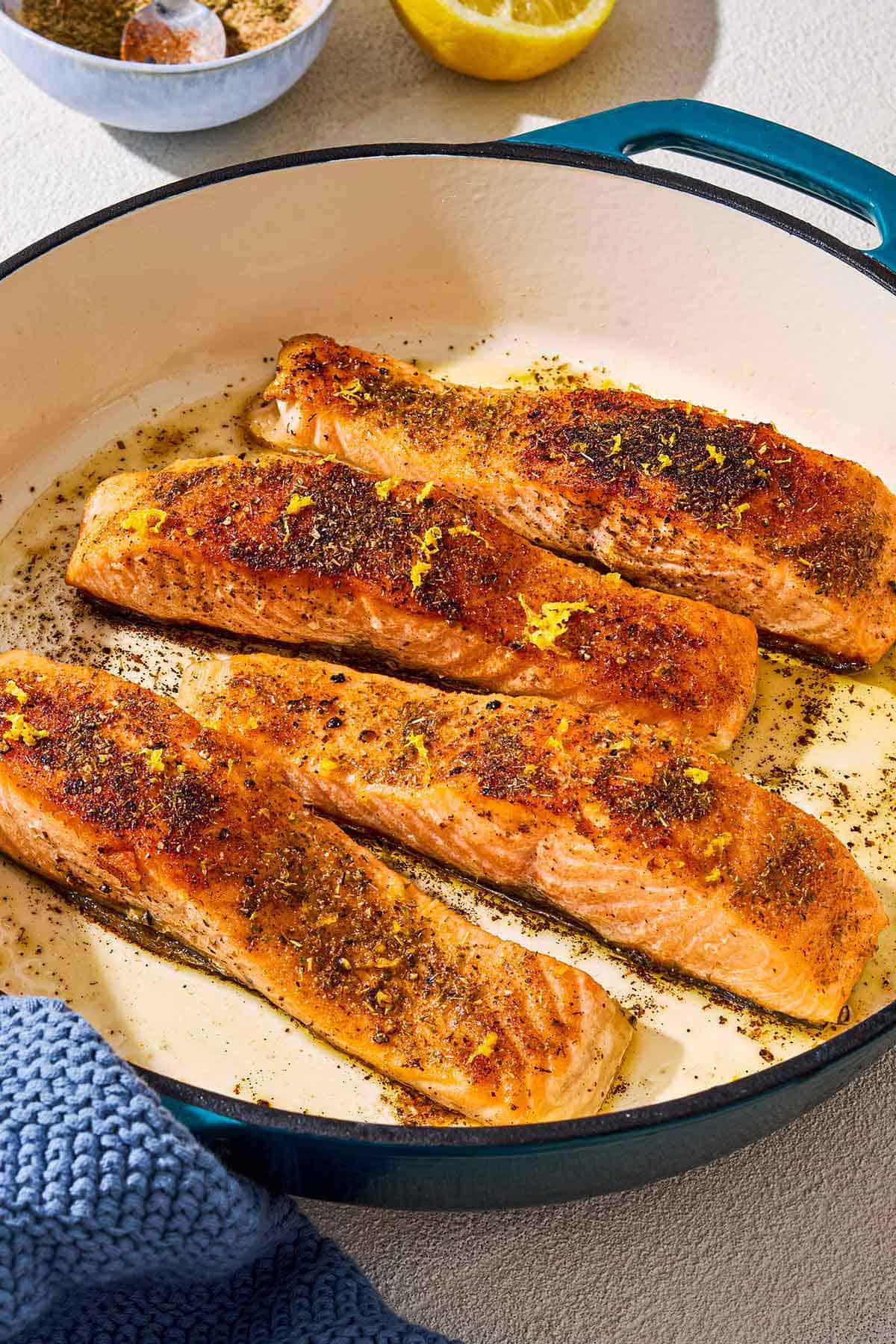
Credit: www.themediterraneandish.com
How To Fry Salmon In A Pan: Step-by-step
Frying salmon is simple, but each detail matters. Here’s a reliable process you can trust.
Step 1: Heat The Pan
Place your skillet over medium-high heat. Add 1–2 tablespoons of oil. Wait until the oil shimmers but isn’t smoking—usually about 2 minutes.
Why it matters: A hot pan is essential for browning and crisping the skin. If the oil isn’t hot enough, salmon will stick and turn soggy.
Step 2: Lay Salmon Skin-side Down
Carefully place the salmon fillets in the pan, skin-side down. Gently press each fillet with a spatula for the first 10 seconds. This keeps the skin flat and in contact with the pan.
Non-Obvious Insight: Most sticking happens in the first 30 seconds. Pressing the fillet ensures even browning and prevents curling.
Step 3: Don’t Disturb
Let the salmon cook undisturbed for 4–6 minutes, depending on thickness. You’ll see color change from the bottom up as it cooks.
- For a 1-inch fillet: 5 minutes is typical
- Thinner fillets: 3–4 minutes
Step 4: Flip And Finish
Use a spatula to gently flip the fillets. Cook the other side for 1–2 minutes until the flesh turns opaque and flakes easily.
Key signs of doneness:
- The salmon changes from translucent to opaque pink.
- The internal temperature reaches 125°F for medium-rare (use a meat thermometer for precision).
- The flesh flakes easily with a fork.
Don’t overcook: Salmon continues to cook after leaving the pan. Remove it just before it’s fully done for the best texture.
Step 5: Rest And Serve
Transfer the salmon to a plate. Let it rest for 2–3 minutes before serving—this keeps it juicy.
Add lemon wedges, chopped herbs, or a dab of butter if desired.
Common Mistakes And How To Avoid Them
Even experienced cooks sometimes make errors that affect the final result. Here’s what to watch out for:
- Cooking too cold: If the pan isn’t hot enough, the skin will steam, not crisp.
- Flipping too soon: Wait until the fillet releases easily. If it sticks, give it more time.
- Using too much oil: A thin, even layer is enough. Excess oil can make the skin greasy.
- Overcrowding the pan: Cook in batches if needed. Crowding lowers the pan’s temperature and causes uneven cooking.
- Overcooking: Salmon is best slightly underdone in the center. Overcooked salmon turns dry and chalky.
Experience-Based Tip: If you want extra flavor, add a tablespoon of butter and smashed garlic cloves to the pan during the last minute. Spoon the melted butter over the fillets for a restaurant-style finish.
Serving Suggestions And Flavor Variations
Pan-fried salmon pairs with a wide range of sides and sauces. Here are some ideas to inspire your next meal:
Classic Pairings
- Steamed rice or quinoa
- Roasted vegetables (asparagus, carrots, broccoli)
- Simple green salad with vinaigrette
- Mashed potatoes or sweet potatoes
Flavor Variations
- Herb crust: Press chopped fresh dill, parsley, or chives onto the fillet before cooking.
- Asian twist: Glaze with soy sauce, ginger, and honey in the last minute.
- Mediterranean: Add capers, olives, and a squeeze of lemon after cooking.
For more inspiration, check out detailed salmon recipes from Bon Appétit.
How To Tell When Salmon Is Done
Getting the doneness right is one of the biggest challenges for beginners. Salmon is safe to eat once it reaches 145°F (63°C), but many chefs prefer to remove it at 120–125°F for a juicier, more tender texture.
| Doneness | Internal Temp (°F) | Texture | Color |
|---|---|---|---|
| Rare | 110–115 | Very soft | Translucent |
| Medium-rare | 120–125 | Moist, silky | Light pink |
| Medium | 130–135 | Flaky, moist | Opaque pink |
| Well-done | 140–145 | Firm, dry | Pale pink |
Straight-to-the-point guidance: If you’re unsure, undercook slightly—the fish will continue cooking from residual heat.
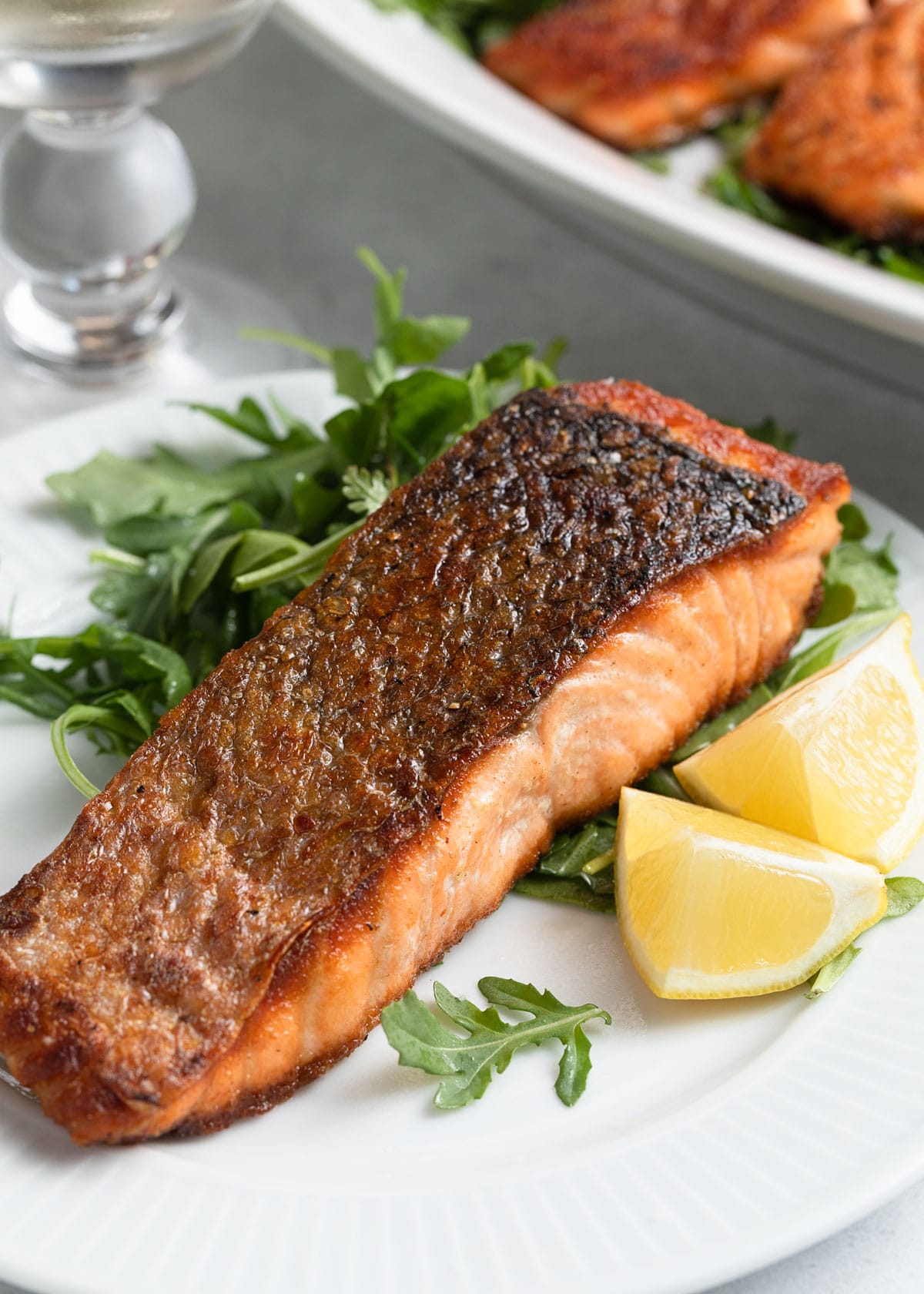
Credit: stripedspatula.com
Cleaning Up After Frying Salmon
Cooking salmon can leave behind oil splatters and fishy smells. Here’s how to make cleanup easier:
- Wipe the pan with a paper towel before washing to remove excess oil.
- Use warm, soapy water and a soft sponge to clean the pan.
- To remove lingering odors, simmer a mixture of water, lemon slices, and vinegar in the pan for a few minutes.
Non-obvious tip: If you have a cast iron pan, avoid soaking it in water. Instead, scrub with coarse salt and a little water, then dry and oil the pan to prevent rust.
Health Benefits Of Pan-fried Salmon
Eating salmon regularly is linked to many positive health effects. A single serving delivers:
- High-quality protein: Supports muscle repair and growth.
- Omega-3 fatty acids: Shown to reduce inflammation and lower risk of heart disease.
- Vitamin D: Important for bone and immune health.
- B vitamins: Aid energy production and brain function.
According to the American Heart Association, eating fish like salmon at least twice a week can improve heart health and lower the risk of some chronic diseases. Even when pan-fried with a small amount of oil, salmon remains a nutrient-dense, low-carb choice.

Credit: cooking.nytimes.com
Expert Tips For Perfect Pan-fried Salmon
- Let the pan get hot: Test by adding a drop of water—it should sizzle and evaporate quickly.
- Score the skin: Lightly score with a sharp knife to prevent curling.
- Don’t crowd the pan: Give each fillet room for heat to circulate.
- Finish with acid: A squeeze of lemon or splash of vinegar brightens up the flavors.
- Rest before serving: Letting the fish rest keeps it juicy and flavorful.
Calm expert advice: Don’t be discouraged if your first try isn’t perfect. Practice helps you learn how your stove and pan behave. Each piece of salmon is a bit different, so trust your senses and adjust as you go.
Frequently Asked Questions
How Do I Keep Salmon From Sticking To The Pan?
The most common cause of sticking is putting the salmon in before the oil is hot enough. Always preheat your pan and oil until shimmering. Also, let the fillet cook undisturbed until it naturally releases from the pan—if it resists, give it more time.
Can I Fry Salmon Without The Skin?
Yes, but the skin helps protect the delicate flesh from overcooking and adds texture. If you use skinless fillets, be extra gentle when flipping, and watch the cooking time closely to avoid drying out the fish.
What’s The Best Thickness For Pan-frying Salmon?
Fillets about 1 inch thick cook most evenly and are easier to manage in the pan. Thinner pieces cook faster and can dry out, while very thick portions may need a lower heat or finishing in the oven.
Is It Better To Use Butter Or Oil For Frying Salmon?
Oil with a high smoke point (like avocado or canola) is safest for searing. Butter adds flavor but burns quickly at high heat. For the best of both worlds, use oil for cooking, then add a pat of butter in the last minute for flavor.
Can I Reuse The Oil After Frying Salmon?
It’s best to discard the oil after frying fish, as it can carry odors and flavors. If you want to minimize waste, strain and store the oil in the fridge for one more use, but avoid using it for delicate dishes.
Pan-frying salmon is a rewarding technique that’s easy to master with a little practice. By choosing quality ingredients, using the right tools, and following a few key steps, you’ll enjoy delicious, healthy salmon at home any night of the week.
Try different seasonings and sides to keep things interesting, and don’t be afraid to make the method your own. With each cook, your confidence and results will only improve.

Hello, This is Annie Walker, a 38-year-old blogger, founder, and editor of Cookware Guider from NY, USA. I am a cookware fanatic and passionate cooker. I love to cook with different types of cooking appliances (example: all types of cookware, rice cookers, slow cookers, etc) almost every day in my kitchen. I love to share my experience with my readers in my blog. Also, I enjoy helping people to solve their problems through my website. You can follow me on Twitter & Pinterest. To know details about my blog please check the about us page.