
Cooking salmon in a frying pan is a simple way to enjoy this nutritious fish with a crispy, golden finish. It’s a favorite for many home cooks because it’s quick and doesn’t require fancy equipment. But how long should you cook salmon in a frying pan to get the best results?
The answer depends on the thickness, the type of cut, and whether you prefer your fish slightly rare or fully cooked. If you’ve ever ended up with dry or undercooked salmon, you’re not alone. Understanding timing, temperature, and technique will help you master salmon every time.
Let’s break down what you need to know for perfect pan-fried salmon.
Factors That Affect Pan-frying Time
Several elements change how long salmon takes to cook in a frying pan. Let’s look at the main factors:
- Fillet thickness: A thin fillet cooks much faster than a thick steak.
- Skin on or off: Skin-on fillets take a bit longer, but the result is crispier.
- Starting temperature: Room-temperature salmon will cook faster than one straight from the fridge.
- Pan heat: Medium-high heat is ideal, but too hot or too cool will change the timing.
- Desired doneness: Some people like salmon just cooked through (medium), while others want it well done.
For most home cooks, the sweet spot is salmon that’s opaque, moist, and just flakes with a fork. Let’s dive into what that means for your frying pan.
How Long To Cook Salmon In A Frying Pan
The general rule is 3-4 minutes per side for a 1-inch thick fillet over medium-high heat. But there’s more detail to get it just right.
Average Cooking Times For Different Thicknesses
The cooking time changes based on how thick your salmon is. Here’s a handy reference:
| Salmon Thickness | Cook Time (First Side) | Cook Time (Second Side) | Total Time |
|---|---|---|---|
| 1/2 inch (thin) | 2 min | 1-2 min | 3-4 min |
| 1 inch (standard) | 4 min | 3-4 min | 7-8 min |
| 1 1/2 inches (thick) | 5-6 min | 4-5 min | 9-11 min |
These times are for fillets cooked over medium-high heat. If your fillet is thicker than 1 1/2 inches, consider finishing in a preheated oven to avoid burning the outside.
Skin-on Vs Skinless Fillets
Skin-on salmon is popular because the skin gets crispy and helps protect the delicate flesh. Here’s how they compare:
| Type | First Side (Skin-side Down) | Second Side | Notes |
|---|---|---|---|
| Skin-on | 4-5 min | 2-3 min | Skin gets crispy, less sticking |
| Skinless | 3-4 min | 3-4 min | Flip gently, watch for sticking |
Cooking skin-side down first is recommended for best results. It allows the skin to crisp up and forms a barrier, helping the fish cook evenly.
How To Tell When Salmon Is Done
It’s easy to overcook salmon, which makes it dry and less flavorful. Here are reliable ways to check doneness:
- Color: The flesh should turn opaque (light pink) and no longer look translucent.
- Texture: Press gently with a fork. If it flakes easily, it’s done.
- Internal temperature: Use a food thermometer. The FDA recommends 145°F (63°C) for salmon, but many chefs prefer 125–130°F (52–54°C) for a moister texture.
- Juices: The juices should run clear, not milky or red.
A common beginner mistake is to cook by time alone. Always check for visual and textural cues, especially if your fillet is not a standard size.
Step-by-step: Pan-frying Salmon
Let’s walk through the process for perfect salmon in a frying pan.
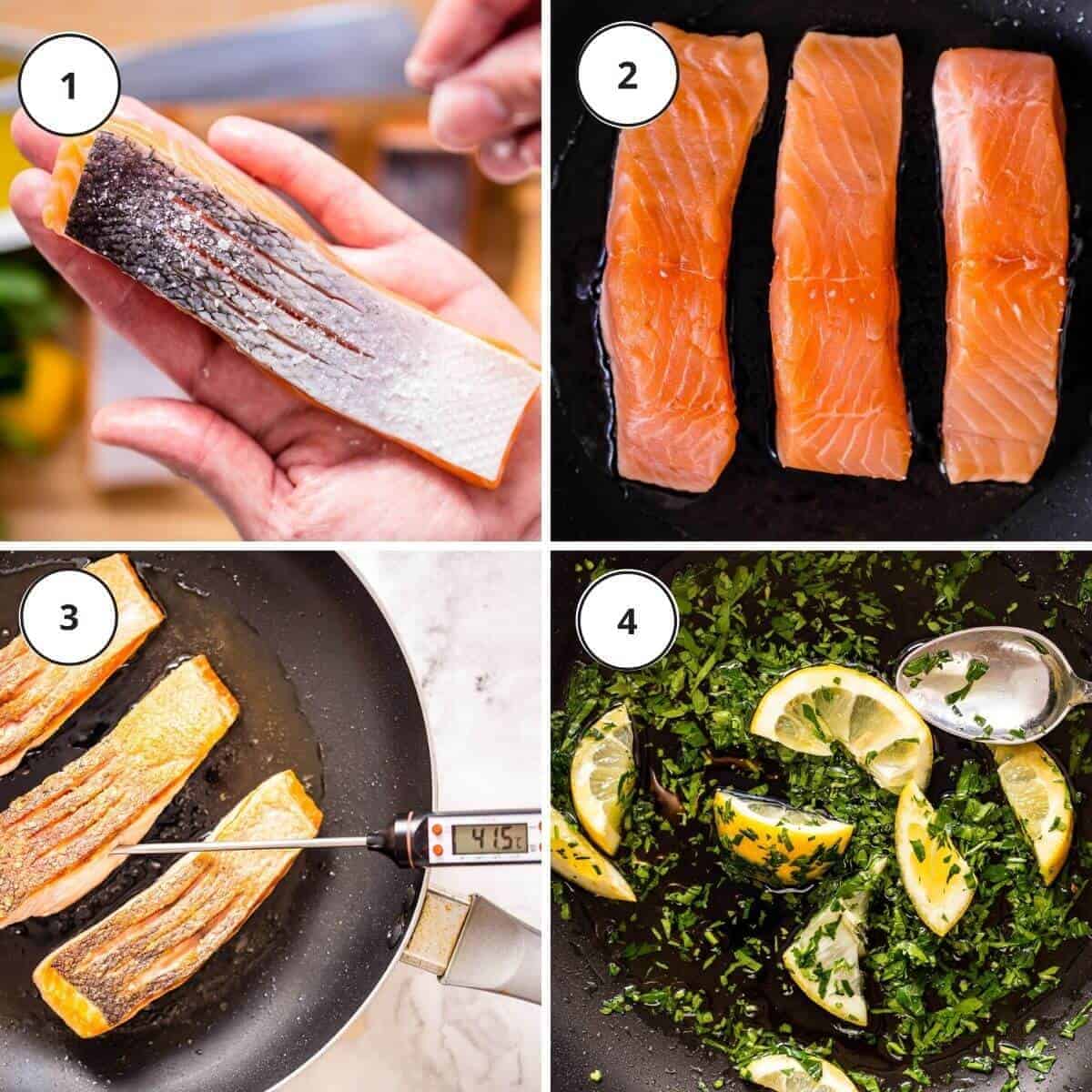
1. Prepare The Salmon
- Pat dry with paper towels to remove extra moisture (helps with browning).
- Season both sides with salt and pepper. Add other spices or herbs if you like.
- Let the salmon sit at room temperature for 10-15 minutes for more even cooking.
2. Preheat The Pan
- Use a nonstick or stainless steel skillet.
- Heat 1-2 tablespoons of oil (olive, canola, or avocado oil work well) over medium-high heat until shimmering.
3. Cook Skin Side Down First
- Place the salmon skin-side down (if skin-on) into the hot pan.
- Press gently with a spatula for the first 30 seconds to prevent curling.
4. Time Each Side
- Skin side: Cook undisturbed for 4-5 minutes, depending on thickness.
- Watch the color change from bottom to top as it cooks.
- Flip carefully: Use a thin spatula to avoid breaking the fillet.
- Flesh side: Cook for another 2-4 minutes.
5. Test For Doneness
- Use a fork or thermometer as described above.
- If the salmon is not done but the outside is browning, lower the heat or cover the pan for a minute.
6. Rest And Serve
- Let the salmon rest for 2-3 minutes before serving. This helps the juices redistribute.
Tips For Crispy Skin And Perfect Texture
Crispy salmon skin is a treat, but it’s easy to miss. Here’s how to get it right:
- Dry the skin thoroughly before cooking.
- Use enough oil to coat the pan.
- Don’t move the fillet during the first few minutes; let it sear.
- Press down lightly with a spatula at the start.
- Finish with a squeeze of lemon or sprinkle of herbs for extra flavor.
Common Mistakes To Avoid
- Pan too cold: Results in soggy skin and sticking.
- Pan too hot: Burns the outside before the inside is cooked.
- Flipping too soon: Causes the skin to tear.
- Skipping the rest: The juices run out, making the salmon dry.
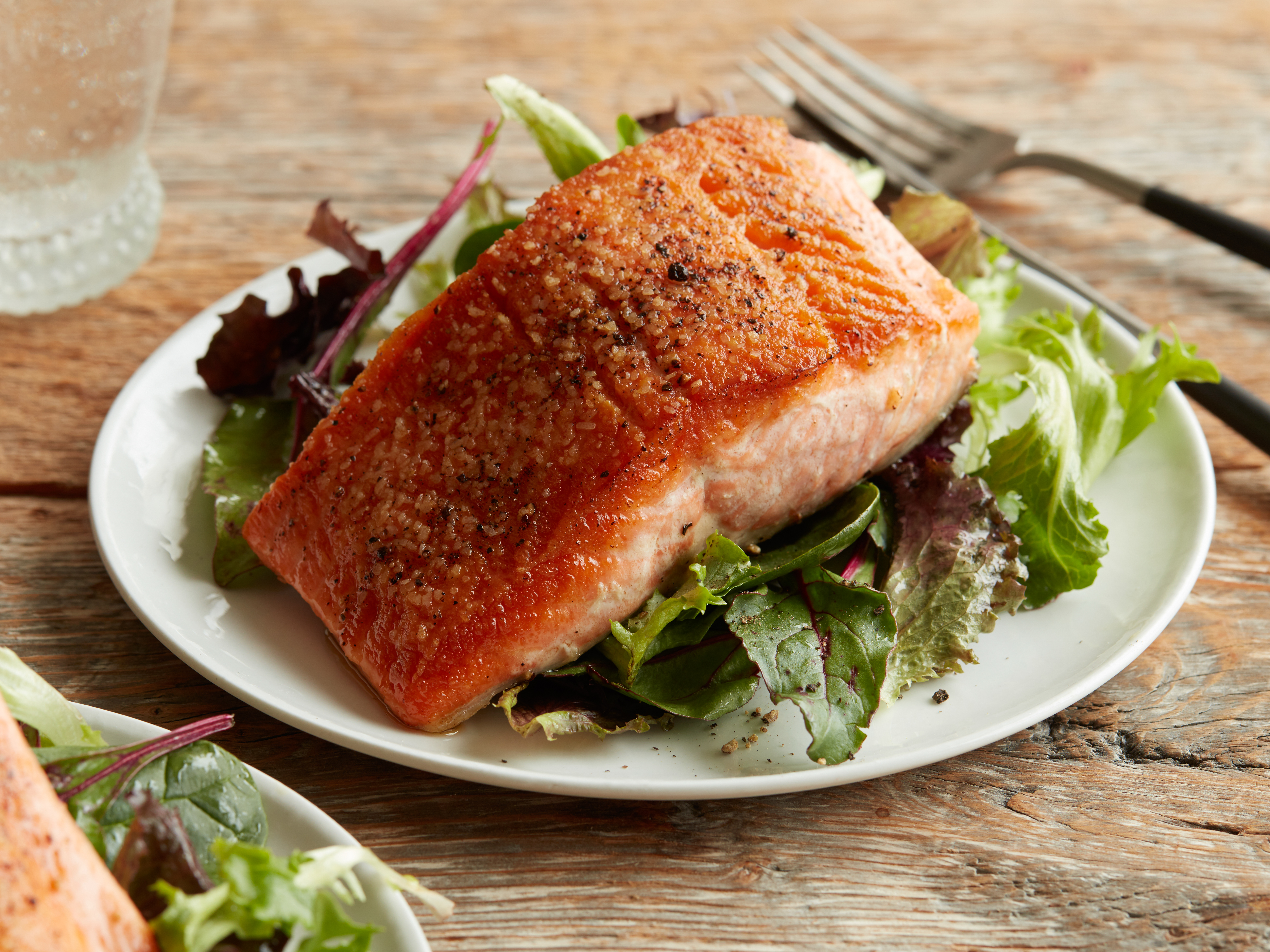
Credit: www.foodnetwork.com
Should You Cook With The Lid On Or Off?
Most pan-fried salmon recipes call for cooking uncovered. This helps the moisture evaporate, making the skin crispier. However, for very thick cuts, you can cover the pan for the last minute to help cook the center without burning the outside.
Using Butter, Oil, Or Both
Oil has a higher smoke point, so it’s good for searing. Butter adds flavor but can burn quickly. A good tip is to use oil at the start, then add a small amount of butter in the last minute for flavor and browning.
Serving Suggestions
Salmon is flexible and goes well with many sides. Here are some popular options:
- Rice or quinoa
- Steamed or roasted vegetables
- Salad with a citrus dressing
- Mashed potatoes or cauliflower
For a simple sauce, try mixing yogurt with lemon, dill, and a pinch of salt.
Cooking Frozen Salmon In A Frying Pan
You can cook salmon straight from the freezer if you’re in a rush. Here’s how:
- Rinse the frozen fillets quickly under cold water to remove any ice.
- Pat dry and season.
- Place in a preheated pan over medium heat, cover, and cook for 6-7 minutes.
- Flip, uncover, and cook another 5-7 minutes until cooked through.
Frozen salmon won’t get as crispy, but it’s still tasty and safe when cooked to the right temperature.
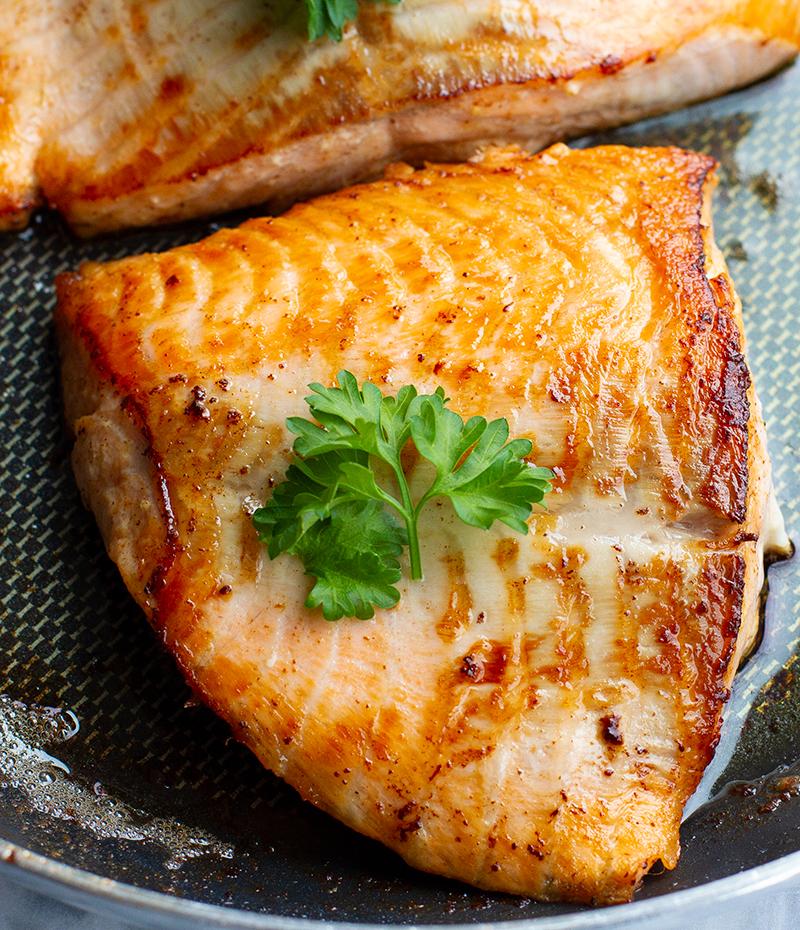
Credit: thekitchenmagpielowcarb.com
Comparison: Pan-frying Vs Other Salmon Cooking Methods
How does frying in a pan compare with other methods like baking or grilling? Here’s a quick look:
| Method | Time | Texture | Difficulty |
|---|---|---|---|
| Pan-frying | 6-10 min | Crispy outside, moist inside | Easy to moderate |
| Baking | 12-18 min | Even, soft | Easy |
| Grilling | 6-8 min | Smoky, charred | Moderate |
| Poaching | 8-12 min | Very moist, no crust | Easy |
Pan-frying is best for crispy skin and a quick meal, while baking is good for hands-off cooking.
Health Benefits And Food Safety
Salmon is rich in omega-3 fatty acids, protein, and vitamin D. Eating two servings a week supports heart and brain health. However, undercooked fish can carry bacteria or parasites. Always cook salmon to a safe internal temperature, especially for young children, the elderly, or those with weak immune systems.
If you want to learn more about safe fish cooking guidelines, visit the FDA Food Safety Standards.
Credit: www.pantsdownapronson.com
Frequently Asked Questions
How Do I Keep Salmon From Sticking To The Pan?
Dry the fish well before cooking and heat the oil until shimmering. Use a nonstick or well-seasoned skillet, and don’t move the fish in the first few minutes.
Can I Use Butter Instead Of Oil For Frying Salmon?
Yes, but butter burns at a lower temperature. For best results, start with oil and add butter in the last minute for flavor.
What Is The White Stuff That Comes Out Of Salmon When Frying?
That’s albumin, a protein that solidifies when heated. It’s harmless but can be reduced by cooking the fish more gently or brining briefly before cooking.
Can I Fry Salmon With The Skin Removed?
Absolutely. Skinless fillets cook a bit faster and need more care when flipping to prevent breaking.
How Do I Know If Salmon Is Undercooked?
Undercooked salmon will look translucent and raw in the center. It won’t flake easily with a fork. Use a thermometer to check for at least 125°F (52°C) for safe, moist salmon.
Cooking salmon in a frying pan is quick, delicious, and easy with the right technique. Remember: adjust your cook time based on the thickness, start with a hot pan, and always check for doneness. With a little practice, you’ll have perfect pan-fried salmon every time—crispy on the outside and juicy inside. Enjoy your meal and the health benefits that come with it!

Hello, This is Annie Walker, a 38-year-old blogger, founder, and editor of Cookware Guider from NY, USA. I am a cookware fanatic and passionate cooker. I love to cook with different types of cooking appliances (example: all types of cookware, rice cookers, slow cookers, etc) almost every day in my kitchen. I love to share my experience with my readers in my blog. Also, I enjoy helping people to solve their problems through my website. You can follow me on Twitter & Pinterest. To know details about my blog please check the about us page.