
How Long To Pan Fry Burgers
There’s something special about the taste of a burger cooked in a hot pan. The sizzle, the aroma, and that golden crust make it hard to resist. But many people ask, “How long should I pan fry burgers?” Timing matters—a few minutes too short, and your burger may be raw inside; too long, and it dries out. Getting it right is not just about minutes but also thickness, heat level, and meat type. Whether you’re new to cooking or just want to perfect your burger game, this guide gives you clear, simple steps and practical tips for juicy, flavorful burgers every time.
What Affects Pan Frying Time?
Pan frying burgers may sound simple, but several factors affect how long it actually takes. Understanding these will help you cook burgers that are safe and delicious.
Burger Thickness
Thicker burgers need more time. A standard burger is about ¾ inch thick, but some prefer them thinner or thicker. Thinner patties cook much faster.
Meat Type And Fat Content
Most home cooks use ground beef (usually 80/20—80% lean, 20% fat). Leaner meat dries out faster and may need less time. Turkey, chicken, or plant-based burgers have different cooking times and safety needs.
Pan Temperature
A hot pan is essential for a good crust. But too much heat can burn the outside while leaving the inside raw. Medium-high heat works best for most burgers.
Burger Doneness
How do you like your burger? Rare, medium, or well-done? The USDA recommends ground beef be cooked to 160°F for safety. Some people like their burgers less done, but that’s a personal choice.
Average Pan Frying Times
Let’s get straight to the numbers. Here’s a summary for a typical ¾-inch beef patty on medium-high heat:
| Doneness | Cook Time (per side) | Total Time | Internal Temp |
|---|---|---|---|
| Rare | 2-3 min | 4-6 min | 120-125°F |
| Medium Rare | 3-4 min | 6-8 min | 130-135°F |
| Medium | 4-5 min | 8-10 min | 140-145°F |
| Medium Well | 5-6 min | 10-12 min | 150-155°F |
| Well Done | 6-7 min | 12-14 min | 160°F+ |
Remember, these are guidelines. Actual time may vary based on your stove, pan, and patty size.
Credit: allshecooks.com
Step-by-step: Pan Frying The Perfect Burger
Cooking burgers in a pan isn’t complicated, but following these steps helps you avoid common mistakes.
1. Shape Your Patties
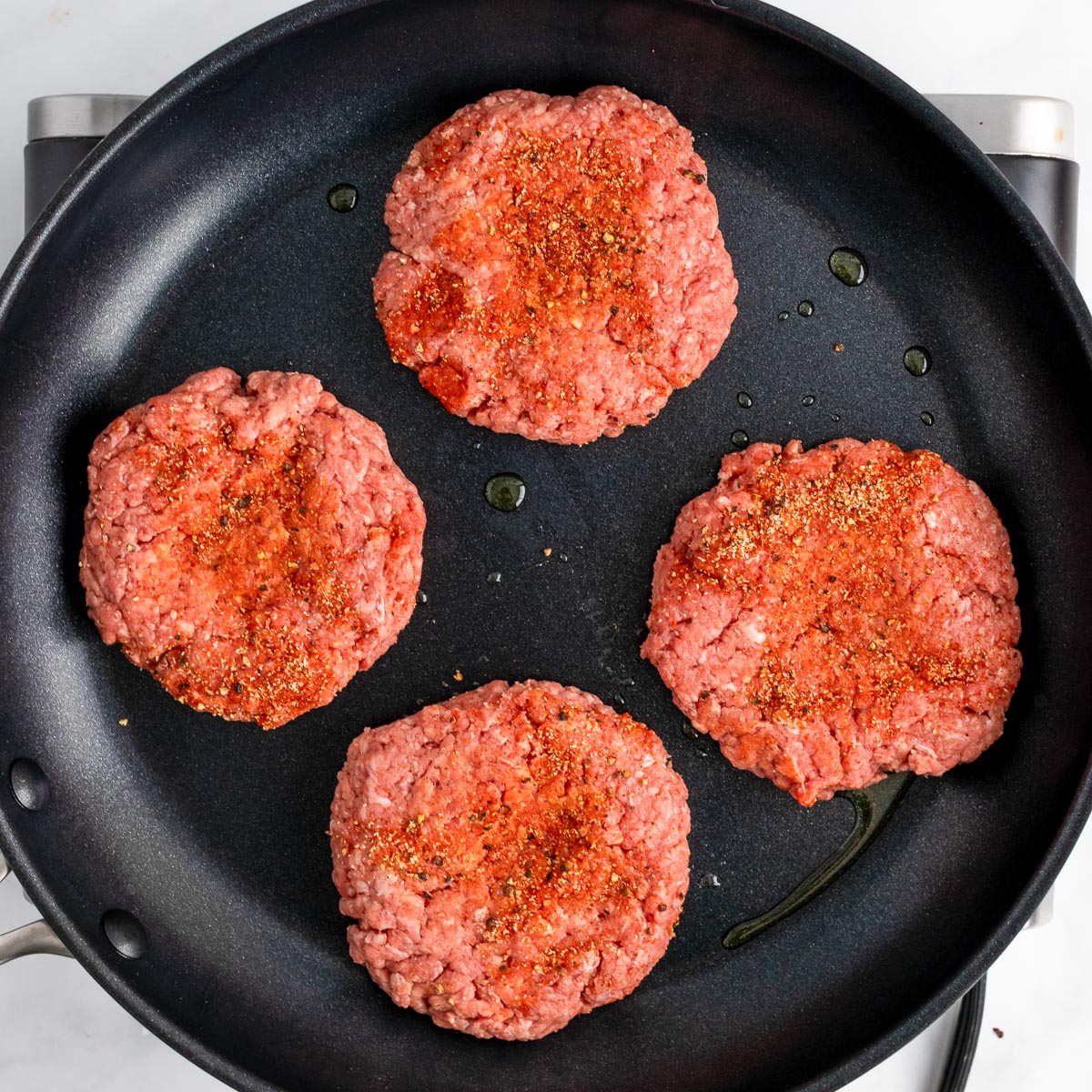
Make patties that are about ¾ inch thick. Press a small dent in the center with your thumb—this helps the burger cook evenly and prevents it from puffing up.
2. Preheat The Pan
Heat a heavy skillet (cast iron is best) on medium-high heat for 2–3 minutes. A drop of water should sizzle and evaporate instantly.
3. Season Your Burger
Just before cooking, sprinkle both sides with salt and pepper. You can add garlic powder, onion powder, or other spices, but simple salt brings out the beef flavor.
4. Add A Little Oil
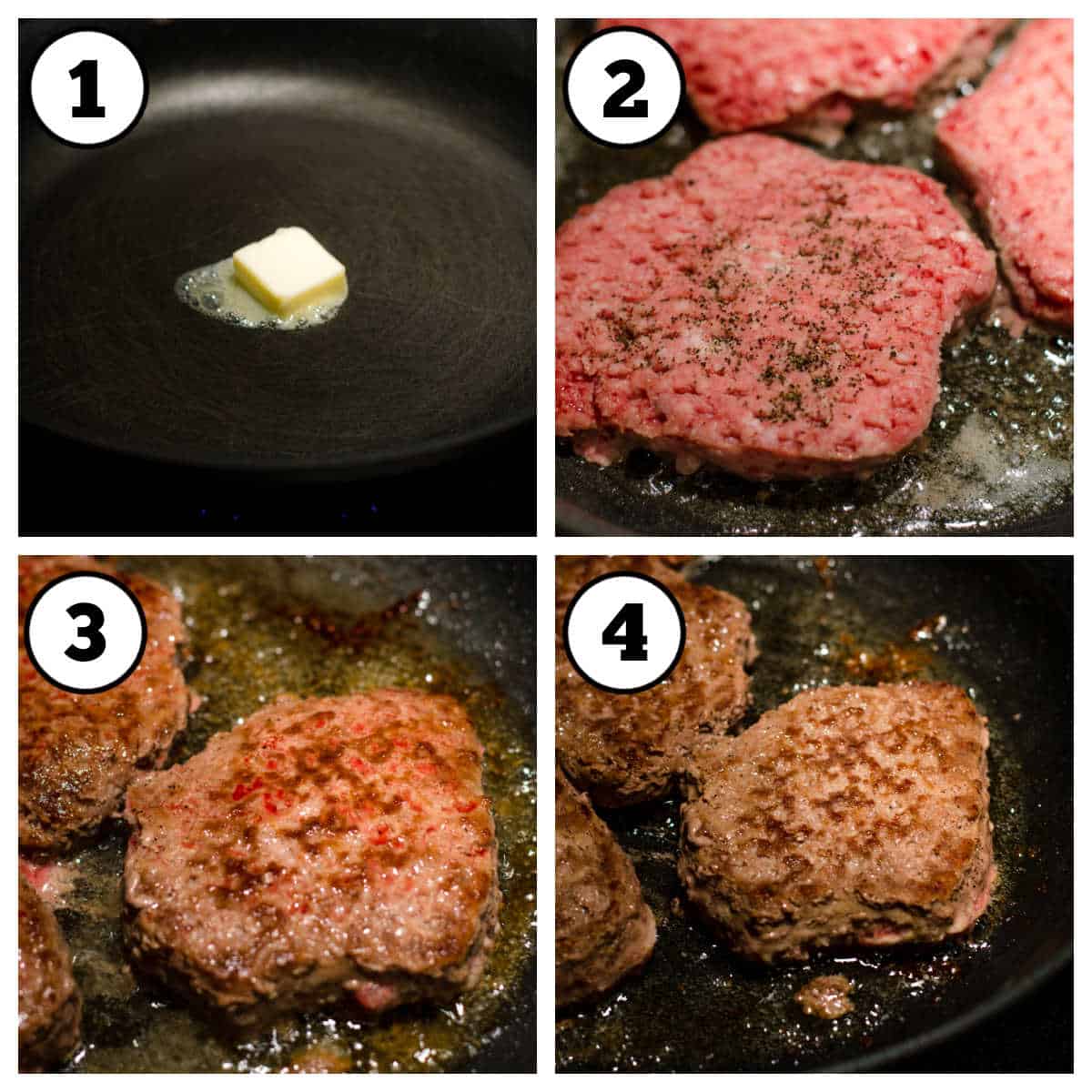
Pour ½–1 tablespoon of vegetable or canola oil in the pan. Swirl to coat the bottom. This prevents sticking and helps form a nice crust.
5. Place Burgers In The Pan
Lay the patties down gently. Don’t press on them with a spatula—this squeezes out juices.
6. Cook First Side
Let the burgers cook undisturbed for the recommended time (see table above). Look for brown edges before flipping.
7. Flip And Finish
Turn the burgers carefully. Cook for the same time on the other side. If adding cheese, put a slice on in the last minute and cover the pan to help it melt.
8. Check Doneness
For best results, use a meat thermometer. Insert it into the center from the side. For safety, aim for 160°F.
9. Rest Before Serving
Let burgers sit for 2–3 minutes before eating. This keeps the juices inside.
How Pan Type Changes Cooking Time
Not all pans are equal. Here’s a quick comparison:
| Pan Type | Pros | Cons | Effect on Time |
|---|---|---|---|
| Cast Iron | Even heating, best crust | Heavy, needs care | No change, but more even cooking |
| Nonstick | Easy to clean | Less browning | May cook faster on high heat |
| Stainless Steel | Great sear | Can stick | Similar to cast iron |
Cast iron is preferred by many chefs for its heat retention and crust, but a nonstick pan is easier for beginners.

Credit: www.omahasteaks.com
Different Meats: Beef, Turkey, Chicken, And Plant-based Burgers
Not all burgers are beef. Here’s how pan frying time changes for other types.
Turkey And Chicken Burgers
Poultry must be cooked to 165°F for safety. These burgers are often leaner and can dry out quickly.
- Usual cooking time: 5–6 minutes per side for a ¾-inch patty
- Add a little extra oil for moisture
- Use a thermometer—don’t guess
Plant-based Burgers
Brands like Beyond Meat or Impossible use different ingredients. Always check the package, but most cook in 3–4 minutes per side.
- Don’t overcook—texture can get mushy or dry
- Some browning is normal, but they won’t always look like beef
Fish Burgers
Fish (like salmon or tuna) burgers need about 3–4 minutes per side. They should be cooked until firm but not dry.
Common Pan Frying Mistakes (and How To Avoid Them)
Even experienced cooks make mistakes. Here are some to watch for:
- Overcrowding the pan: Too many burgers lower the pan’s temperature, leading to steaming instead of browning.
- Pressing the burgers: This pushes out flavorful juices—let them cook undisturbed.
- Flipping too often: Flip once only for best results.
- Not preheating: A cold pan leads to sticking and pale burgers.
- Skipping the rest: Resting helps the juices settle—don’t skip it.
A less obvious mistake is using cold meat straight from the fridge. Let patties sit at room temperature for 10–15 minutes before cooking. This helps them cook more evenly.
How To Tell If Your Burger Is Done
You don’t have to guess. Here are three ways:
1. Meat Thermometer
The most reliable method. Insert into the side of the burger for the best reading.
2. Touch Test
Press the center of the burger gently. Rare will feel very soft, medium has a little bounce, and well-done feels firm. This method takes practice and isn’t foolproof for beginners.
3. Visual Clues
Check the juices. For beef, clear juices mean well-done, pink means medium. For poultry, juices must run clear.
Cooking Frozen Burgers In A Pan
Not everyone has time to thaw burgers. You can pan fry frozen patties, but it takes longer.
- Add 2–3 extra minutes per side
- Cover the pan for the first half of cooking to help thaw the center
- Remove excess water that may collect in the pan
For best results, thaw burgers in the fridge overnight before cooking.
Tips For Juicy, Flavorful Burgers
- Use high-fat ground beef (80/20) for more flavor and moisture.
- Don’t overwork the meat when shaping patties. Gentle handling keeps burgers tender.
- Try a quick butter baste: In the last minute, add a pat of butter and spoon it over the burger.
- Add toppings (like onions or mushrooms) in the pan after removing burgers to soak up extra flavor.
Nutritional Insights: Calories And Fat
Pan frying burgers adds fat and calories, but you can manage both by choosing leaner meat or draining excess fat. Here’s a basic comparison:
| Burger Type | Calories (4 oz cooked) | Total Fat | Protein |
|---|---|---|---|
| 80/20 Beef | 290 | 23g | 19g |
| 93/7 Beef | 195 | 7g | 25g |
| Turkey | 170 | 9g | 22g |
| Plant-Based | 240 | 14g | 19g |
For more on nutrition and safe cooking, the USDA offers reliable information (USDA).
Credit: fantabulosity.com
Frequently Asked Questions
How Do I Know When To Flip My Burger?
Wait until you see brown edges and juices pooling on the uncooked side. This usually happens after 3–5 minutes. Flipping too early can cause sticking and uneven cooking.
Can I Pan Fry Burgers Without Oil?
You can, especially with fattier meats, but a small amount of oil helps create a better crust and prevents sticking. Lean burgers or nonstick pans may work without added oil but watch closely.
Should I Cover The Pan While Frying Burgers?
Covering helps melt cheese and can cook the center more evenly, especially for thick or frozen patties. However, keeping the pan uncovered gives a better crust. Try covering for the last minute if adding cheese.
Why Do My Burgers Shrink So Much?
All burgers shrink as fat and water cook out. To reduce shrinkage, don’t overwork the meat, make a small indentation in the center, and avoid high heat that cooks too fast.
Can I Use The Same Timing For Sliders Or Mini Burgers?
No, sliders cook faster because they’re smaller and thinner. Start with 2 minutes per side and check doneness early. Adjust as needed.
Cooking the perfect pan-fried burger is about more than just time—it’s about understanding your ingredients, tools, and a few simple techniques. By following these tips and guidelines, you’ll enjoy juicy, flavorful burgers every time, whether you like them rare or well-done.
Remember, a little practice makes a big difference. Happy cooking!

Hello, This is Annie Walker, a 38-year-old blogger, founder, and editor of Cookware Guider from NY, USA. I am a cookware fanatic and passionate cooker. I love to cook with different types of cooking appliances (example: all types of cookware, rice cookers, slow cookers, etc) almost every day in my kitchen. I love to share my experience with my readers in my blog. Also, I enjoy helping people to solve their problems through my website. You can follow me on Twitter & Pinterest. To know details about my blog please check the about us page.