
Cooking filet mignon in a frying pan can seem intimidating, especially if you’ve only had it at expensive restaurants. But with the right steps and a bit of care, you can create a restaurant-quality steak in your own kitchen. You don’t need fancy equipment—just a heavy pan, some simple ingredients, and a little technique. This guide will show you exactly how to get that perfect sear, a juicy center, and incredible flavor with filet mignon cooked on your stovetop.
Understanding Filet Mignon
Filet mignon comes from the smaller end of the tenderloin, a muscle that rarely gets used. This is why it’s one of the most tender cuts of beef. While it’s not as flavorful as ribeye or strip steak, its buttery texture and mild taste make it highly prized.
Because filet mignon is lean, it can dry out if overcooked. Careful cooking and a few tricks help keep it juicy and tender. It’s also a smaller steak, often around 6–8 ounces and 1. 5–2 inches thick. These details affect cooking time and technique.
Ingredients And Tools
Before you start, gather everything you need. Using high-quality ingredients makes a real difference.
You’ll need:
- 2 filet mignon steaks (6–8 oz each, 1.5–2 inches thick)
- 2 teaspoons kosher salt
- 1 teaspoon freshly ground black pepper
- 2 tablespoons high smoke point oil (like canola, grapeseed, or avocado oil)
- 2 tablespoons unsalted butter
- 2 sprigs fresh thyme (optional)
- 2 cloves garlic (crushed, optional)
Essential tools:
- Heavy frying pan (cast iron preferred for best sear)
- Tongs
- Instant-read meat thermometer
- Paper towels
- Spoon (for basting)
Using a cast iron pan is best for heat retention and even browning. If you don’t have one, use the heaviest pan you own.

Credit: www.antillespr.edu
Preparing The Filet Mignon
1. Bring Steak To Room Temperature
Remove the steaks from the fridge about 30–40 minutes before cooking. Cold meat cooks unevenly. Letting it warm up helps the filet mignon cook more evenly and brown better.
2. Dry The Surface
Pat the steaks dry with paper towels. This is a small step, but it’s essential for a good crust. Surface moisture turns to steam and prevents browning.
3. Season Generously
Coat both sides of each steak with kosher salt and freshly ground black pepper. Don’t be shy—much of the seasoning stays on the pan, so add a little more than you think you need.
Cooking Filet Mignon In A Frying Pan
1. Preheat The Pan
Place your pan over medium-high heat for at least 2–3 minutes. A properly preheated pan is key for the perfect sear. If you drop a little water, it should sizzle and evaporate instantly.
2. Add Oil
Pour in the oil and swirl to coat the pan. Wait a few seconds for the oil to shimmer but not smoke. High smoke point oils are important—olive oil will burn before you finish searing.
3. Sear The Steaks
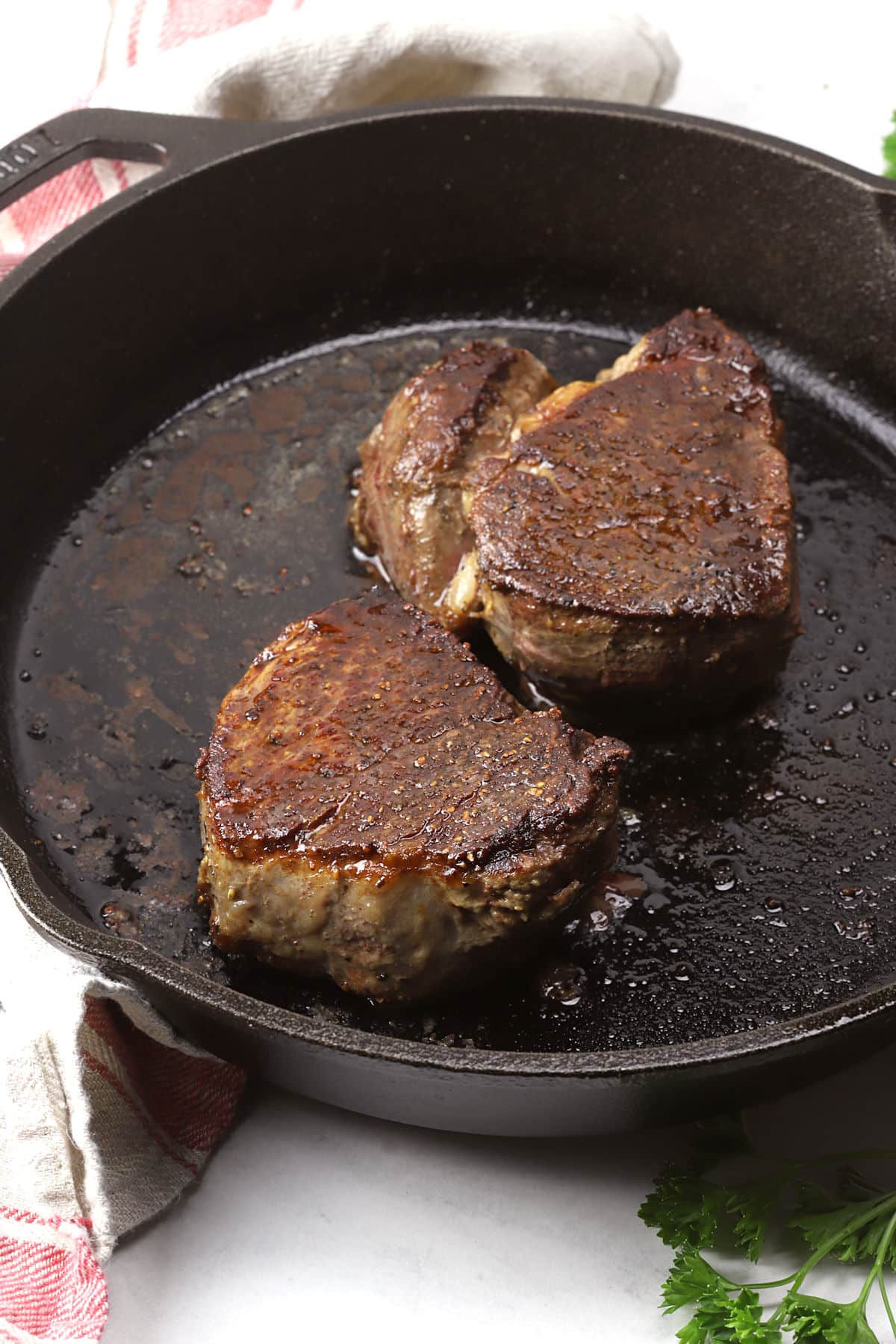
Carefully lay the steaks in the pan away from you, so hot oil doesn’t splash. Let them sear without moving for 2–3 minutes. Check the bottom: it should have a deep brown crust before you flip.
Flip the steaks and sear the other side for another 2–3 minutes. For a classic crosshatch pattern, rotate the steaks 90 degrees halfway through each side.
4. Add Butter, Garlic, And Thyme
Lower the heat to medium. Add butter, crushed garlic, and thyme to the pan. As the butter melts and foams, tilt the pan and use a spoon to baste the steaks with the flavorful butter. This adds aroma and helps cook the sides.
5. Sear The Edges
If your filet mignon is thick, hold it with tongs and sear the sides for 30–60 seconds each. The sides should brown just like the top and bottom.
6. Check Doneness
Use a meat thermometer for best results. Filet mignon is best medium-rare to medium. Here’s a simple guide:
| Doneness | Internal Temperature (°F) | How It Feels |
|---|---|---|
| Rare | 120–125 | Very soft, spongy |
| Medium-rare | 130–135 | Soft, slightly springy |
| Medium | 140–145 | Firm, springy |
| Medium-well | 150–155 | Very firm |
| Well-done | 160+ | Hard, little give |
Insert the thermometer from the side into the center of the steak. Stop cooking when the steak is about 5°F below your target, as it will keep cooking after you remove it from the pan.
7. Rest The Steak
Transfer the steaks to a plate and loosely cover with foil. Rest for 5–10 minutes. This step keeps the juices inside, so your steak is moist when you cut into it.
:max_bytes(150000):strip_icc()/perfect-pan-seared-steaks-recipe-step-beauty-c7a9ca69ad9e4d4cb783f845fd429251.JPG)
Credit: www.seriouseats.com
Serving Suggestions
Filet mignon shines with simple sides and sauces. Here are some classic pairings:
- Garlic mashed potatoes for a creamy, rich base.
- Grilled asparagus or green beans add color and freshness.
- Red wine reduction or classic béarnaise sauce brings another layer of flavor.
Many people skip sauce because filet mignon is already rich, but a little compound butter or pan sauce can elevate your meal.
Common Mistakes To Avoid
Cooking filet mignon is simple, but a few errors can ruin the result. Here’s what to watch out for:
- Starting with cold meat: As mentioned, it will cook unevenly.
- Under-seasoning: Thicker cuts need more salt and pepper.
- Moving the steak too much: Let it sear to build a crust.
- Overcooking: Filet mignon dries out quickly. Use a thermometer.
- Skipping the rest: Resting makes a huge difference in juiciness.
- Using olive oil: It burns and can make your steak taste bitter.
Credit: thetoastykitchen.com
How Pan-frying Compares To Other Methods
Is frying filet mignon better than grilling, oven-roasting, or sous vide? Each method has strengths. Here’s a quick comparison:
| Cooking Method | Pros | Cons |
|---|---|---|
| Frying Pan | Great crust, easy to control, fast | Can get smoky, needs attention |
| Grilling | Charred flavor, outdoor cooking | Harder to control heat, can dry out |
| Oven Roasting | Good for large batches, even cooking | No crust unless seared first |
| Sous Vide + Sear | Perfect doneness, tender | Needs special equipment, takes longer |
For most home cooks, the frying pan is the best mix of flavor, control, and simplicity.
Pro Tips For A Better Filet Mignon
1. Dry brining: Salt your steak and leave it uncovered in the fridge for up to 24 hours. This draws moisture out and back in, seasoning the steak deeply and improving the crust.
2. Basting: Don’t skip basting with butter and aromatics. It gives the steak a nutty, rich flavor.
3. Sear in batches: If you’re cooking more than two steaks, do them in batches. Crowding the pan drops the temperature and prevents a good crust.
4. Let the pan cool a bit before adding butter: Butter burns quickly. Lower the heat or remove the pan from the burner when you add it.
5. Save the pan juices: After cooking, use the browned bits in the pan to make a quick sauce. Add a splash of wine or stock, simmer, and finish with a little more butter.
Understanding Steak Thickness And Cooking Time
Thicker steaks need more time, but you don’t want to overcook the outside. Here’s how thickness changes your timing:
| Steak Thickness | Sear Each Side | Finish in Pan? | Total Time (Med-Rare) |
|---|---|---|---|
| 1 inch | 2 min | Yes | 4–6 min |
| 1.5 inches | 2.5–3 min | Usually | 7–8 min |
| 2 inches | 3–3.5 min | Maybe (may need quick oven finish) | 8–10 min |
If your steak is extra thick and the outside browns before the inside is done, you can finish it in a 400°F oven for a few minutes. But for most home cooks, a frying pan alone is enough for 1–2 inch thick filets.
The Science Of Searing
Searing meat causes the Maillard reaction—a complex chemical process that creates hundreds of new flavor compounds and a brown crust. The key is high heat and a dry surface. Searing doesn’t “seal in” juices, but it does add tremendous flavor. That’s why we preheat the pan, dry the meat, and don’t move it as it cooks.
Final Thoughts
Cooking filet mignon in a frying pan is not just possible—it’s often the best way to enjoy this luxurious cut at home. You get a perfect sear, control over doneness, and a rich taste without complicated steps. Focus on the details: bring the steak to room temperature, dry the surface, use high heat, and don’t skip the rest. With practice, you’ll find your preferred doneness and technique.
If you want to dive deeper into steak science and techniques, check out this Serious Eats guide for more in-depth information.
Frequently Asked Questions
How Do I Know When Filet Mignon Is Done Without A Thermometer?
You can use the finger test—press the center of the steak with your finger or tongs. Rare feels very soft, medium-rare is soft and a bit springy, medium is firmer. This takes practice, so a thermometer is more reliable.
Can I Use Butter Alone Instead Of Oil For Frying?
Butter alone can burn at high heat. Use oil for searing and add butter later for flavor and basting. This avoids burnt, bitter flavors.
Do I Need To Marinate Filet Mignon?
Marinating isn’t necessary and can even overpower the delicate flavor. Salt and pepper are enough. If you want extra flavor, use compound butter or a quick pan sauce after cooking.
Can I Cook Filet Mignon From Frozen?
It’s possible, but not recommended. The outside may burn before the inside cooks. If you must, sear both sides and finish in the oven, but expect less even results.
What’s The Best Pan For Frying Steak?
A cast iron skillet is ideal because it retains heat and gives a great crust. Stainless steel pans also work well. Avoid nonstick pans—they don’t brown meat as effectively.
By following these steps and tips, you’ll create an impressive filet mignon every time—even if you’re new to cooking steak at home.

Hello, This is Annie Walker, a 38-year-old blogger, founder, and editor of Cookware Guider from NY, USA. I am a cookware fanatic and passionate cooker. I love to cook with different types of cooking appliances (example: all types of cookware, rice cookers, slow cookers, etc) almost every day in my kitchen. I love to share my experience with my readers in my blog. Also, I enjoy helping people to solve their problems through my website. You can follow me on Twitter & Pinterest. To know details about my blog please check the about us page.