
Pan-fried potatoes are a classic comfort food—crispy on the outside, soft on the inside, and full of flavor. Yet, one common question arises in kitchens everywhere: how long to pan fry potatoes? If you’ve ever ended up with burnt outsides and raw centers, you know timing is everything. Mastering this simple dish isn’t just about tossing potatoes in a pan. Small choices—like potato type, slice thickness, and pan temperature—make a big difference. This guide will walk you through the process with clear steps, timing advice, and tips you won’t find on most recipe cards.
What Affects Pan Frying Time?
The time it takes to pan fry potatoes depends on several key factors. Understanding these can help you get perfect results every time.
Potato Type
Some potatoes are better for frying than others. Waxy potatoes (like Yukon Gold or Red potatoes) hold their shape and cook faster. Starchy potatoes (like Russet) develop a crispier edge but may take longer to cook through. For even cooking, aim for medium-sized, firm potatoes.
Cut Size And Shape
How you cut your potatoes is just as important as the type you choose. Thin slices (about 1/8 inch) cook much faster than thick wedges or cubes. If you go for diced potatoes (about ½ inch cubes), expect a longer cooking time. Consistency matters: if your pieces are uneven, some will burn while others stay raw.
Pan And Oil Choice
A heavy-bottomed skillet—preferably cast iron or stainless steel—retains heat and cooks more evenly. Nonstick pans can work but may not give the same crisp. Choose neutral oils with a high smoke point, like canola, sunflower, or avocado oil. Butter adds flavor but can burn, so mix it with oil if you use it.
Temperature And Stove Power
Medium to medium-high heat is best. Too high and the outside burns before the inside cooks. Too low and you’ll get soggy, pale potatoes. Home stovetops vary, so you may need to adjust as you go.
Moisture Content
Wet potatoes steam instead of frying. Always pat potatoes dry with a clean towel before they hit the pan. This small step can make the difference between soggy and crisp.
Typical Pan Frying Times
So, how long should you actually pan fry potatoes? Here’s a quick reference for common cuts and methods:
| Potato Cut | Approximate Fry Time (Minutes) | Notes |
|---|---|---|
| Thin Slices (1/8 inch) | 8–12 | Fastest; flip often for even browning |
| Thick Slices (1/4 inch) | 12–18 | May need to cover pan for soft centers |
| Diced (1/2 inch cubes) | 15–20 | Stir occasionally, cover for best texture |
| Wedges (thick) | 18–25 | Use lower heat to avoid burning |
These are estimates for frying on medium heat in a single layer. Crowded pans or very thick pieces can add several minutes to the total cook time.
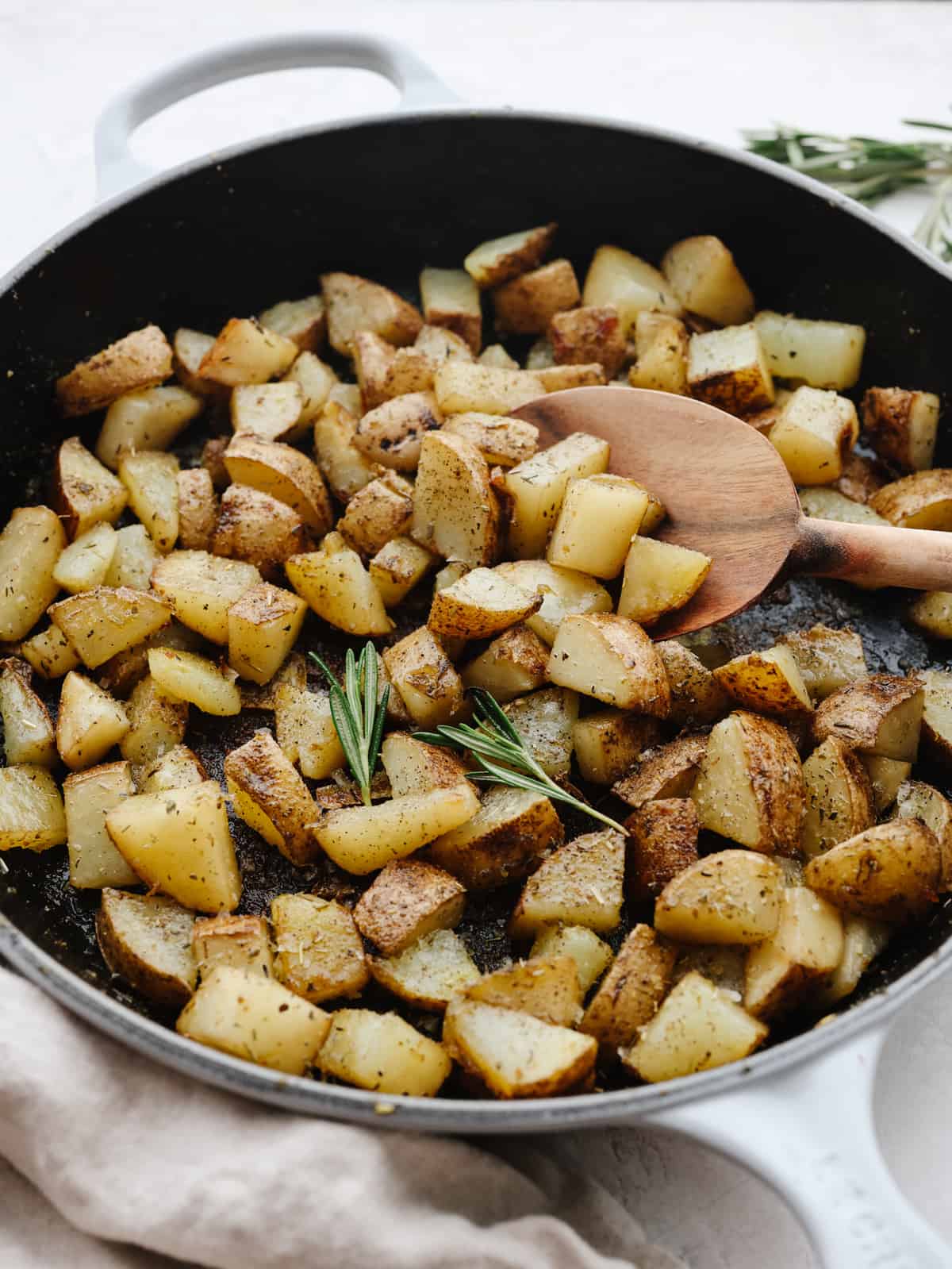
Credit: therecipecritic.com
Step-by-step Guide: Pan Frying Potatoes
Follow these clear steps for delicious, evenly cooked pan-fried potatoes.
1. Choose And Prep Potatoes
- Select about 1–2 medium potatoes per person (Yukon Gold or Russet are most popular).
- Wash thoroughly; peel if desired.
- Cut into your chosen shape, keeping pieces uniform for even cooking.
- Rinse cut potatoes in cold water to remove excess starch, then pat completely dry with a towel.
2. Preheat The Pan
- Place your skillet on medium to medium-high heat.
- Add enough oil to coat the bottom (2–3 tablespoons for a 12-inch pan).
- Wait until the oil shimmers—this means it’s hot enough.
3. Add Potatoes
- Lay potatoes in a single layer—don’t crowd the pan.
- Sprinkle with salt and, if you like, a pinch of pepper or paprika.
- Let them cook undisturbed for 3–5 minutes until the bottoms develop a golden crust.
4. Flip And Stir
- Use a spatula to flip or stir the potatoes so all sides brown evenly.
- After the initial sear, reduce the heat to medium.
- Stir every 2–3 minutes to prevent burning.
5. Optional: Cover The Pan
- For thick pieces or softer centers, cover the pan for 5–8 minutes. This traps steam and helps cook the inside.
- Uncover for the last few minutes to crisp the outside.
6. Check For Doneness
- Pierce a piece with a fork; it should slide in easily.
- Taste for seasoning and adjust as needed.
7. Drain And Serve
- If desired, place potatoes on a paper towel-lined plate to remove excess oil.
- Serve hot. Add fresh herbs or grated cheese for extra flavor.
Common Mistakes And How To Avoid Them
Even experienced cooks sometimes get pan-fried potatoes wrong. Here are common problems and how to fix them.
Uneven Cooking
If some pieces are burnt while others are raw, the cut size is probably inconsistent. Take time to cut evenly; a mandoline slicer can help with thin slices.
Soggy Potatoes
Moisture is the enemy of crispiness. Dry potatoes well before frying, and don’t crowd the pan. Fry in batches if needed.
Burnt Exteriors, Raw Centers
This usually means your pan was too hot. Start with medium heat and adjust up or down as needed. Covering the pan partway through can help thicker pieces cook through without burning.
Sticking To The Pan
If potatoes stick, they may not be ready to flip. Let them form a crust before stirring. Using enough oil and a quality skillet also helps.
Bland Taste
Season at the beginning and again at the end. Potatoes soak up flavor, so don’t be shy with salt, pepper, and herbs.
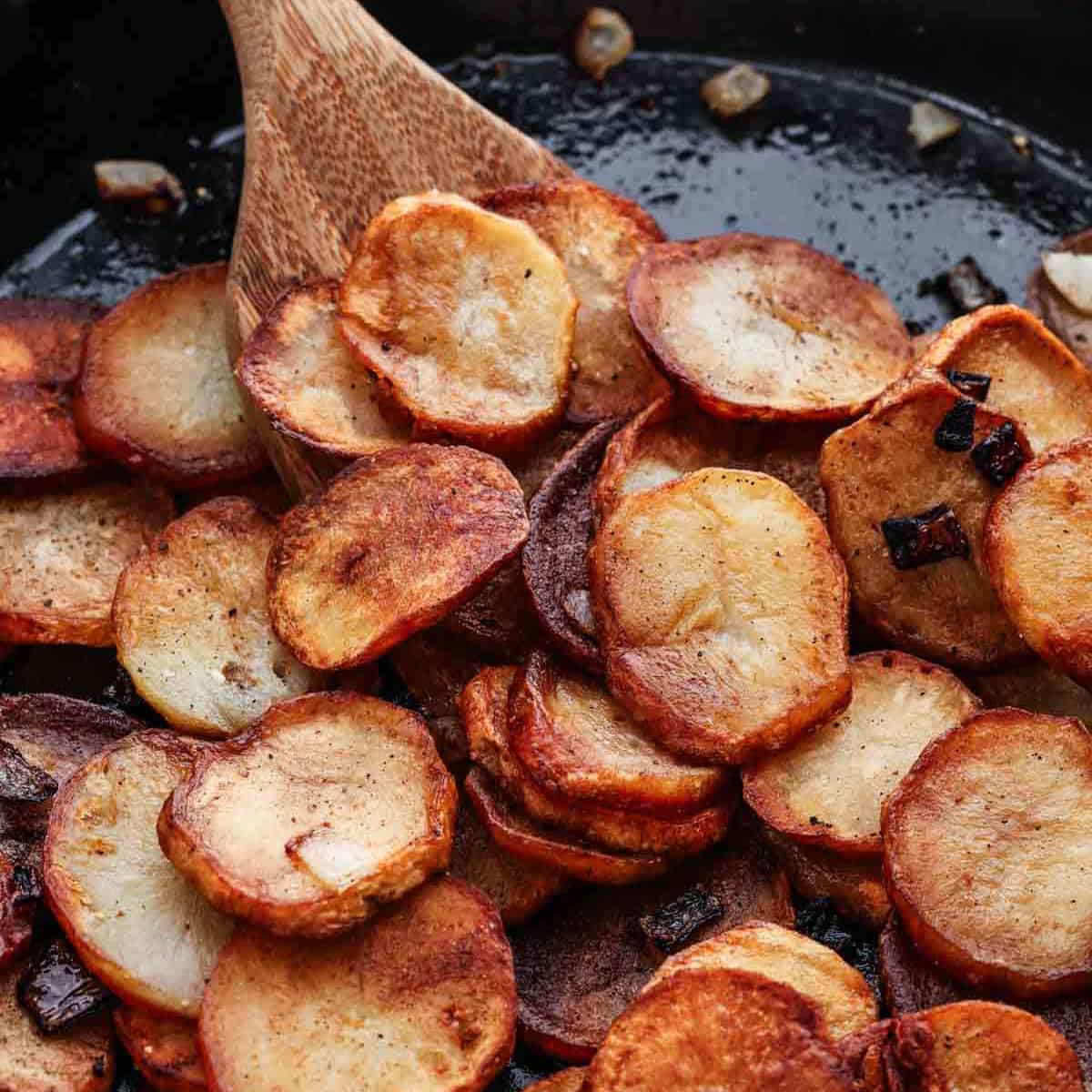
Credit: www.eatingonadime.com
The Role Of Potato Variety
Not all potatoes fry the same way. Here’s a quick comparison of popular varieties:
| Potato Type | Texture When Fried | Best Use |
|---|---|---|
| Yukon Gold | Creamy, holds shape | Thin or thick slices, cubes |
| Russet | Crispy outside, fluffy inside | Thick slices, wedges |
| Red Potato | Firm, slightly waxy | Diced, thin slices |
| Fingerling | Very creamy | Halves or coins |
For beginners, Yukon Gold is a safe all-purpose choice.
Pan Frying Vs Other Cooking Methods
How does pan frying compare to other ways of cooking potatoes?
| Method | Texture | Time (min) | Best For |
|---|---|---|---|
| Pan Frying | Crispy outside, soft inside | 8–25 | Breakfast, side dishes |
| Boiling | Soft, no crisp | 10–20 | Salads, mashing |
| Baking | Fluffy, can be crispy skin | 45–60 | Main courses, large potatoes |
| Roasting | Crisp outside, fluffy inside | 25–40 | Large batches, dinner sides |
Pan frying is fast and perfect for small amounts, but not ideal for big groups.
Two Insider Tips Most People Miss
- Parboil for Speed and Texture: For extra-crispy pan-fried potatoes, try parboiling cut potatoes for 3–4 minutes before frying. Drain and dry, then fry as usual. This step cooks the inside, so you only need to focus on getting the perfect crust in the pan—cutting your total pan time by 20–30%.
- Finish with a Flavor Boost: In the last minute of frying, add a small knob of butter, a crushed garlic clove, or a sprinkle of fresh herbs. The heat will release extra aroma and flavor without burning.
Adjusting For Special Diets
Pan-fried potatoes are naturally gluten-free and vegan if you use plant-based oil. For lower fat, use less oil and a nonstick skillet, but note they won’t get as crispy. If you’re watching sodium, season with herbs or a squeeze of lemon instead of salt.
Seasoning Ideas
Classic salt and pepper work well, but don’t stop there. Try these for variety:
- Paprika and garlic powder
- Rosemary and thyme (add at the end)
- Cajun spice for a kick
- Grated Parmesan after frying for a savory crust
Experiment to find your favorite.
Safety And Storage
Always use caution with hot oil. Keep handles turned away from the edge and avoid splashing water into the pan. Leftover pan-fried potatoes can be stored in an airtight container in the fridge for up to 3 days. To reheat, use a hot skillet for best texture—microwaving makes them limp.

Credit: www.delish.com
Frequently Asked Questions
How Can I Make Pan-fried Potatoes Extra Crispy?
For the crispiest potatoes, dry them very well before frying. Parboil for 3–4 minutes, drain, and let them cool. Fry in enough hot oil without crowding, and don’t stir too often—let a crust form before turning. A final minute over high heat can boost crispness.
Why Do My Potatoes Stick To The Pan?
Potatoes often stick if the pan isn’t hot enough or if you try to move them too soon. Use a well-seasoned cast iron or quality nonstick skillet. Wait until a golden crust forms before flipping—this natural barrier helps them release easily.
Can I Pan Fry Potatoes Without Oil?
You can use a nonstick pan and a little water or broth, but you won’t get the same crispiness. Oil is what gives pan-fried potatoes their signature texture and flavor. For a lighter option, use just one tablespoon and spread it well.
Is It Better To Peel Potatoes Before Pan Frying?
Peeling is optional. Skins add texture and nutrients, especially with Yukon Gold or Red potatoes. If you prefer a more refined look or softer bite, peel them before cutting.
What’s The Best Oil For Pan Frying Potatoes?
Choose oils with a high smoke point: canola, sunflower, or avocado oil are good choices. Olive oil works for flavor but can burn at high temperatures. For more on oil types, see this Cooking Oil Guide.
Pan-fried potatoes are simple, but getting them right takes a little practice. Focus on cut size, pan temperature, and don’t rush the process. Try different potato varieties and seasonings to keep things interesting. With these tips, you’ll be serving up golden, crispy potatoes that hit the spot every time.

Hello, This is Annie Walker, a 38-year-old blogger, founder, and editor of Cookware Guider from NY, USA. I am a cookware fanatic and passionate cooker. I love to cook with different types of cooking appliances (example: all types of cookware, rice cookers, slow cookers, etc) almost every day in my kitchen. I love to share my experience with my readers in my blog. Also, I enjoy helping people to solve their problems through my website. You can follow me on Twitter & Pinterest. To know details about my blog please check the about us page.