
Cooking salmon at home can feel intimidating, especially if you want that crispy finish without skin. Many people think the skin is necessary for frying, but you can make delicious, juicy salmon fillets without it. Pan frying salmon without skin is not just possible—it can be simple and rewarding.
With the right steps, you can enjoy flaky, flavorful fish that’s perfect for a weeknight dinner or a special occasion. This guide will show you how to pan fry salmon without skin, covering everything from ingredient selection to common mistakes, so you can cook with confidence and enjoy excellent results every time.
Why Pan Fry Skinless Salmon?
Pan frying is a fast and efficient way to cook skinless salmon. It creates a nice outer crust, keeps the inside moist, and doesn’t require special tools or a lot of oil. Without skin, the fish cooks evenly and absorbs flavors well, making it ideal for marinades or spices. Skinless fillets are also simpler to handle and serve, especially for people who don’t like eating fish skin.
Choosing The Right Salmon Fillets
Not all salmon is the same. When pan frying skinless salmon, the cut and freshness matter a lot. Here’s what to look for:
- Freshness: Choose fillets that smell clean and have a vibrant pink or orange color. Avoid fillets with a strong fishy odor or grayish spots.
- Thickness: Thicker fillets (about 1 to 1.5 inches) cook more evenly and stay juicy. Thin fillets can dry out quickly.
- Type: Wild-caught salmon, like sockeye or king salmon, has richer flavor but can be pricier. Farmed salmon is milder and often more affordable.
- Bones: Ask your fishmonger to remove pin bones, or check by running your fingers along the fillet and pulling out any you find with tweezers.
Salmon Types Comparison
Here’s a quick look at how common types of salmon compare for pan frying:
| Type | Flavor | Fat Content | Best For |
|---|---|---|---|
| King (Chinook) | Rich, buttery | High | Moist, tender results |
| Sockeye | Strong, deep | Medium | Bold flavors, grilling |
| Atlantic (Farmed) | Mild | High | Everyday cooking |
| Coho | Delicate | Lower | Lighter meals |
Essential Ingredients And Tools
You don’t need a long list of items to pan fry skinless salmon. Here’s what you’ll need for four servings:
Ingredients:
- 4 skinless salmon fillets (about 6 oz each)
- 2 tablespoons olive oil or canola oil
- 1 teaspoon salt
- 1/2 teaspoon black pepper
- Lemon wedges (for serving)
- Optional: 1 teaspoon paprika, garlic powder, or fresh herbs
Tools:
- Non-stick or stainless-steel skillet (10 to 12 inches)
- Fish spatula (thin and flexible)
- Paper towels
- Kitchen tongs (optional)
Preparing The Salmon
Getting the fillets ready is a step many home cooks rush, but it makes a big difference.
- Pat dry: Use paper towels to blot both sides. Removing moisture helps the salmon brown instead of steaming.
- Season: Sprinkle salt and pepper evenly on both sides. For more flavor, add a dash of paprika or garlic powder.
- Rest: Let the fillets sit at room temperature for 10–15 minutes before cooking. This helps them cook more evenly.

Credit: healthyrecipesblogs.com
Step-by-step Guide To Pan Frying Skinless Salmon
Now, let’s get cooking. Follow these steps for perfect pan fried salmon every time.
1. Preheat The Pan
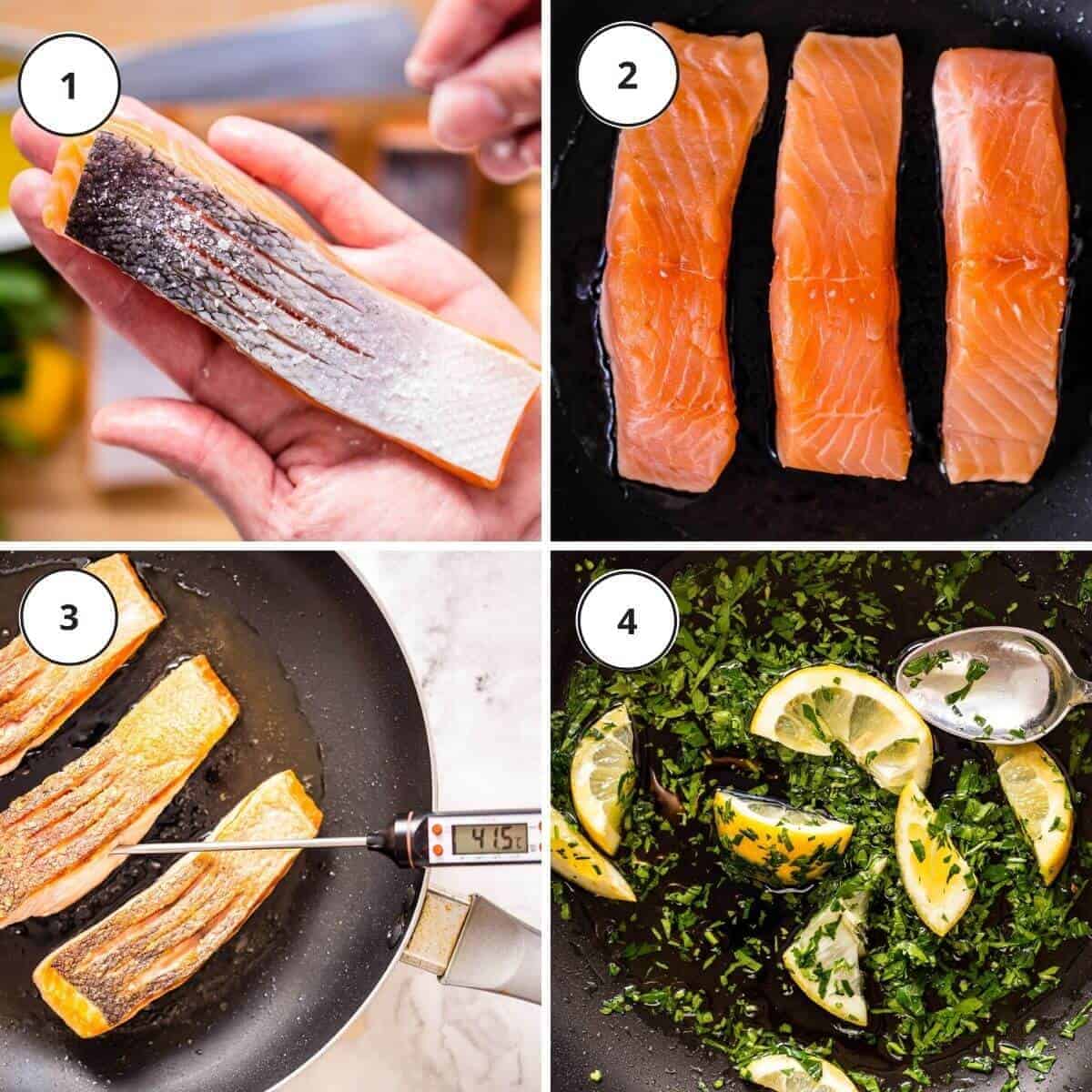
Place your skillet on medium-high heat. Wait 1–2 minutes, then add the oil. Swirl to coat the bottom evenly. The oil should shimmer but not smoke.
Tip: If you use stainless steel, the pan is ready when a drop of water dances across the surface.
2. Add The Salmon
Carefully place the salmon fillets in the pan, presentation side down (the side that looks better). Lay the fillets away from you to avoid splashing hot oil.
- For best results, don’t overcrowd the pan. Leave space between fillets so they cook evenly.
3. Sear And Wait
Let the salmon cook undisturbed for 3–4 minutes. You’ll see the color change from deep pink to light as it cooks up the sides. Resist the urge to move or press down on the fish.
Non-obvious insight: Moving the salmon too soon causes sticking and tearing. Letting it sit undisturbed helps build a crisp, golden crust.
4. Flip Gently
Use a thin fish spatula to flip each fillet. If the fish sticks, give it another 30 seconds. Properly seared salmon will release easily.
- Cook for another 2–4 minutes, depending on thickness and desired doneness.
5. Check For Doneness
Salmon is done when it turns opaque and flakes easily with a fork. The internal temperature should reach 125–130°F for medium-rare, or up to 140°F for well-done.
6. Rest And Serve
Transfer the salmon to a plate. Rest for 2–3 minutes before serving. This keeps it juicy.
Serving tip: Squeeze fresh lemon juice on top or sprinkle with chopped herbs.
Cooking Times And Doneness Chart
Cooking time depends on the thickness of your fillet and how you like your salmon cooked. Here’s a simple chart:
| Thickness | Cook Time (1st Side) | Cook Time (2nd Side) | Internal Temp |
|---|---|---|---|
| 3/4 inch | 2–3 min | 2 min | 125–130°F |
| 1 inch | 3–4 min | 2–3 min | 125–130°F |
| 1.5 inches | 4–5 min | 3–4 min | 125–130°F |
Common Mistakes And How To Avoid Them
Even experienced cooks make errors with salmon. Here’s how to avoid the most frequent problems:
- Not drying the fillets: Wet salmon steams instead of searing. Always pat dry for the best crust.
- Pan too cold or hot: Too cold means no crust. Too hot and the outside burns before the inside cooks.
- Flipping too soon: The fish will stick if flipped early. Wait until a crust forms.
- Overcooking: Salmon turns dry and chalky if cooked too long. Use a thermometer if you’re unsure.
- Using the wrong spatula: A thick spatula can break the fillet. Use a thin, flexible fish spatula for easy lifting.
Flavor Variations And Sauces
Pan fried salmon without skin is delicious with just salt, pepper, and lemon. But you can change up the flavors easily:
- Honey garlic: Mix 1 tablespoon honey and 2 teaspoons minced garlic, brush on the fillets during the last minute.
- Dill and lemon butter: Melt 2 tablespoons butter with fresh dill and pour over the cooked salmon.
- Spicy Cajun: Rub fillets with Cajun spice blend before frying.
Sauce ideas: Try serving with homemade tartar sauce, yogurt dill sauce, or mango salsa.

Credit: mindovermunch.com
Nutrition Benefits Of Pan Fried Salmon
Salmon is packed with omega-3 fatty acids, which support heart and brain health. It’s also high in protein, vitamin D, and selenium.
Salmon Nutrition Facts (per 6 Oz Fillet, Cooked)
| Calories | Protein | Fat | Omega-3s | Vitamin D |
|---|---|---|---|---|
| 367 | 39g | 22g | ~2g | 570 IU |
Non-obvious insight: Even when pan fried, salmon’s healthy fats stay mostly intact, making it one of the most nutritious fish you can eat.
Cleaning Up After Pan Frying
Salmon can leave a smell and some oily residue. Here’s how to make cleanup easier:
- Let the pan cool, then wipe excess oil with a paper towel before washing.
- Use warm, soapy water and a non-scratch sponge.
- For stubborn bits, add water and a little baking soda, heat gently, then scrub.
- Boil lemon slices in water on the stove to remove fishy smells from your kitchen.
Credit: www.pantsdownapronson.com
Serving Suggestions
Pan fried salmon pairs well with many side dishes:
- Steamed rice or quinoa
- Roasted vegetables like asparagus or broccoli
- Simple green salad with vinaigrette
- Mashed potatoes or garlic bread
Try to serve salmon right after cooking. It loses texture if reheated.
Frequently Asked Questions
How Do I Keep Skinless Salmon From Sticking To The Pan?
Make sure your pan is hot and use enough oil to coat the bottom. Dry the salmon well before adding it. If the fillet sticks, give it more time—a good crust will release naturally.
Can I Use Frozen Salmon Fillets For Pan Frying?
Yes, but thaw them fully and pat them dry before cooking. Frozen fillets can be watery, so extra drying is needed for good browning.
What Oil Is Best For Pan Frying Salmon?
Use oils with a high smoke point, like canola, avocado, or light olive oil. These oils won’t burn easily and keep the salmon’s flavor clean.
How Do I Know When Salmon Is Cooked?
Check for an opaque color and easy flaking with a fork. For the most accurate result, use a food thermometer—125–130°F is medium-rare, which is moist and safe.
Is Pan Fried Salmon Healthy?
Yes! Salmon is rich in omega-3s, protein, and important vitamins. Pan frying with a small amount of healthy oil keeps it nutritious. For more, see the Harvard School of Public Health.
Pan frying salmon without skin is easier than most people think, and it delivers outstanding results with just a few key steps. With practice, you’ll be able to cook restaurant-quality fish at home, full of flavor and nutrition. Try experimenting with different seasonings and sides to find your favorite combinations.
Happy cooking!

Hello, This is Annie Walker, a 38-year-old blogger, founder, and editor of Cookware Guider from NY, USA. I am a cookware fanatic and passionate cooker. I love to cook with different types of cooking appliances (example: all types of cookware, rice cookers, slow cookers, etc) almost every day in my kitchen. I love to share my experience with my readers in my blog. Also, I enjoy helping people to solve their problems through my website. You can follow me on Twitter & Pinterest. To know details about my blog please check the about us page.